Custom wooden box packaging lets a brand turn a simple container into part of the product experience, but only if structure, materials, branding and production are planned together. Many first-time buyers lose weeks to unclear briefs, mismatched inserts or logos that look different on wood than on screen. This guide from Guangzhou T.wing-Pak Mfg Co., Ltd. explains how to choose a lid structure and hardware, select inserts, pick a branding method and run a clean OEM process from first inquiry to mass production. It is written for brand owners, product managers and sourcing teams who want a wooden gift box that opens well, protects the product and arrives in perfect condition. If the substrate is still open, start with our wooden box packaging materials comparison.
Choosing the Right Structure for Custom Wooden Box Packaging
Lid styles and how they feel in use
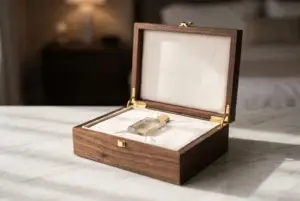
The lid is the first thing a customer touches, so its action shapes the unboxing experience. A hinged lid opens like a small chest and stays attached, which makes it the most versatile option for watches, jewelry, cosmetics and gift sets. A sliding lid glides along grooves and suits flat items such as tea, chocolate, stationery and cards.
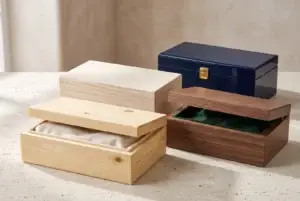
A lift-off lid, sometimes called a telescope lid, simply lifts away from the base and is among the easiest structures to make. A magnetic lid closes with hidden magnets and gives a clean, modern look without visible hardware. A drawer-style box slides out of a sleeve and works well for layered presentations or for keepsake sets.
| Lid style | Opening experience | Cost tendency | Sensitivity to tolerance | Best for |
|---|---|---|---|---|
| Hinged lid | Chest-like, lid stays attached | Medium to high (hardware and alignment) | High, because hinge position must be exact | Watches, jewelry, cosmetics, premium gifts |
| Sliding lid | Smooth glide along grooves | Medium | High, because the groove fit must be consistent | Tea, chocolate, stationery, cards |
| Lift-off lid | Simple lift and remove | Low to medium | Medium | Gift sets, food, corporate gifts |
| Magnetic lid | Clean closing with a soft snap | Medium to high (magnets and recesses) | Medium to high | Cosmetics, small gifts, modern brands |
| Drawer and sleeve | Layered reveal | Medium to high | High | Keepsakes, multi-layer gift sets |
Cost tendencies are general guidance and will vary with size, finish and quantity. Our guide to choosing wood for wooden box packaging explains how species and panel choice affect tolerance and finishing. The practical rule is that the more precisely two parts must fit, the more important tooling accuracy and quality control become.
Hinges, clasps and other hardware
Hardware turns a wooden box from a simple container into a refined product, and it is also the most common source of complaints. Common choices include butt hinges in brass or zinc alloy, concealed hinges for a seamless look, lid stays that hold the lid open at a stable angle, small clasps for security and embedded magnets for closure. Gold-tone, silver-tone and gunmetal finishes are all widely available.
The wood around the hardware matters as much as the hardware itself. Soft species such as paulownia and pine can strip out screws, so factories should predrill and, where loads are high, reinforce the fixing point with a hardwood or plywood block. Ask for a hinge cycle test and agree on the pass standard in writing, then check by hand that the lid stays aligned after repeated opening. For glossy finishes, see the 12-layer high-gloss piano lacquer process.
Inserts that protect and present the product
The insert holds the product in place, prevents scratches and defines how the box looks when it opens. EVA foam can be cut precisely to the product shape and is a common choice for cosmetics, accessories and electronics. Velvet or flocked linings and fabric-wrapped cushions are popular for watches and jewelry, while paper pulp or cardboard dividers suit food, tea and bottles.
| Insert type | Strengths | Typical use | Points to check |
|---|---|---|---|
| Cut EVA foam | Precise fit, good shock absorption | Cosmetics, gadgets, accessories | Foam density; edge cleanliness |
| Velvet or flocked lining | Soft touch, rich look | Jewelry, pens, small luxury items | Fiber shedding; adhesive odor |
| Fabric-wrapped cushions | Holds watches securely | Watch boxes | Cushion size and firmness |
| Paper pulp or cardboard | Economical, recyclable story | Tea, food, bottles | Moisture sensitivity |
| Wooden dividers | Rigid structure, stylish display | Tea sets, tool sets, multi-item kits | Added weight; fit tolerance |
Allow a small, controlled clearance between the product and the insert so it can be placed and removed without force. An insert that is too tight can scratch the product, while one that is too loose lets it rattle in transit. A physical prototype with your actual product is the only reliable way to settle this. Our guide to velvet-covered and lined wooden boxes compares lining options in more detail.
Branding, Finishing and Sustainability Claims for Wooden Boxes
Logo and branding methods
A logo on wood behaves very differently from a logo on paper, because grain, color and finish all change the result. Laser engraving burns the design into the surface and gives a precise, permanent mark, although its contrast varies by wood species and finish. Hot stamping presses metallic foil into the surface for gold, silver or colored effects, and silk screen printing applies ink for flat colors and larger graphics.
UV printing prints directly onto flat surfaces and handles detailed artwork and gradients. Debossing or hot branding presses the design into the wood, and a metal plate fixed to the lid adds a tactile, premium detail. Many brands combine methods, such as a hot-stamped logo on the lid and a printed brand story on the inner lining.
| Method | Look | Works best on | Things to test |
|---|---|---|---|
| Laser engraving | Fine, permanent, tone-on-tone | Natural wood and light finishes | Contrast on the chosen species; char smell |
| Hot stamping (foil) | Metallic gold, silver or colors | Smooth lacquered or wrapped surfaces | Foil adhesion and edge sharpness |
| Silk screen printing | Flat solid colors | Smooth, sealed surfaces | Color match and ink adhesion |
| UV printing | Full-color artwork and gradients | Flat panels and lids | Fine-line sharpness; scratch resistance |
| Debossing or hot branding | Pressed, tactile mark | Natural wood | Depth consistency across boxes |
| Metal plate | Premium, three-dimensional | Most finishes | Plate placement and adhesive strength |
Always request a logo test on the actual wood and finish before approving mass production. A vector file in the correct format will produce much cleaner results than a screenshot or a low-resolution image. Define the size, position and color reference, such as a Pantone code, for each branding element. Our 3D mockup to mass production workflow shows how logo placement is presented before a sample is built.
Sustainability and certification claims
Many brands want their wooden boxes to support an environmental story, but claims must be backed by documents. The Forest Stewardship Council (FSC) offers three label types: FSC 100 percent, where all forest-based material comes from FSC-certified forests, FSC Mix, which can combine certified, recycled and controlled wood, and FSC Recycled (FSC). An FSC label can only be used under a valid FSC certificate, and its use must be authorized by the certificate holder’s certification body. Our FSC-certified wood verification guide shows how to check a certificate number and an approved claim.
In practice, ask your supplier for the certificate details before you place any FSC wording on packaging or marketing material. Avoid vague terms such as “eco-friendly” unless you can explain exactly what they mean for the product. Our wooden box packaging export compliance guide explains the other legality rules that may apply to wooden products.
Designing for shipping and unboxing
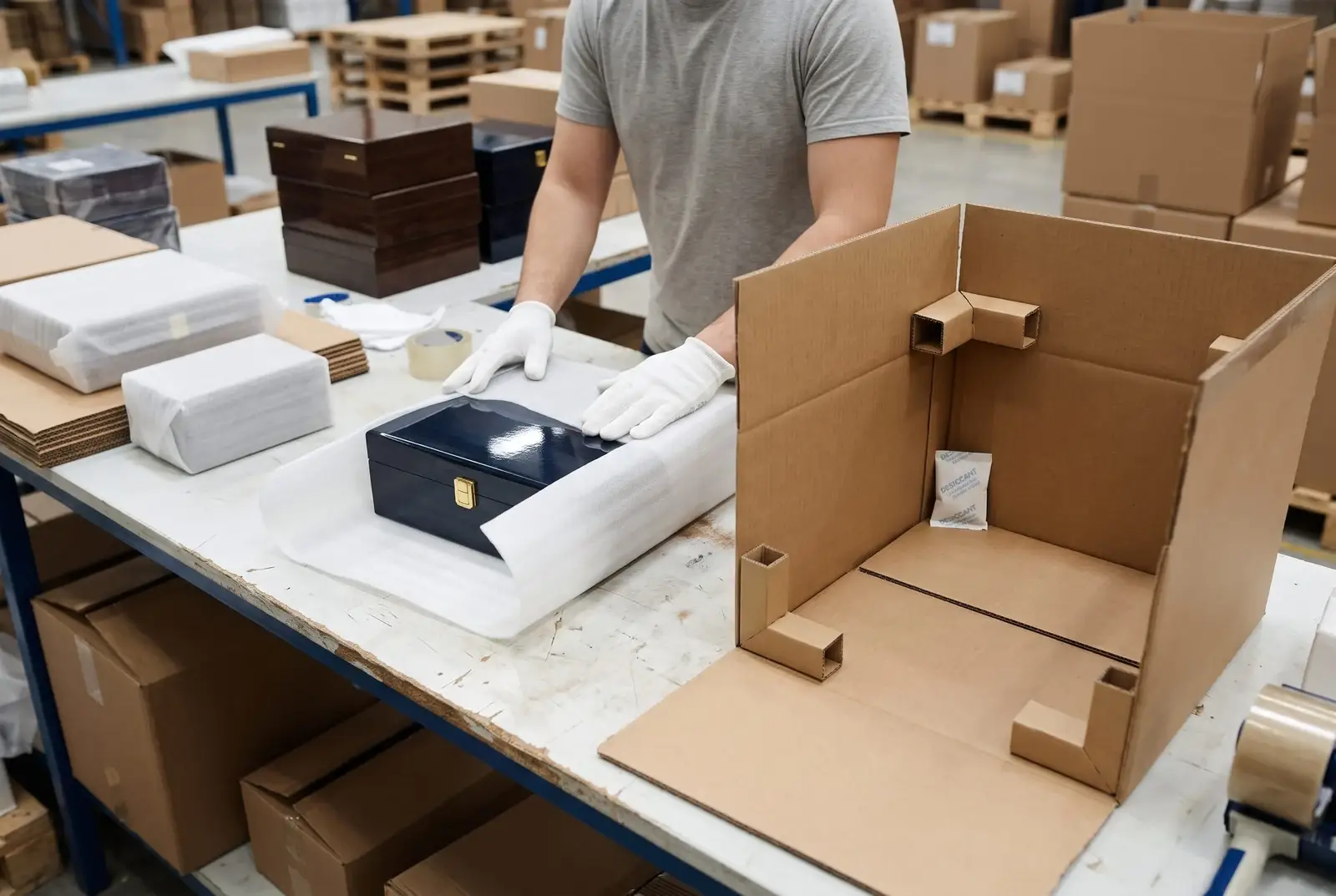
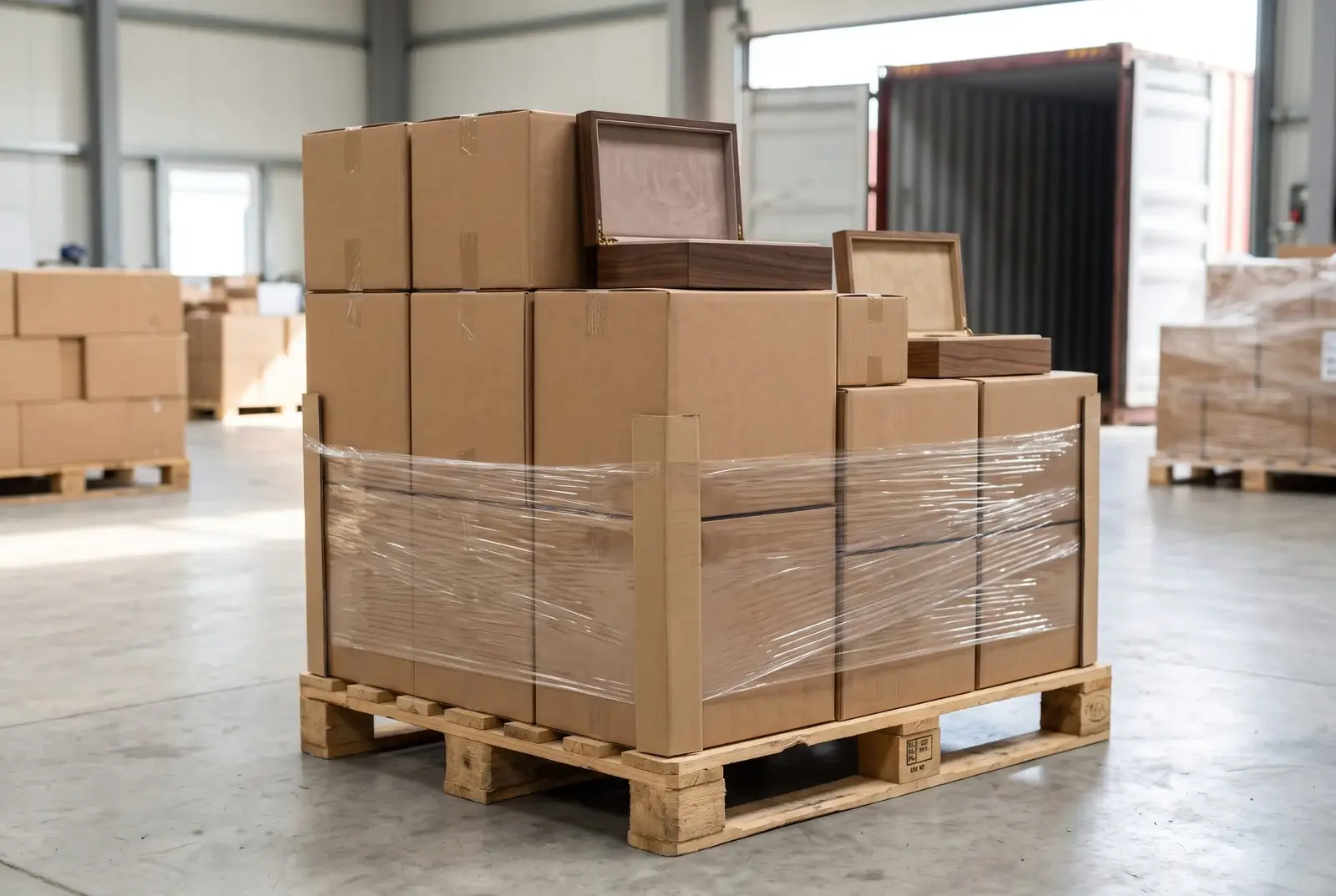
A beautiful wooden box that arrives with a scratched finish or a chipped corner damages the brand it was meant to support. Wrap each box in a soft film or foam sleeve, protect corners, and pack boxes in a master carton that does not allow movement. Gloss lacquered surfaces need especially careful separation, because rubbing between boxes can leave marks.
Think about the full journey from factory to customer, including stacking pressure, humidity changes and handling by couriers. A shipping test that includes a drop test and a compression test will reveal weak points before a full production run is shipped. Our environmental certification guide for wooden box exports lists the documents that accompany the shipment. For consumer deliveries, consider an outer carton that is sized for the single box with a little protective filling.
The OEM Process: From Brief to Mass Production
What to include in your inquiry
A complete inquiry speeds up quotation and reduces the number of revisions. See our product sampling and design guide for what to send with a brief. The more clearly you define the product and the market, the more accurate the factory’s proposal will be. Use the checklist below as a starting point.
- Product dimensions and weight, with photos or a sample if possible.
- Preferred box size, lid style and number of compartments.
- Wood or panel type, finish and color references.
- Insert type, lining color and fabric preferences.
- Hardware style and finish.
- Logo files, branding methods and positions.
- Target quantity, target price and delivery date.
- Destination market and any required certificates or tests.
An eight-step OEM workflow
- Brief and quotation. Share the inquiry details and receive a quotation with the proposed specification.
- Drawing and design review. Confirm dimensions, structure, hardware positions and insert layout on a drawing (see the OEM/ODM wooden packaging complete guide).
- Material and color sampling. Review wood, finish, fabric and hardware samples in daylight and indoor light.
- Prototype. Build a working sample and test it with your real product.
- Feedback and revision. Adjust fit, finish, logo and hardware, then confirm the changes in writing.
- Pre-production sample. Approve a final sample that serves as the standard for production.
- Mass production with inspection. Produce to the approved sample with checks at key stages.
- Final inspection, packing and shipment. Inspect against the agreed standard, pack with protection and prepare export documents.
| Stage | You provide | The factory provides | Approval needed |
|---|---|---|---|
| Brief | Product details, references, target price | Quotation and proposed specification | Scope and budget |
| Design | Logo files, brand colors | Drawings and renderings | Structure and layout |
| Sampling | Feedback on swatches | Material and finish samples | Materials and color range |
| Prototype | Your real product for fit testing | Working sample | Fit, function and finish |
| Production | Final order and quantity | Production schedule and inspection reports | Pre-production sample |
| Shipping | Delivery address and documents needed | Packed goods and export documents | Packing plan |
What drives cost and lead time
Several choices have an outsized effect on price and timing. Custom sizes, multi-layer lacquer, mixed materials, complex inserts and special hardware all add work. At T.wing-Pak the OEM minimum order quantity is a fixed 50 to 100 pieces per design. A structure that needs new tooling sits at the upper end of that band, but we quote within it rather than an open-ended figure.
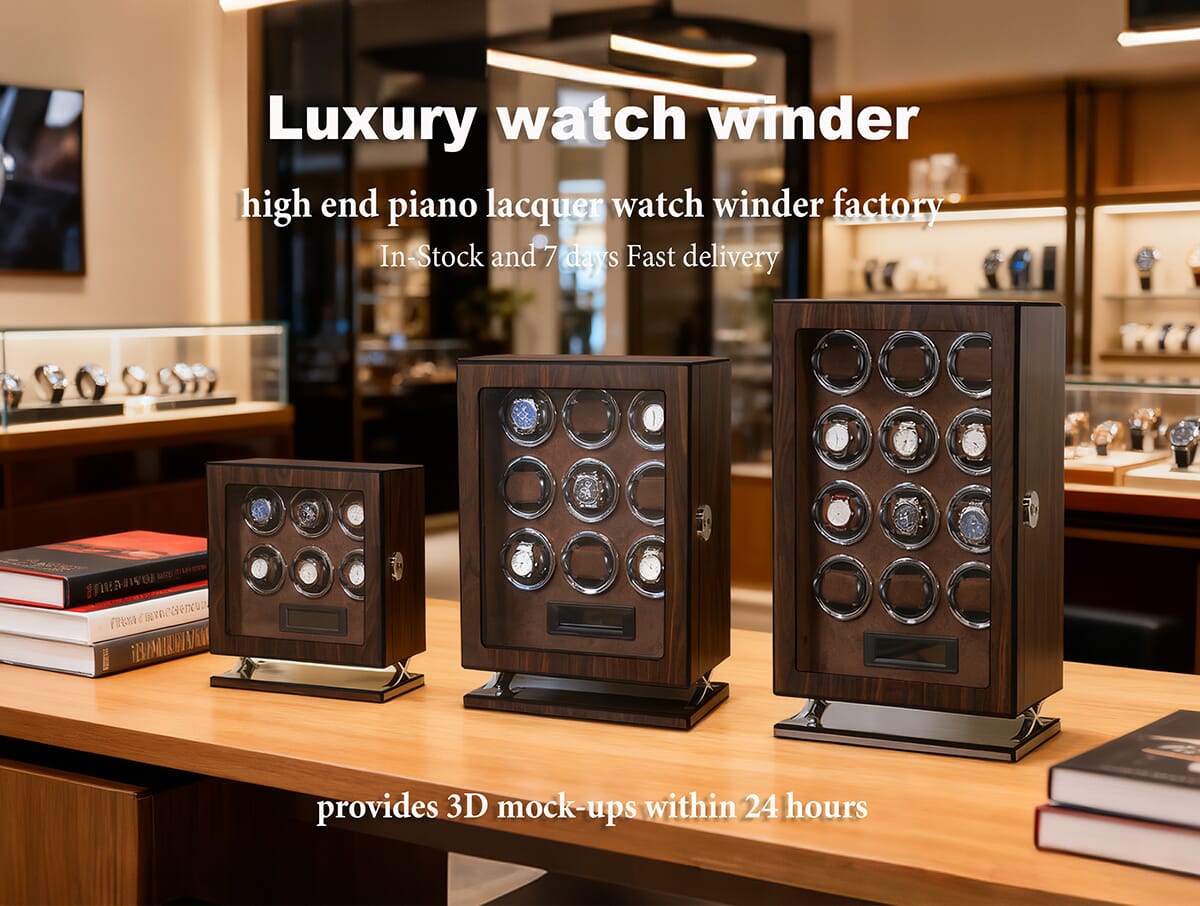
Ask your supplier for quotations at more than one quantity level so that you can see how unit price changes. Our luxury watch box packaging guide covers how structure, finish and quantity interact on cost. Build realistic time for sampling and revisions into your launch plan, since rushing the prototype stage is the most common reason for late changes. Our standard schedule is a 3D rendering within 8 hours of a confirmed brief, a physical sample in 7 days, and bulk production in 20 to 30 days from sample approval. Seasonal peaks, such as the period before major gifting holidays, can also affect factory schedules, so plan orders well ahead.
Troubleshooting common OEM issues
| Issue | Likely cause | How to resolve |
|---|---|---|
| Uneven gap around the lid | Tolerance variation or moisture movement | Review drawing tolerances; check material moisture; adjust hinge position |
| Hinge misalignment | Imprecise routing or drilling | Use jigs for positioning; add alignment checks to inspection |
| Insert too tight or loose | Cut size not tested with the real product | Test with the product; adjust cut size and agree a clearance range |
| Logo looks faint or blurry | Wrong method for the surface; poor file quality | Test several methods; supply vector artwork; adjust depth or foil |
| Color mismatch between batches | Different material lots or finishing batches | Approve a color standard; finish each order from the same lot |
| Magnet is weak or reversed | Wrong magnet strength or polarity | Specify strength; check polarity on every box |
| Scratches on arrival | Boxes rubbing during transit | Add film or foam sleeves and corner protection; test the packing method |
| Strong odor on opening | Adhesives or fresh coating in a sealed carton | Allow full curing and airing; use low-odor adhesives |
Summary and Frequently Asked Questions
Successful custom wooden box packaging comes from aligning structure, hardware, inserts and branding with the product and the market. Choose a lid style that matches the opening experience you want, protect the product with a tested insert, and validate your logo method on the real finish. Then run a disciplined OEM process with written approvals at each stage, and test packing before shipping a full order. For a wider sourcing view, see our watch box manufacturing and sourcing guide.
Ready to develop your own wooden box? Send Guangzhou T.wing-Pak Mfg Co., Ltd. your product dimensions, logo files, preferred structure and target quantity. Our team will return a design proposal, a 3D rendering and a physical sample for approval. See our OEM/ODM wooden packaging complete guide for the full project workflow.
- OEM minimum order quantity: 50 to 100 pieces per design
- 3D rendering: within 8 hours of a confirmed brief
- Sample lead time: 7 days from confirmed specification
- Bulk production lead time: 20 to 30 days from sample approval
Browse our custom wooden box packaging services or contact us with your brief to receive a tailored specification and quotation.
1. What information should I include in an OEM inquiry for wooden boxes?
Include product dimensions and weight, preferred box size and structure, wood or panel type, finish, insert type, logo method and position, target quantity, target price, destination market and delivery date. Reference images and a rough drawing speed up the quotation.
2. Which lid style suits a wooden gift box best?
A hinged lid is the most versatile for gifts, watches and jewelry. A sliding lid suits tea and food sets, a lift-off lid is simple and cost-effective, and a magnetic lid gives a clean modern look for cosmetics and small gifts.
3. Does the minimum order quantity depend on the level of customization?
At T.wing-Pak the OEM minimum order quantity is 50 to 100 pieces per design. Highly customized structures may sit at the upper end of that band because each design needs setup, tooling and finishing control, but we quote against a fixed range. Ask for quotations at 50, 100 and 300 pieces to see how the unit price changes.
4. Which logo method gives the most premium look on a wooden box?
Laser engraving, hot stamping in gold or silver, and metal plates are common premium choices. The best result depends on the wood or finish, so test each method on a sample before approving.
5. Can I put an FSC label on a wooden box?
Only if the product is made under a valid FSC certificate and the label use is authorized by the certificate holder’s certification body. Ask your supplier for the certificate details before promoting a box as FSC certified.