
How luxury wooden packaging moves from a 3D mockup through sampling, tooling, production, and logistics, and why one-stop service shortens the timeline.
A custom packaging order is a chain of steps, and where those steps sit — inside one factory or spread across vendors — decides how fast and how reliably a product reaches market. This article walks through the full workflow from first 3D mockup to shipped mass production, and explains why a one-stop manufacturer with in-house design compresses a timeline that otherwise stretches across weeks of coordination.
Step 1: 3D mockup and design
Every custom project starts by turning an idea into something you can evaluate. A 3D mockup renders your concept — dimensions, proportions, finish, hardware — so you can judge and refine it before any physical cost is committed. Speed here matters more than buyers expect: when a mockup takes days, each design iteration adds a week, and a few rounds can push a launch back a month. A factory that delivers a 3D mockup in as little as 8 hours collapses that loop, letting you iterate to an approved design in days rather than weeks.
Step 2: physical sampling
Once the design is approved on screen, a physical sample confirms it in the real world — the finish under real light, the hinge action, the fit of inserts, the weight in hand. This is the stage to catch anything the render could not show, and to lock the specification: coat count, materials, tolerances, hardware. A good sample is not just a preview; it is the reference the production run will be measured against, which is why the sample and the quality specification should be finalized together.
Step 3: tooling and pre-production
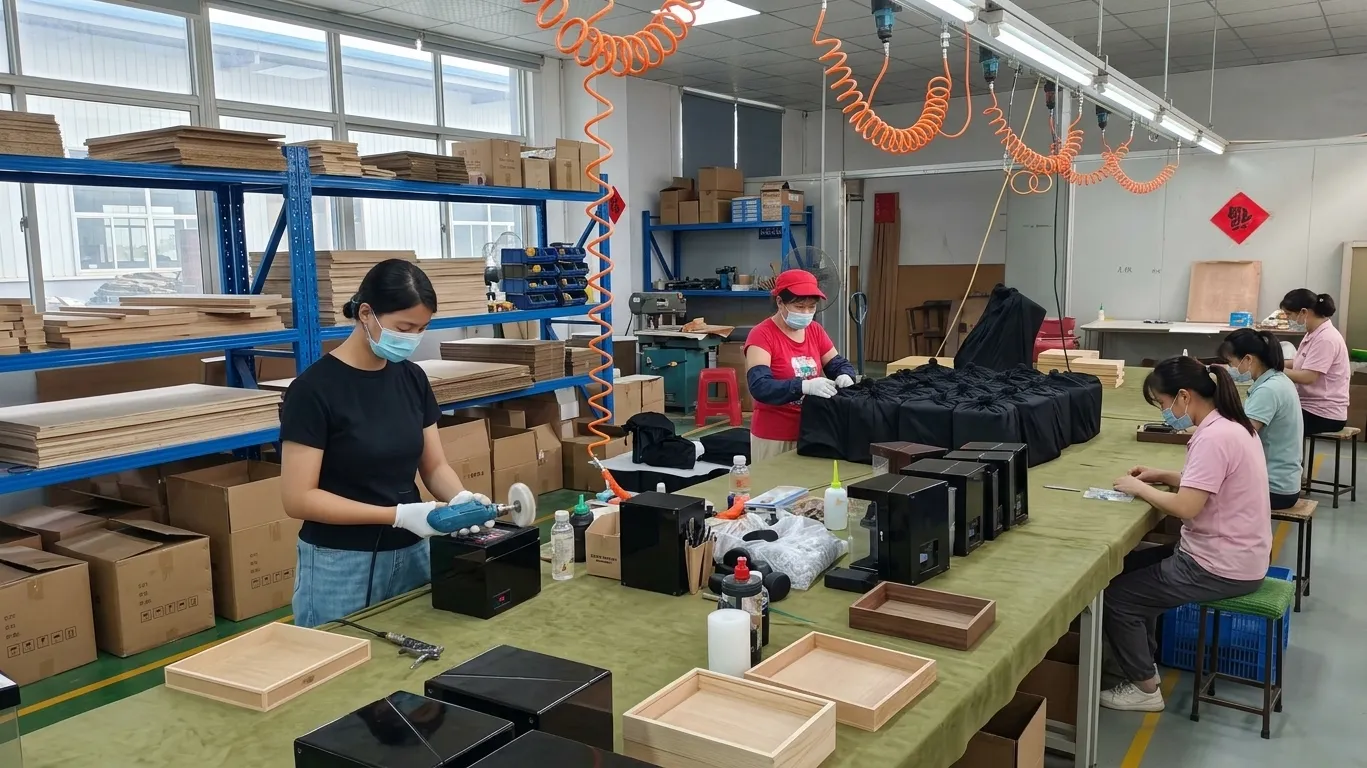
For OEM work, this is where molds and tooling are made so the approved design can be produced consistently at volume. Tooling is a real investment and takes time, but it is what makes every subsequent unit match the sample. Pre-production checks confirm that materials, finishes, and hardware are sourced to specification before the full run begins. Skipping or rushing this stage is where batch inconsistency is born, so a disciplined factory treats pre-production as a gate, not a formality.
Step 4: mass production with quality control
With tooling proven and the sample locked, the full run proceeds. The critical element here is inspection: a factory that runs full-batch inspection and holds a documented defect rate — 2% or lower is a strong benchmark — is what keeps the production run consistent with the sample that was approved. First-order production for luxury wooden packaging typically runs 35-60 days depending on volume, finish complexity, and certification. This is also where certification matters, since UL, CE, RoHS, and FSC requirements must be met in the actual produced goods, not just in principle.
Step 5: logistics and delivery
The final step is getting the goods to you, packed to survive transit with the finish intact. A one-stop manufacturer handles export logistics as part of the chain, so packaging, documentation, and shipping are coordinated rather than handed off. For an importer, that means one accountable partner from concept to delivered container, instead of stitching together a designer, a factory, and a freight arrangement separately.
Why one-stop service changes the timeline
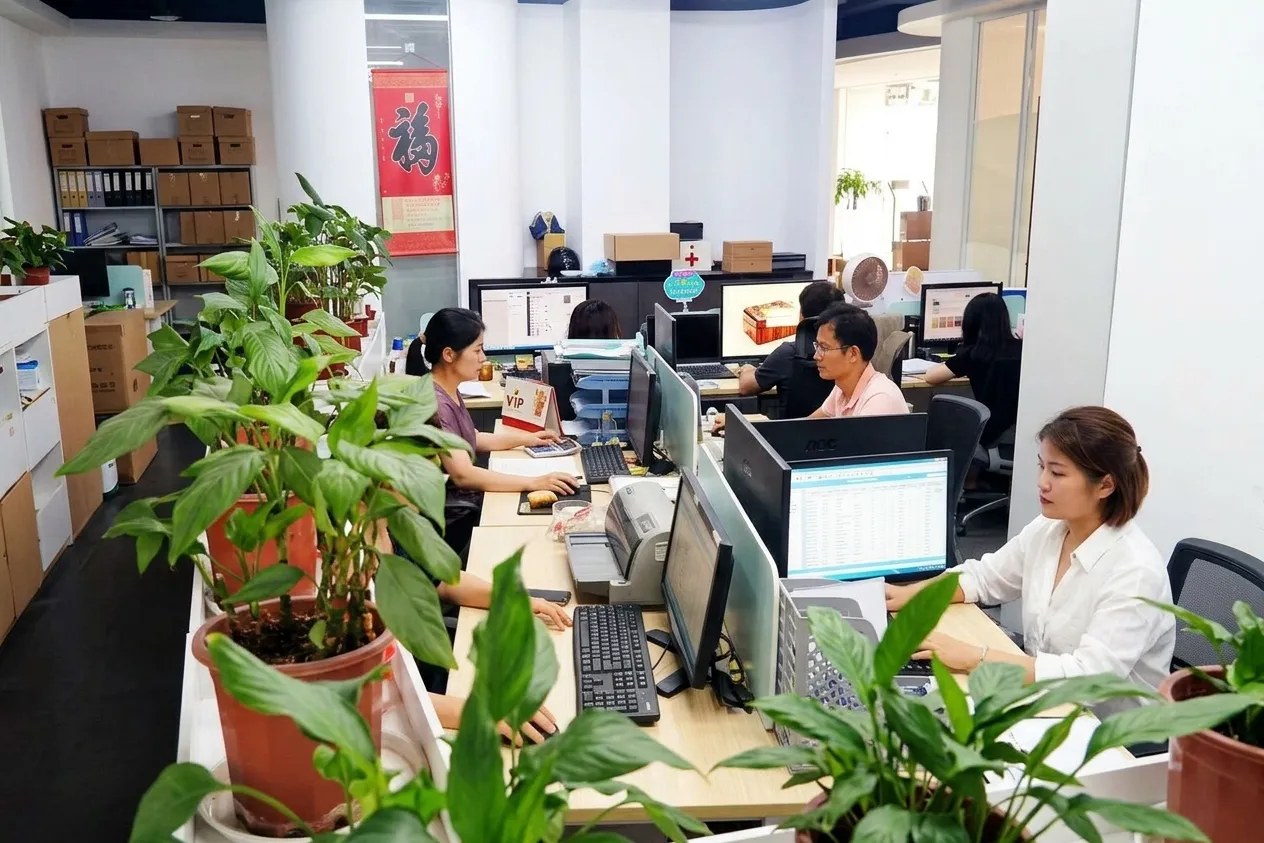
The hidden cost in packaging sourcing is coordination. When design, sampling, tooling, production, and logistics sit with different parties, every handoff adds delay, miscommunication risk, and finger-pointing when something is off. A one-stop factory with in-house design removes those seams: the team that renders your mockup is connected to the team that samples, tools, produces, and ships it. That is what makes an 8-hour mockup meaningful — it feeds directly into a chain built to move from approved design to shipped product without losing time between steps.
| Stage | Typical output | What to confirm |
|---|---|---|
| 3D mockup | Rendered design (as fast as 8 hrs) | Dimensions, finish, hardware |
| Sampling | Physical reference | Spec locked: coats, materials, tolerances |
| Tooling | Molds for consistent production | One-time investment, matches sample |
| Production | Full run (35–60 days first order) | Full-batch inspection, ≤2% defects |
| Logistics | Packed, documented shipment | Transit protection, export docs |
What a 19-year track record adds
Experience shows up in the parts of this workflow buyers cannot see on a spec sheet: anticipating where a finish will fail in transit, knowing which designs are hard to tool consistently, and holding a defect rate steady across large runs. A manufacturer with 19 years and annual output above 800,000 units has run this chain enough times that the timeline is predictable and the quality is repeatable — which, for a buyer planning a launch, is worth as much as any single specification.
Want a one-stop path from 8-hour mockup to shipped mass production? Explore our OEM/ODM capabilities and custom watch winders, then request a quote.