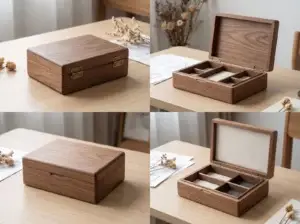
The lid of a wooden gift box does more than close it. It sets the pace of the unboxing, signals the price tier and determines how well the contents are protected in transit. Hinged, magnetic, lift-off and drawer structures are all common, but they are not interchangeable: each asks for different hardware, tolerances and finishing work. This comparison from Guangzhou T.wing-Pak Mfg Co., Ltd. is written for brand owners, product managers and sourcing teams who need to choose a structure before they compare prices. It focuses on how each option behaves in real use rather than on how it photographs.
A frequent mistake is to choose a structure from a picture and discover its cost only at quotation stage. A sliding lid and a hinged lid may look similarly simple, but the groove fit on the first and the hinge alignment on the second demand different levels of accuracy. The sections below separate the visible choice from the manufacturing consequence. For background on the materials behind these structures, see our comparison of solid wood, plywood, MDF and bamboo.
Comparative Analysis of the 4 Wooden Gift Box Structures
| Feature | Hinged Style | Magnetic Style | Lift-Off (Removable) Style | Drawer (Slide-Out) Style |
|---|---|---|---|---|
| Structural Design | The lid and base are connected by metallic hinges (visible or mortised), often paired with front latches or locks. | Inset strong rare-earth magnets are embedded within the wood, relying on magnetic pull for seamless closure. | The lid and base are entirely separate, nesting together using stepped shoulders or inner lip joints. | A double-layer horizontal push-pull system consisting of an outer sleeve and an inner drawer. |
| Opening Experience | Easy one-handed flip; stay-open hinges can hold the lid at ~90° for elegant, natural presentation. | Satisfying, snappy snap-close; incredibly smooth to open with zero external metal interference. | Requires two hands to lift off vertically; creates an immersive, high-ceremony reveal with natural air resistance. | Horizontal slide-out; slow and smooth reveal, creating a sense of exploration and rich layered unveiling. |
| Key Advantages | Durable, sturdy, can’t lose the lid; excellent for display; feels weighty and premium. | Extremely minimalist and sleek; easy to open/close; wear-resistant with no visible hardware. | Hardware-free; highlights natural continuous wood grain; structurally sturdy & easy to stack. | Superb dust protection; allows stacking; functions beautifully as drawer-style desk organization. |
| Limitations | Requires precise routing and hardware; higher production cost; opening angle is restricted. | Requires high drilling tolerance; lower impact-resistance (can spill if dropped) compared to latch locks. | Lid can be misplaced; requires two hands; susceptible to warping/sticking due to humidity changes. | Uses more material (heavy); friction on wood-on-wood sliding can change with moisture. |
| Cost & Complexity | High (hardware sourcing, alignment, and precise routing). | Medium-High (drilling, magnetic pairing, and alignment). | Low-Medium (standard joinery, depends on fitting tolerances). | High (requires double-walled material and high sliding tolerance). |
| Typical Scenarios | High-end watches, jewelry, collectors’ items, heirloom boxes, heavy keepsakes. | Modern luxury items, tech accessories, premium tea, customizable gifting, minimalism. | Tea leaves, artisanal crafts, custom gift sets, traditional/Japanese aesthetic packaging. | Multicomponent sets (tea, mooncakes, incense), grooming kits, reusable desk organizers. |
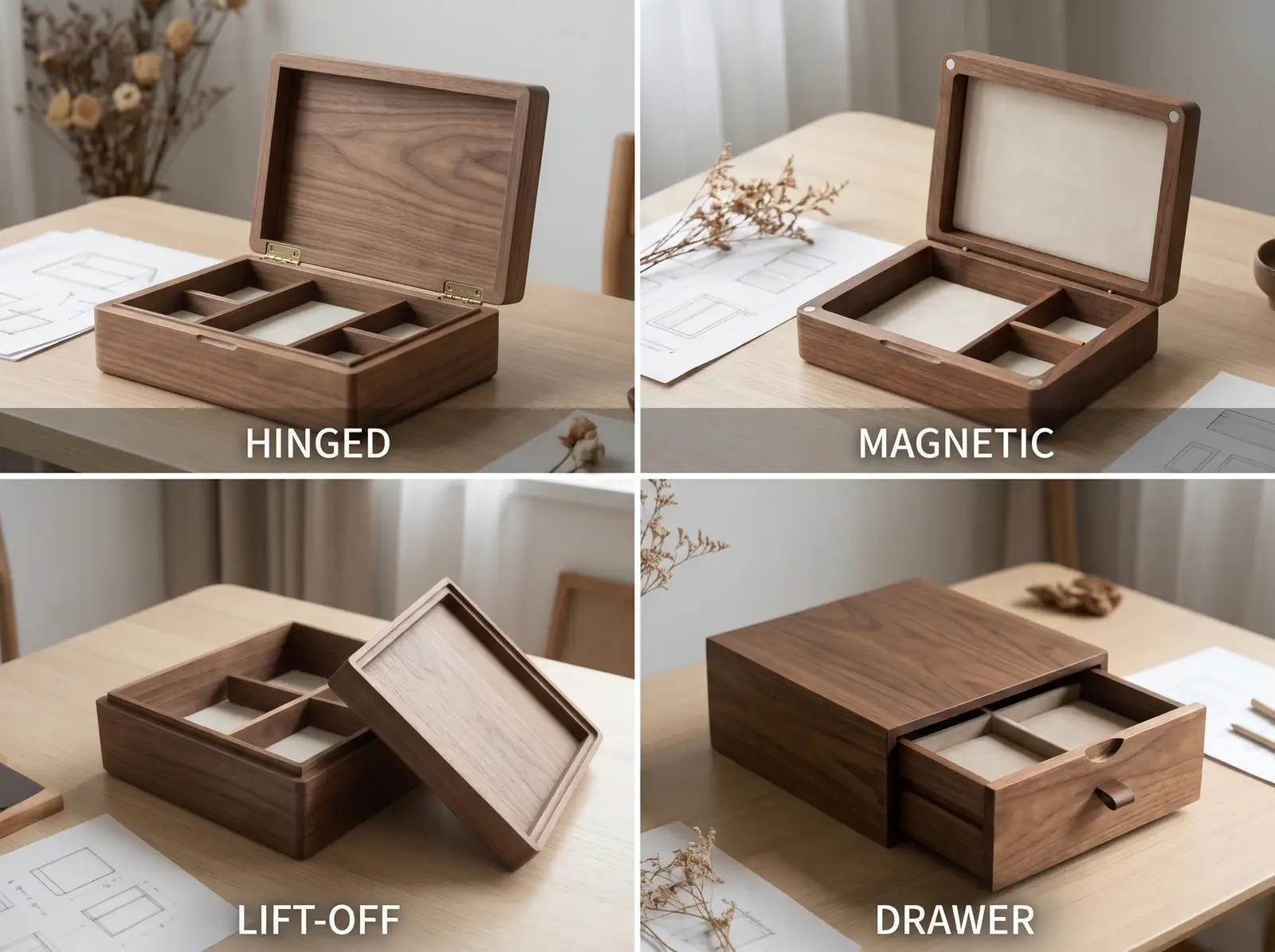
Cost tendencies are general guidance and change with size, finish and quantity. The useful rule is that the more precisely two parts must fit, the more tooling accuracy and quality control matter. If your product will sit beside a watch or jewelry line, the structural decisions described in our luxury watch box packaging guide apply in much the same way.
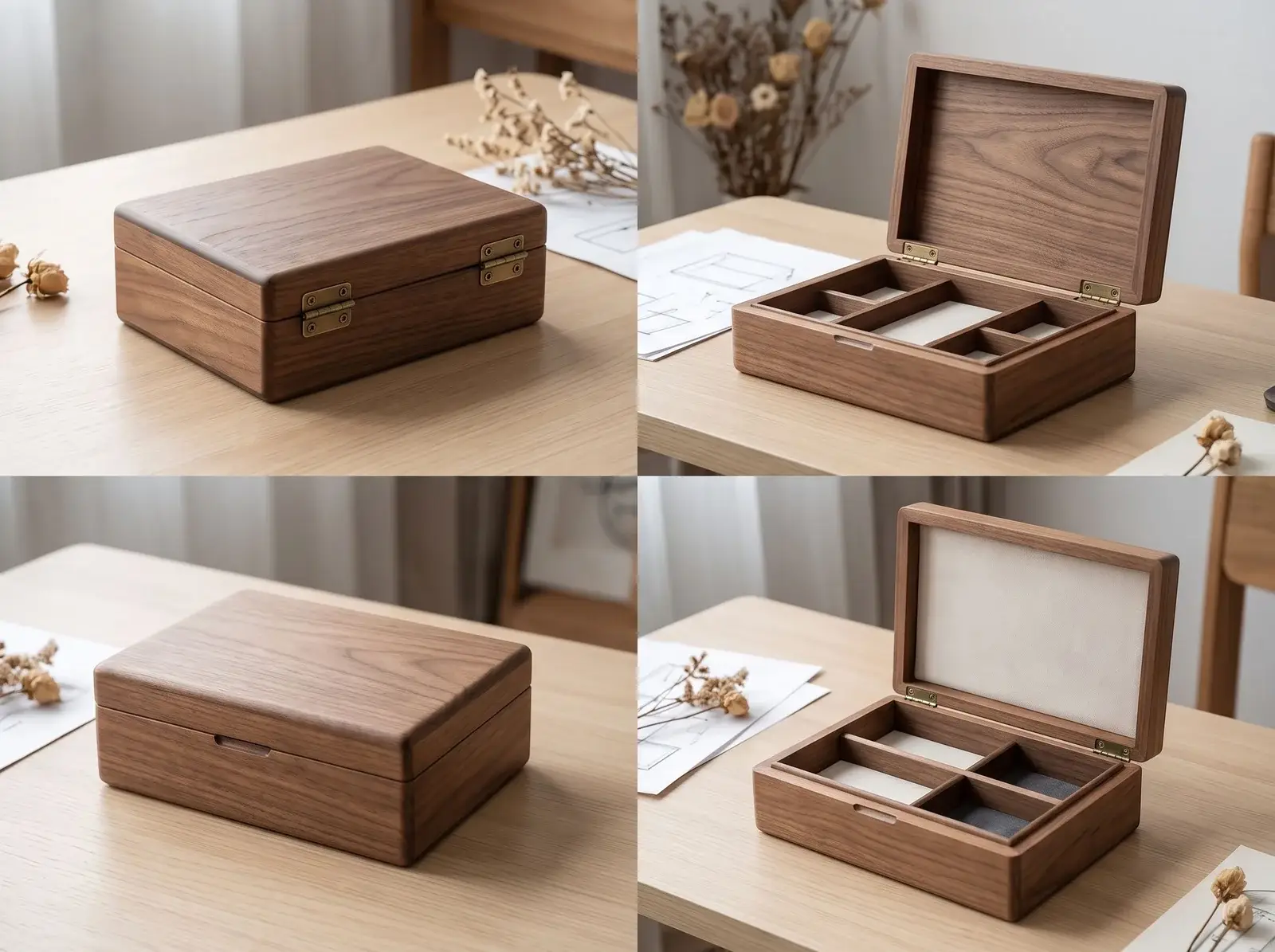
Hinged Lid: The Versatile Premium Option
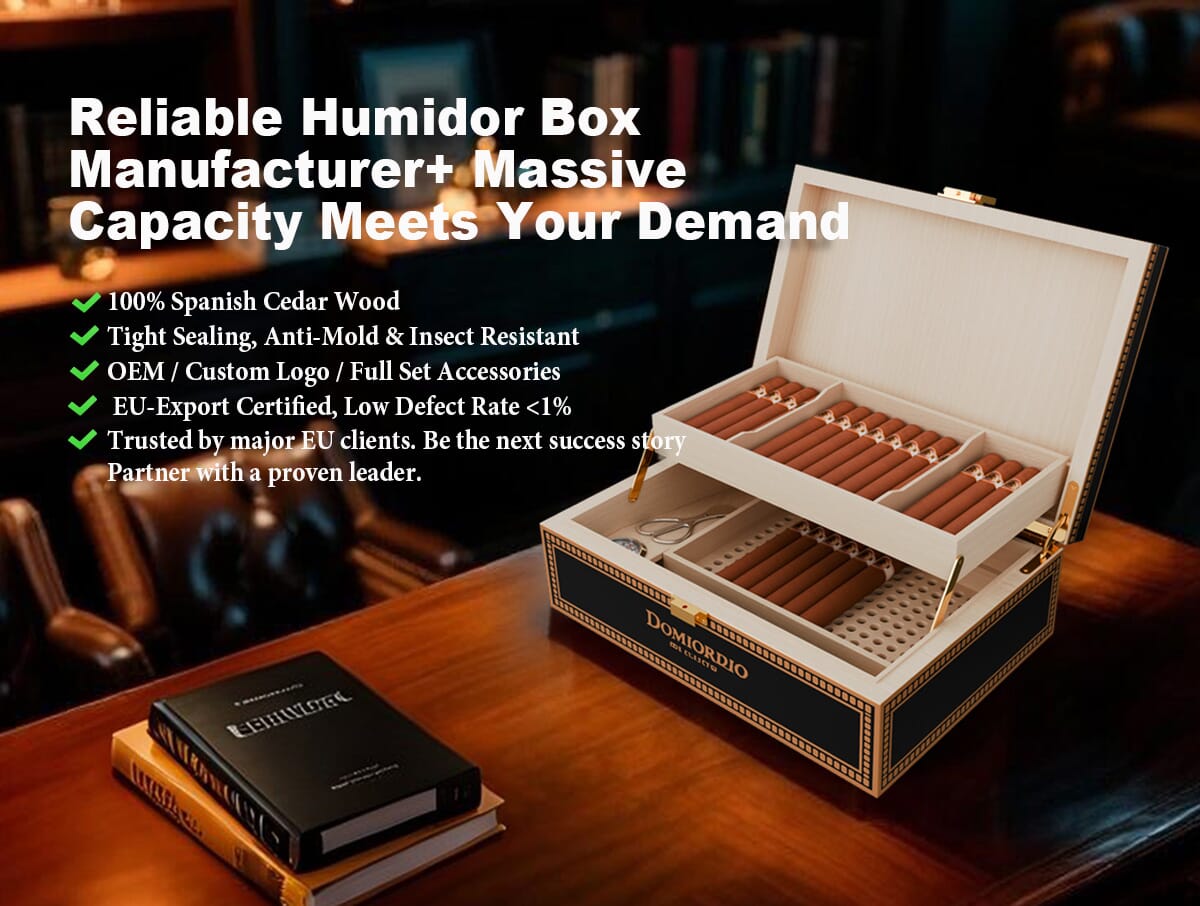
A hinged lid keeps the two halves together, which makes it the safest choice for valuable contents and the most familiar gesture for recipients. It also offers the widest range of hardware: exposed butt hinges in brass or zinc alloy, concealed hinges for a seamless exterior, and lid stays that hold the cover at a stable angle. A small clasp can add security and a more formal look.
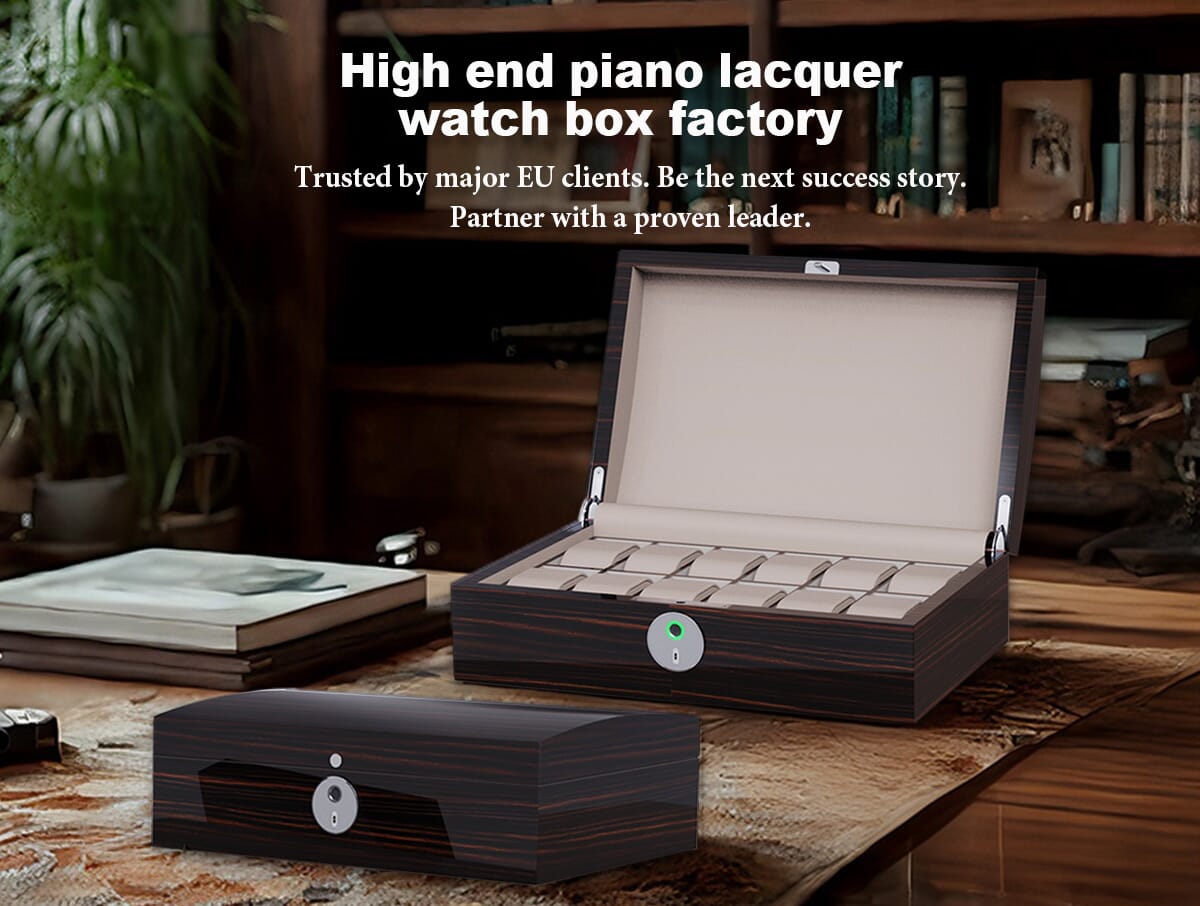
The trade-off is alignment. The hinge seats must be cut accurately or the lid will sit proud or drift to one side after repeated opening. Soft species such as paulownia and pine can strip out screws, so fixing points should be predrilled and, where loads are high, reinforced with a hardwood or plywood block. Ask for a hinge cycle test and agree the pass standard in writing. For a high-gloss version, read how the 12-coat piano lacquer process affects both appearance and joint tolerance.
Magnetic Lid: Clean Lines, Hidden Hardware
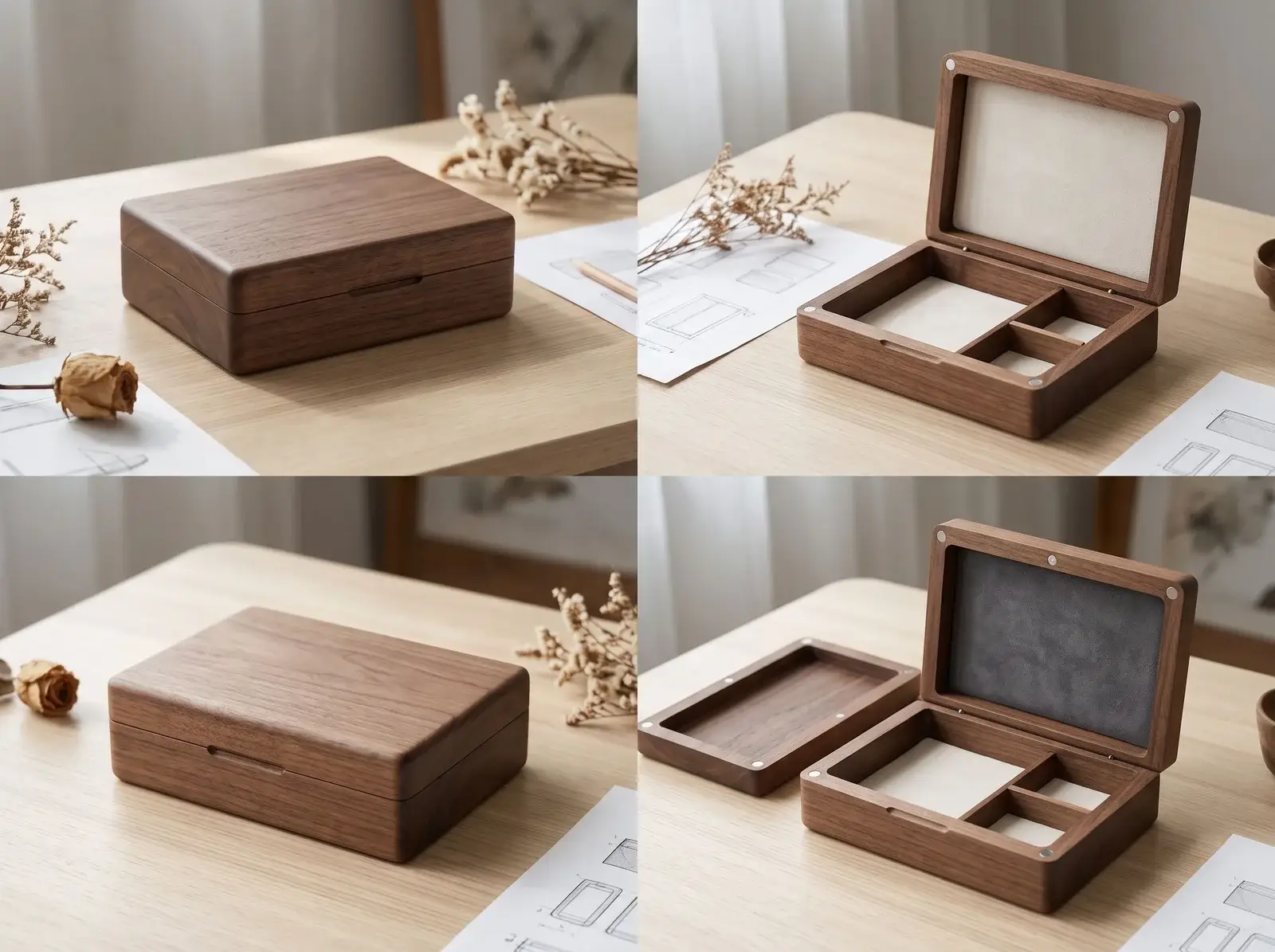
A magnetic lid closes with a soft snap and leaves the exterior free of visible clasps, which suits minimalist branding and modern retail. The magnets are recessed into the base and lid so the faces sit flush. This is a comfortable choice for cosmetics, small gifts and presentation boxes where a refined surface matters more than a ceremonial opening.
Two points deserve attention. Magnet strength must be matched to lid weight; too weak and the box opens in a bag, too strong and the recipient struggles to lift it. The recess must also be deep enough that the magnet does not create a visible bump under a thin veneer or lacquer. Confirm both on a physical sample, since neither is obvious in a rendering. Our overview of gift packaging options shows where magnetic closure fits in a wider range.
Lift-Off and Drawer: Simplicity and Reveal
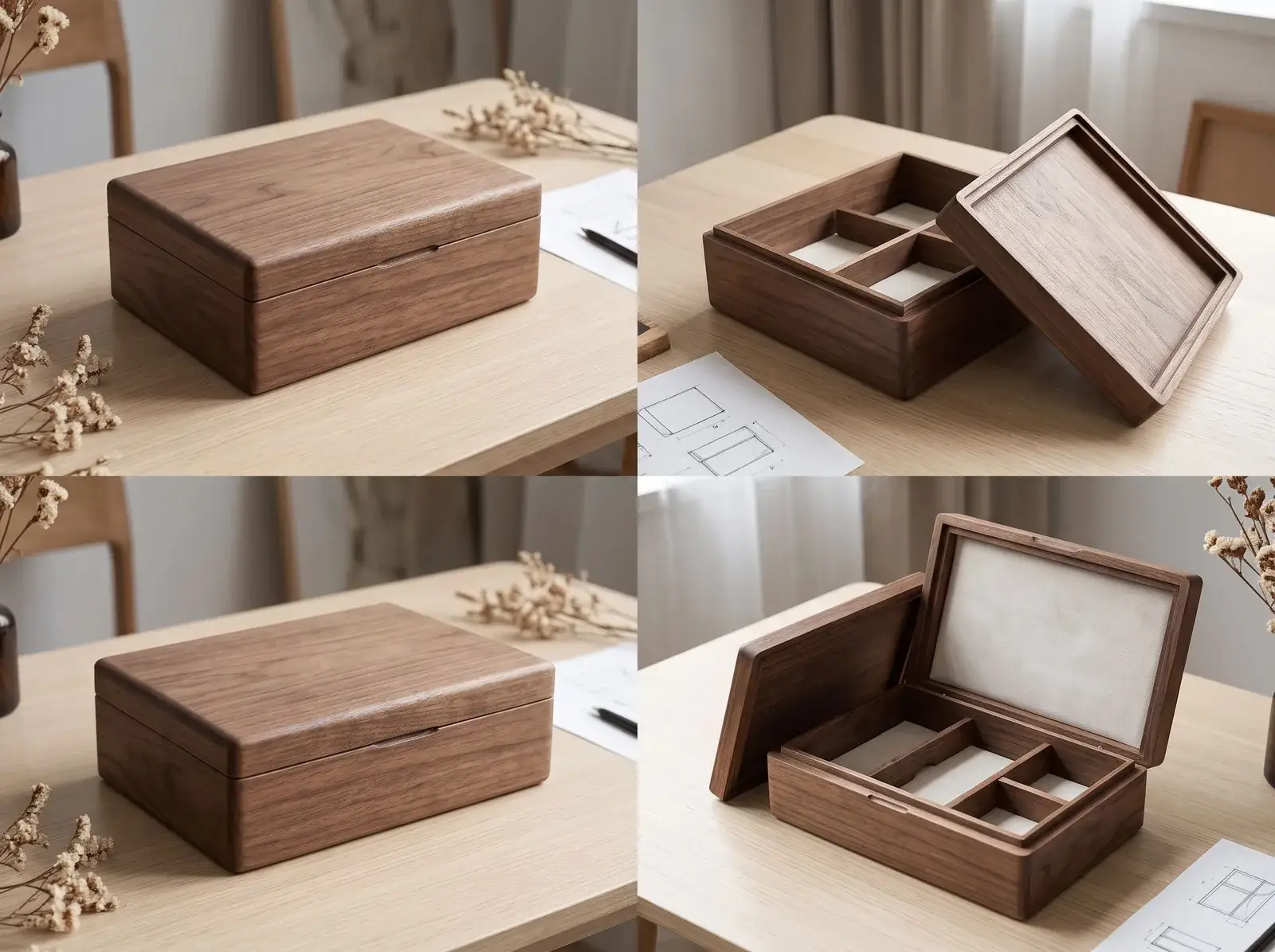
A lift-off lid, sometimes called a telescope lid, is among the simplest structures to make. The lid sits over or into the base and lifts away, which keeps tooling costs low. It suits gift sets, food products and corporate items where the budget is better spent on print or inserts than on hardware. The main disadvantage is practical: a separate lid is easy to misplace and offers less protection if the box is carried loose.
A drawer and sleeve structure takes the opposite approach to pacing. The inner tray slides out of an outer sleeve, creating a slower, layered reveal that works well for keepsakes and multi-item sets. The slide fit is the critical detail: too tight and the drawer sticks in humid weather, too loose and it falls out in transit. Ask how the structure behaves after a humidity change, not only on the day it is sampled. A related discussion appears in our custom wooden gift boxes guide.
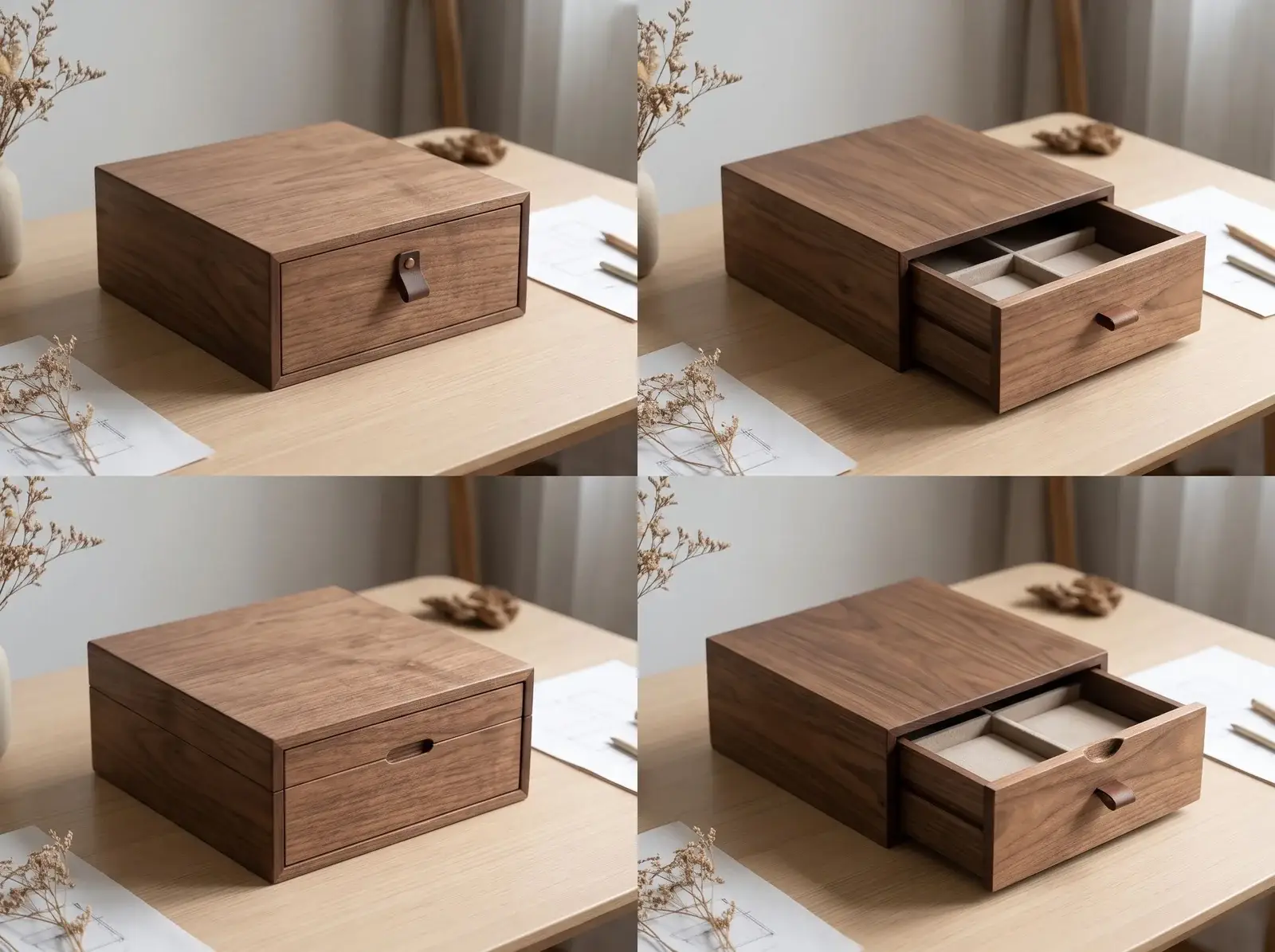
Match the Structure to the Channel
The right choice depends on where the box will be opened. A boutique product benefits from the ceremony of a hinged lid or a drawer. A parcel that travels through a courier network favours a structure that stays closed under vibration and can be packed snugly in a master carton. A corporate gift that is handed out at an event should open easily without instructions and survive being carried in a bag.
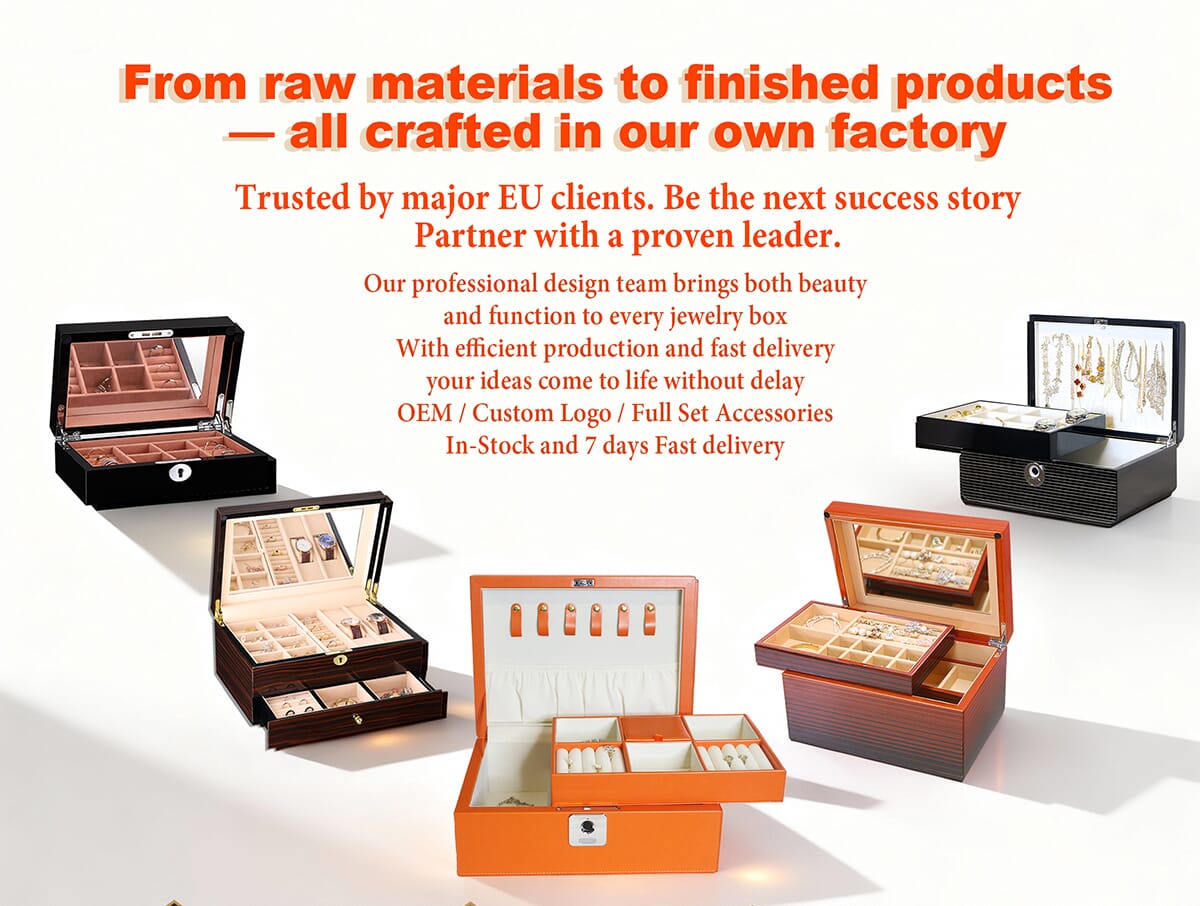
Tell your supplier the sales channel, the contents, the weight and the price tier before asking for a quote. With that information they can recommend a starting structure and warn you about features that will not survive your distribution. If the contents include watches or jewelry, the insert and lining questions are covered in our guide to velvet-covered and lined boxes. For export markets, check the export compliance guide before the structure is fixed, since some destinations have requirements that affect packaging materials.
MOQ, Sampling and Lead Time
At T.wing-Pak the standard OEM minimum order quantity is 50 to 100 pieces per custom design, depending on materials, structure and finishing. A structure that needs new tooling sits at the upper end of that range. We can return 3D renderings within about 8 hours of a confirmed brief, complete a physical sample in about 7 days, and finish bulk production in 20 to 30 days from sample approval. Those timings assume that artwork, colour references and hardware choices arrive on time.
See the full workflow in From 3D Mockup to Mass Production. If you are weighing a fully custom box against an adapted catalog model, our OEM vs ODM comparison explains the commercial differences.
Common Questions
Which lid structure is the most economical?
A lift-off lid is usually the lowest-cost option because it needs the least hardware. However, the saving can disappear if the lid fit is poor or the box requires extra protection in transit.
Are magnetic boxes suitable for heavy products?
They can be, provided the magnet strength and recess depth are matched to the lid weight. Heavy contents generally favour a hinged structure, which carries load more predictably.
How do I choose hardware finishes?
Brass, zinc alloy and stainless steel are common, with gold, silver and gunmetal finishes. Select the finish on a physical sample, because plating appears different under showroom and daylight lighting.
Can I change the structure of an existing box?
Only within limits. Changing a surface colour or logo is straightforward; changing a lid structure usually means new tooling and a different cost base. Ask your supplier where the line falls for your chosen model.
Do I need technical drawings?
No. A reference photograph, a physical sample or a clear written description is enough to start a discussion. The supplier will identify which dimensions and tolerances need to be defined.
Choose the Structure Before the Finish
Structure sets the cost base, the tolerances and the unboxing experience. Finish and branding then work within that frame. Decide in that order, confirm the mechanism on a physical sample and record the agreed specification in writing. The result is a box that opens as intended, protects the product and holds its appearance through the supply chain.
Choosing a structure for a wooden gift box?
Send Guangzhou T.wing-Pak Mfg Co., Ltd. your product dimensions, target price tier, sales channel and a reference design. Our team will recommend a structure, return 3D renderings and prepare a sample for approval.
- OEM minimum order quantity: 50 to 100 pieces per custom design
- 3D rendering: within 8 hours of a confirmed brief
- Sample lead time: 7 days from confirmed specification
- Bulk production: 20 to 30 days from sample approval
Related reading: Wooden Box Materials Compared · Custom Wooden Box OEM Guide · Choosing Wood for Wooden Box Packaging