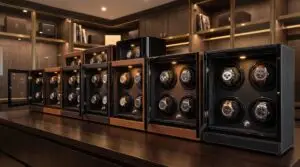
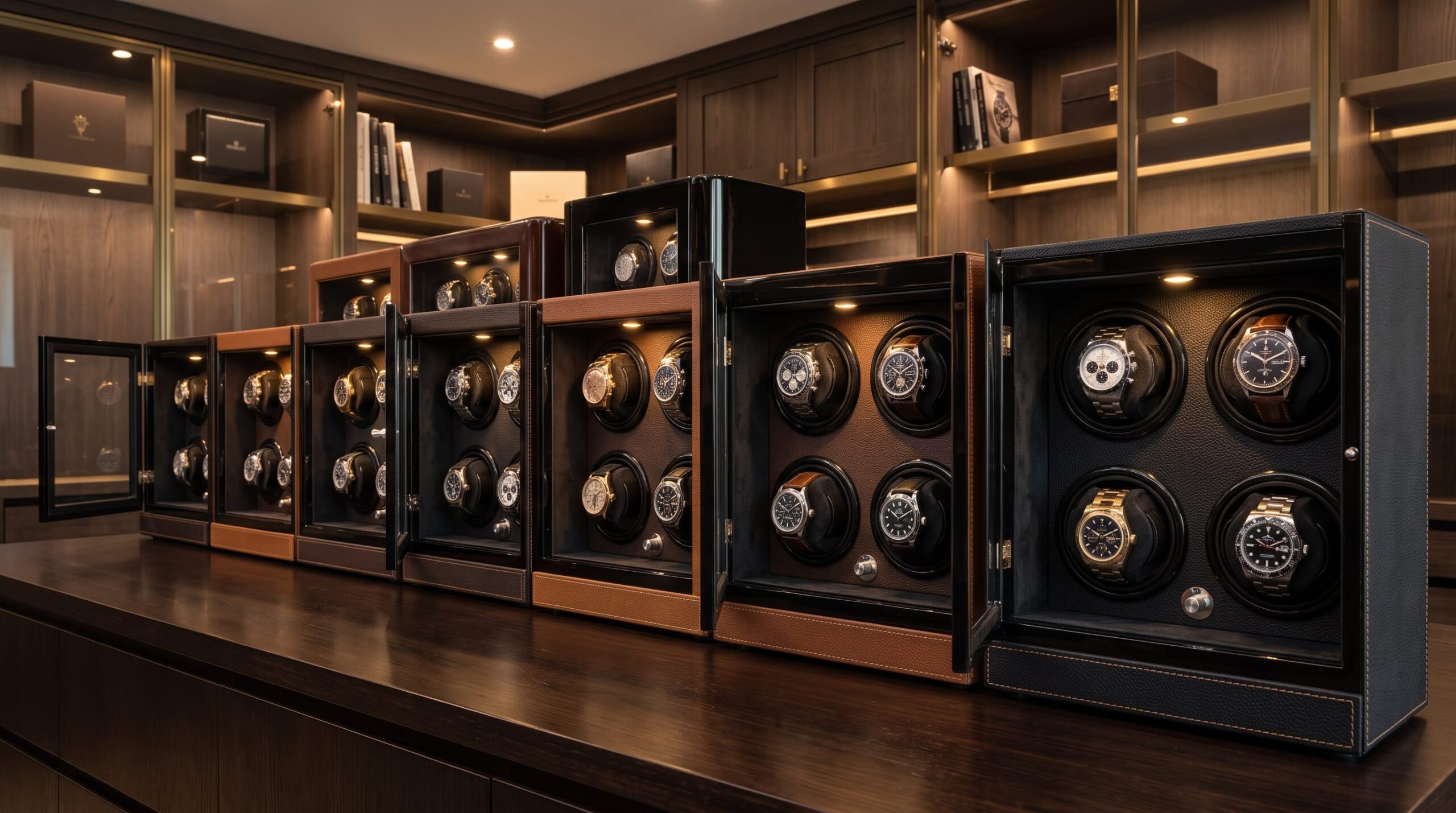
A custom watch winder is a motorized case built to a buyer’s rotation program, capacity, finish and packaging rather than to a retailer’s catalog. It is ordered by watch brands, jewelry chains and sourcing teams that need private-label units for retail display, gift sets or hotel amenities. Unlike a stock winder from a watch winder range, every variable — turns per day, direction, interior fit, logo method and carton spec — is agreed before tooling begins.
Start with the movement, not the cabinet
Most rework starts here. Automatic movements need a defined number of turns per day (TPD) and a direction pattern; the cabinet is the easy part. Common programs sit in the 650 to 1,800 TPD range, with clockwise, counter-clockwise, alternating and oscillating modes. Confirm the requirement with the watch maker before fixing the program. A winder that looks correct but turns the wrong way is a return, not a feature. If you need the mechanical background, our note on watch winder TPD settings explains how direction and cycle timing are set.
Ask suppliers to state the program in writing: TPD range, direction options, cycle timing and what happens to the setting after a power loss. The phrase “multiple rotation modes” without numbers is not a specification. For the engineering detail behind motor selection and calibration, see specifying a commercial watch winder motor.
The spec sheet that actually specifies
Use a table with options and consequences. If a row has no decision attached to it, it is decoration. Our guide to OEM/ODM custom watch winder manufacturing walks through how these decisions are locked before sampling.
| Decision | Options to confirm | Why it matters |
|---|---|---|
| Capacity | 1, 2, 4, 8 or 12 watches | Sets cabinet size, carton weight and freight cost |
| Drive program | TPD range, direction, cycle timing | Decides whether the watch stays wound |
| Power | AC adapter, USB, battery, dual input | Battery units face extra rules in air freight |
| Interior | Cushion diameter, foam density, removability | A poor fit marks the strap or caseback |
| Shell | PU, microfiber, leather, wood veneer | Affects unit cost, wear and channel positioning |
| Window | Acrylic or glass, coating | Clarity and scratch resistance over time |
| Closure | Magnetic, latch, lock | Retail demo use versus secure display |
| Branding | Print, emboss, deboss, foil | Method must match the chosen material |
| Packaging | Gift box, mailer, master carton | Determines stack load and landed cost |
Material and branding choices that survive production
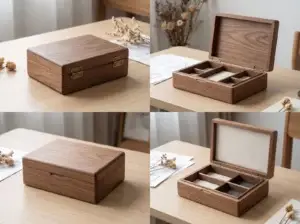
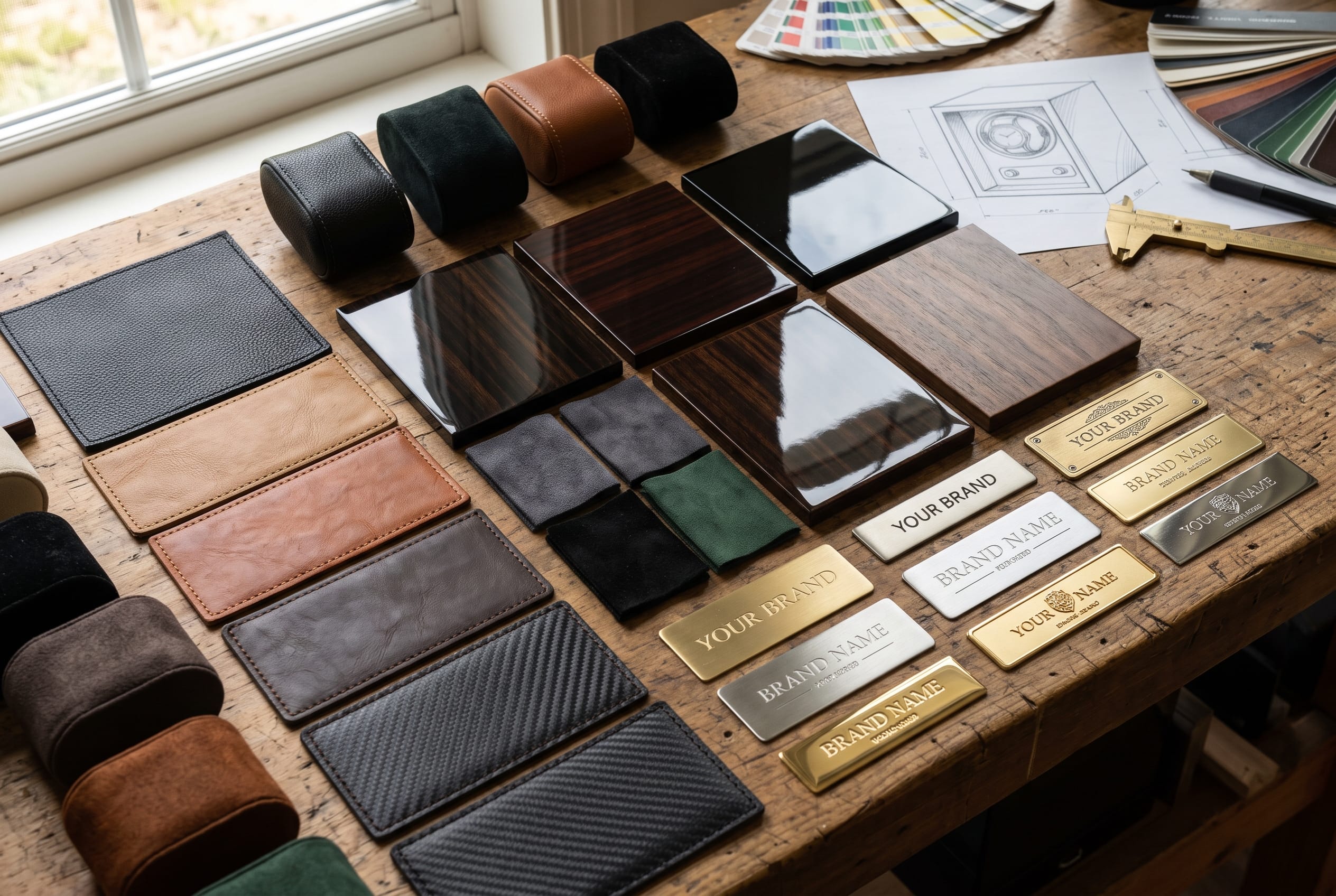
PU and microfiber are predictable bases for private-label runs: consistent color, predictable wear and straightforward printing. Leather varies lot to lot, so approve a physical sample instead of a digital swatch. Wood veneer adds weight and asks more of the outer carton. The trade-offs between wood, veneer, lacquer and other shell materials are set out in our wooden box packaging materials comparison.
The logo method depends on the material. Foil and deboss work on leather and PU; print is cleaner on microfiber; embossing needs a die and a minimum run. Confirm the artwork file type, a color reference (Pantone number or physical sample) and placement tolerance before the sample is made. A color described only as “red” is not a color specification.
What MOQ and lead time actually cover
At Twingpak the working baseline is 50 to 100 pieces MOQ, a 3D mock-up in about 8 hours, a sample in 7 days and bulk production in 20 to 30 days after sample approval. The sample window starts from confirmed artwork and material choice, not from the first email. The full set of sourcing terms is summarized in our B2B sourcing FAQ.
Ask any supplier to split the timeline into stages: spec confirmation, sample, artwork sign-off, tooling if any, production and packing. A single “3 to 4 weeks” answer hides where delays happen and makes a launch date impossible to plan. Our walkthrough from 3D mock-up to mass production shows what each stage involves.
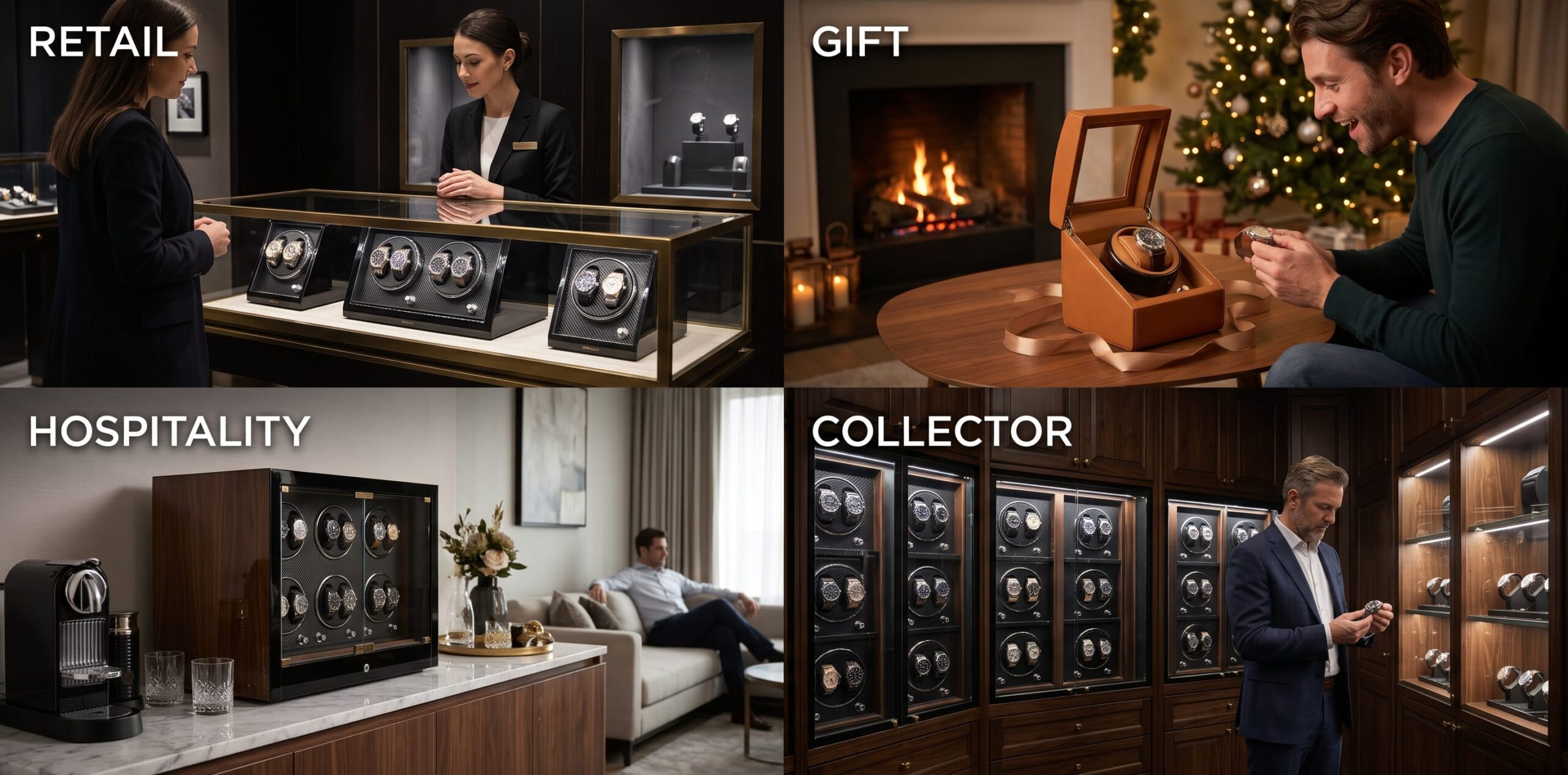
Match the configuration to the channel
Watch brand retail display
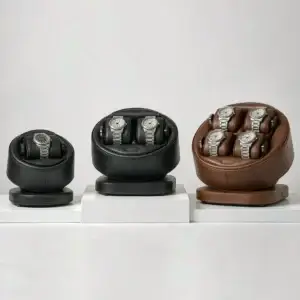
Single or double unit, quiet motor, clear window, magnetic closure and an interior matched to the brand palette. Boundary: demo units are opened many times a day, so closure life matters more than the finish. Capacity choice is explored in single versus multi watch winders.
E-commerce gift sets
One or two units with a custom gift box and a mailer spec agreed at the same time. Boundary: ship-test the master carton before the launch. Returns caused by damaged packaging cost more than a better box. See our gift packaging options for coordinated sets.
Hotel and suite amenities
Compact unit, universal power input, simple controls. Boundary: guest rooms need quiet operation and instructions that work without a manual in five languages.
Collector cabinets
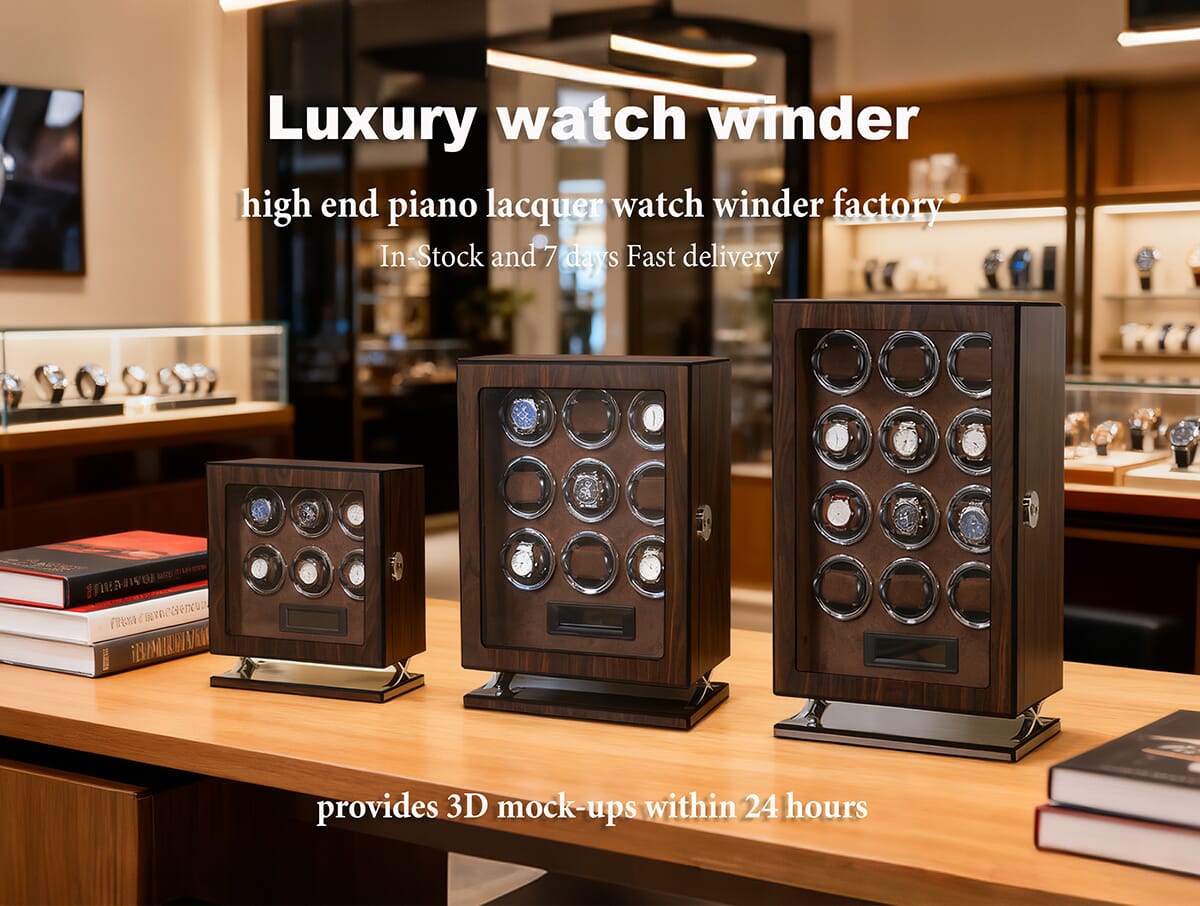
Multi-unit capacity, consistent rotation across bays, a stable base. Boundary: heavier cabinets need deliberate pallet planning and corner protection.
Five checks before tooling
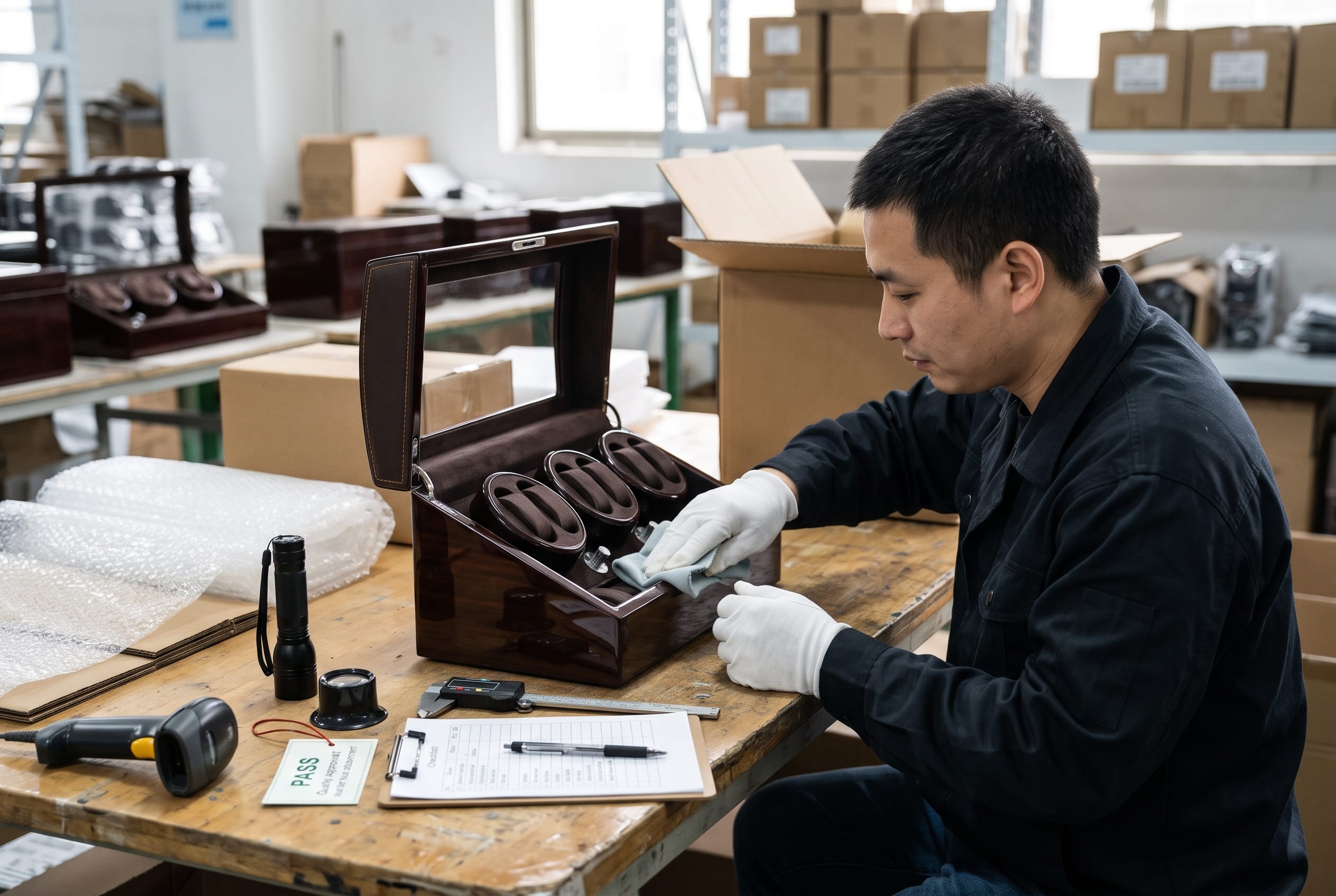
- Ask for the written TPD and direction program, not a marketing description.
- Request one physical sample carrying your logo, not a catalog sample.
- Ask what was tested and how: noise condition, opening cycles, abrasion method and date. “Strictly tested” is not evidence.
- Confirm the master carton: units per carton, gross weight, carton dimensions and stack layers.
- Ask what fails in the field and what the warranty does not cover. A supplier who names the limits is easier to work with. Our guide to choosing an OEM watch winder manufacturer covers the same checks from the buyer’s side.
When a custom winder is the wrong page
Custom units do not fit every purchase. If the buyer needs stock units within days, a catalog page is the right destination. If the goal is to rank for a broad consumer term such as “best watch winder”, an OEM page will not outrank review sites — a comparison or education article is the realistic target. And if a supplier cannot state any difference in program, material, packaging or lead time, the page has nothing that can be indexed as distinct.
This guide covers specification and sourcing. Mechanical principles and model-level dimensions belong on separate pages so each page serves one search intent.
Frequently asked questions
Related reading
- OEM vs ODM in luxury packaging — who owns the tooling and the design.
- Choosing luxury watch box packaging — hardware and lining checks from a buyer’s perspective.
- How to choose an OEM watch winder manufacturer — supplier evaluation criteria.
Need a sample with your logo? Send the rotation program, material and artwork — MOQ 50 to 100 pieces, 3D mock-up in about 8 hours, sample in 7 days, bulk production in 20 to 30 days after sample approval. Contact our team to request an OEM quote.