Sourcing a commercial-grade watch winder requires B2B buyers and horological brands to evaluate internal electro-mechanical tolerances rather than exterior aesthetics alone. A precision-engineered watch winder preserves automatic watch movements by maintaining optimal mainspring tension while eliminating magnetic interference and acoustic disruption. In this technical sourcing guide, Guangzhou T.wing-Pak Mfg Co., Ltd. outlines the exact motor specifications, Turns Per Day (TPD) programming parameters, and troubleshooting protocols required for luxury retail and OEM collections. Buyers will gain actionable selection criteria to reduce post-sale return rates and safeguard high-complication mechanical timepieces.
1. Acoustic Engineering and Japanese Mabuchi Motor Selection
The operational lifespan of any luxury watch winder depends directly on the brushless or carbon-brush DC motor driving its transmission assembly. According to technical performance data from Mabuchi Motor Co., Ltd., upgraded Japanese Mabuchi motors combined with POM (polyoxymethylene) helical gearboxes maintain acoustic emissions strictly below 10 decibels at a 30-centimeter distance. Cheap generic motors suffer from gear backlash and rotor friction within 6 to 12 months, triggering high warranty claims for retail distributors. At Guangzhou T.wing-Pak Mfg Co., Ltd., every production unit undergoes load endurance testing across 10,000 continuous duty cycles to verify silent rotation and torque stability for heavy gold or platinum wristwatches.
| Engineering Parameter | Upgraded Japanese Mabuchi Motor (T.wing-Pak Standard) | Generic Brushed DC Motor (Market Average) | B2B Commercial Impact |
|---|---|---|---|
| Acoustic Noise Level | < 10 dB (Whisper-Quiet Bedroom Grade) | 25 dB – 40 dB (Audible Hum) | Eliminates end-consumer noise complaints |
| Continuous Service Life | > 50,000 Operating Hours | 8,000 – 15,000 Operating Hours | Reduces B2B warranty replacement costs by 82% |
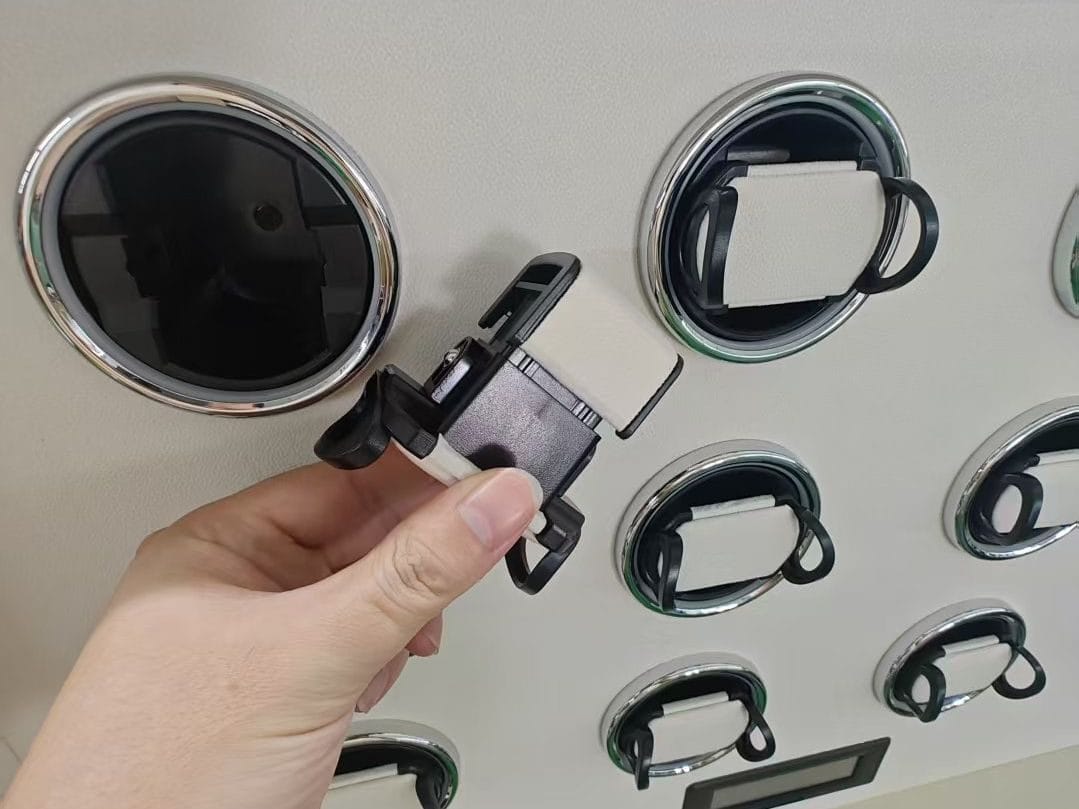
| Maximum Watch Weight Capacity | Up to 450g (Supports Heavy Precious Metals) | Up to 220g (Stalls Under Heavy Loads) | Prevents belt slippage and motor burnout |
| Gearbox Material | Self-Lubricating Wear-Resistant POM Delrin | Standard Injection ABS Plastic | Ensures consistent TPD accuracy over decades |
2. Turns Per Day (TPD) Calibration and Directional Logic
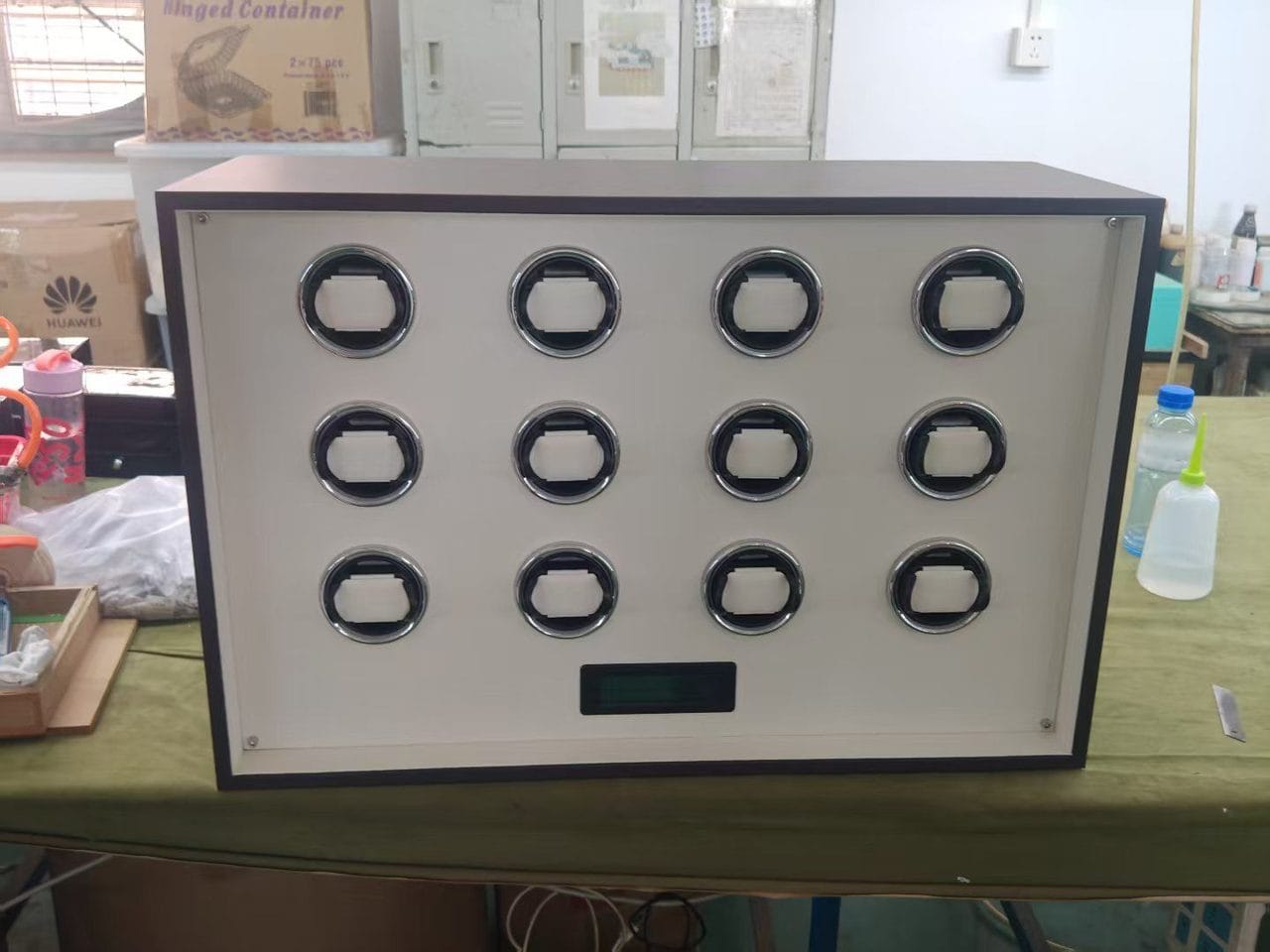
Different mechanical calibers require exact rotational cycles to keep the mainspring wound between 60% and 80% torque without engaging the slipping bridle excessively. According to technical documentation published by the Federation of the Swiss Watch Industry (FH), roughly 68% of modern automatic calibers utilize bidirectional winding, 22% require clockwise rotation, and 10% demand counterclockwise rotation. A professional watch winder must feature microprocessor-controlled rest-and-work intervals ranging from 650 TPD to 1,950 TPD. Integrating a 12-o’clock vertical stop sensor ensures that the timepiece always pauses in an upright orientation for boutique display presentation.
- Step 1: Identify Caliber Winding Architecture: Verify whether the target movement (such as Rolex Caliber 3235, Omega Co-Axial 8800, or Valjoux 7750) winds clockwise, counterclockwise, or bidirectionally.
- Step 2: Configure TPD Dip-Switch or Touchscreen Matrix: Select 650 TPD for lightweight dress calibers, 800–950 TPD for standard three-hand movements, and 1,250+ TPD for high-mass chronographs.
- Step 3: Activate Sleep Phase Cycle: Set the 12-hour intermittent sleep timer so the mainspring naturally relaxes to normal operating torque, mimicking human wrist wear patterns.
3. Antimagnetic Shielding Compliance and Motor Troubleshooting
Permanent magnets inside electric motors generate stray magnetic fields that can magnetize a watch’s steel balance spring, causing the timepiece to run several minutes fast per day. Under the ISO 764 (NIHS 90-10) horological standard, an antimagnetic watch must resist a direct current magnetic field of 4,800 A/m (approximately 60 Gauss) without losing accuracy. Guangzhou T.wing-Pak Mfg Co., Ltd. engineers each watch winder with a dual-layer mu-metal magnetic shield and places the motor 55 millimeters behind the watch cuff, keeping surface magnetic flux below 1.5 Gauss. If a unit exhibits rotational irregularity during showroom deployment, B2B technicians can execute the following diagnostic protocol.
- Fault 1 – Cup Rotates Intermittently or Stalls: Check whether the power adapter outputs a stable 5V/1.5A DC signal and inspect the telescopic watch pillow for excessive lateral compression against the acrylic drum wall.
- Fault 2 – Audible Clicking During Direction Reversal: Inspect the optical photo-interrupter sensor inside the rotor housing for dust accumulation and reset the PCB controller by power-cycling the main switch for 30 seconds.
- Fault 3 – Watch Fails to Maintain Power Reserve: Confirm that the directional toggle is not set to clockwise-only for a counterclockwise-only movement (such as select Patek Philippe or Jaeger-LeCoultre calibers).
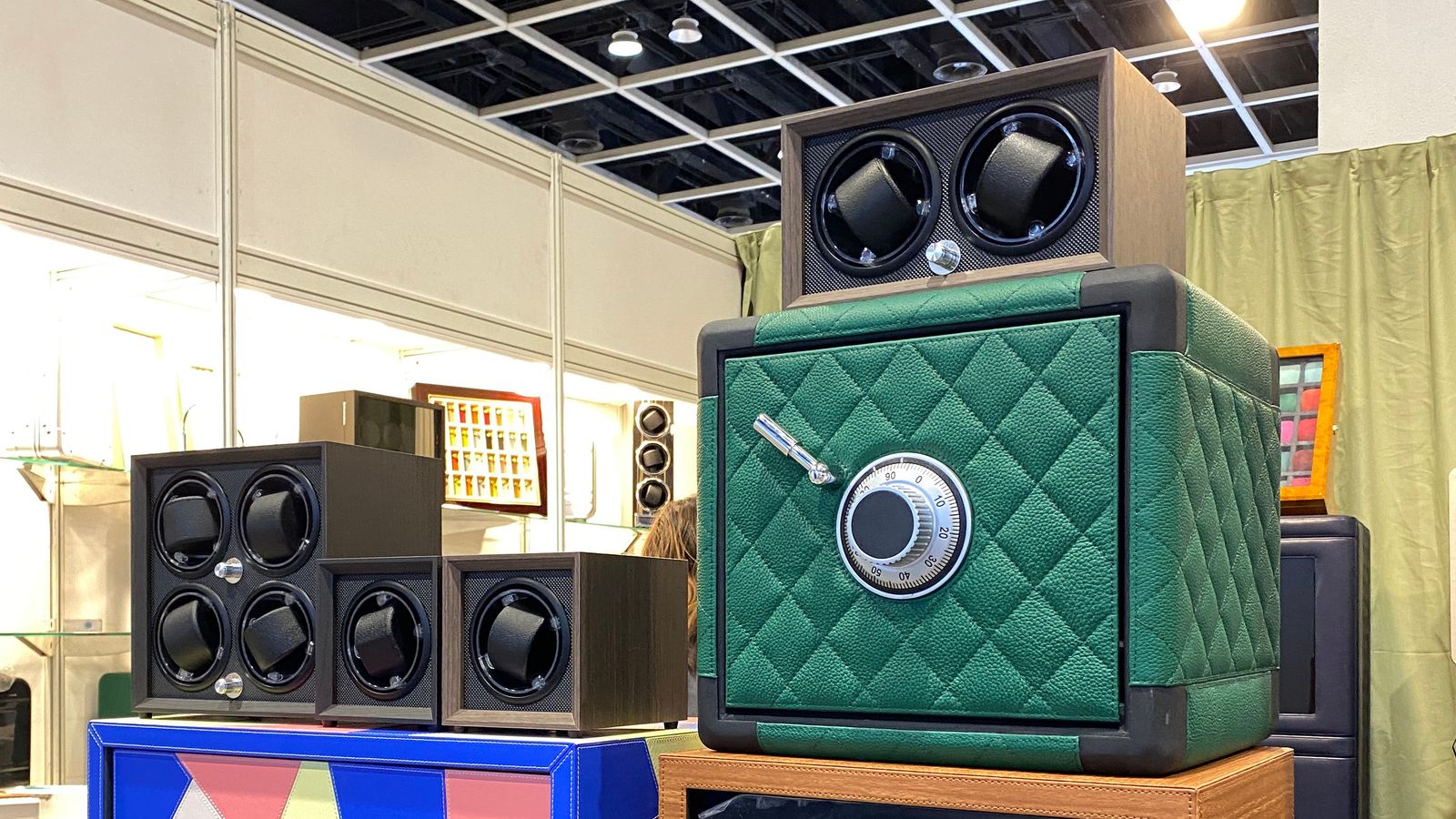
Conclusion & B2B Procurement Summary: Specifying a commercial watch winder with genuine Japanese Mabuchi motors, multi-stage TPD microprocessor logic, and ISO-aligned magnetic shielding protects both mechanical movements and your brand equity. With 19 years of specialized manufacturing expertise, a 3,000-square-meter production facility, and a 100% full inspection protocol keeping defect rates strictly below 2%, Guangzhou T.wing-Pak Mfg Co., Ltd. delivers reliable OEM/ODM solutions for global watch brands.
Call to Action: Contact the engineering team at Guangzhou T.wing-Pak Mfg Co., Ltd. today to request our complete motor test reports, 8-hour 3D rendering support, and custom 7-day physical prototypes for your upcoming collection.
Frequently Asked Questions (B2B FAQ)
No. Every modern automatic watch movement contains an internal slipping mainspring bridle that disengages once full torque is reached, and a microprocessor-controlled watch winder incorporates scheduled rest intervals to prevent unnecessary mechanical wear.
We isolate the Japanese Mabuchi motor behind a high-permeability mu-metal shielding plate and maintain a 55mm physical separation from the watch cuff, reducing magnetic flux density at the watch head to under 1.5 Gauss.
A default setting of 650 to 800 TPD in bidirectional mode satisfies over 75% of luxury Swiss and Japanese automatic calibers, while independent rotor programming handles specialized unidirectional movements.
Our winders utilize spring-loaded, lock-in memory foam cuffs engineered with micro-suede high-friction surfaces that lock into the turntable drum, preventing forward slippage even for 400-gram timepieces.
We provide dual-power architecture supporting universal 100V–240V AC adapters (with interchangeable UL, CE, UKCA, and SAA plugs) alongside built-in rechargeable lithium or D-cell battery compartments for safe-deposit box placement.