
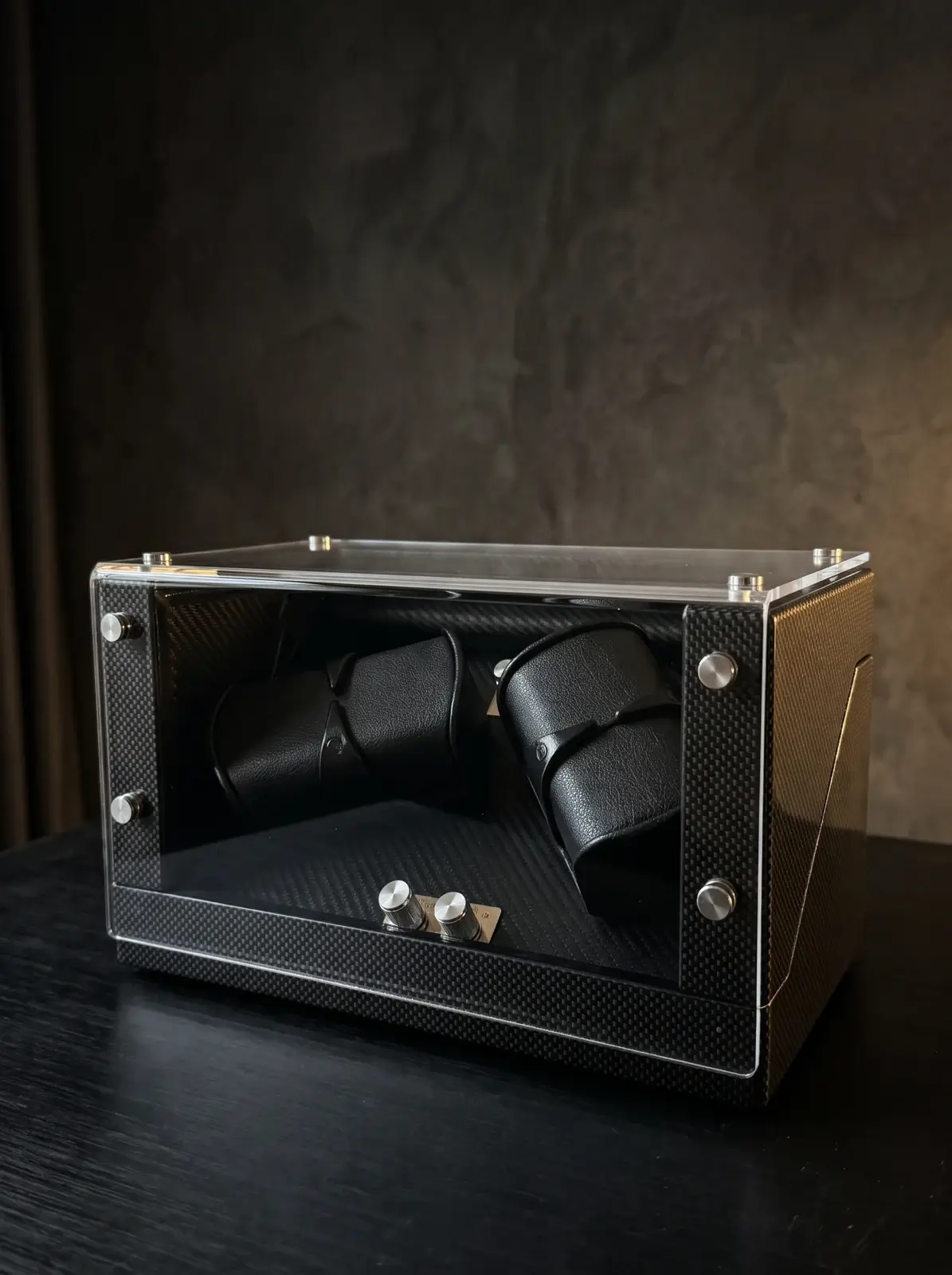
A watch winder is one of those products where the finish does as much work as the mechanism. This carbon-fiber dual watch winder pairs a technical, woven-texture exterior with a clear acrylic display lid, two black leather cushions and brushed-metal control knobs — a design that reads as precision equipment on a dresser and as a premium object under retail lighting. It is built by T.WING-PAK, a Guangzhou-based manufacturer supplying watch brands with OEM and ODM watch winders, watch boxes and wooden packaging. Like every project we take on, it can be specified with your own finish, interior, hardware and logo from 50 to 100 pieces, with a 3D mock-up in about 8 hours, a physical sample in 7 days and bulk production in 20 to 30 days after sample approval.
Why carbon fiber and a clear acrylic lid
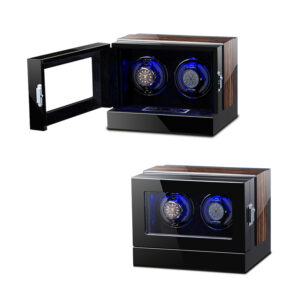
Carbon fiber has become a signature material in watches, automotive interiors and high-end accessories because it signals engineering rather than decoration. The woven texture catches light in a way that flat lacquer cannot: the pattern shifts as the box moves, giving it depth even in a dark room. For watch brands whose customers care about mechanics, that visual language is an easy fit. The clear acrylic lid is the other half of the story — it lets the owner see the cushions and watches at a glance without opening the box, which matters both for daily use and for retail display, where a closed wooden lid hides the product entirely.
Acrylic also solves a practical problem. Compared with glass, it is far lighter and far more resistant to impact, which reduces shipping weight and the risk of a cracked lid in transit. It can be polished back to clarity if it picks up fine marks over years of handling. If you are weighing display-lid options for a retail line, our guide to choosing luxury watch box packaging covers how display lids, finishes and interiors work together.
Twin cushions and brushed-metal controls
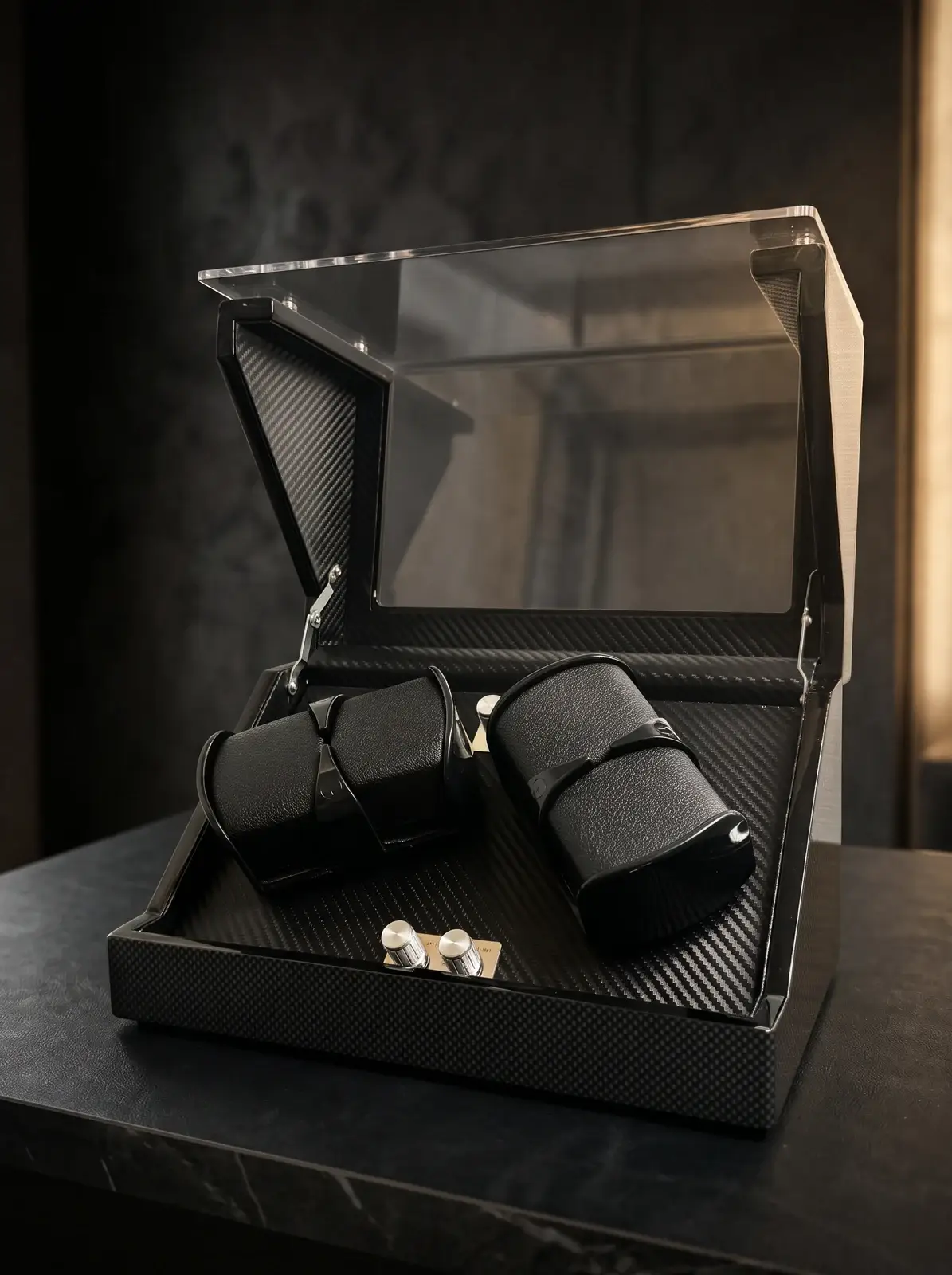
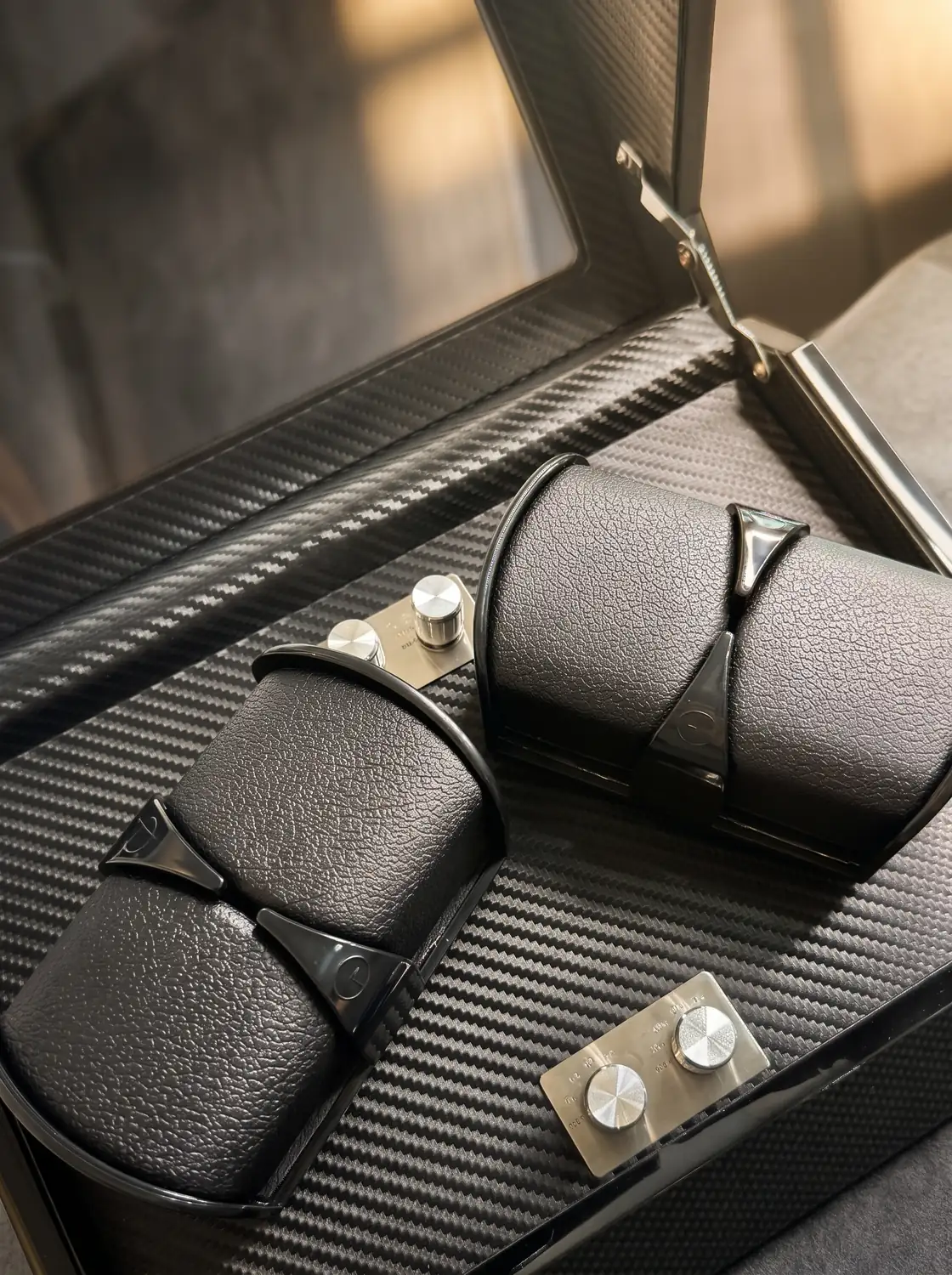
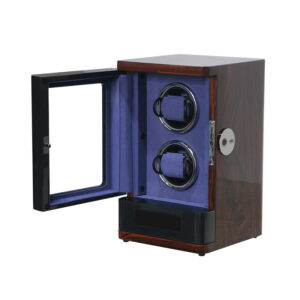
Inside, two black leather cushions sit side by side, each shaped to hold a watch steady while the rotor turns. The leather is grained rather than glossy, which keeps watches from slipping and hides the minor scuffs that accumulate over years of daily use. The cushion arms are adjustable, so the winder accommodates a range of case sizes from slim dress watches to larger sports models — an important detail if the box is meant to serve a collection rather than a single watch. The interior tray is lined to match, so the moving parts sit on a quiet, protected surface.
Control is handled by brushed-metal knobs set into a small plate at the front of the interior. They are tactile and easy to adjust with the lid open, letting the owner set rotation direction and speed for each position independently. That independence is what makes a dual winder genuinely useful: two watches with different power reserves and winding directions can be looked after at the same time. Our article on TPD settings explained explains how to match turns per day to different automatic movements, and our engineering guide to commercial watch winder motors and TPD calibration goes deeper into the mechanism behind these controls.
Hardware, hinges and the details that hold up
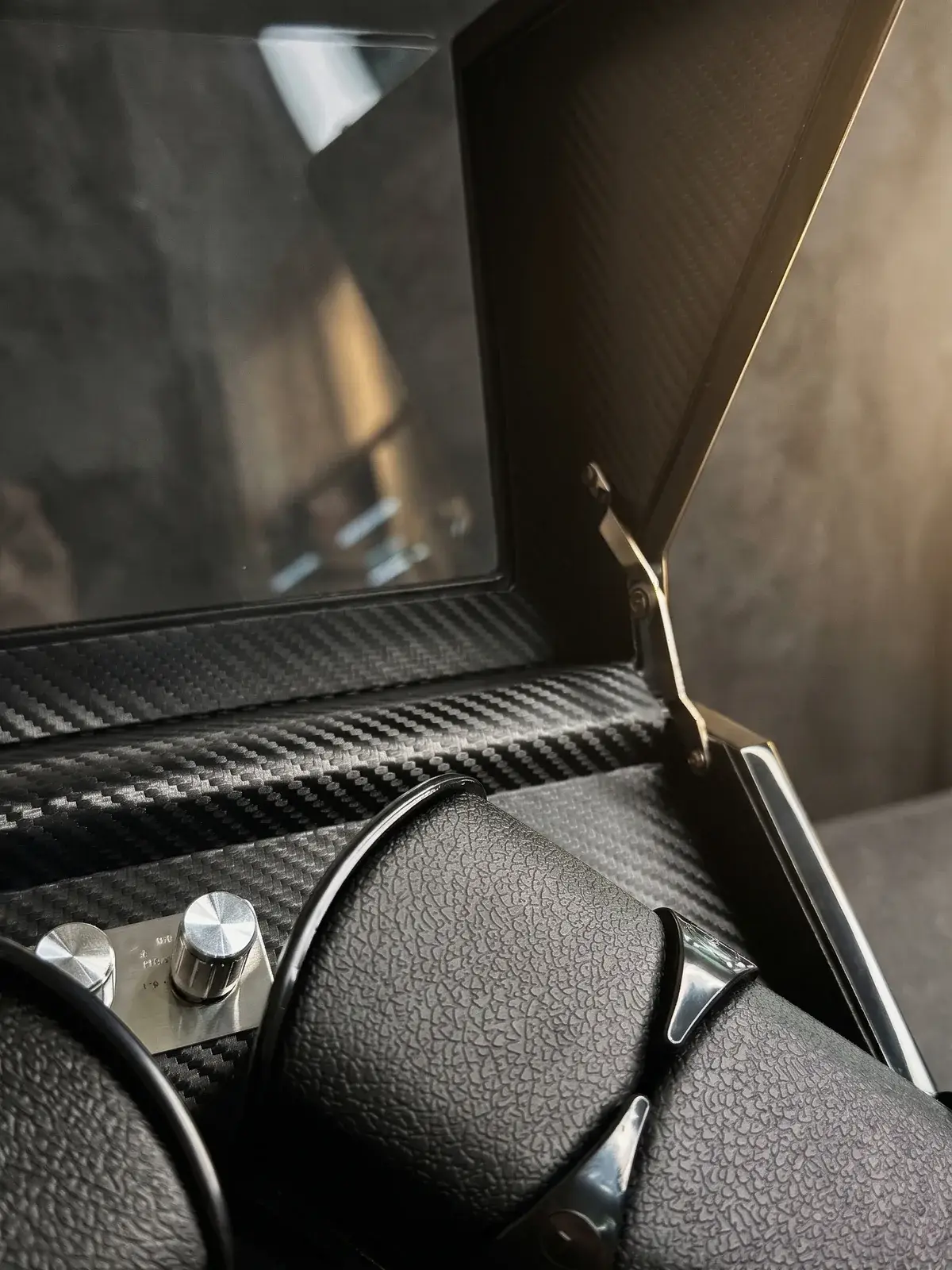
The exterior is finished with polished metal corner fittings and a front lock, which do more than add visual contrast. The corners protect the most vulnerable edges of the box in transit, and the lock keeps the lid seated firmly so the acrylic panel does not rattle. The lid itself is mounted on metal hinges that hold it at a stable open angle, so you can place or remove a watch without propping the lid with one hand. These are small things on a spec sheet, but they are exactly what a buyer feels the first time they open the box — and what fails first on a poorly assembled one.
This is why we treat the physical sample as non-negotiable. A sample lets you check the hinge action, the feel of the knobs, the fit of the cushions and how the carbon texture reads under your own lighting. Our guide to choosing an OEM watch winder manufacturer sets out the checks we recommend before placing a production order.
Where this winder fits
A dual winder like this serves several channels well. For watch collectors, two positions cover a rotating wardrobe of automatic pieces without taking up the space of a full cabinet. For watch brands, it works as a retail display and a high-margin accessory that sits alongside the watches themselves. For gifting, the carbon texture and clear lid make an immediate impression out of the box. And for hotels or executive gifting programmes, it is a compact, premium amenity that reads as considered rather than generic. If you are deciding between capacities, our comparison of single versus multi watch winders explains how to match configuration to customer and price point.
Because this is an OEM/ODM platform, the same construction can carry your own identity: the carbon pattern and finish, the interior colour, the hardware tone, the control layout and the logo can all be specified. Our overview of OEM/ODM custom watch winder manufacturing walks through the design-to-production path, and the watch winder category shows the wider range this model belongs to.
Specifications
| Item | Specification |
|---|---|
| Product type | Dual (2-slot) automatic watch winder |
| Exterior finish | Carbon-fiber texture with polished metal corner fittings |
| Display lid | Clear acrylic panel on metal hinges with front lock |
| Interior | Two adjustable black leather watch cushions, lined interior tray |
| Controls | Brushed-metal direction and speed knobs, independently adjustable per position |
| Capacity | 2 watches |
| OEM minimum order quantity | 50-100 pieces |
| 3D mock-up | About 8 hours |
| Sample lead time | 7 days |
| Bulk production lead time | 20-30 days from sample approval |
| Branding options | Logo printing, laser engraving, metal badge, custom interior and hardware |
| Shipping terms | FOB Nansha (EXW available) |
From 3D mock-up to production
Every custom project starts with a drawing and ends with a signed sample. We build a 3D mock-up within about 8 hours so you can see the proportions, finish and branding before anything is cut. A physical sample follows in 7 days, giving you the chance to test the hinge, the knobs and the fit of your watches. Only after that sample is approved do we move to bulk production, which takes 20 to 30 days. Our article from 3D mockup to mass production describes the full workflow, and luxury packaging sampling and design explains what to check at the sample stage. For the commercial terms behind these numbers, see our MOQ, lead time and certification FAQ and the comparison of OEM versus ODM.
Frequently asked questions
Can I change the exterior finish and interior colour?
Yes. The carbon texture, lid type, interior lining, hardware tone and logo are all specified at the sample stage. MOQ for a custom configuration is 50-100 pieces.
Does each cushion rotate independently?
Yes. The two positions have separate controls, so you can set direction and turns per day for each watch. See our TPD guide for help choosing settings.
Is the acrylic lid replaceable if it gets scratched?
Yes. The lid is a separate component and can be replaced. Acrylic can also be polished to remove fine surface marks.
What watches does the cushion fit?
The adjustable arms accommodate most case sizes, from slim dress watches to larger sports models. Share your case dimensions and we will confirm the fit at sampling.
How long does a full custom order take?
Allow about 8 hours for the 3D mock-up, 7 days for the physical sample and 20-30 days for bulk production once the sample is approved.
Enquire about this winder
If you are sourcing a dual watch winder for your brand, we can build this platform to your specification and brand it as your own. Send us your finish, interior and logo requirements for a 3D mock-up and a quotation at contact us.

Reviews
There are no reviews yet.