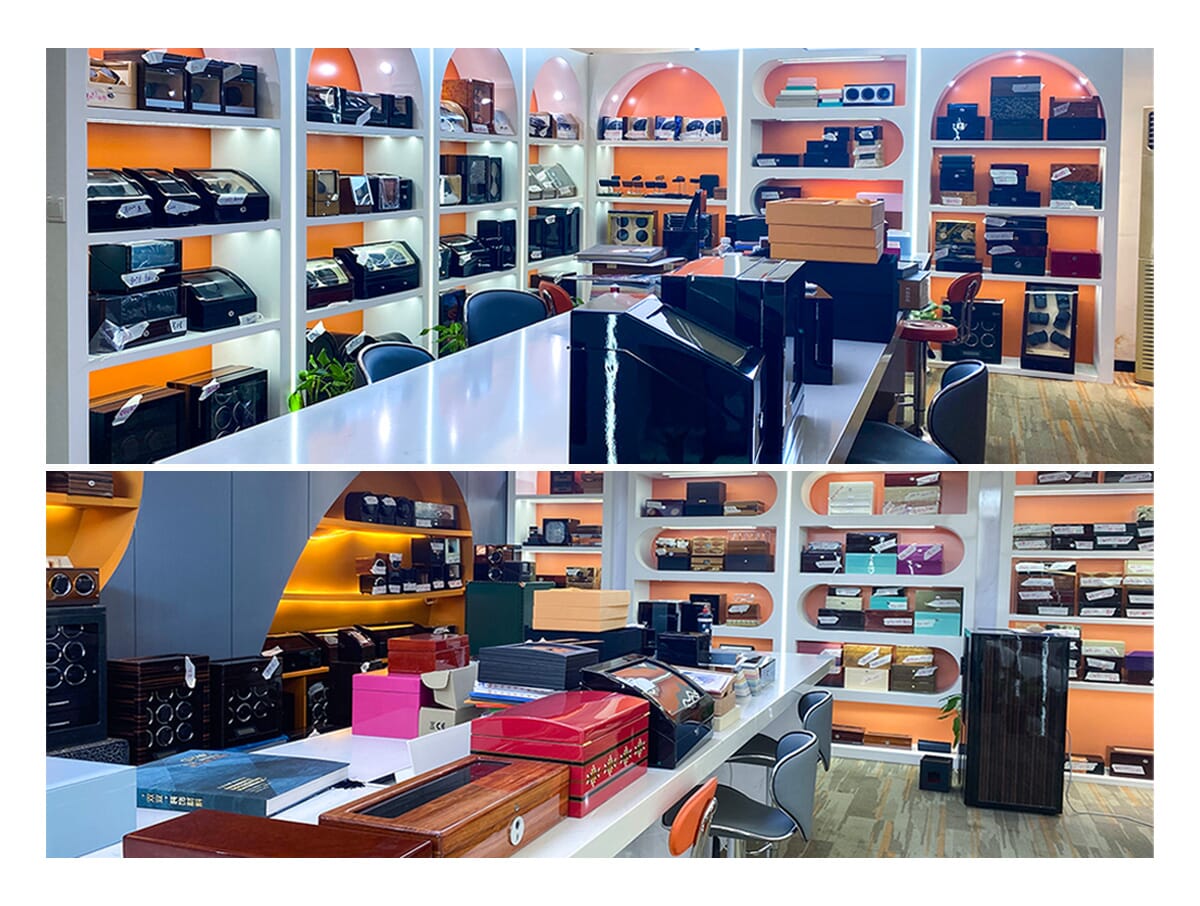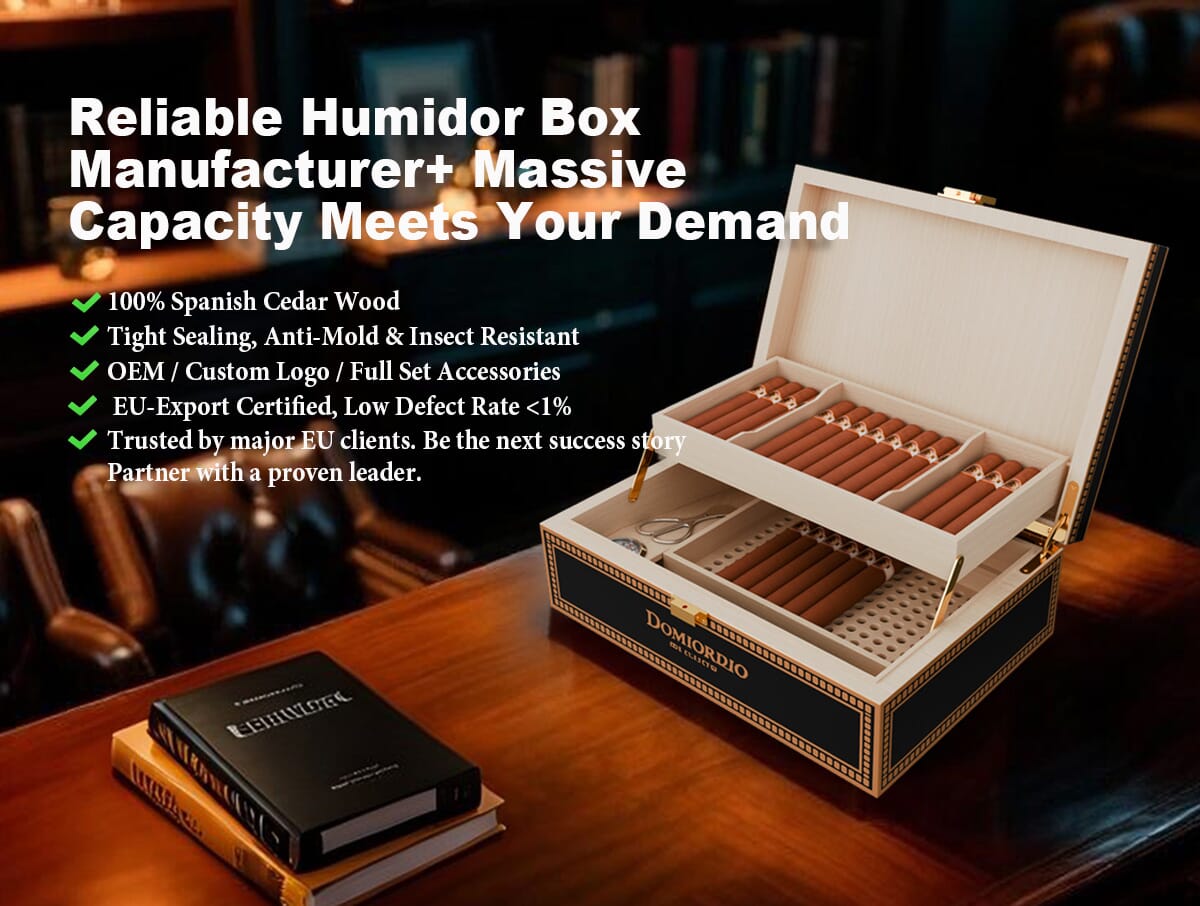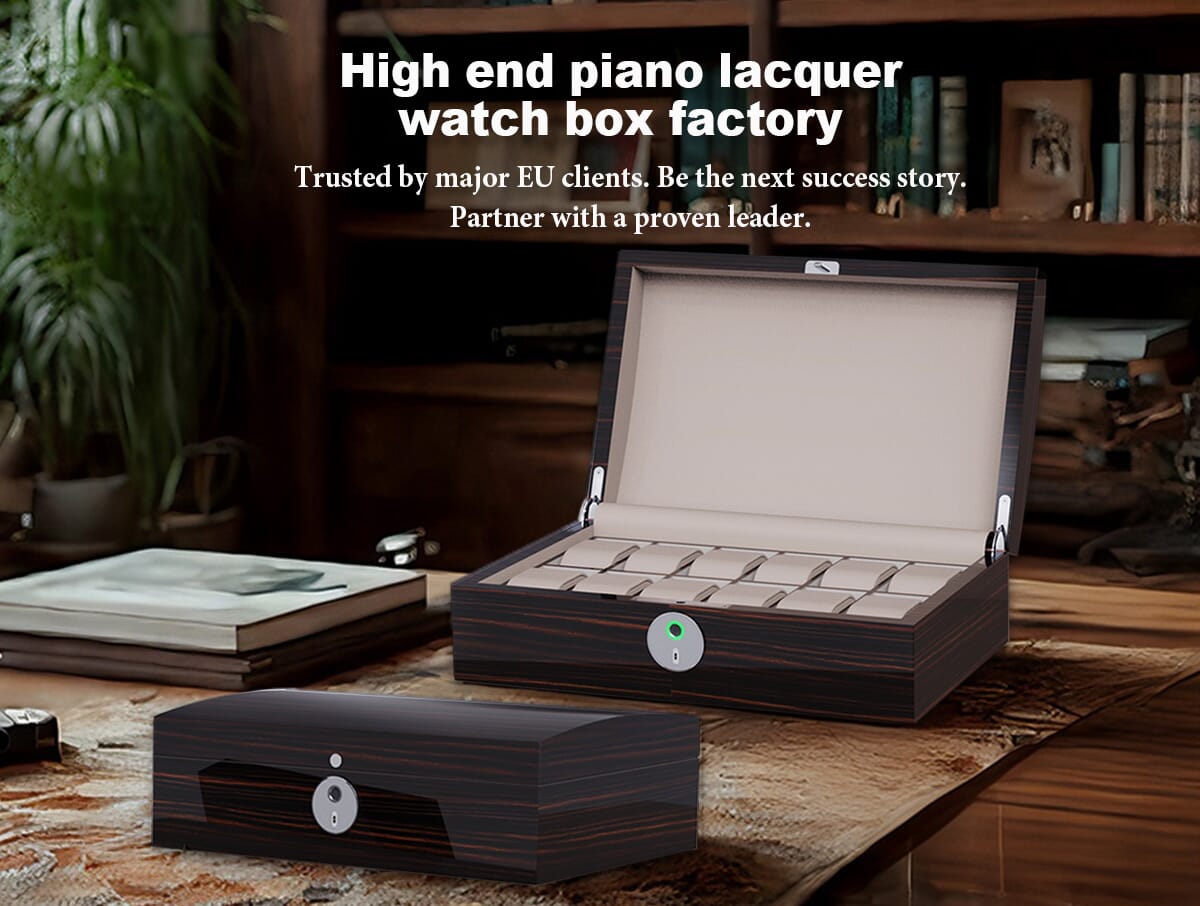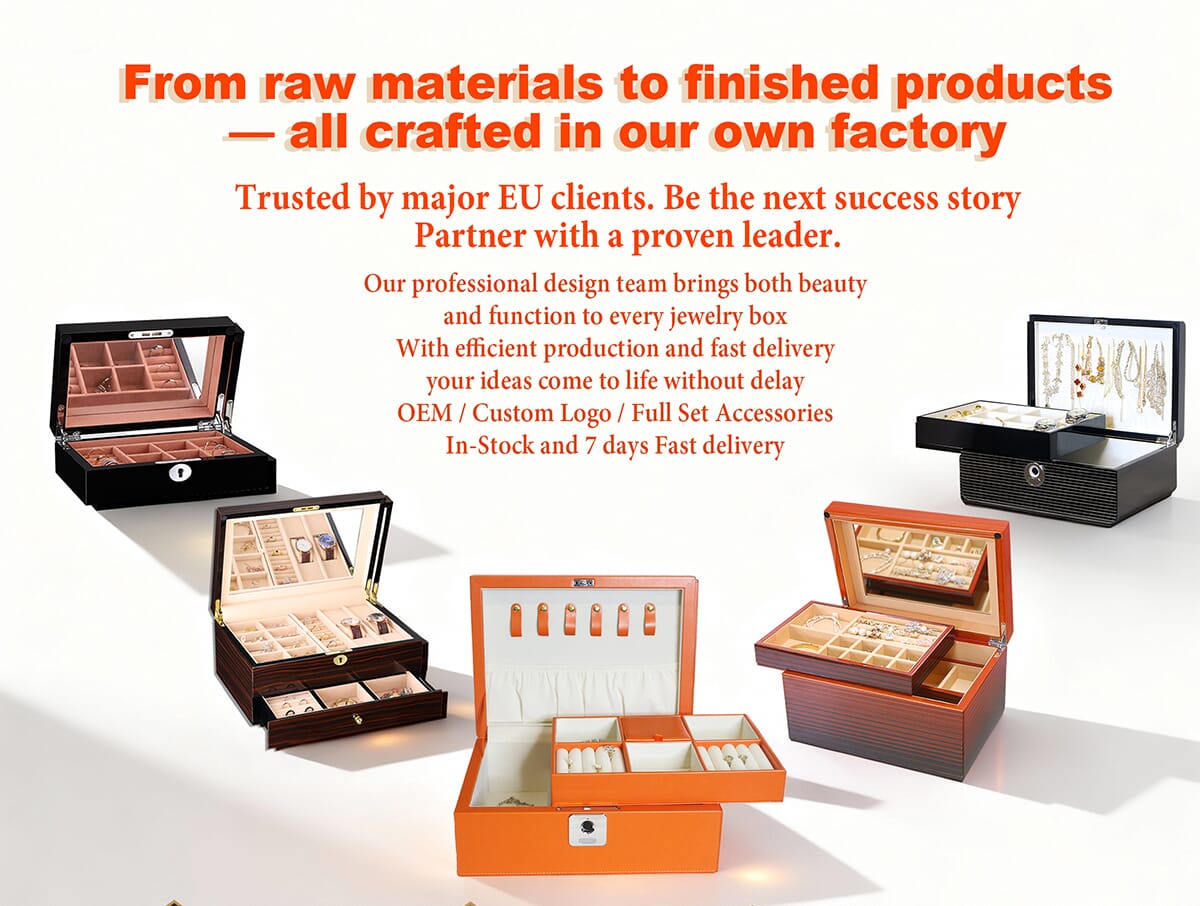
Most private label watch winder projects do not fail because of a bad idea. They fail because of a thin brief. A logo, a photo and a target price feel like enough to start, but each missing detail becomes a question during sampling, a surprise during production, or a dispute at delivery. After 19 years of building wood watch winders, watch boxes and luxury packaging for brands and distributors, we have seen the same gaps cause the same delays.
The short version: a good brief is not a specification document. It is a risk-control tool. It tells your supplier where your project is exposed, so the problems get solved on paper in week one rather than on a pallet in week ten. This guide walks through the brief from the factory side of the table, covering what we need to know, why we need it, and what usually goes wrong when we do not.
1. Treat the Brief as a Risk Document
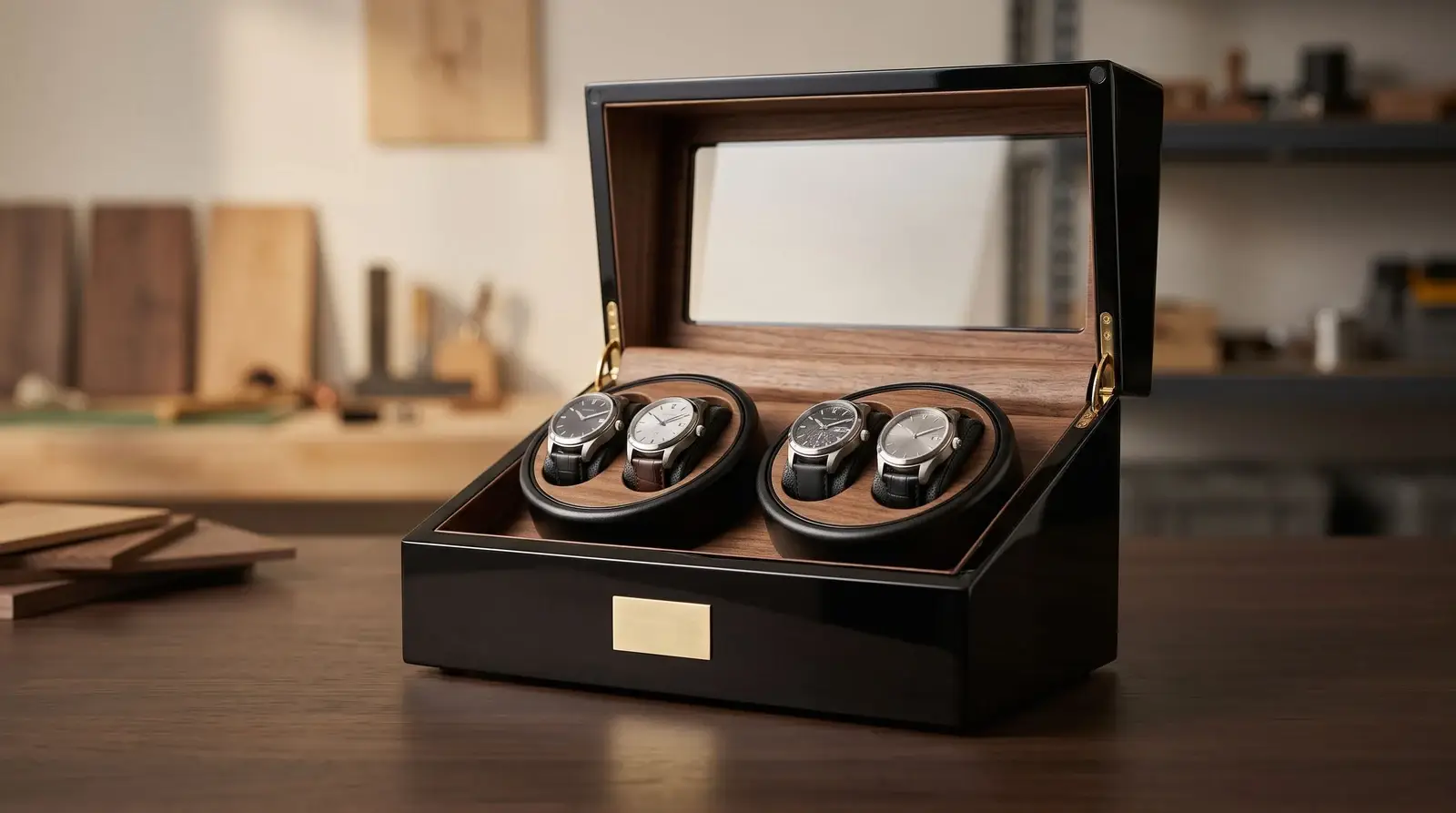
Buyers often ask us for a quote first and a brief second. We would reverse that order. A quotation is only as reliable as the information behind it. If the brief says "four-watch winder, black piano finish, logo on top," three different factories can quote three different prices and all of them are technically answering the question. One assumes a veneer finish, one assumes real lacquer, and one assumes the cheapest motor. The lowest number wins the comparison, and the buyer discovers the difference at sample stage.
A clear brief removes that ambiguity. It forces every supplier to price the same product, and it gives you a document to point to when something drifts. In our experience, the buyers with the smoothest projects are not the ones with the most technical knowledge. They are the ones who wrote down their priorities and agreed on them in writing before any wood was cut.
2. Choose Your Development Route by Risk, Not Ambition
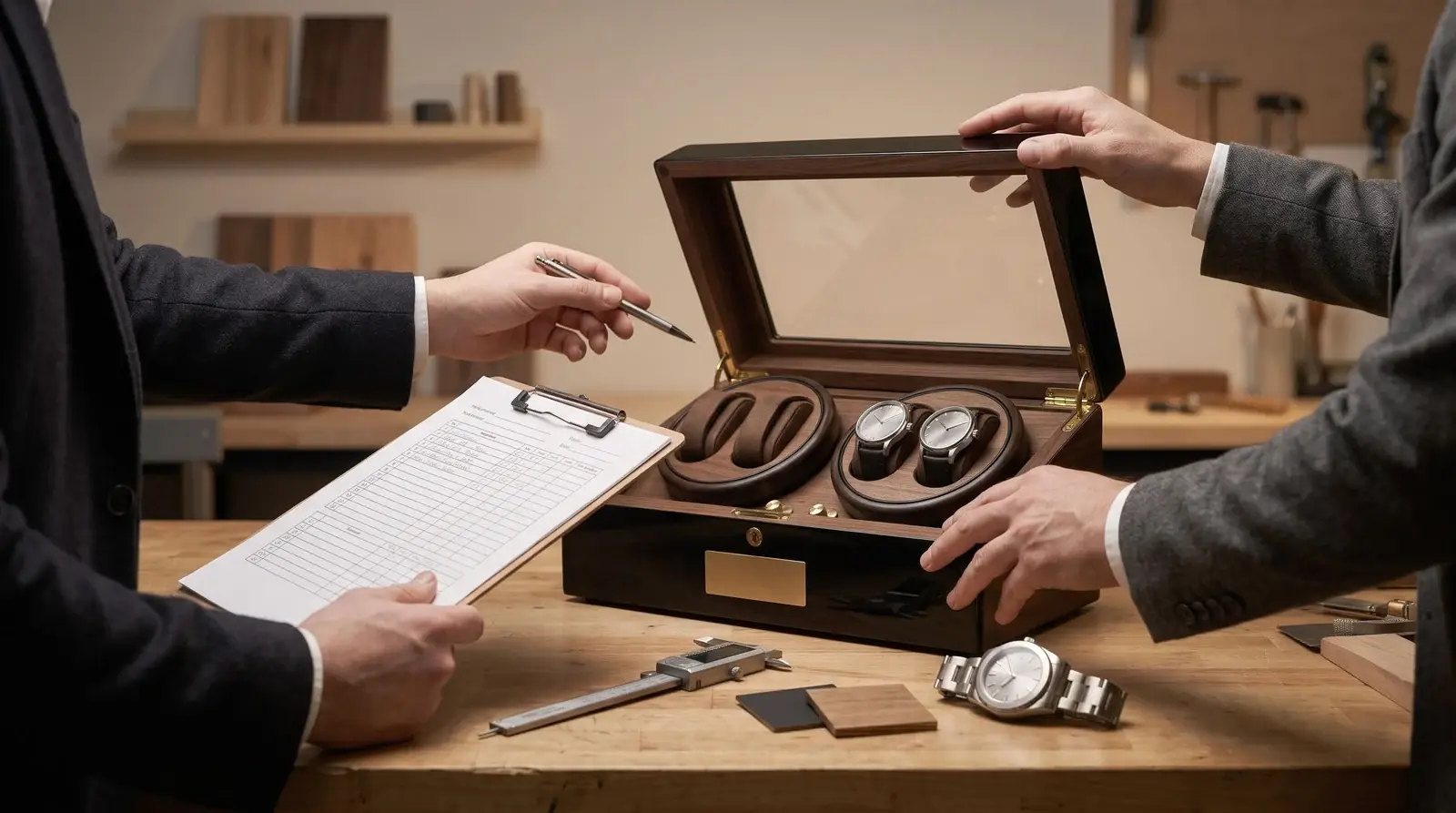
There are three realistic routes to a private label winder, and each carries a different commercial profile.
Route A: Brand an existing design
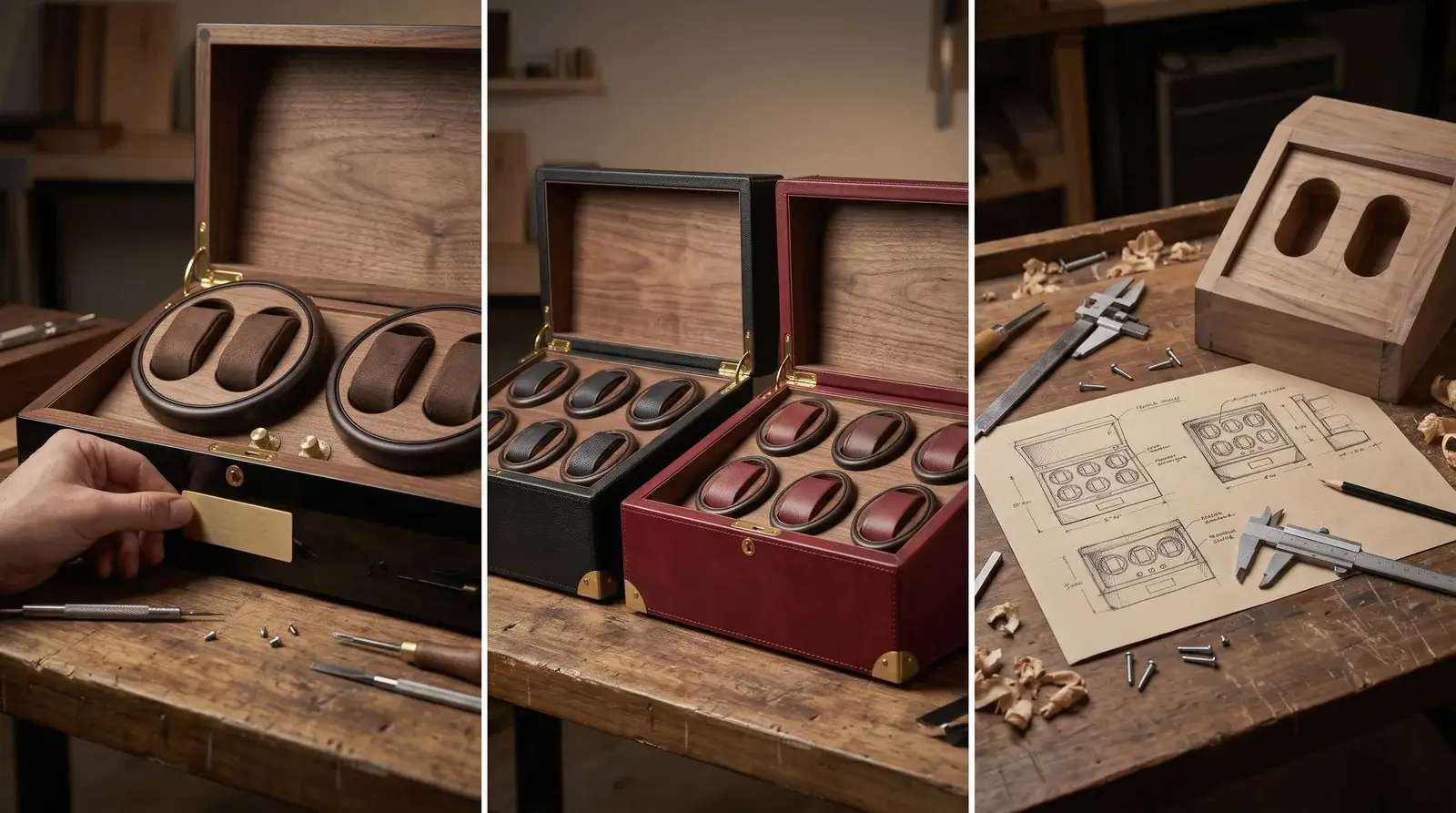
This is the fastest and lowest-risk path. You select a proven model from our watch winder range, and we apply your branding through methods such as printing, hot stamping, embossing or a metal plate, together with coordinated packaging. The structure, motor and tooling already exist, so there is little new engineering to validate. It suits distributors, retailers and gift companies that need a branded product on the shelf quickly and want to test the market before committing to a larger program. The questions to settle are logo method, sample requirement, minimum order and delivery schedule.
Route B: Modify an existing design
Here you keep a proven cabinet and motor layout but change what the customer sees: exterior finish, interior lining color, hardware or logo treatment. A common example is moving a catalog winder from black to a signature color while leaving the structure untouched. Because the mechanics do not change, the risk stays moderate, and the product gains a distinct identity. The key is to separate cosmetic changes from structural ones. Changing a surface color and changing a cabinet dimension are very different amounts of work, and your factory should tell you which side of that line each request falls on.
Route C: Develop a new design
A new design makes sense when your concept simply cannot be built from an existing structure. This route involves a longer sampling cycle, possible tooling, and more validation of the motor, door, drawer and finish together. It also raises commercial questions that should be settled early: who owns the design, whether any exclusivity applies, and how development costs are handled. Do not assume a new design is automatically exclusive to you. Put the ownership terms in writing.
Our advice: start with Route A or B unless your product genuinely demands more. Many successful private label collections began as a modified catalog model and moved to a fully custom design once sales justified it.
3. Start With the Customer Who Opens the Box
Before materials and motors, tell us who will buy this winder and where. A winder for a watch brand's boutique, a collector-focused online retailer and a corporate gifting program are three different products, even if the capacity is identical. The boutique cares about finish and presentation. The online retailer cares about shipping survival and return rates. The gift buyer cares about unboxing and branding visibility.
Useful context includes the sales channel, the typical watch collection of your end customer, the price tier you are aiming at, and whether the winder stands alone or sits inside a coordinated range alongside watch boxes and watch rolls. With this, we can steer you toward the right starting model and tell you which features deserve budget and which do not. Without it, we default to a generic answer, and a generic answer rarely wins a competitive category.
4. Winding Slots vs. Storage Slots: The Most Expensive Misunderstanding
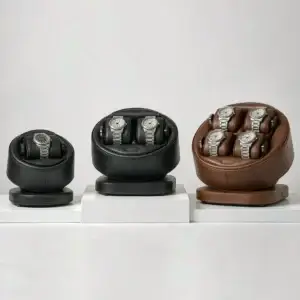
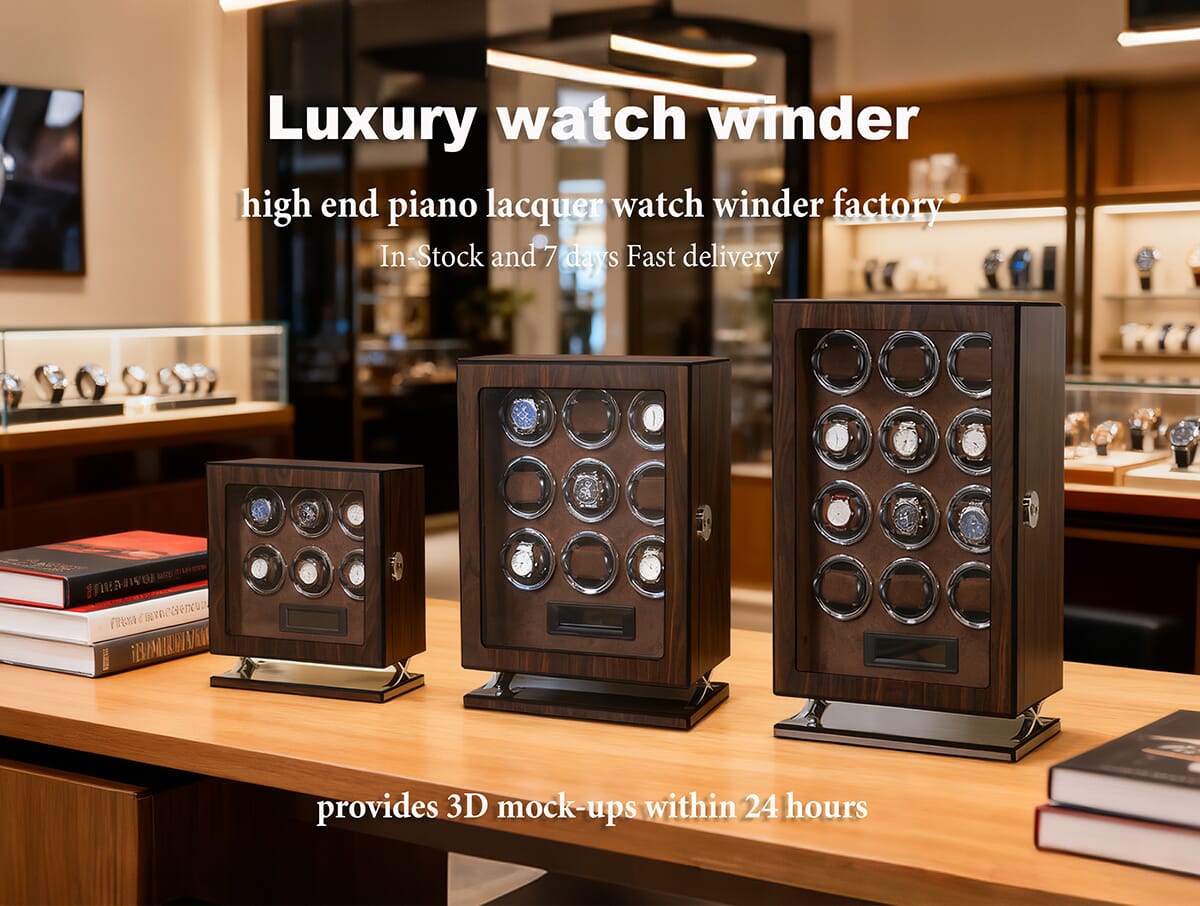
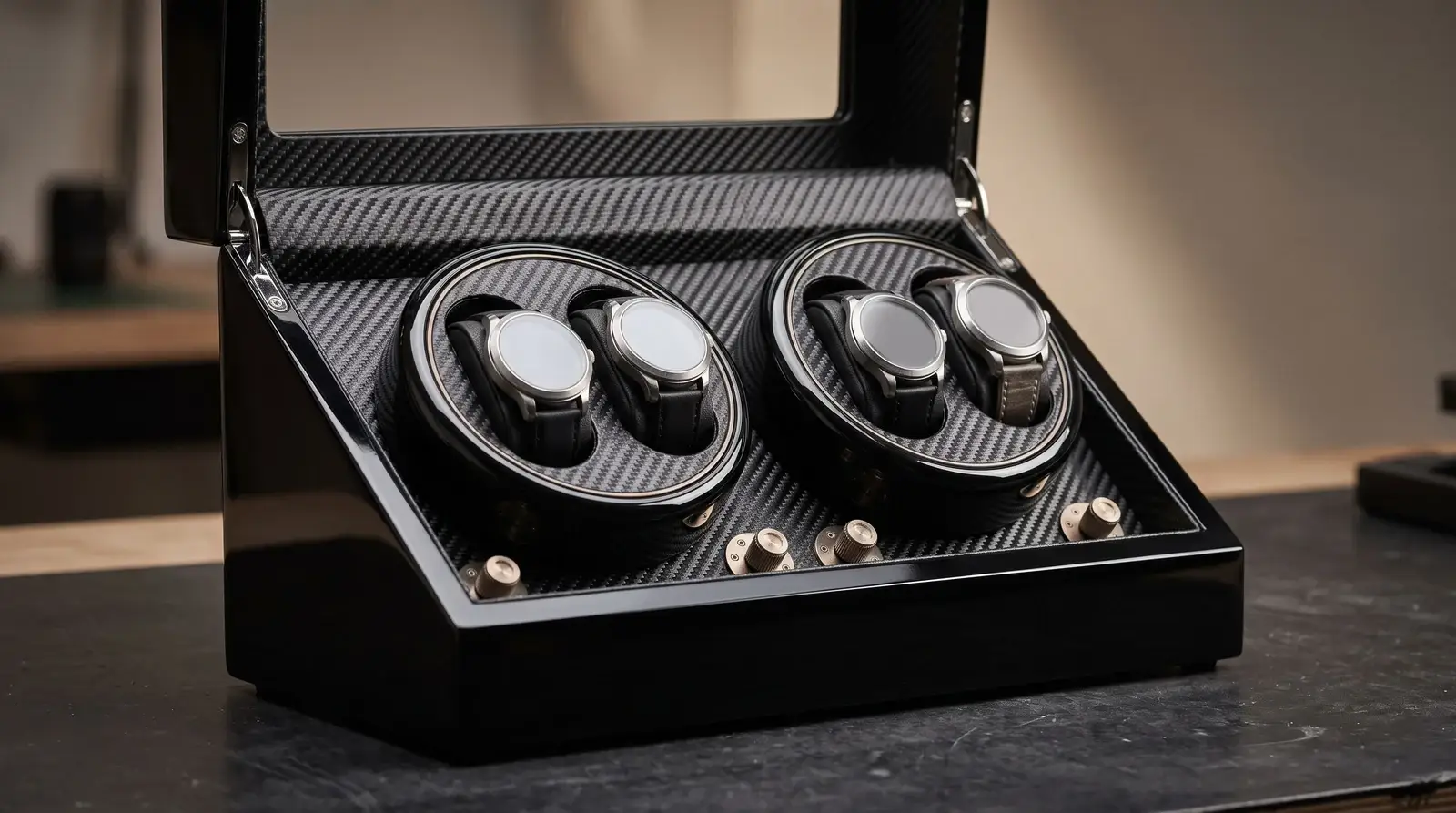
If we could add one line to every inquiry form, it would be: "How many watches must be wound, and how many only stored?" This single confusion generates more disputes than any other detail. A "4+6" winder has four winding positions and six static positions. It does not wind ten watches. Likewise, a winder with two rotators may hold two watches per rotator, giving four winding positions but only two rotating modules.
These distinctions matter for pricing, because motors and rotators are a major cost driver, and for your marketing claims, because overstating winding capacity creates returns and reviews you cannot afford. Specify the following in your brief:
- The number of watches that must be wound at the same time.
- The preferred rotator count, if your market expects a particular layout.
- The number of static watch positions, plus any drawers or accessory compartments.
- Whether you need individual rotator control or grouped control. This varies by model and affects both cost and user experience.
5. Watch Fit: Test With Real Watches, Not Catalog Numbers
A stated capacity does not guarantee that a given watch fits. Case diameter, case thickness, bracelet circumference, protruding crowns and clasp construction all change how a watch sits on the cushion. A cushion must hold the watch firmly without squeezing the bracelet, and it must match the holder in that specific winder. Cushions are not universally interchangeable between winding modules.
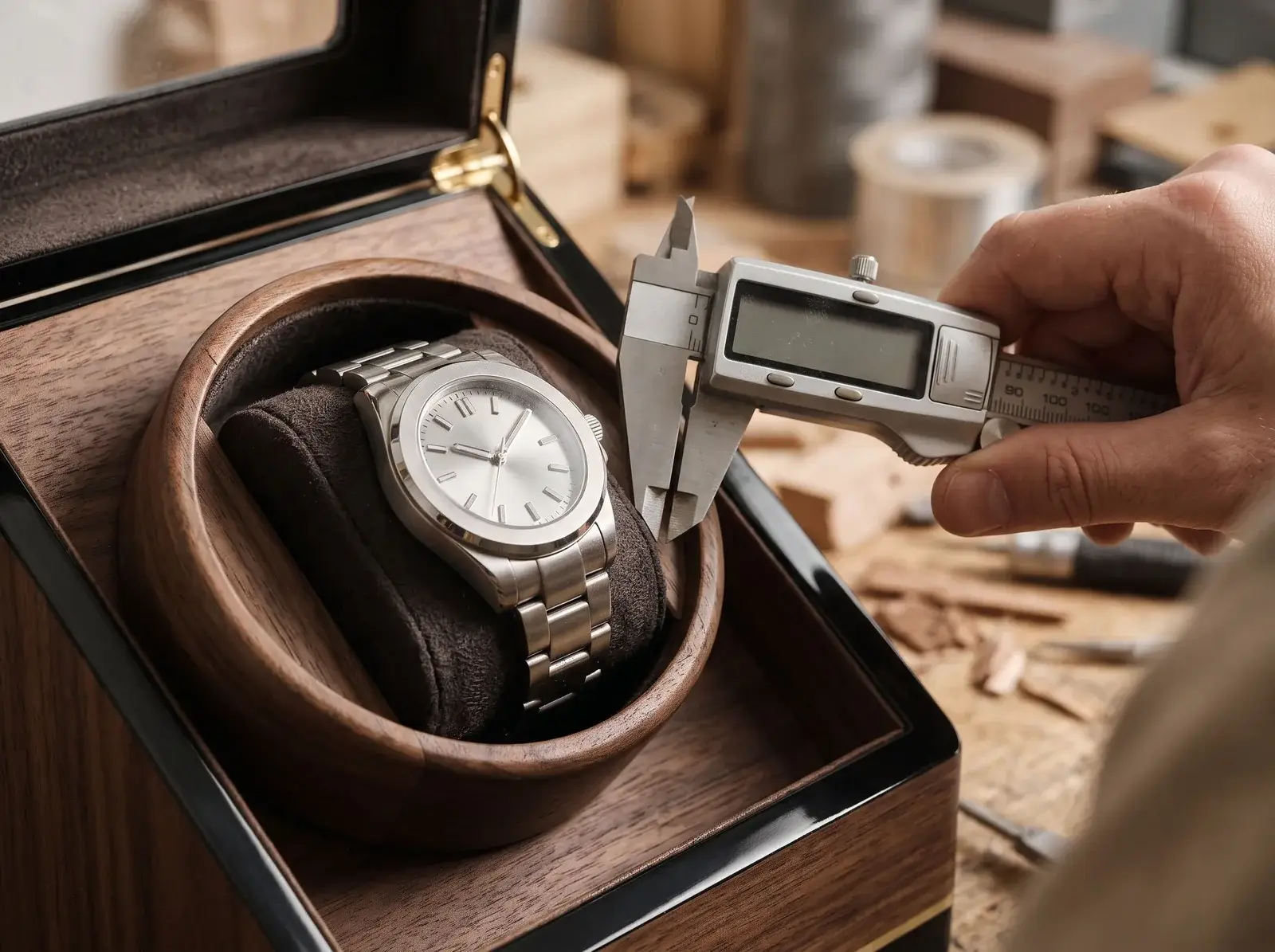
The practical solution is simple. Send us the dimensions of the watches your customers actually wear, especially the largest and heaviest, and have us test a physical sample with representative pieces. Large sports watches and metal bracelets are where fit problems show up first. Catching a clearance issue at sample stage costs a few days. Catching it after a full production run costs the order.
6. Finish and Construction: Look Beneath the Surface
Photos communicate style, but they do not describe how a winder is built. A woodgrain look does not prove a solid wood cabinet. A glossy surface does not tell you how many coats are behind it. When we review a brief, we separate three layers: the core material, the surface treatment and the visible finish.
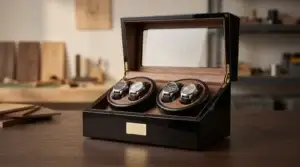
This matters most with piano lacquer. Our standard process uses 10 to 12 spray coats with four to five sanding passes, compared with the three to five coats common elsewhere in the market. That extra depth is why the surface holds its clarity over years rather than months, but it also takes time and skilled labor, which is a legitimate reason a properly lacquered winder costs more than a veneer one. If your target price assumes a lacquer finish, make sure the quotation actually specifies it.
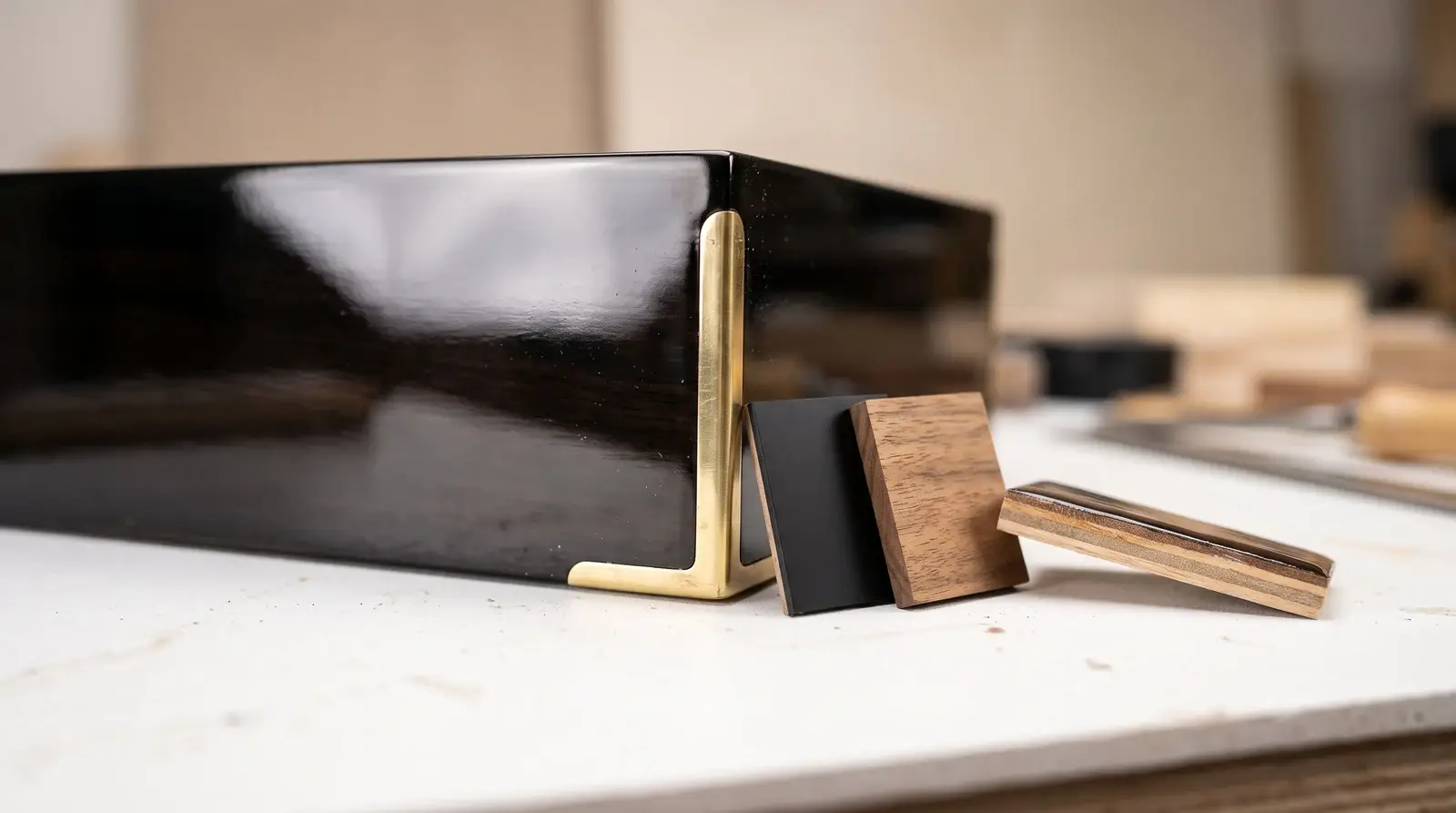
Construction details matter too (our comparison of solid wood, plywood, MDF and bamboo explains the trade-offs). We work with wood at 12 to 14 percent moisture and use relief grooving in panels and structural members to resist warping. Because lacquer film thickness changes panel gaps, tolerances depend on the finish chosen: a matte surface and a piano lacquer surface behave differently at the joints. If tight, uniform color across a batch of solid wood is critical to your brand, say so early. Color consistency in natural wood requires selecting stock at the raw-material stage, and that selection is reflected in the unit price.
For interior and hardware, specify lining material and color, cushion and divider requirements, and any lock or viewing window. Always confirm final colors against a physical material sample, because screens misrepresent texture and shade.
7. Motor and Function: Specify the Experience, Not Just the Feature
The motor is the heart of a winder, and it is where buyers most often over-specify or under-specify. What matters is how the winder behaves in the customer's bedroom or collection room. Our winders use Japanese Mabuchi motors running under 10 dB, which means the unit stays effectively silent on a nightstand. TPD (turns per day) settings are adjustable from 300 to 2,200 on our range, covering most mechanical movements.
Be precise about what you need:
- Rotation direction: clockwise, counterclockwise or bidirectional.
- TPD options and how the user selects them. Some models offer preset steps rather than free adjustment, so confirm what the chosen model actually provides.
- Control arrangement, meaning per-rotator or grouped.
- Extras such as lighting, locks, remote control or door-open stop.
One caution from experience: do not promise customers winding programs for specific movements unless you have checked the watch manufacturer's own guidance. The winder supplies the motion; the watch brand defines what that watch needs. Responsible product copy points customers to that guidance.
8. Branding: Match the Method to the Surface
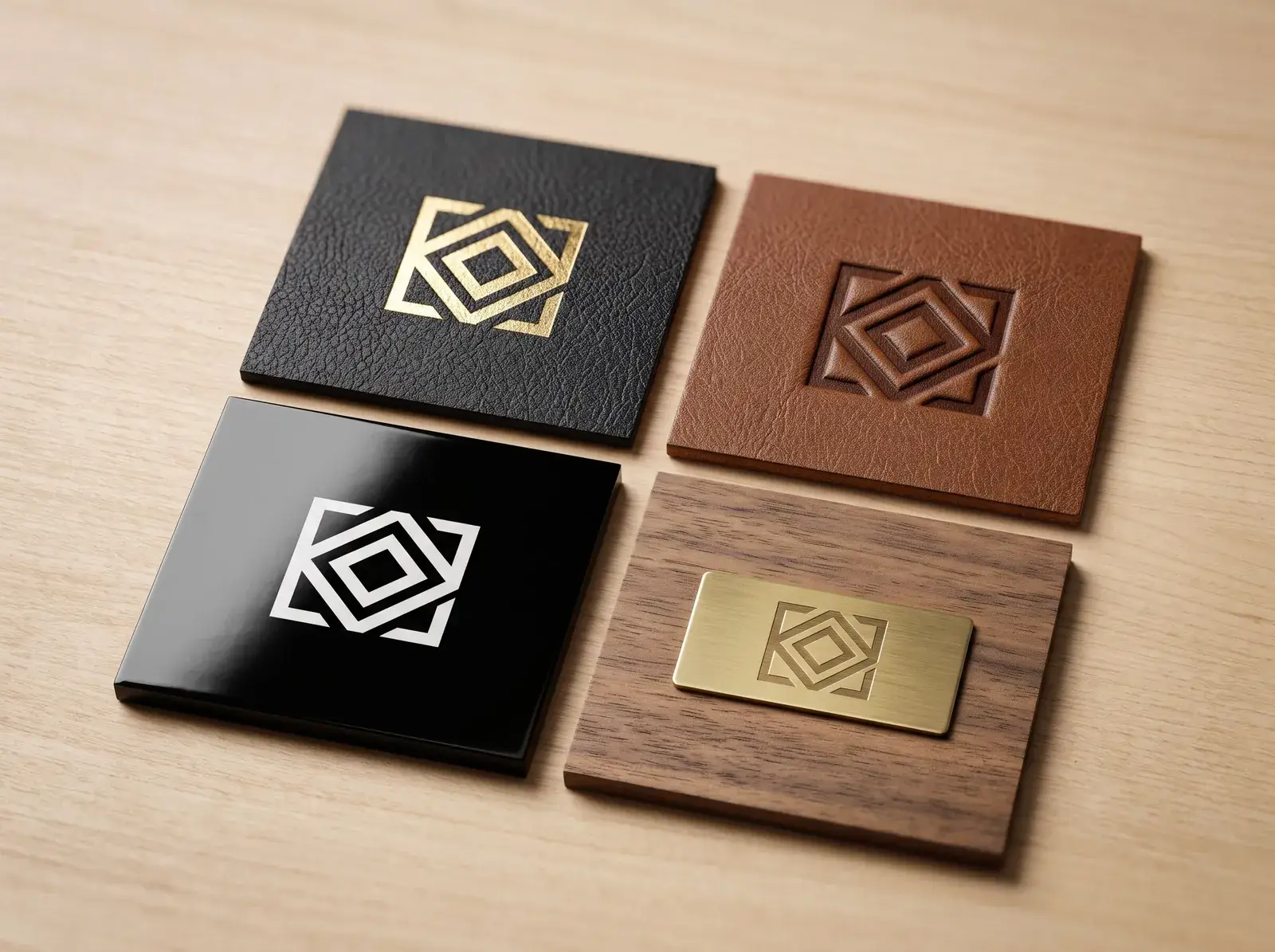
A logo that looks sharp on a flat lacquered lid may not survive on textured PU leather, fabric or curved hardware. That is why the method has to be chosen after the surface, not before. Send a vector logo file, the target position and approximate size, color or metallic finish requirements, and any brand guidelines on clear space. Tell us whether branding is needed on the exterior, interior, packaging or manuals.
Available methods typically include silk printing, hot stamping, embossing or debossing, and metal logo plates. Each has limits on fine detail, color and durability. Ask for the logo to be shown on the actual sample surface, because a rendering will always look cleaner than reality.
9. Destination Market, Power and Compliance
A winder is an electrical product, so the destination market shapes the design. Tell us where you will sell, in what proportions, and what plug and power arrangement each region requires. If you sell in several regions, list quantities per market, because plug variants affect packaging and inventory planning.
On compliance, our products are supported by UL, CE and RoHS credentials, with FSC for responsibly sourced wood, which helps buyers entering North American and European channels. Our export compliance guide covers ISPM 15, formaldehyde, EUDR and FSC in detail. Still, which documents apply depends on the exact configuration, components and market, so confirm the required paperwork before production, not after the container is booked.
10. Packaging Is Part of the Product
Packaging is where many private label programs quietly lose margin or reputation. Our OEM guide to custom wooden box packaging covers structures, inserts and branding. An online retailer needs protection that survives parcel handling. A boutique needs a presentation that supports a premium price. A gift buyer needs a box that photographs well. Define the scope: individual product packaging, branded gift packaging if needed, protective inserts, master cartons, manuals and labels.
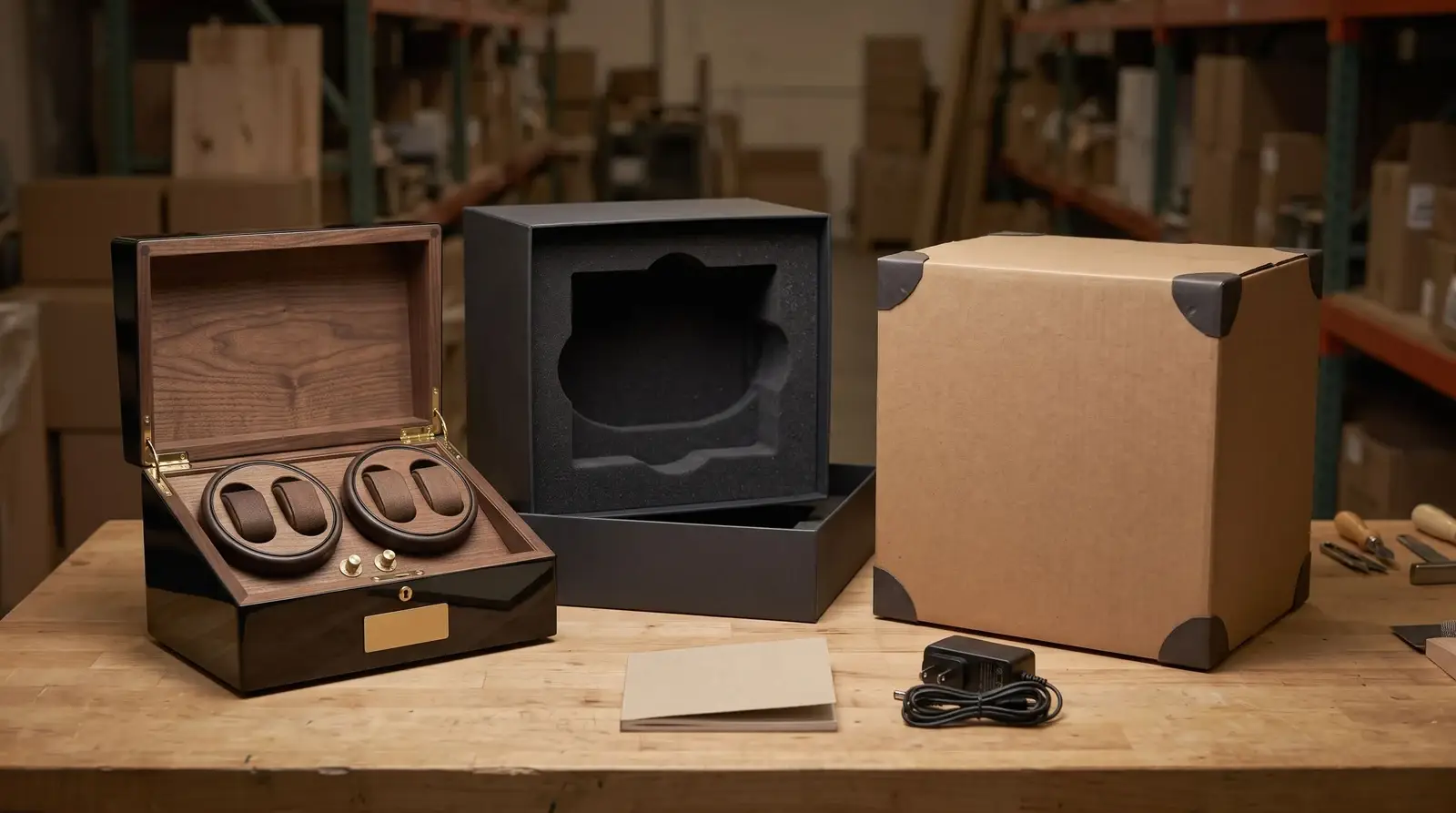
Also state what your target price includes. A price for the winder alone and a price for the winder plus gift box, manual and inserts are not comparable. Half of the "too expensive" feedback we hear comes from two quotations built on different packaging assumptions.
11. The Sample Stage: Where Projects Are Won or Lost
The physical sample is the moment your brief meets reality. Under our standard terms, a prototype where no tooling is needed is charged at three times the unit price, with a sample lead time of 7 days from a confirmed specification. Where tooling is required, it is quoted separately. Budget for both time and cost, and treat the sample as an investment in avoiding a larger mistake.
Review it against the written brief, not against memory. Check the following:
- Appearance: finish, color, grain, edge quality and panel gaps.
- Fit: representative watches on the cushions, with bracelets closed and clasps in place.
- Operation: rotation, TPD settings, noise, door or drawer movement.
- Branding: position, size and legibility on the real surface.
- Included items: adapter, plug, manual and packaging.
Record every requested change in writing, agree how each will be addressed, and only then approve. Once approved, treat the sample as the production reference, and keep a signed copy of that approval on file with the supplier. In practice, the written sign-off is what protects both sides when a batch is questioned later.
12. Quality Control: Agree the Standard Before Production
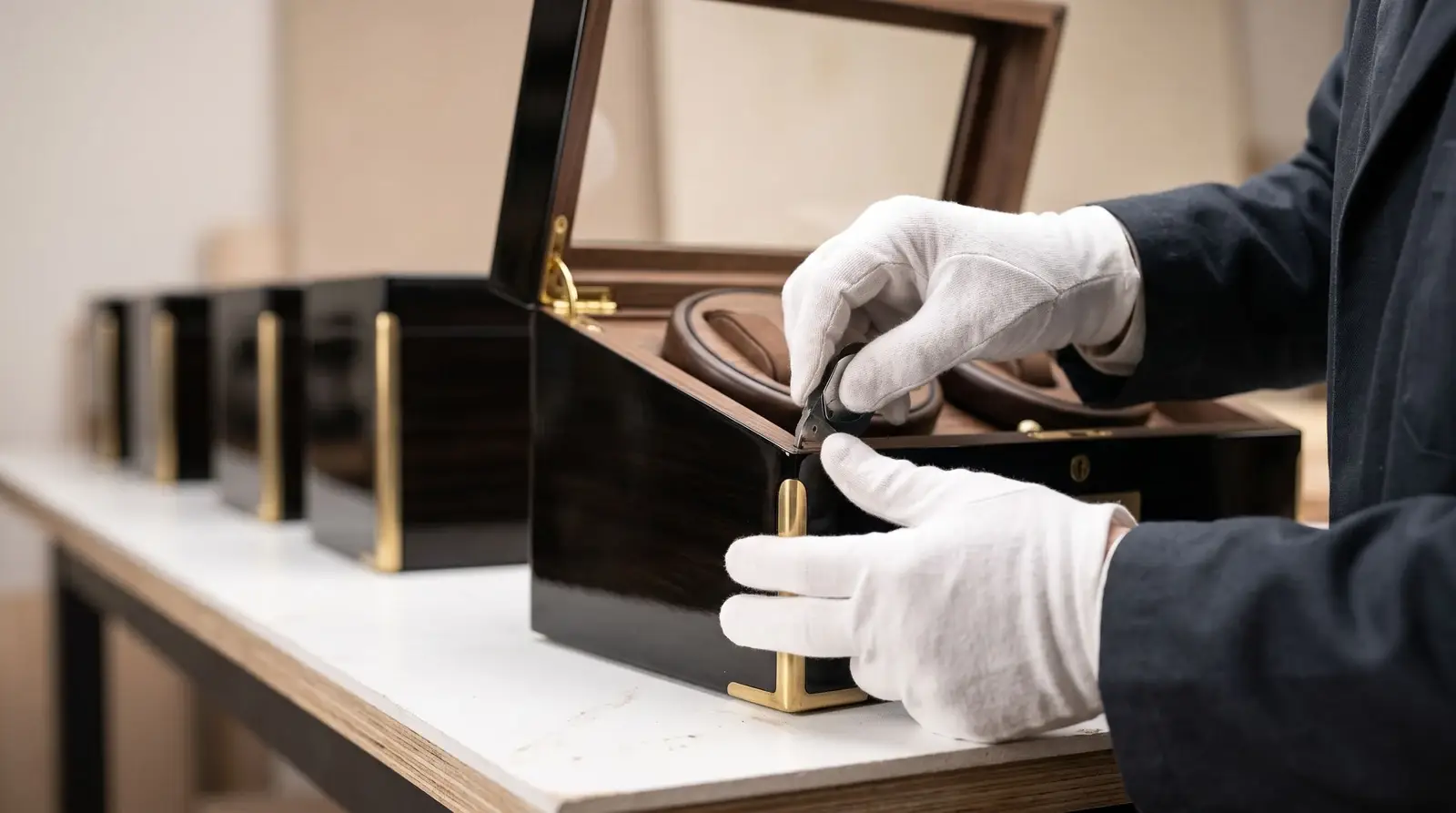
Ask any supplier how quality is controlled, then ask what the defect threshold is and who verifies it. Our process combines in-process patrol checks with 100 percent final inspection, holding the defect rate at 2 percent or less. Misalignments are treated as zero tolerance and are not shipped. For a fuller supplier audit, use our B2B checklist for evaluating a watch winder factory. Whatever supplier you choose, agree the inspection method and acceptance criteria in advance, and decide whether you or a third party will audit the lot.
13. Commercial Terms: Quantity, Price Basis and Schedule
State your estimated order quantity, target price basis, preferred trade terms and desired schedule. Our standard OEM minimum order quantity is 50 to 100 pieces per custom design, and we support everything from small batches through large programs. A branded catalog model sits at the lower end of that range, while a project with new materials or components sits at the upper end. For a first order, plan on a bulk production lead time of 20 to 30 days from sample approval, and build that window into your launch calendar.
If some details are still undecided, say so, and list your priorities. A supplier who knows your top three priorities can recommend where to spend and where to save. A supplier who knows nothing can only quote the safe, expensive version.
A Practical Brief Checklist
Use this list when you prepare your next inquiry. It is acceptable to leave an item open when you want the supplier's recommendation, as long as you mark it as open.
- Development route: existing design with branding, modified design or new development.
- Target customer, sales channel and destination markets.
- Positioning and target price, with the price basis stated.
- Winding capacity, rotator count and static storage.
- Representative watch dimensions and bracelet sizes.
- Exterior material and finish, lining, hardware, window and lock.
- Logo file, position, size and method.
- Rotation direction, TPD options, control type and extras.
- Plug, power and documentation requirements.
- Packaging scope, manuals and labels.
- Estimated quantity, trade terms and schedule.
- Reference photos, sketches, color samples or a physical sample.
Final Thought: Build the Brief Together
A private label winder is a shared project between your brand and your manufacturer. The best results come when both sides treat the brief as a living document: you bring the market knowledge, and the factory brings the construction knowledge. When that conversation happens early, sampling is faster, quotations are comparable, and production holds few surprises.
If you are planning a private label watch winder collection, send us your target capacity, a reference design, branding needs, destination market and estimated quantity. Our design team can return 3D renderings in as little as eight hours, so you can react to a concept in a day rather than a month.
Planning a private label watch winder collection?
Send us your target capacity, a reference design, branding needs, destination market and estimated quantity. With 19 years of experience in watch winders and wooden packaging, our design team can return 3D renderings in as little as eight hours, so you can react to a concept in a day rather than a month.
- OEM minimum order quantity: 50 to 100 pieces per custom design
- 3D rendering: within 8 hours of a confirmed brief
- Sample lead time: 7 days from confirmed specification
- Bulk production: 20 to 30 days from sample approval
Guangzhou T.WING-PAK Mfg. Co., Ltd. | www.twing-pak.com | kathy@twing-pak.com | WhatsApp +86 13431139311