Most articles on private label watch winders tell you what to put in a specification sheet. This one starts where those guides stop: on the factory floor, after the brief has arrived, when real decisions about tooling, motors, finishes and packing begin to determine whether a product line makes money. Drawing on years of OEM and ODM production for watch brands, retailers and gift companies, Guangzhou T.wing-Pak Mfg Co., Ltd. shares the patterns we see again and again — the specifications buyers consistently underestimate, the small choices that quietly drive cost, and the failures that only show up months after a winder reaches a customer’s home. If you have never sourced a winder before, treat this as the conversation we would have with you before you place an order.
The Brief Is Only the Beginning: What Actually Happens After You Send It
A project brief is a wish list written by someone who has thought carefully about the product they want. What a manufacturer receives is something slightly different: a set of signals about how serious the project is, how much latitude there is to substitute materials, and how much risk is hidden in the details. The first thing an experienced factory does is not to price the requested configuration, but to sort every line in the brief into three buckets — feasible as written, feasible with a change, and not feasible at the stated quantity and price.
That sorting is why two buyers with almost identical briefs can receive very different quotations. One brief says “wood-grain finish, leather interior, four slots, our logo.” The other says “painted MDF with a wood-grain transfer, PU-wrapped cushion, four active positions plus six storage, vector logo applied by hot stamping at 80 × 20 mm on the lid.” The second brief removes guesswork, and a supplier can quote a real process instead of a worst-case allowance. The difference is not pedantry; it is the difference between a number that holds and a number that moves after your sample is approved.
Three questions sit behind almost every internal feasibility discussion. Can the structure be built on an existing platform, or does it need new tooling? Can the requested finish and logo method coexist on the same surface? And will the target quantity support the setup the configuration requires? A useful first discussion answers these before anyone talks about unit price. For a step-by-step view of the workflow we will be discussing, see From 3D Mockup to Mass Production.
Five Decisions That Silently Set Your Cost
Experienced buyers know that cost is not decided at the quotation stage. It is locked in much earlier, by five design decisions that are often made casually. Each one has a “what buyers assume” and a “what we actually see” side, and the gap between them is where budgets go wrong.
1. Capacity architecture — how many rotors, how many slots
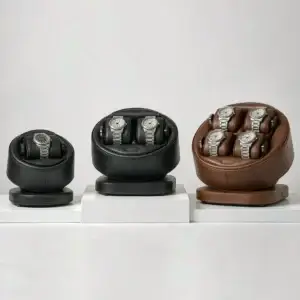
The most common misconception is that capacity is a single number. It is not. A “4+6” winder has four active winding positions and six static storage positions; only four watches rotate. Likewise, two rotors carrying two watches each give a winding capacity of four from a rotator count of two. Buyers who describe a product as “ten-watch winder” and expect ten motors are pricing a very different machine. Decide early whether each rotor needs independent control — individual programming costs more in control electronics and assembly time, but it is essential if the line will be sold to owners of several movements with different winding needs. Our single versus multi watch winder comparison breaks down the trade-offs by configuration.
2. Motor and TPD specification
Motor choice affects noise, power draw, service life and perceived quality, but it is rarely visible in a photograph. A winder intended for a premium brand and one intended for a promotional gift can look identical on a shelf and behave completely differently after a year. Confirm the available turns-per-day presets and how they are selected, whether rotation is clockwise, counter-clockwise or bi-directional, and whether the unit uses presets or freely adjustable TPD. Our guide to TPD settings and turns per day explains why “more settings” is not automatically better. The engineering details — quiet motors, calibration and antimagnetic considerations — are covered in specifying a commercial watch winder motor.
3. Cabinet construction and substrate
A photo communicates a look, not a construction. A wood-grain appearance may be solid wood, veneer over engineered board, or a printed transfer on MDF — all legitimate options, but with different costs, weights and failure modes. Always record the core material and the surface treatment separately in the agreed specification. If the brief leaves this open, you will receive a price based on the cheapest interpretation, and any later upgrade becomes a variation order.
4. Finish and hand-polishing
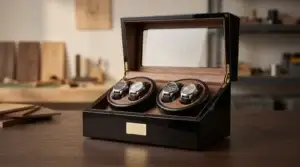
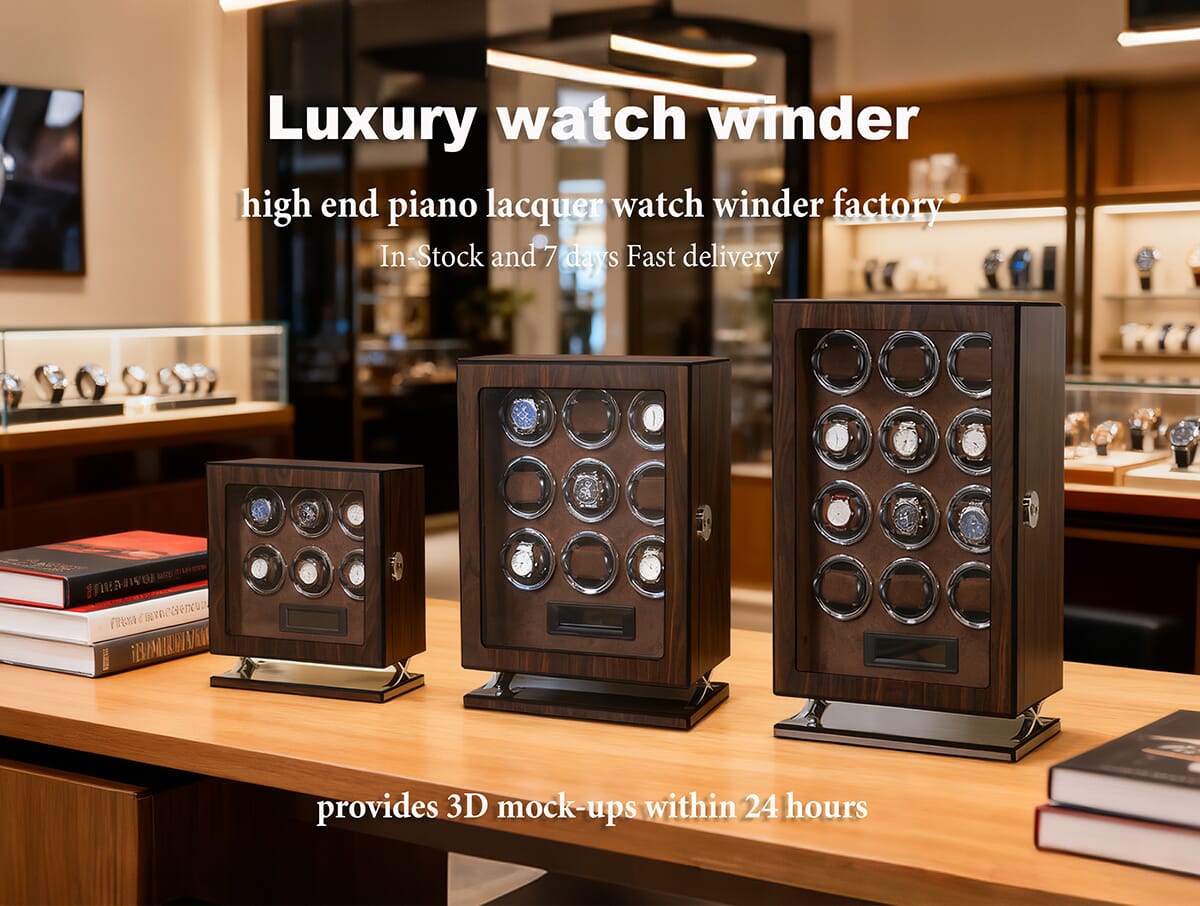
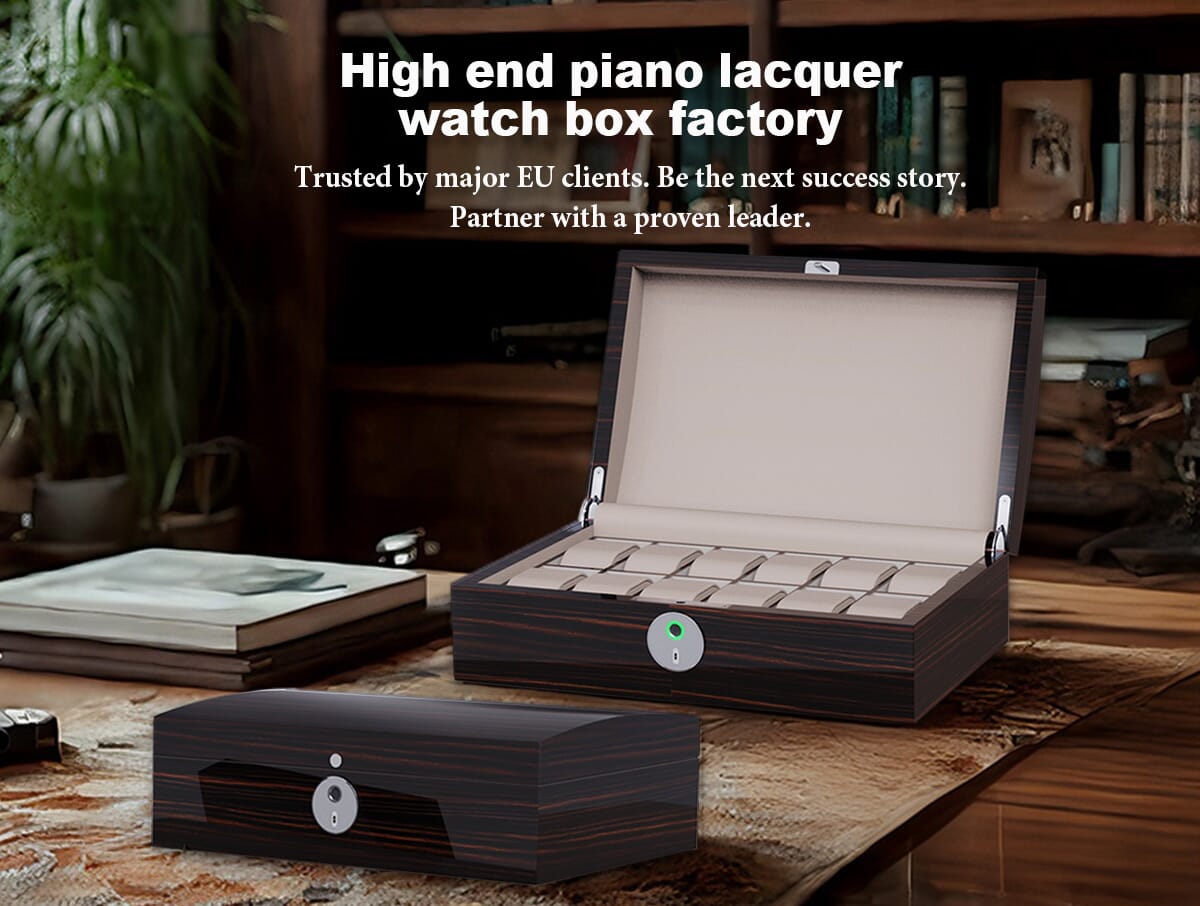
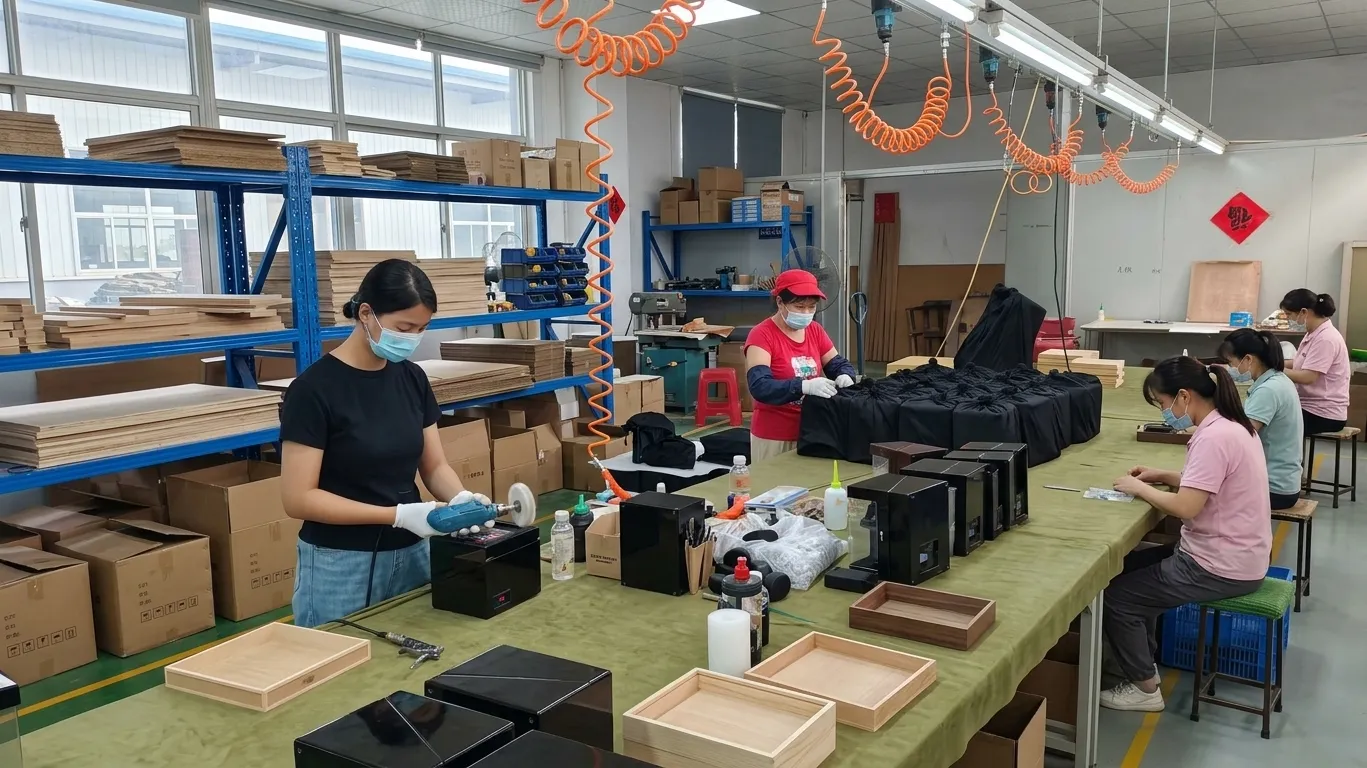
High-gloss piano lacquer is the classic example of a decision that looks cosmetic but is really a labour decision. Ten to twelve coats, with sanding and polishing between them, create a mirror finish; an open-pore or matte finish removes much of that work. Neither is “better” in the abstract — the right answer depends on the price point and the channel. What matters commercially is that finish is priced explicitly, so a buyer who downgrades from gloss to satin knows exactly what they are saving. Our notes on sourcing piano lacquer watch boxes describe the process in more detail.
5. Packaging and presentation
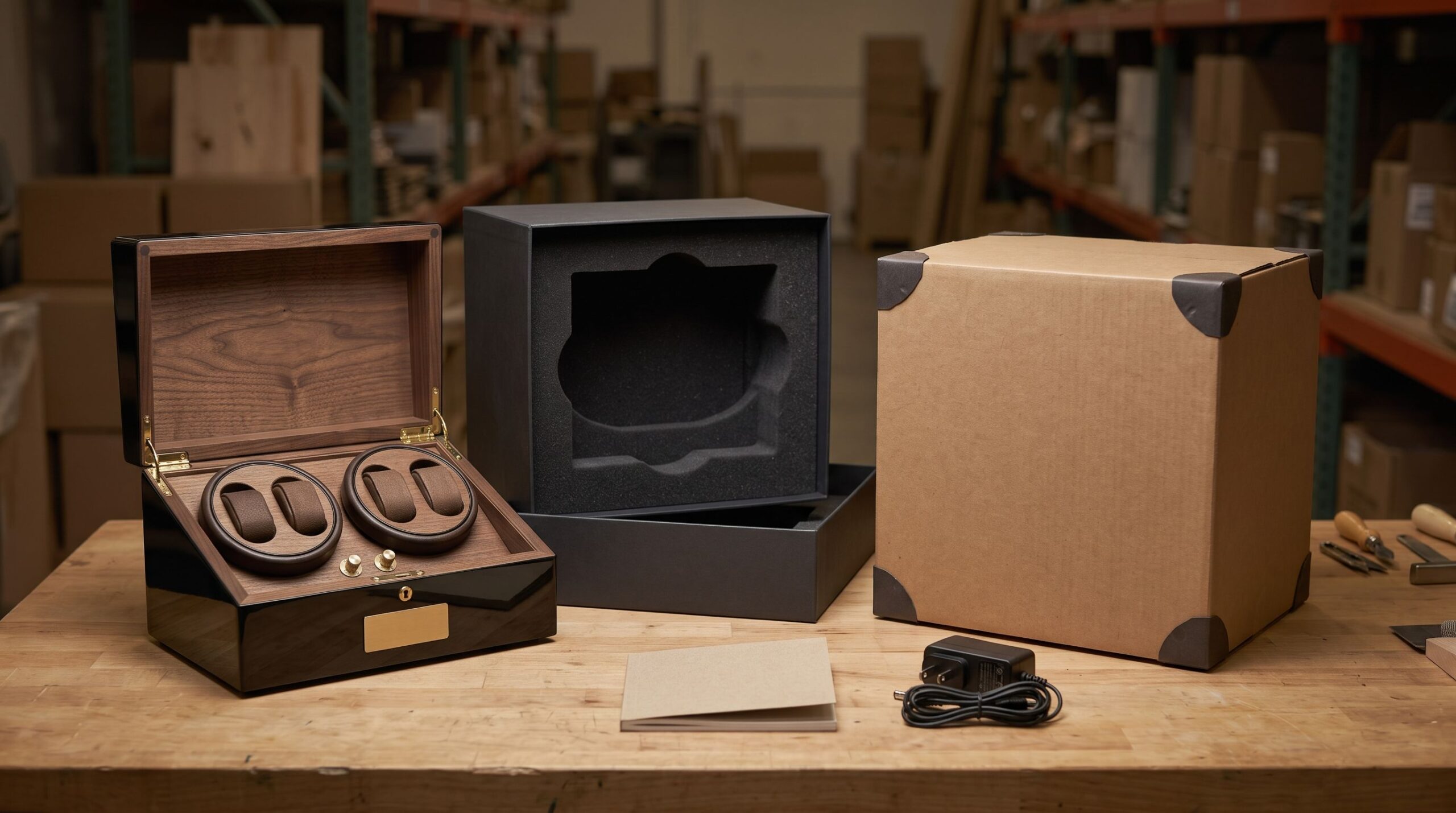
Packaging is the most frequently underestimated line item, because it is often discussed last. An online-only product may need a protective mailer; a boutique product needs a rigid gift box with a fitted insert; a corporate gift program may add branded inserts and a separate outer carton. Each option changes both unit cost and cubnage, which affects freight. Decide the sales channel before the packaging discussion, and ask the supplier to quote the packaging scope line by line.
| Decision | Common buyer assumption | What the factory actually prices | Commercial effect if left vague |
|---|---|---|---|
| “10-watch” capacity | Ten watches all rotate | Separate active rotors and static storage positions | Quotation based on the wrong machine; rework after sample |
| “Wood” finish | Solid wood throughout | Core substrate plus surface treatment | Price based on the cheapest interpretation; upgrade charged later |
| “Our logo” | Any method, any surface | Method compatible with that exact surface and finish | Logo looks wrong on the sample; new plates or printing setup |
| “Quiet motor” | One standard motor | Motor grade, noise level, TPD control and lifespan | Price gap between premium and promotional platforms |
| “Gift box included” | One standard box | Structure, insert, printing and master carton | Freight and unit cost rise after approval |
Where Private Label Projects Actually Lose Money
In our experience, very few projects fail because of a dramatic mistake. They lose money through a series of small, reasonable decisions that were never tested together. A cushion that fits a sample watch but not the customer’s bracelet. A logo method that works on a painted lid but not on textured PU. A plug type that is discovered after production. A target price that includes packaging in the buyer’s mind but excludes it in the quotation. None of these is expensive in isolation; together they can add weeks and a significant percentage to the landed cost.
The pattern worth watching is the “false economy”: choosing the cheaper option in an area that drives returns or rework, then paying far more to fix it downstream. A lower-grade cushion may save cents per unit and generate complaints about watches slipping. A motor without adequate noise control may pass a bench test and fail in a quiet bedroom. A logo applied by the wrong method may look acceptable in a photograph and peel after a month. The discipline that prevents this is simple: test the interaction, not just the component. Ask for the cushion with your actual watch, the logo on your actual chosen surface, and the finished unit with your actual plug and packaging.
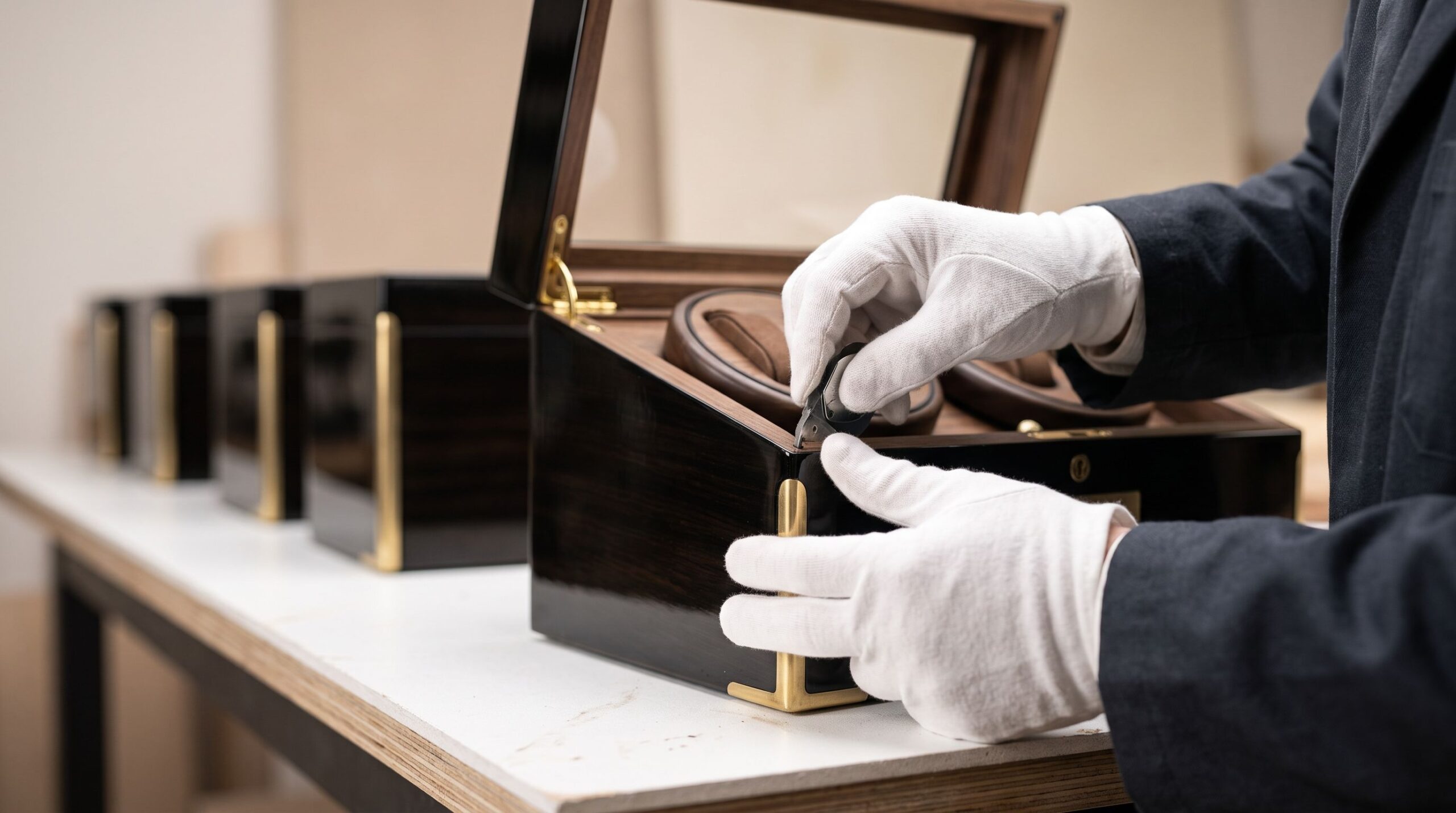
Logo work deserves a special mention because it is the most common source of “it doesn’t look like the artwork” disappointment. Silk printing, hot stamping, embossing, debossing and metal plates are all valid methods, but each interacts with the substrate. A flat painted lid accepts foil beautifully; textured PU, fabric and curved hardware may not. Provide a scalable vector file, the intended position and size, and the required colour, then insist on seeing the method applied to a real sample. Our broader comparison of luxury watch box packaging materials and branding is useful background here.
The Sample Is a Conversation, Not a Formality
A sample is the moment when a specification stops being a set of claims and becomes an object you can hold. Treat the sample stage as a negotiation in three parts: appearance, function and documentation. Appearance covers colour, grain, lining, hardware and logo. Function covers rotation direction, TPD presets, control layout, lighting, lock and any door-open stop. Documentation fixes the agreed specification in writing — the substrate, the finish, the logo method, the adapter and plug, and what the packaging contains. Once those are recorded against an approved sample, a production order becomes a repeatable instruction rather than an act of memory.
Cushion compatibility deserves its own test. Case diameter and thickness, bracelet circumference, protruding crowns or pushers, clasp construction and watch weight all influence whether a watch sits securely without forcing the bracelet closed. A cushion that suits one strap does not automatically suit every winding module. Send representative watches — especially large or heavy models — and have the supplier confirm the fit on the specific holder that will be used. A physical sample is the only reliable judge, because colour and texture are notoriously unreliable on screens.
MOQ and Lead Time: The Numbers Behind the Numbers
Buyers often treat minimum order quantity as an arbitrary barrier. In practice it reflects setup economics. For private label watch winders at T.wing-Pak, the standard OEM minimum is 50 to 100 pieces per custom design, depending on materials, structure and finishing. Below that range, the setup for a dedicated finish, logo or insert cannot be recovered in the unit price. The figure is a starting point for discussion, not a fixed rule — a branding-only program on an existing platform sits at a different point from a new cabinet structure.
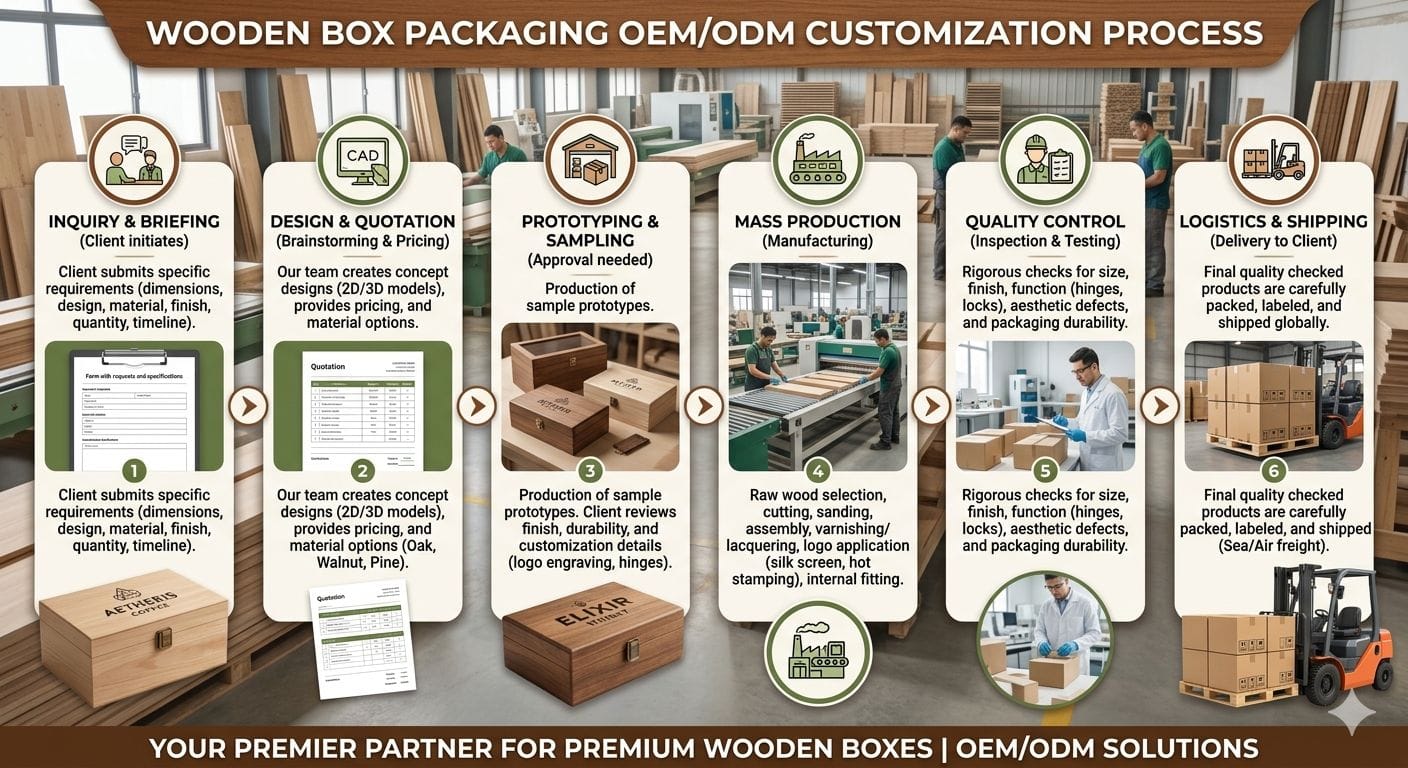
The same logic explains the timeline. 3D rendering typically takes around 8 hours to produce a visual proposal that can be reviewed and revised before tooling. Sampling takes about 7 days once the specification is agreed. Bulk production then runs 20 to 30 days from sample confirmation, with the exact duration depending on finish complexity and quantity. Those numbers are realistic only when the buyer’s decisions arrive on time: artwork, colour references, plug type and packaging choices are the usual sources of delay. Our B2B sourcing FAQ on MOQ, lead time and certification covers the commercial background in more detail.
Warranty and Returns: The Cost Nobody Budgets For
A private label program is not finished when the goods ship. The products that come back — or the reviews that appear online — are shaped by decisions made at the specification stage. The most common field failures are predictable: a motor that becomes audible after weeks of use, a cushion that loses its shape, a finish that shows fingerprints or chips at the edges, hardware that loosens, and an adapter that fails in the destination market. None of these is mysterious, and all of them can be reduced by specifying the right component and testing it under realistic conditions.
Ask what the warranty covers and for how long, and ask what the supplier tests before packing. A hinge or lid cycle test, a noise check, a run-in period for the rotor and an electrical check of the adapter are reasonable expectations. For products sold in a specific region, confirm plug type, voltage, labelling and instructions before production rather than at the port. If your line will sit alongside a watch collection, think about how the winder will be presented in store — our notes on choosing a premium 6-slot leather watch box illustrate how structure and presentation work together.
How to Read a Quotation Like Someone Who Has Done This Before
Compare quotations on scope, not on the final number. A lower price can exclude the gift box, the insert, the adapter, the logo setup or a second colour, and become the more expensive option once those are added. Work through a quotation line by line and check that each of the following is stated explicitly: the exact configuration, the core material and surface treatment, the logo method with size and position, the winding programs and controls, the adapter and plug, the packaging scope, the sample and tooling charges, the order quantity, the trade terms and the schedule.
Then examine the target price basis. A useful target price says whether it includes the product only, or packaging, accessories and services as well. If some commercial details are still open, say what your priorities are and ask which options have the greatest effect on cost. A supplier who explains the cost consequences of each choice is usually a better long-term partner than one who simply agrees to every request. The distinction between OEM and ODM development also changes cost and ownership; the two models are compared in OEM vs ODM luxury packaging.
| Stage | Typical timing | What you must decide before it starts | Deliverable to check |
|---|---|---|---|
| Brief and feasibility | Days 1–2 | Route, capacity, target market, rough price band | Written scope and open questions |
| 3D rendering | About 8 hours | Reference design, colour direction, branding placement | Visual mockup for review and revision |
| Sampling | About 7 days | Final specification, logo artwork, cushion requirements | Physical sample and agreed specification record |
| Sample approval | 1–3 days | Watch fit, finish, function, packaging | Signed, retained production reference |
| Bulk production | 20–30 days | Quantity, plug and documentation, packing list | Finished goods against the approved sample |
A Pre-Production Checklist Built From Experience
Condense everything above into the questions you should be able to answer before you approve a sample. If any of them is still open, the factory will fill the gap with an assumption — and you will pay for that assumption later.
- Which development route applies: brand an existing design, modify one, or build new?
- How many active rotors, and how many static storage positions, does the product actually have?
- Are rotators individually controlled, and do the TPD presets suit the watches you expect?
- What is the core material, and what is the surface treatment — stated separately?
- Which logo method will be used on which exact surface, at what size and position?
- Have you tested the cushion with representative watches, including heavy or large cases?
- Which plug, voltage, labels and instructions does the destination market require?
- What exactly does the packaging include, and what does the target price include?
- What does the warranty cover, and what tests are run before packing?
- Is the approved sample signed, dated and retained as the production reference?
Common Questions
What is the MOQ for private label watch winders?
At T.wing-Pak the standard OEM minimum is 50 to 100 pieces per custom design, depending on materials, structure and finishing. A branding-only program on an existing platform may sit at a different point from a program requiring a new cabinet or insert. Ask for the MOQ of your specific configuration rather than assuming one figure applies to every model.
Can a ready-stock winder simply be branded with our logo?
Sometimes. Whether branding is possible depends on the product, the requested logo method and the quantity. A model may be in stock without branding, while adding a logo or changing the packaging requires a separate arrangement. Confirm current stock, the available branding positions and the most suitable method for that surface before you plan a launch around it.
Do I need engineering drawings before contacting a manufacturer?
No. A reference photograph, an existing product, a physical sample or a clear written description is enough to start a useful discussion. The supplier will tell you which dimensions and specifications still need to be defined. What matters more than the format is that you distinguish fixed requirements from preferences.
Can different cushion sizes be requested?
Yes, provided the requirement is stated in the brief. Give the watch or bracelet dimensions you need to accommodate and ask the supplier to assess compatible options. An alternative cushion must fit the holder or mounting structure of the chosen winder, so the fit should be confirmed on the specific model rather than assumed.
How long does a private label winder program take from start to finish?
Allow roughly 8 hours for the initial 3D rendering, about 7 days for sampling once the specification is agreed, and 20 to 30 days for bulk production from sample confirmation. The variable most often outside the supplier’s control is the timing of buyer decisions — artwork, colour approvals, plug type and packaging. Settle those early and the schedule is predictable.
Start With the Decisions That Are Hard to Reverse
Private label watch winders reward buyers who think like manufacturers. The decisions that matter most — capacity architecture, substrate and finish, logo method, cushion compatibility, packaging and documentation — are the ones that are expensive to change later. Decide those first, confirm them on a physical sample, and record them in writing. The rest of the program then becomes a straightforward exercise in timing and quantity rather than a series of expensive surprises.
Planning a private label watch winder line?
Guangzhou T.wing-Pak Mfg Co., Ltd. builds OEM and ODM watch winders and watch boxes for brands, retailers and gift companies. Bring us your target capacity, a reference design, your branding needs, the destination market and an estimated quantity, and we will discuss the platforms that fit — with clear MOQ, sample and production timings.
- Standard OEM minimum: 50–100 pieces per custom design
- 3D rendering in about 8 hours; samples in about 7 days
- Bulk production in 20–30 days from sample confirmation
Related reading: How to Choose an OEM Watch Winder Manufacturer · From 8-Hour 3D Rendering to Bulk · How to Choose Luxury Watch Box Packaging