I. Introduction: Material Selection as a Strategic Design Proposition
In today’s consumer context, packaging design has long transcended the purely functional role of product protection. It serves as a critical vehicle for brand storytelling, shaping user experience, communicating brand values, and establishing an emotional connection with consumers as the primary touchpoint. Particularly in the premium and luxury sectors, wooden box packaging, with its unique texture, warmth, and sense of heritage, has become the preferred medium for creating “ritual” and “exclusivity.”
However, faced with the same aesthetic goal—a refined wooden box—designers face a core strategic choice early in the product definition process: solid wood or wood veneer? This choice is far from a simple matter of aesthetic preference or cost trade-off; it is a comprehensive decision matrix involving brand positioning, sustainable development, user experience, and supply chain resilience. This article aims to move beyond superficial comparisons, providing designers, product managers, and brand decision-makers with a systematic analytical framework based on material science, business logic, and consumer psychology. It empowers them to make rational, efficient, and forward-looking choices in specific business and design scenarios.
II. Core Concept Analysis: Definitions, Processes, and Technical Characteristics
To avoid ambiguity, we first redefine “solid wood” and “wood veneer” from academic and industrial perspectives.
Redefining Solid Wood
Definition & Scope: Solid wood refers to lumber or timber processed from logs through scientific drying, sawing, and other procedures. The material is continuous natural wood throughout. From the specific tree species characteristics (density, grain, hardness) to post-treatment processes (drying, carbonization), these factors collectively determine the final material’s performance.
Process & Core Characteristics:
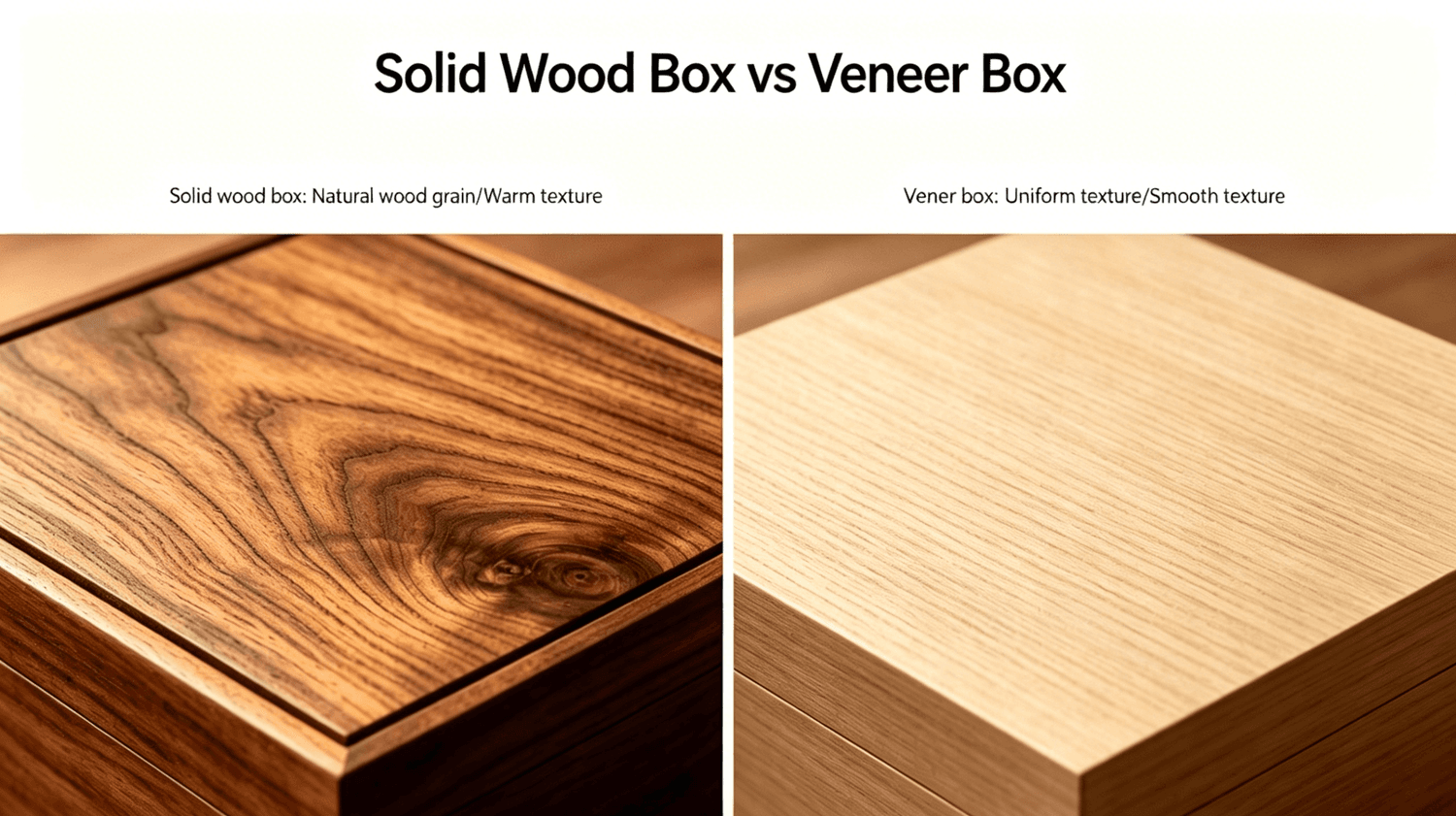
- Advantages: Offers unparalleled authentic texture and visual depth; possesses excellent physical strength and durability, developing a warm luster over time; the unique nature of natural grain gives each product individuality; the substantial feel and texture convey a strong sense of “value” and “permanence.”
- Limitations: A resource-intensive material, especially for rare species, leading to high costs; as a natural biomaterial, susceptible to environmental humidity and temperature changes, potentially causing warping or cracking if not properly processed; natural variations in grain, color, and even mineral lines pose challenges for product consistency in large-scale production.
Re-examining Wood Veneer
Definition & Scope: Wood veneer is an extremely thin sheet of wood (typically 0.1mm to 1.0mm thick) produced by precision rotary or sliced cutting from logs. It is not a standalone material but is used as a decorative surface layer, bonded to various substrates (such as MDF, plywood, particleboard) through pressing processes to form what is known as “decorative engineered wood.”
Process & Core Characteristics:
- Core Structure: A typical “sandwich” construction, generally consisting of (from top to bottom): surface coating (paint/oil), wood veneer layer, highly stable engineered substrate, and balancing layer (to prevent warping).
- Advantages: Significantly enhances the utilization rate of precious timber; a single log of valuable wood can produce veneer covering a much larger area than the log itself could as solid wood; thanks to the high stability of the substrate, finished products are almost unaffected by ambient humidity, offering excellent dimensional stability; material costs are significantly lower than solid wood of equivalent dimensions; veneer selection and matching allow for highly consistent surface appearance, suitable for batch production.
- Limitations: Although the surface grain is authentic, the tactile feel, warmth, and cross-sectional texture are generally weaker than those of solid wood; edge and end-face treatment is a design challenge—poor execution can expose the non-wood substrate, harming the aesthetic integrity; the thin veneer layer makes repair much more difficult than solid wood when subjected to severe physical impact or scratches.
III. Multi-Dimensional Comparative Analysis Framework
To comprehensively evaluate both materials, we construct an analytical framework spanning four dimensions: aesthetics, functionality, cost, and strategy.
1. Aesthetic & Sensory Dimension
- Authenticity & Uniqueness: Solid wood bears the marks of natural growth; its grain, mineral lines, and even knots possess irreproducible uniqueness, ideal for conveying narratives of “nature,” “authenticity,” and “craftsmanship.” High-quality veneer, especially from burls or crotch cuts, can also present highly artistic grain patterns, but these patterns tend towards controlled repeatability and uniformity after matching, pointing towards an aesthetic of “refinement,” “order,” and “modernity.”
- Tactility & Warmth: Solid wood has a low thermal conductivity coefficient, feeling warm and soft to the touch, subtly changing with user interaction. The tactility of a veneered surface is determined by its coating (glossy, matte, open-pore) and the underlying substrate, often feeling more consistent but potentially slightly “colder” due to faster heat conduction through the substrate.
- Design Freedom: Thanks to the moldability of their substrates, veneer-based composites more easily achieve large-area continuous grain coverage, complex curved shapes (via thermoforming), and extremely thin-wall designs. While solid wood has a long history in carving and milling, achieving large, thin, and complex organic forms is often limited by internal stresses and processing challenges, demanding higher design and process expertise.
2. Functional & Performance Dimension
- Physical Properties: In terms of load-bearing and impact resistance, solid wood (especially hardwood) generally has an inherent advantage, though performance heavily depends on the quality of drying (moisture content control). The structural performance of veneer composites is primarily determined by the substrate; for instance, using high-quality plywood as a substrate provides bending strength and moisture resistance (via additives) suitable for most packaging applications. Regarding stability, high-quality veneer composites typically perform better, especially in warehousing and logistics environments with frequent temperature and humidity fluctuations.
- Forming & Processing Limitations: Bending solid wood requires specialized processes like steam bending, which are species-specific. Veneer, when thermoformed onto pre-shaped MDF molds, can achieve complex curved shapes. For edge treatment, solid wood allows for rounded corners, chamfers, and even complex joinery, offering a uniform cross-section. Veneer edges require edge banding, tapes, or precise 45-degree miter techniques (as mentioned in Case B) to conceal the substrate—a critical process detail for achieving a “premium” feel.CategorySpecific Content to Be ClarifiedKey Communication NotesProduct SpecificationsPrecise overall dimensions, internal partitions, and weight limitsProvide detailed drawings and clarify the error rangeMaterial RequirementsMain materials (carton, wood model), surface treatment (paint finish, film coating), inner lining (velvet type, sponge density), hardware (material, surface treatment such as gold plating/chrome plating)Provide material samples and clarify environmental standardsProcess DetailsPrinting process (offset printing/screen printing/digital printing), logo process (hot stamping/embossing/inlaying), special structures (hinges, locks, magnetic attraction)Confirm process feasibility and additional costsCommercial TermsMinimum Order Quantity (MOQ), unit price and tiered quotation, payment method (deposit ratio, final payment node), delivery time, delivery location (FOB/EXW, etc.)Clarify liability for breach of contract due to delayed deliveryQuality and DeliveryInspection standards (refer to national standards or provide samples), packaging method (inner packaging, outer carton), acceptable defect rate (AQL standard)Agree on rework/compensation plan for defective products
3. Cost & Economic Dimension
- Direct Material Cost Analysis: From a single-unit raw material procurement perspective, thick solid wood is generally more expensive than a “veneer + substrate” combination of equivalent surface area. However, cost analysis must include processing efficiency (faster tool wear with solid wood?), scrap rates (yield issues from natural grain defects), and differences in surface finishing steps.
- Lifecycle Cost Considerations: A broader perspective is needed. Solid wood’s higher value and longer drying cycles can lead to higher inventory carrying costs. Its sensitivity to environmental conditions during transport and warehousing introduces potential hidden after-sales costs from warping. Veneer materials are stable with higher yield rates and relatively lower logistics risks. However, if the environmental aspects of their material composition (adhesives, substrate) are not properly controlled, they can pose long-term brand reputation risks.
- Impact of Scale Production: For small batches or single custom pieces, solid wood offers flexibility and the potential for “unique piece” appeal. However, when moving to large-scale production (e.g., thousands of units), the challenges of material consistency, supply stability (especially for rare species), and total cost pressure for solid wood escalate dramatically. At this scale, the advantages of veneer in cost control, supply security, and product uniformity become highly pronounced.
4. Business & Strategic Dimension
- Brand Narrative & User Perception: Material is a silent brand statement. Solid wood inherently communicates “heritage,” “preciousness,” “warmth,” and “authenticity.” A well-designed veneer package, conversely, more readily conveys “technology,” “precision,” “environmental efficiency,” and “modern luxury.” The brand must ask: Are we telling a story about “time” or a story about “intelligence”?
- Sustainability & Social Responsibility:
- Solid Wood: Its sustainability is entirely dependent on whether its source is legal and well-managed. FSC or PEFC certification is a basic entry requirement. For premium brands, “traceability” itself can be a significant marketing asset.
- Wood Veneer: The core logic is “using wood efficiently,” enhancing timber utilization. However, its environmental impact must be assessed holistically: the energy consumption and emissions of substrate production (e.g., MDF), and critically, whether the adhesives meet high environmental standards like CARB or E0 level to minimize the release of volatile organic compounds (VOCs) such as formaldehyde.
- A preliminary lifecycle carbon footprint analysis suggests that because the same volume of wood can produce a much larger surface area of veneer, and it reduces the weight of heavy solid wood for transport, high-quality veneer might, in certain scenarios, have a lower carbon footprint per packaging unit. However, this requires case-by-case analysis.
IV. Decision Flowchart & Scenario-Based Case Studies
Structured Decision Flowchart Logic Summary:
- Level 1 (Quantitative Screening): Project budget range (tight / flexible) and order volume (single unit / small batch / mass production). This step quickly eliminates clearly incompatible options.
- Level 2 (Core Objective): Does the project prioritize ultimate, authentic natural texture and uniqueness (strongly favoring solid wood), or does it prioritize structural stability, design complexity, and batch consistency (strongly favoring veneer)?
- Level 3 (Contextual Validation): Is the application environment demanding (e.g., extreme temperature/humidity changes)? Which material narrative resonates more easily with the target consumer?
- Level 4 (Final Decision): Synthesize the conclusions from the previous three steps, and evaluate your own or your supplier’s process capabilities (e.g., can they execute precise 45-degree mitered seams? Do they have proven experience with solid wood stabilization?), then make the final choice.


Real-World Application Case Studies
Case A: Gran Oso 25-Year-Old Single Malt Whisky Gift Box (Solid Wood Choice)
Background & Objective: To communicate the brand’s century-old heritage, the rarity of the product, and its intrinsic connection to oak cask aging.
Choice & Rationale: Utilized solid European white oak, naturally air-dried for two years. Rationale: ① Narrative Connection: The material shares the origin with the aging casks, creating a complete brand story loop through visual, olfactory (subtle wood scent when opened), and tactile experiences. ② Sensory Experience: The weight of the box, its warm feel, and contrast with precision-machined hinges and locks reinforce the combination of “natural craft” and “human artistry.” ③ Collectible Value: The solid wood gift box itself is perceived as an art piece, forming a value-retaining collection system alongside the whisky inside.
Design Challenge & Solution: To ensure long-term precise alignment of hinges and locks, the design incorporated slight “breathing” gaps, selected quarter-sawn lumber for maximum stability, and used metal reinforcements with an expansion coefficient matching the solid wood at key structural points.
Case B: Mora Smartwatch Premium Edition Packaging Watch Box (Veneer Choice)
Background & Objective: To match the product’s near-$10,000 price point, emphasizing precision technology, while ensuring that the appearance and opening/closing feel of the first global batch of 10,000 units are highly consistent, with cost control.
Choice & Rationale: Utilized 0.6mm high-grade rotary-cut American black walnut veneer, bonded to a moisture-resistant HDF substrate, with a custom ultra-matte, wear-resistant UV coating. Rationale: ① Consistency Assurance: Through pre-selection of veneer, grain matching diagrams, and automated production lines, ensured uniform grain and color across all 10,000 boxes. ② Structural & Functional Integration: The MDF substrate allows for precision CNC machining of thin walls and exact recesses for the watch and accessories, embedding magnetic closure mechanisms and cushioning materials. ③ Economy & Stability: Achieved luxury feel while controlling costs, and the finished products shipped globally without deformation concerns.
Design Highlight: The four corners of the box body utilize an extremely fine 45-degree miter joint technique, precisely aligning the veneer with edge banding of the same material, achieving a “seamless” visual effect with no exposed substrate, giving the veneer packaging a solid-wood-like integrity.
V. Implementation Advice & Future Trends
Specific Advice for Designers & Project Decision-Makers
- In the design brief, move beyond vague terms like “premium” or “natural.” Describe the desired “material feeling” concretely, for example: “a slight凹凸感 of wood pores when touched,” or “a warm luster reminiscent of an old library’s bookshelves.”
- Involve experienced packaging engineers and material suppliers during the conceptual design phase to jointly evaluate process feasibility, risk points, and cost structures for different material options.
- Always conduct A/B comparative prototyping. Don’t just look; touch, open/close, test with light scratching, and observe stability in simulated environments (e.g., alternating between air-conditioned and room temperature conditions).
- Incorporate circular design thinking: What is the end-of-life of the packaging? Can it be easily disassembled for material recycling? Does it encourage user reuse?
Hybrid Solutions & Innovation Trend Outlook
- Hybrid Application: In practice, combine the strengths of both. For example, use solid wood for the main external visual panel to showcase texture, while employing high-performance veneer composites for the box frame, lining, or hidden structures to reduce cost and ensure stability.
- Innovative Materials: Pay attention to engineered woods (e.g., laminated wood, oriented strand board as design elements), eco-friendly substrates made from agricultural residues (e.g., straw, sugarcane bagasse) overlaid with precious veneers, and stabilized re-engineered woods (e.g., resin-stabilized burl wood).
- Digital Technology Integration: Digital UV printing can apply high-fidelity reproductions of rare wood grains or even custom patterns onto non-wood substrates or standard veneer; laser engraving, CNC routing, etc., can create unique tactile graphics on both materials, opening new possibilities for personalized, small-batch customization.
VI. Conclusion: Towards a Balanced and Dialectical Design Thinking
In summary, the choice between solid wood and wood veneer should not be simplified into a binary opposition of which is better. Instead, it should be viewed as two critical vectors with different directions in the design coordinate system. They respectively point to two value logics and technical systems: “natural origin” versus “technological intelligence.”
The core argument of this article is that what truly defines the “premium feel” of packaging is not the price tag or traditional label attached to the material itself, but the deep congruence between the material’s properties and the design intent, along with the meticulousness of process execution.