


The Watch Winder 8117 is manufactured by T.WING-PAK, a wooden packaging maker based in Nansha, Guangzhou, that has produced watch winders, watch boxes, jewellery boxes and wooden gift packaging for export for more than 19 years.
What the Watch Winder 8117 does
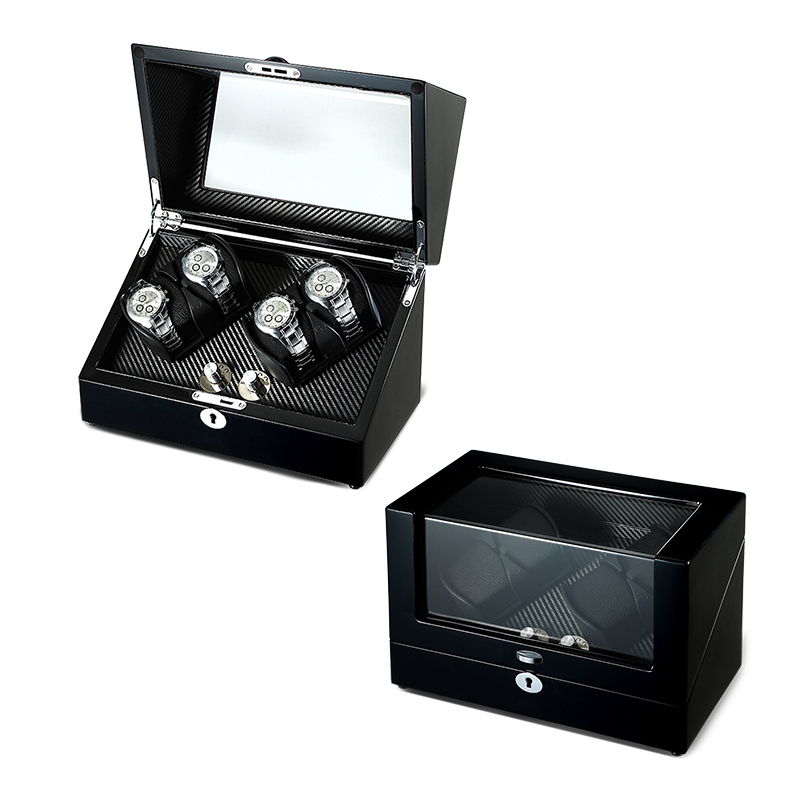
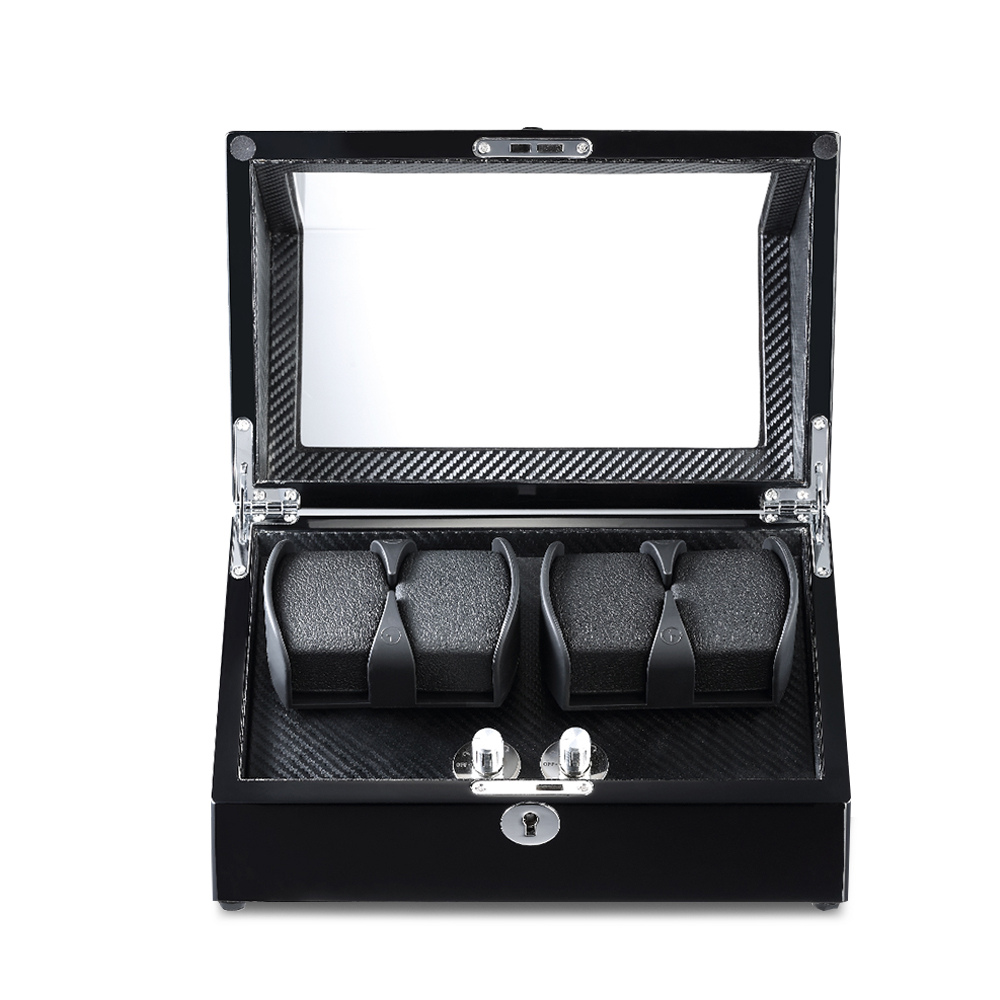
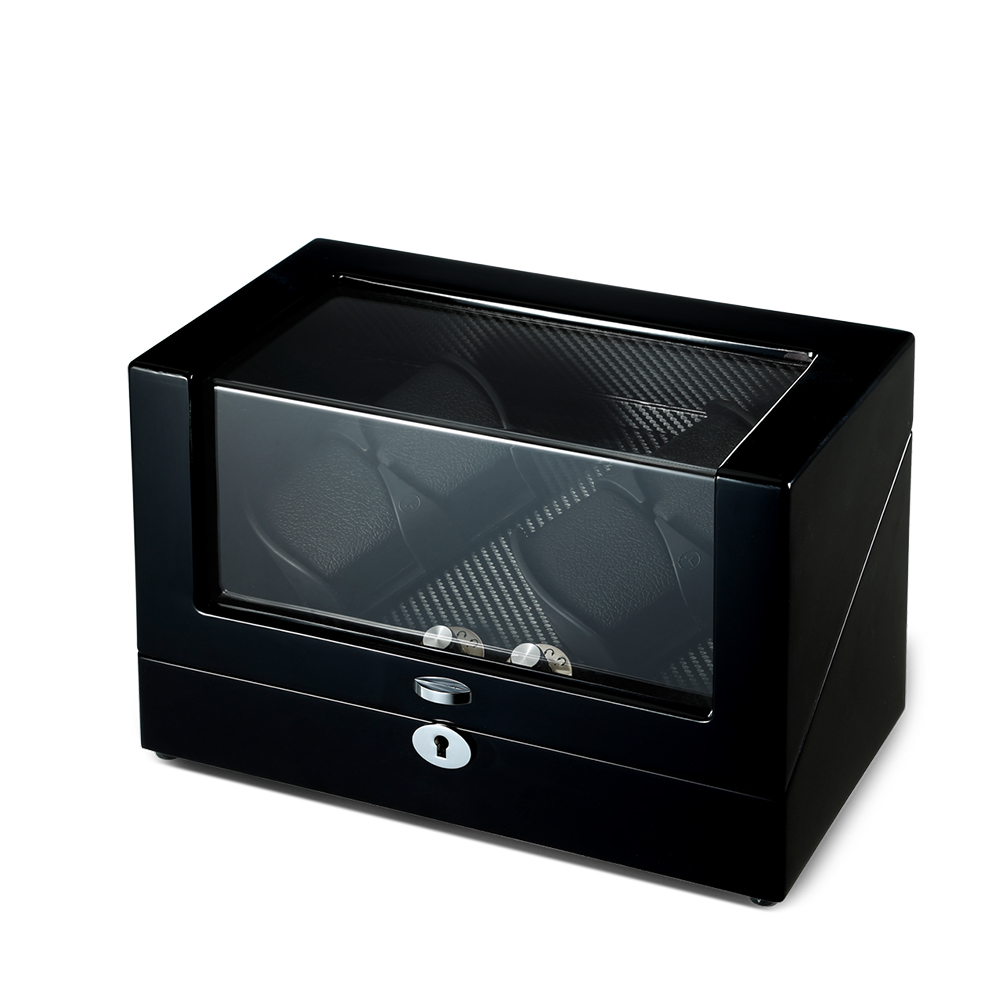
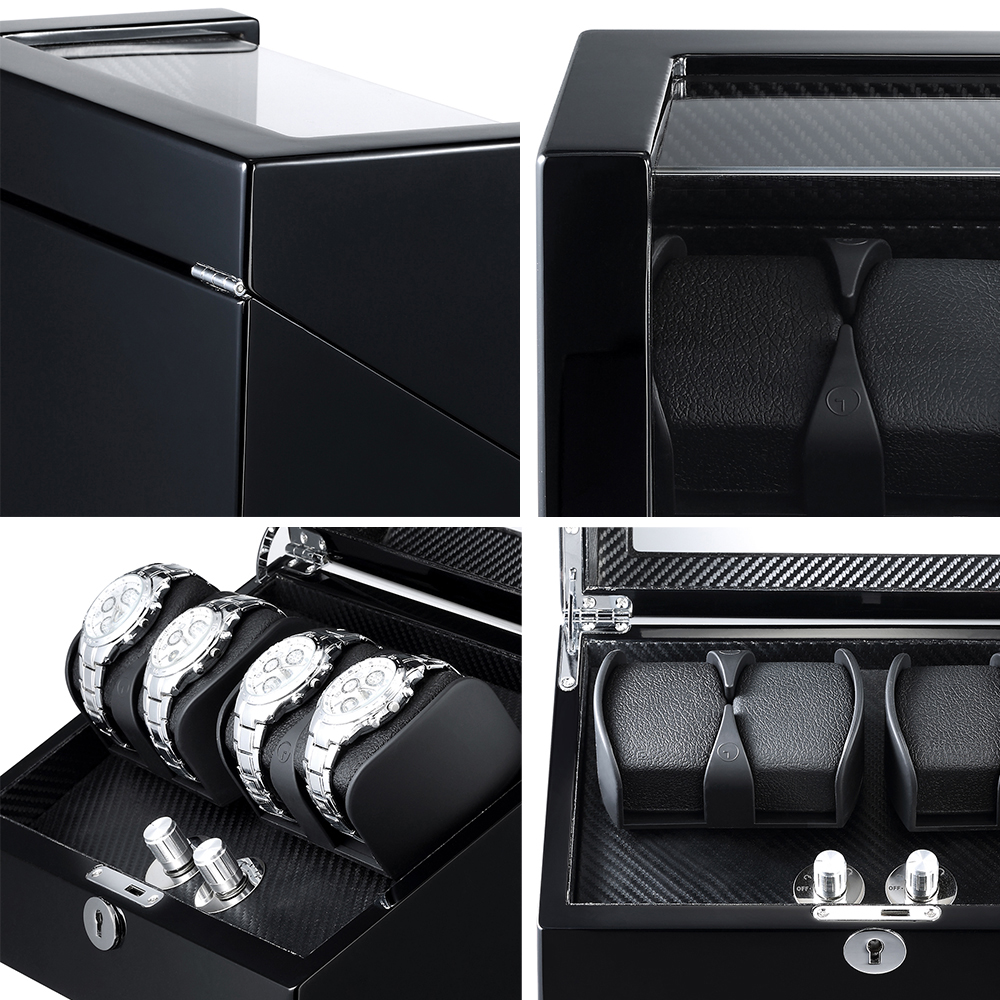
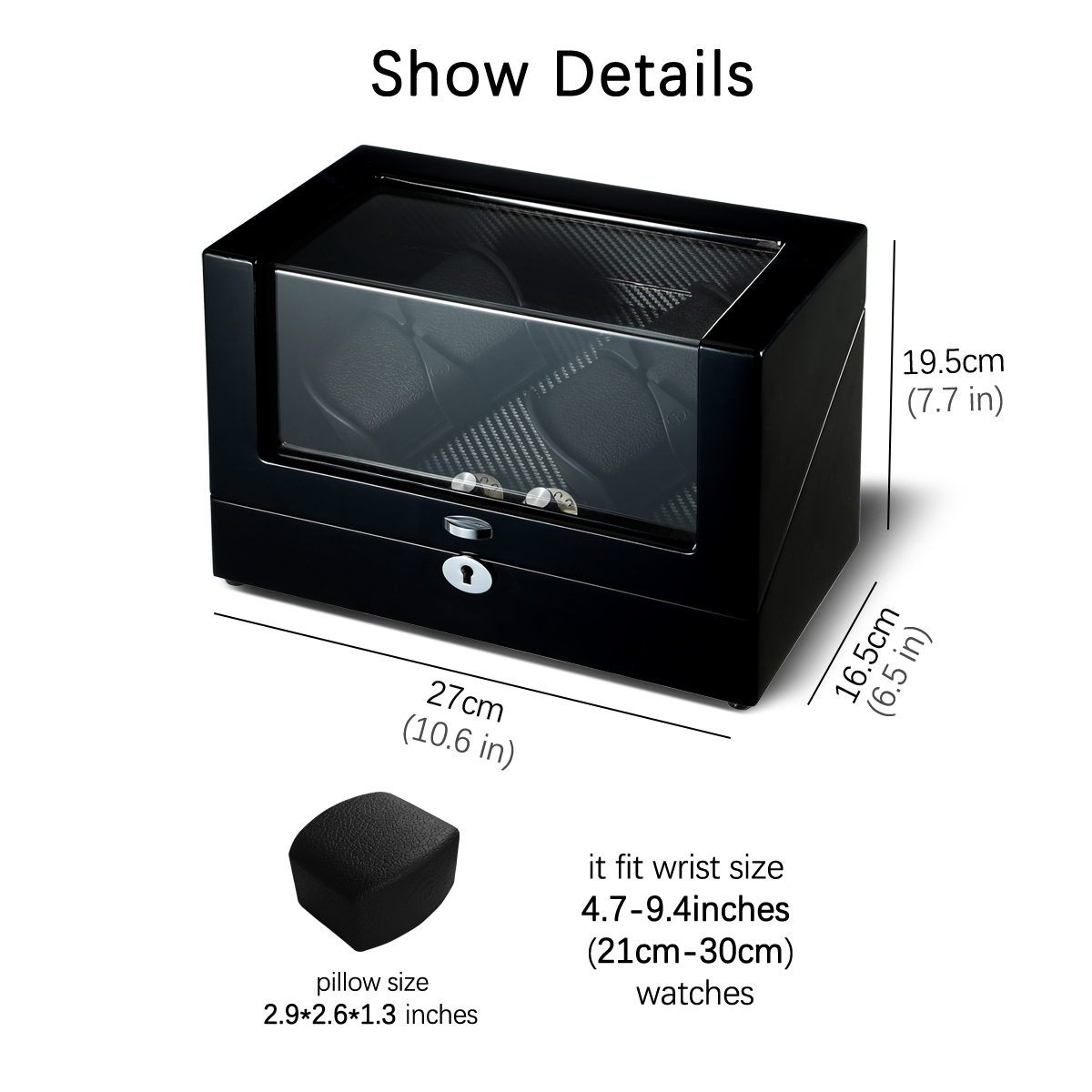
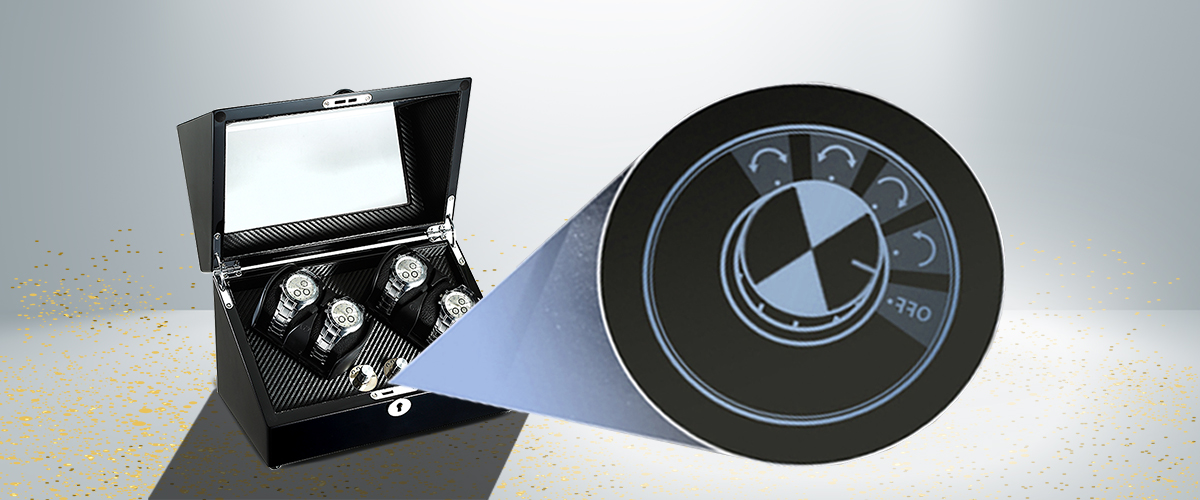
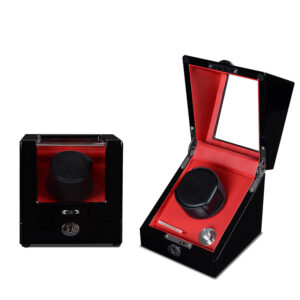
The Watch Winder 8117 is a 4 watch winder – the first model in the series to run two independent rotors, which is what makes four positions practical in a case only 27 cm wide. It measures 27 × 16.5 × 19.5 cm (10.63 × 6.50 × 7.68 in) and this version is finished in high-gloss black, with an acrylic window across the front and an integrated LED light behind it.
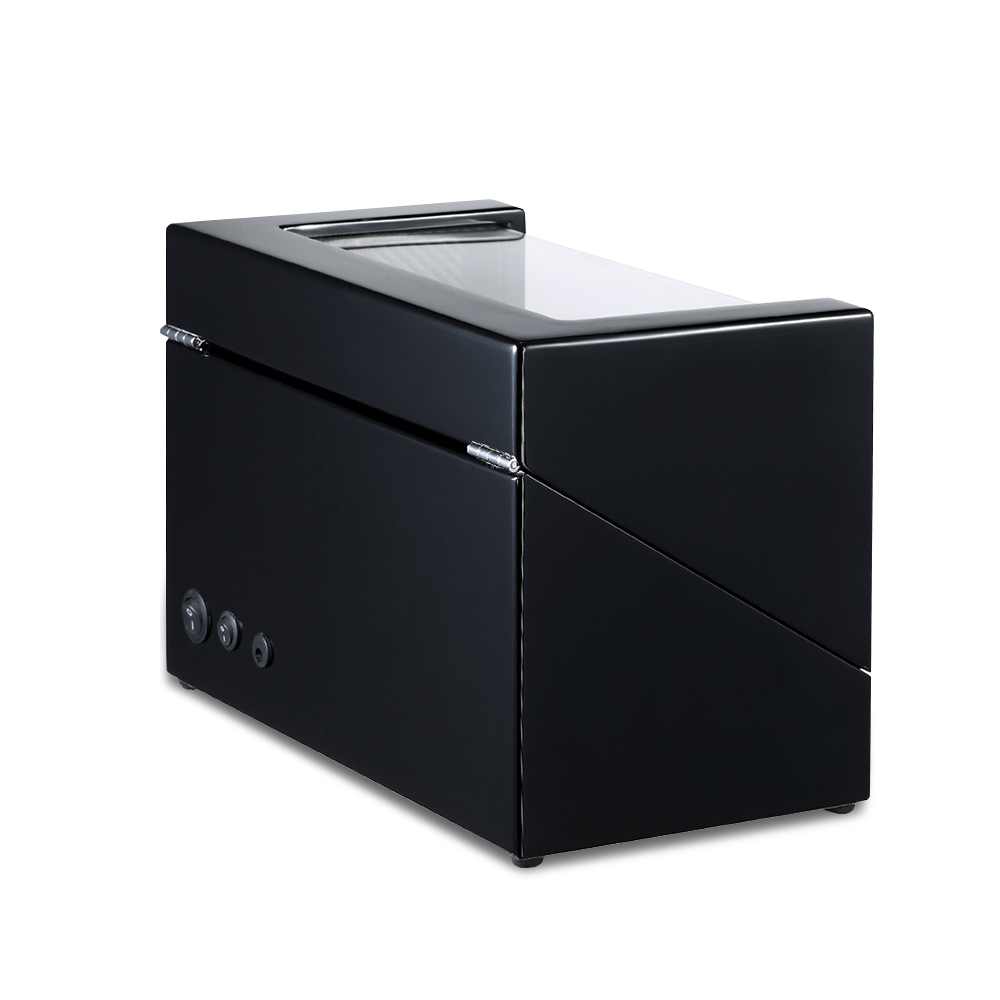
Capacity is 4 watches on two rotors, each holding two watches, all driven by a Japanese Mabuchi motor through the same four-programme knob control used across the series. The structure is fully enclosed to keep dust out and keep running noise down, and the anti-magnetisation layout keeps the motor field away from the watch bays. It runs from the supplied AC adapter and also accepts two C-size batteries; a user manual, cleaning cloth and key come in the box.
Watch Winder 8117 specifications
| Specification | Detail |
|---|---|
| Model | Watch Winder 8117 (Black) |
| Watch capacity | 4 watches (two rotors, each holding two watches) |
| External dimensions | 27 × 16.5 × 19.5 cm / 10.63″ × 6.50″ × 7.68″ |
| Exterior | medium-density fibreboard with a high-gloss black PE lacquer finish |
| Interior lining | Plush velvet or pu leather |
| Motor | Japanese Mabuchi motor, low-noise operation |
| Rotation programmes | 4 (clockwise, counter-clockwise, two bi-directional) |
| Power | AC adapter supplied; also runs on two C-size batteries |
| Lighting | Integrated LED interior light |
| Anti-magnetisation | Fully enclosed structure with the motor isolated from the watch bays |
| In the box | User manual, cleaning cloth, key, AC adapter |
| OEM minimum order quantity | 50 to 100 pieces, depending on finish and level of customisation |
| Sample lead time | 7 days |
| Bulk production lead time | 20 to 30 days from sample approval |
The installed base of mechanical watches keeps expanding. Statista’s figures show global watch and clock exports of about US$55.5 billion in 2025, while its luxury watch outlook puts 2025 revenue near US$63.7 billion with roughly 3.8% compound annual growth to 2030. Every one of those automatic movements stops running after 40 to 72 hours off the wrist, and every one of them then needs resetting – a winder removes that daily friction.
High-gloss black lacquer: the finish explained
High-gloss black is the default finish in this series for a reason: it works with almost any interior and it makes the watch the only bright object in the box. The process starts with a medium-density fibreboard carcass, chosen because it is dimensionally stable and will not warp the way solid timber can in a centrally heated room or a humid climate. Multiple coats of PE lacquer are applied over a sealed and sanded substrate, then polished to a piano-black gloss. The result is a hard, wipe-clean surface with the depth you see on a grand piano lid rather than the flat look of sprayed paint.
Practical points follow from that. A gloss black surface shows fingerprints and dust more readily than a matte one, so the supplied cleaning cloth earns its place – a dry microfibre wipe removes marks without dulling the polish. Dark lacquer also hides the seam lines of the lid better than pale finishes, and it photographs well, which matters for resale listings and for retailers shooting catalogue images. Scratches, when they happen, are more visible on black, so treat the surface as you would a piano lid and avoid sliding anything across it.
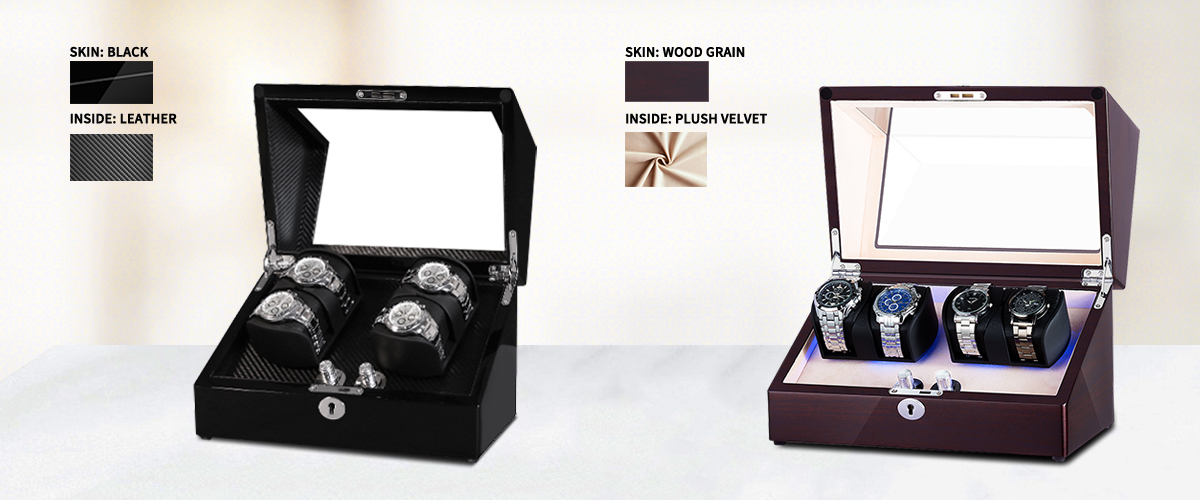
Against the black exterior, the interior can be specified in plush velvet or in PU leather, and the contrast is deliberate: a pale lining behind a dark shell makes a steel or gold case read clearly through the acrylic window. For buyers ordering OEM runs, black is also the safest colour to hold in stock, because it is the one finish that suits every watch style from a dress piece to a full-lume diver.
Motor, noise and anti-magnetisation
The motor is the part that decides whether a winder lasts two years or ten. This model uses a Japanese Mabuchi motor. Mabuchi Motor traces its history to 1946 and to the founding of Tokyo Science Industrial Co. on 18 January 1954, and it is now the largest producer of small DC motors in the world by volume, at more than 1.4 billion motors a year. For a watch winder, what that buys you is consistency: the motor runs at a stable speed from a cold start, tolerates repeated start-stop cycles and does not develop the bearing rumble that cheap motors get after a few months of nightly running.
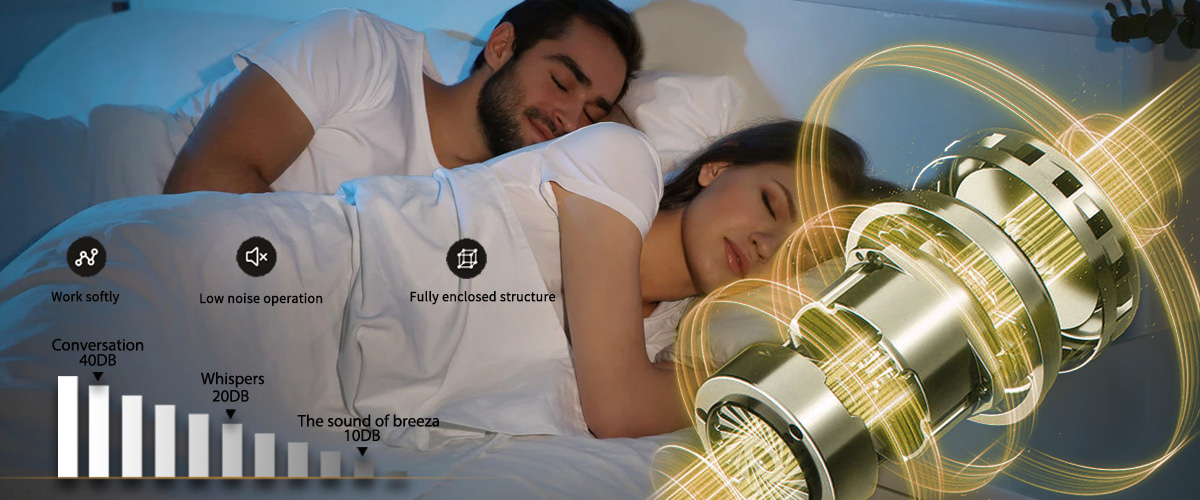
The fully enclosed case does the second half of the job. It damps what noise the motor does make, keeps dust away from the watch, and gives the unit the solid, closed feel buyers expect at this price. In practice the winder can live on a bedside table or in a dressing room without ever becoming a nuisance.
The second engineering question after noise is magnetism. ISO 764:2020 sets the benchmark: a magnetic resistant watch is tested in a 4,800 A/m direct current field and must keep its rate within about ±30 seconds a day afterwards. Phones, tablets, magnetic closures and laptop speakers produce fields easily capable of disturbing a hairspring, and a magnetised watch can lose several minutes a day until it is demagnetised.
That is why the anti-magnetisation design here matters. The motor is housed inside a fully enclosed shell with the watch bays isolated from it, so the winder does not add a magnetic source to a watch that is already at risk from the rest of the house. Unshielded budget winders put the motor a few centimetres behind the watch pillow, which is precisely what this design avoids.
Four rotation programmes
| Programme | Cycle |
|---|---|
| Programme 1 | Clockwise only – 3 minutes turning, 40 minutes rest, repeat |
| Programme 2 | Counter-clockwise only – 3 minutes turning, 40 minutes rest, repeat |
| Programme 3 | Bi-directional – 2 min counter-clockwise, 28 min rest, 2 min clockwise, 28 min rest, repeat |
| Programme 4 | Bi-directional – 10 min clockwise, 10 min counter-clockwise, repeat for 1 hour, then 7 hours rest |
A single knob selects the programme, and four options are enough to match any automatic calibre. Programme 1 is clockwise only – three minutes turning, forty minutes rest, repeat. Programme 2 is the mirror image, counter-clockwise only, on the same cycle. Programme 3 alternates: two minutes counter-clockwise, twenty-eight at rest, two minutes clockwise, twenty-eight at rest, and repeat. Programme 4 is built for long storage: ten minutes clockwise and ten minutes counter-clockwise, cycling for one hour, then a seven-hour rest before it starts again.
Those rest intervals exist because of how automatic winding works. The mainspring is fitted with a slipping bridle, so once it reaches full tension extra rotation is absorbed rather than stored, but continuous running still keeps the rotor, reversing wheels and barrel under needless load. Run-and-rest cycling keeps the power reserve topped up with far less wear. It is also why winder specifications are quoted in turns per day – commonly 650, 750, 850, 1,000 or 1,950 TPD – rather than in motor speed.
Who the 8117 suits
Four positions is where a winder stops being a convenience and starts being storage furniture. It suits the owner with a genuine rotation – a dress watch, a diver, a chronograph and a beater – who may not wear any single piece more than twice a week. It also suits couples sharing one unit, and it is the size most often chosen for a wardrobe shelf or a dressing room rather than a bedside table. Below four, watches still tend to stop; above four, the case gets significantly wider. If your collection is six or eight pieces, the 8118 and 8119 use the same construction with three and four rotors respectively.
Where to put it
At 27 cm wide the 8117 needs a proper shelf rather than a corner of a dresser. Measure the depth as well as the width: 19.5 cm including the lid clearance, plus a few centimetres behind for the power lead. Keep it level and away from speakers, and if it is going inside a wardrobe, check that the LED and the adapter lead have room.
Setting it up and caring for it
A winder lasts longer when it is set up properly. Start with position: level surface, no direct sunlight, and away from speakers, wireless chargers and other magnetic sources. Mount the watch on the cushion so it cannot rock, with the bracelet fastened, and check that the case back is not pressing against the drum. Pick the rotation direction your calibre wants – clockwise for most Swiss automatics, counter-clockwise for the minority that only wind one way, bi-directional for rotors that wind in both. Use the AC adapter as the default and reserve battery operation for travel or for a safe without power.
Upkeep is minimal. Clean the acrylic window with a dry microfibre cloth; avoid solvents and glass sprays, which can cloud acrylic. Vacuum or brush the interior occasionally. If a watch comes back into daily rotation, turn the unit off rather than letting it run empty.
OEM and ODM customisation
This winder is manufactured by T.WING-PAK in Nansha, Guangzhou, on a line that also runs OEM and ODM programmes for watch brands, jewellery brands and retailers. Customisation covers the substrate and the surface – wood species, high-gloss lacquer, carbon fibre pattern, litchi grain leather – the interior lining, and the cushion dimensions. Branding options include hot foil stamping, screen printing, laser engraving and fitted metal badges.
Because T.WING-PAK also makes watch boxes, jewellery boxes and wooden gift packaging, the outer carton can be produced to match the winder instead of being bought in separately. MOQ runs from 50 to 100 pieces by specification, sampling takes 7 days, and delivery is 20 to 30 days after the sample is signed off.
Frequently asked questions
Does a watch winder damage an automatic watch?
No, provided it is a well-built unit and the programme matches the movement. An automatic watch is wound through a slipping bridle on the mainspring, so once the spring reaches full tension further rotation simply slips rather than tightening it – the watch cannot be overwound in the way a hand-wound movement can. The real risks are cheap motors that cog and overheat, and unshielded motors sitting directly behind the watch. This winder uses a Japanese Mabuchi motor in a fully enclosed, anti-magnetisation layout, and its programmes are built around long rest periods rather than continuous running.
Which rotation programme should I use?
Follow the watch maker’s guidance where it exists, otherwise start with Programme 3, the bi-directional cycle. It runs two minutes counter-clockwise, rests twenty-eight, runs two minutes clockwise and rests twenty-eight, which suits the great majority of modern automatics. Programme 1 is clockwise only and Programme 2 counter-clockwise only, for movements that wind in a single direction. Programme 4 – ten minutes each way for an hour, then seven hours of rest – is the setting to use for a watch that will be stored rather than worn weekly.
Should I leave the winder running permanently?
Leaving it running is normal and safe for a watch that is not being worn. The rest periods built into every programme mean the watch is stationary for most of each cycle. Switch it off when the watch returns to daily wear, since there is nothing to gain, and if a piece is going into storage for months, use Programme 4, which rotates for an hour and then rests for seven.
Can the winder run on batteries instead of mains power?
Both options are available. Run the supplied AC adapter at home and switch to two C-size batteries when the winder goes somewhere without a socket – a safe, a cabinet, a hotel room. Because every programme includes long rest periods, current draw is modest, though Programme 4 and the bi-directional Programme 3 are the most economical settings. Fresh alkaline cells are worth using if the unit will sit unattended for months.
Can I add my logo or change the finish for a bulk order?
Yes – the series is produced by T.WING-PAK in Nansha, Guangzhou, on a line that handles OEM and ODM work as standard. Changeable elements include the exterior finish and colour, the wood species, the interior lining, the cushion size and the branding method, which can be hot foil, screen print, laser engraving or a metal plate. Packaging can be developed alongside the product. Minimum order quantity is 50 to 100 pieces, samples are ready in 7 days, and lead time is 20 to 30 days from sample confirmation.
Bottom line
A stopped watch is a small annoyance that repeats every week; a winder removes it permanently. Four watches stay wound, dated and ready, powered by a Mabuchi motor that you will not hear and protected by a fully enclosed, anti-magnetic case. Buy one for your own collection, or ask T.WING-PAK for an OEM or ODM quotation on your own specification.


Reviews
There are no reviews yet.