


The Watch Winder 8116 is manufactured by T.WING-PAK, a wooden packaging maker based in Nansha, Guangzhou, that has produced watch winders, watch boxes, jewellery boxes and wooden gift packaging for export for more than 19 years.
What the Watch Winder 8116 does
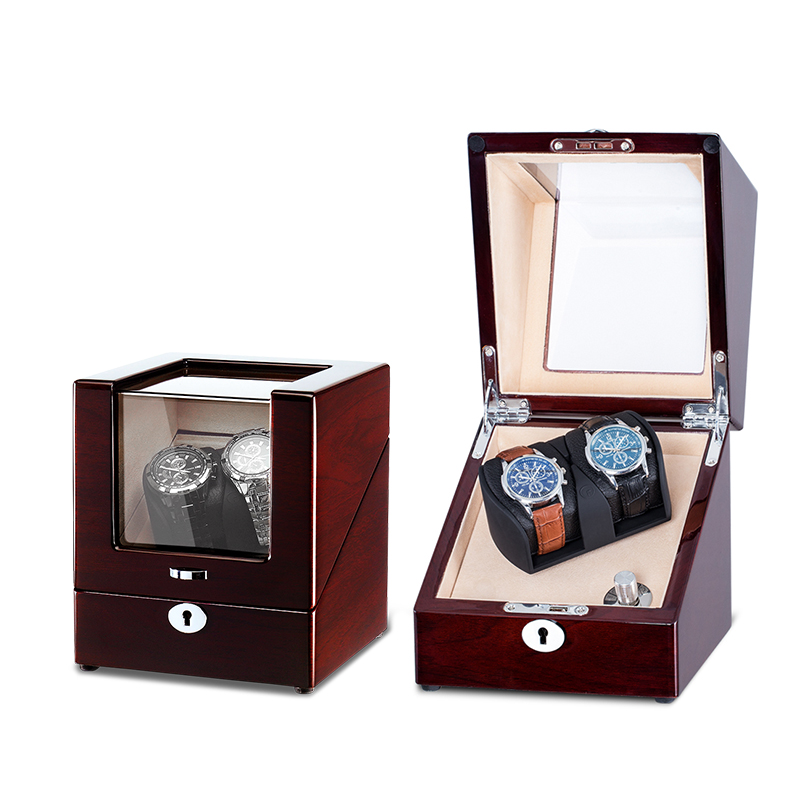
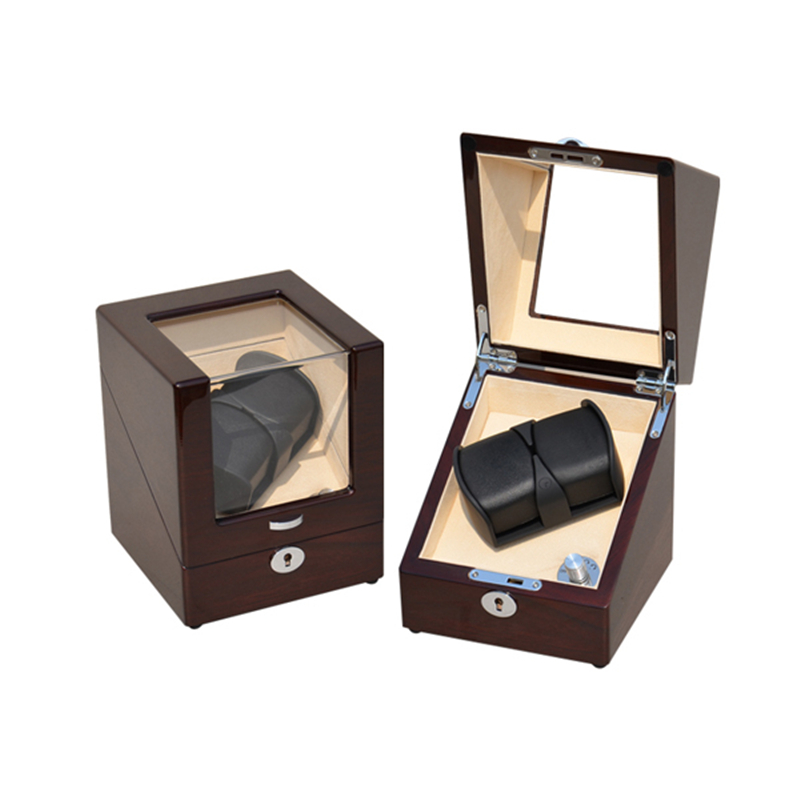
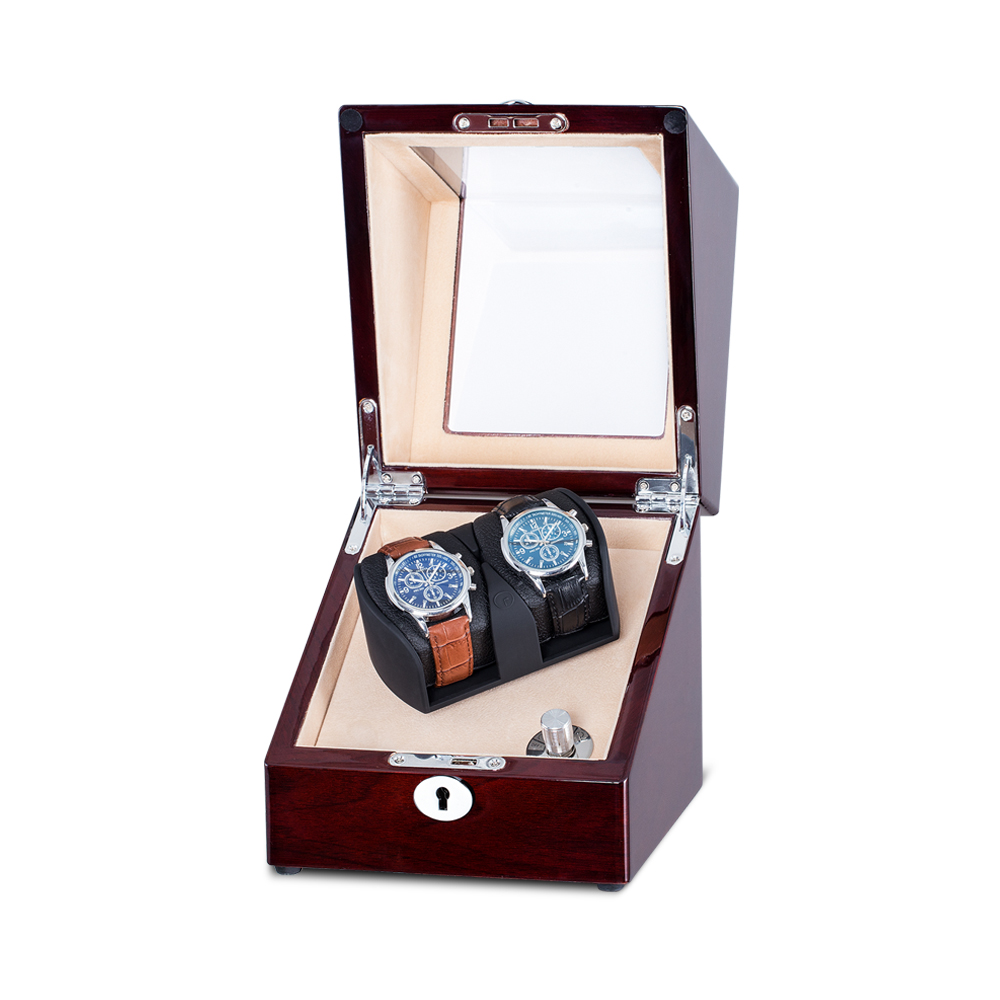
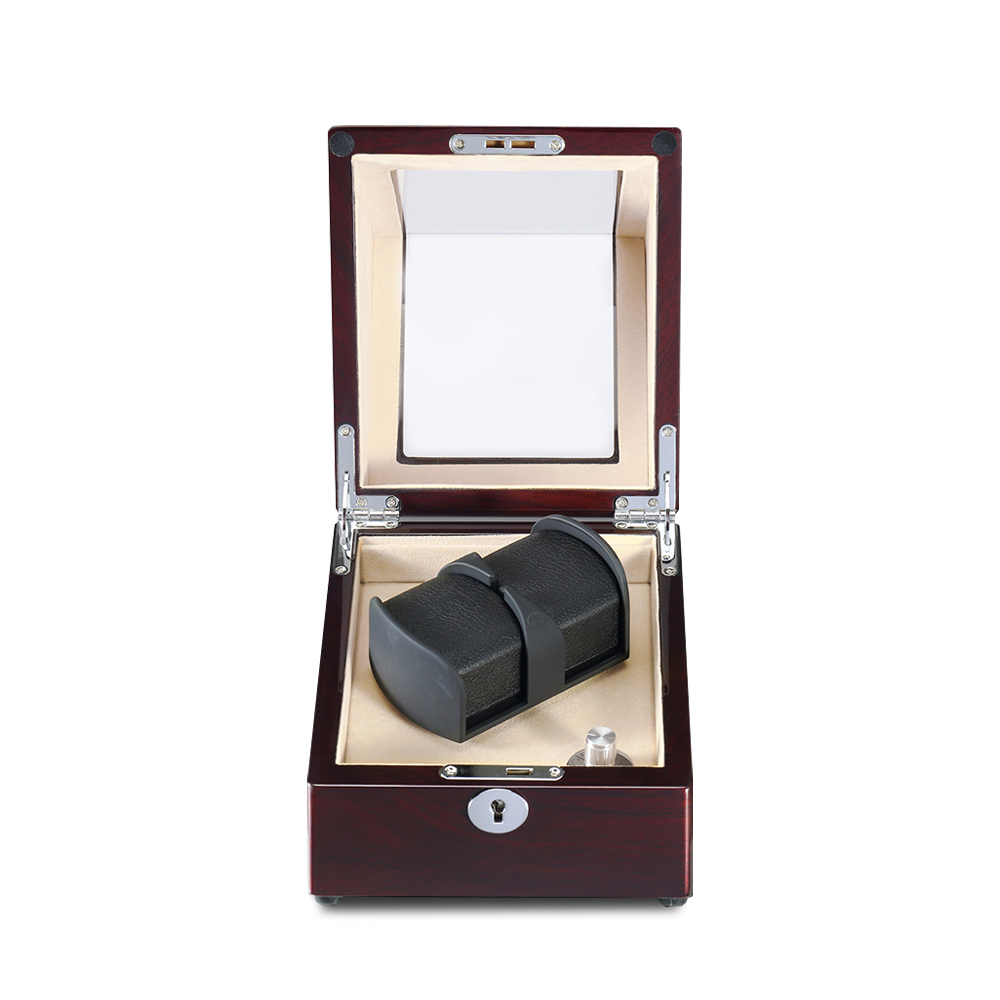
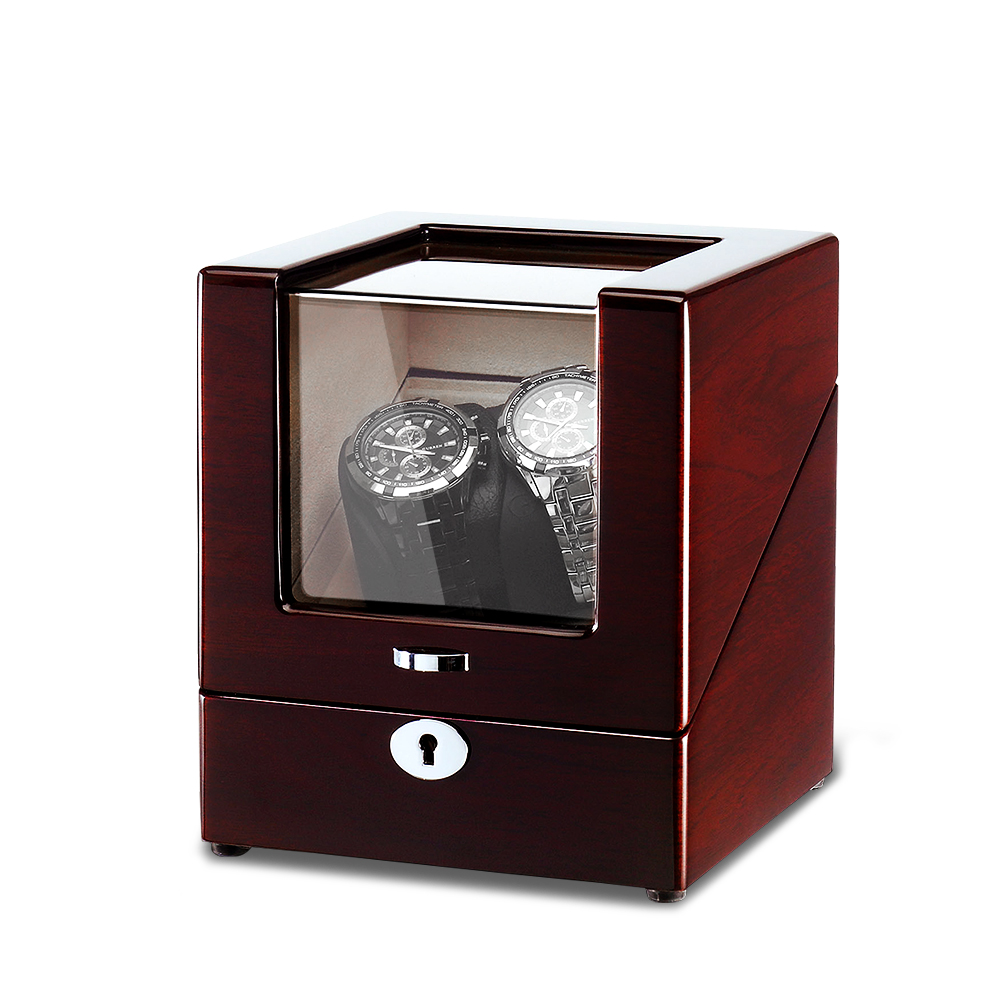
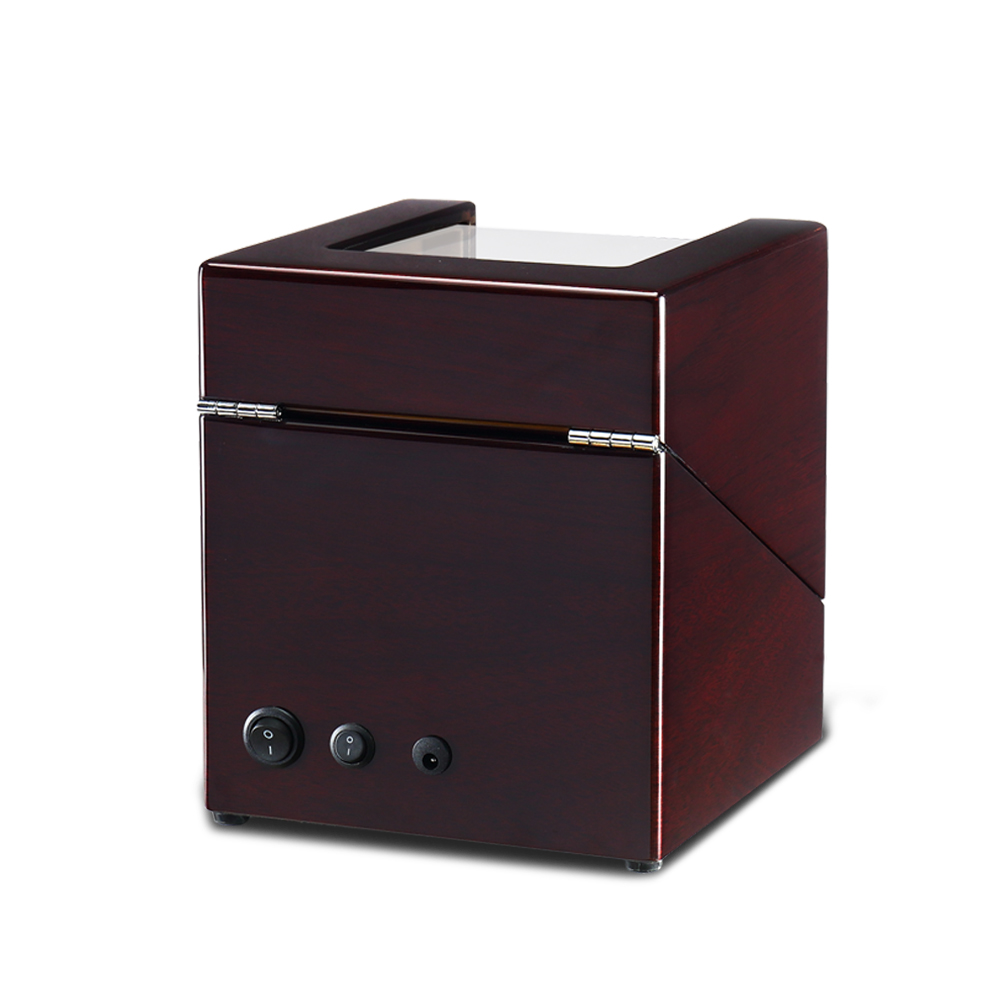
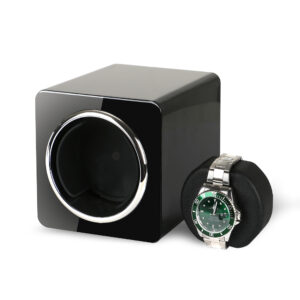
The Watch Winder 8116 is a 2 watch winder – the smallest step up from a single unit, built for the owner who rotates between two automatic watches. It measures 16.5 × 16.5 × 19.5 cm (6.50 × 6.50 × 7.68 in), so it still fits comfortably on a dresser or a shelf, and this version is finished in wood grain with a clear acrylic window and an integrated LED light inside the lid.
Two watch positions share one twin-position rotor, so both watches follow the same programme at the same time. Drive comes from a Japanese Mabuchi motor, chosen for quiet operation and for the ability to handle years of start-stop cycling, and the fully enclosed case keeps dust off the watches and noise in the box. Power is a UL-certified AC adapter, with two C-size batteries as an option for a safe or a room without a convenient socket. A user manual, cleaning cloth and key are included.
Watch Winder 8116 specifications
| Specification | Detail |
|---|---|
| Model | Watch Winder 8116 (Wood Grain) |
| Watch capacity | 2 watches (a rotor with two watch positions) |
| External dimensions | 16.5 × 16.5 × 19.5 cm / 6.50″ × 6.50″ × 7.68″ |
| Exterior | medium-density fibreboard with a natural wood grain surface under high-gloss PE lacquer |
| Interior lining | Black carbon fibre pu leather or plush velvet |
| Motor | Japanese Mabuchi motor, low-noise operation |
| Rotation programmes | 4 (clockwise, counter-clockwise, two bi-directional) |
| Power | AC adapter supplied; also runs on two C-size batteries |
| Lighting | Integrated LED interior light |
| Anti-magnetisation | Fully enclosed structure with the motor isolated from the watch bays |
| In the box | User manual, cleaning cloth, key, AC adapter |
| OEM minimum order quantity | 50 to 100 pieces, depending on finish and level of customisation |
| Sample lead time | 7 days |
| Bulk production lead time | 20 to 30 days from sample approval |
Automatic watches sit at the centre of a very large market. Statista puts the worldwide export value of watches and clocks at roughly US$55.5 billion in 2025, and the same source projects global luxury watch revenue of about US$63.7 billion for 2025, growing close to 3.8% a year through 2030. More mechanical watches in circulation means more of them sitting unworn in a drawer, losing their power reserve and their date setting – which is exactly the problem a winder solves.
Wood grain finish: the finish explained
Wood grain is the classic finish, and it is the one that reads as furniture rather than equipment. The carcass is medium-density fibreboard carrying a natural wood grain surface, sealed and finished with high-gloss PE lacquer so the grain sits under a deep, reflective coat. Because the grain is a natural pattern, no two units are identical: the figure, the colour depth and the way the light moves across the lid vary from piece to piece, which is part of the appeal for buyers who want the box to look like it belongs in a room with wooden furniture.
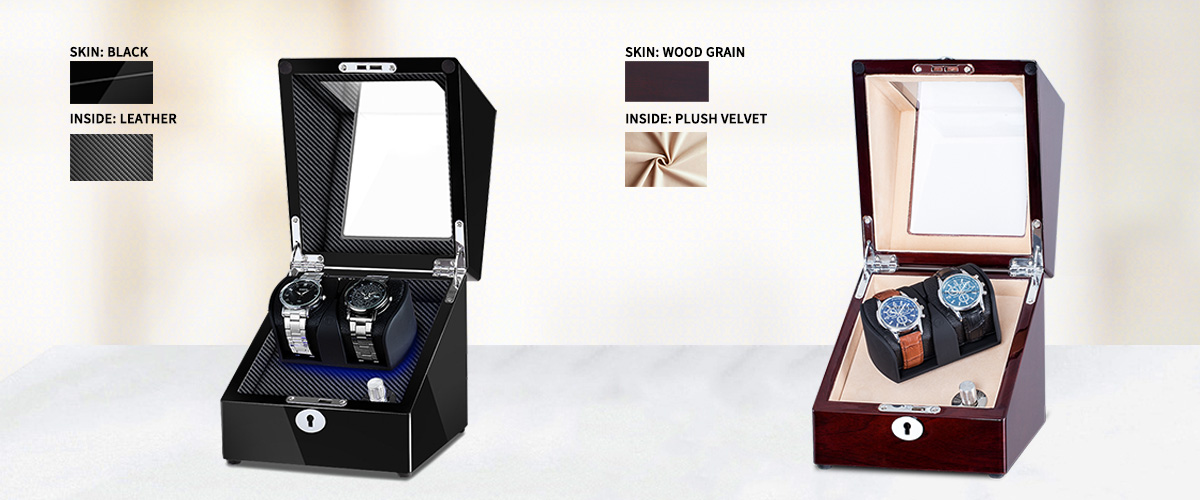
The lacquer does two jobs. It protects the surface from moisture and handling, and it gives the grain depth – a matte wood surface looks flat by comparison. Care is simple: dust with a dry cloth, avoid solvents, and keep the unit out of direct sunlight, which can shift the tone of any wood finish over years. Wood grain also hides dust and fingerprints better than gloss black, making it a lower-maintenance choice despite the similar care instructions.
This is the finish to choose when the winder is going to be seen: on a dressing table, in a study, or in a showroom where it sits alongside other wooden presentation pieces. It suits dress watches, vintage pieces and gold cases especially well. For OEM buyers, wood grain is also the most customisable starting point, because the species and the stain can be changed to match an existing furniture line or a brand’s house colour.
Motor, noise and anti-magnetisation
Rotation is only as good as the motor behind it. This winder runs on a Japanese Mabuchi motor. Mabuchi Motor dates back to 1946 and to Tokyo Science Industrial Co., founded on 18 January 1954; it is today the world’s largest maker of small DC motors by volume, producing well over 1.4 billion units a year. That scale matters in a watch winder because the motor has to start and stop thousands of times without cogging, heating up or drifting off speed. Cheap generic motors use soft brushes and loose bearings: they whine, they slow down under load, and they commonly fail inside a year of continuous duty. A Mabuchi unit holds its speed, starts quietly from rest and stays quiet through the whole cycle, which is why it is the default choice in this class of product.
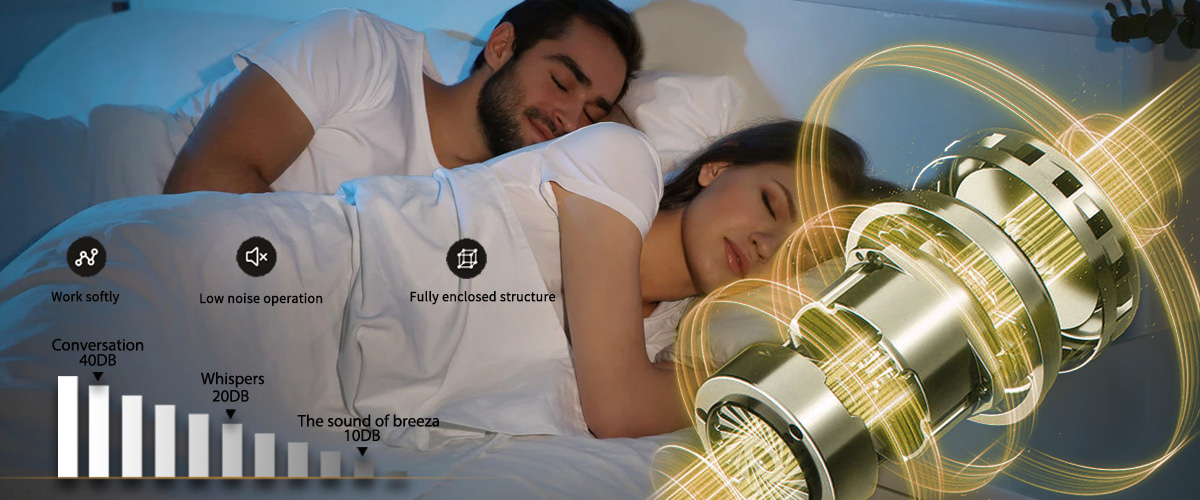
Noise is the specification buyers notice first. Because the case is fully enclosed and the motor is isolated from the shell, sound output stays low enough to sit on a bedroom dresser or an office shelf without being noticed. Fully enclosed also means dust stays out of the movement bays and the watch is never exposed when the lid is closed.
Magnetism is the quiet enemy of a mechanical watch. ISO 764:2020, the international standard for magnetic resistant watches, tests a watch against a direct current field of 4,800 A/m and allows a residual rate change of roughly ±30 seconds a day for a mechanical watch. Everyday sources – a laptop, a magnetic phone mount, a speaker, a handbag clasp, an induction hob – can magnetise a hairspring far more easily than most owners assume, and a magnetised watch that suddenly runs minutes fast usually needs a service visit to demagnetise.
This winder is built with anti-magnetisation in mind. The motor sits in a fully enclosed housing and the movement bays are separated from it, so the field generated by the motor is not passed into the watch on the cushion. It is a design choice rather than a marketing phrase, and it is the reason to avoid cheap winders that mount an unshielded motor directly behind the watch pillow.
Four rotation programmes
| Programme | Cycle |
|---|---|
| Programme 1 | Clockwise only – 3 minutes turning, 40 minutes rest, repeat |
| Programme 2 | Counter-clockwise only – 3 minutes turning, 40 minutes rest, repeat |
| Programme 3 | Bi-directional – 2 min counter-clockwise, 28 min rest, 2 min clockwise, 28 min rest, repeat |
| Programme 4 | Bi-directional – 10 min clockwise, 10 min counter-clockwise, repeat for 1 hour, then 7 hours rest |
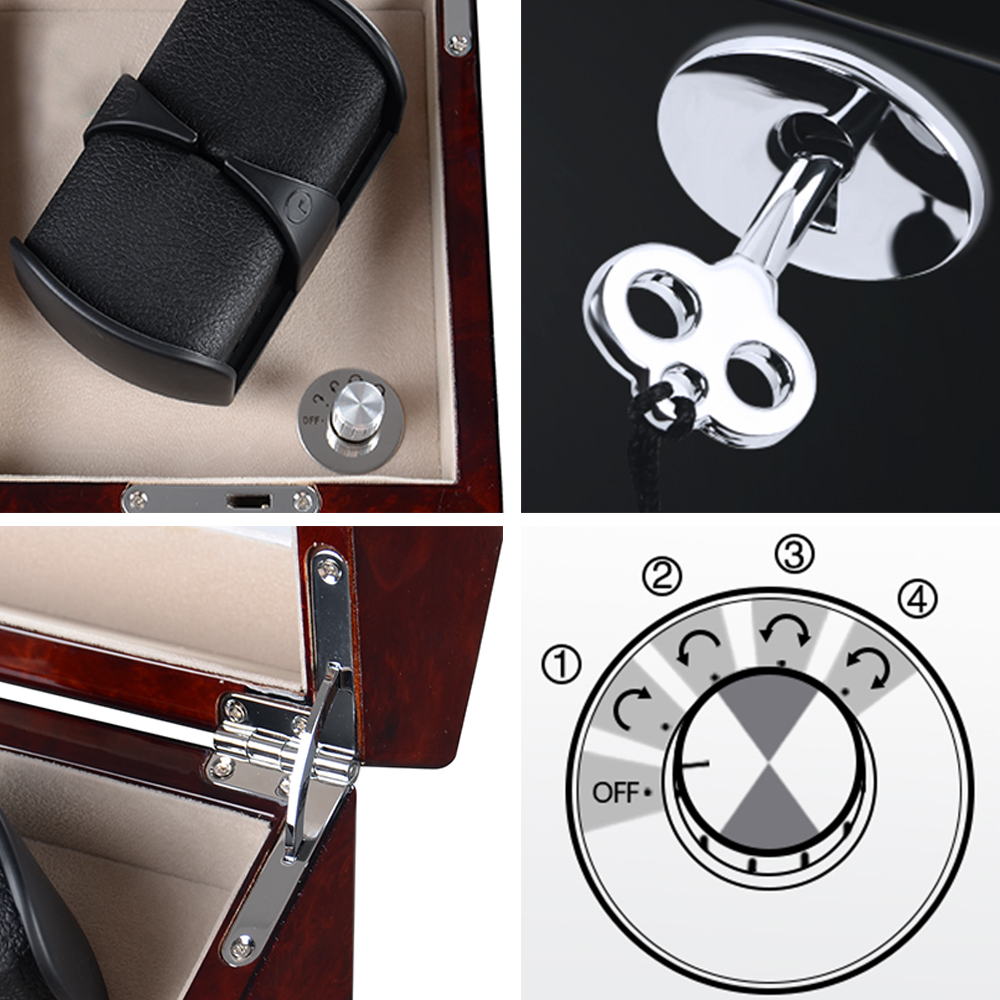
Rotation is set with a single knob, and the four programmes cover effectively every automatic movement in circulation. Programme 1 turns clockwise only, running for three minutes and resting for forty before repeating. Programme 2 does the same counter-clockwise. Programme 3 is bi-directional: two minutes counter-clockwise, twenty-eight minutes rest, two minutes clockwise, twenty-eight minutes rest, then repeat. Programme 4 is the long cycle – ten minutes clockwise then ten minutes counter-clockwise, repeated for one hour, followed by a seven-hour rest before the sequence restarts.
The rest periods are not laziness, they are protection. An automatic movement is wound through a slipping bridle on the mainspring, so once the spring is at full tension continued rotation simply slips rather than winding further. Programmes that run and rest therefore keep the watch fully wound without putting sustained load on the rotor and reversing wheels. Winders sold on turns-per-day figures typically offer 650, 750, 850, 1,000 or 1,950 TPD for the same reason: the number that matters is the total rotation delivered in twenty-four hours, not how fast the drum spins.
Who the 8116 suits
Two positions is the sweet spot for a working collection: one dress watch and one sports watch, or his and hers. Both watches stay wound and dated, and neither has to be reset before it is worn. It is also the size many buyers pick for a shared dresser, because the footprint is barely larger than a single-watch unit while the capacity doubles. Owners who already know they will add a third and fourth watch should look at the 8117 instead; the 8116 cannot be extended, so the honest advice is to buy for the collection you expect to have in twelve months rather than the one you have today.
Where to put it
Think of the 8116 as a cube: it needs about the space of a large tissue box, with clearance at the back for the adapter lead. Keep it level, out of direct sunlight, and away from magnetic sources such as speakers and wireless chargers. On a shelf or inside a wardrobe it works equally well, and the battery option makes it viable inside a safe.
Setting it up and caring for it
Setting the winder up takes a few minutes and pays back over years. Place it on a level, stable surface away from strong magnetic sources such as speakers and wireless chargers. Fit the watch onto the cushion so the case sits snug and the bracelet or strap is closed – a loose watch rattles and a tight one marks the case back. Choose the programme from the watch maker’s own guidance: most Swiss movements wind efficiently clockwise, a minority wind counter-clockwise only, and bi-directional settings suit rotor systems that wind in both directions. Run on the supplied AC adapter day to day and keep the battery option for a safe, a hotel room or a display cabinet without mains power.
Maintenance is light. Wipe the acrylic window with a dry microfibre cloth rather than household glass cleaner, which can haze the surface. Dust the interior a couple of times a year. If the watch is going to be worn daily for a fortnight, switch the winder off rather than leaving it cycling.
OEM and ODM customisation
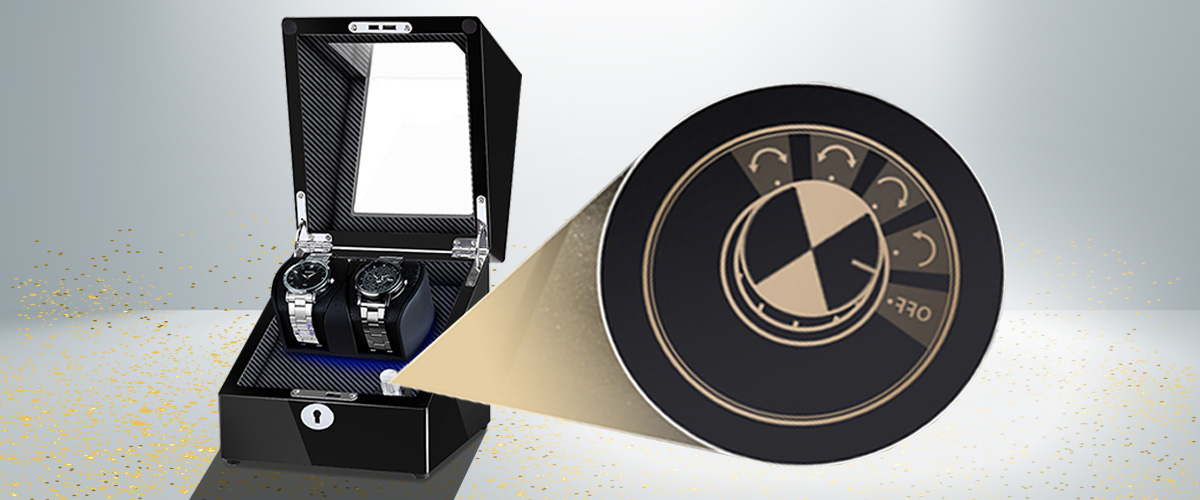
T.WING-PAK builds this series in Nansha, Guangzhou, and the same line supports OEM and ODM work. Buyers can change the wood species underneath the lacquer, swap the exterior colour and texture – wood grain, black, carbon fibre pattern or litchi grain leather – and specify the interior as plush velvet or PU leather. Cushions can be resized for large cases or small straps, the programme configuration can be adjusted, and branding can be applied by hot foil, screen print, laser engraving or a metal plate.
Retail packaging is handled in-house as well, so a winder can ship in a matching printed box rather than a plain carton. Minimum order quantity is 50 to 100 pieces depending on the finish and how far the specification departs from stock, a sample unit is produced in 7 days, and bulk production takes 20 to 30 days from sample approval.
Frequently asked questions
Does a watch winder damage an automatic watch?
Used correctly, no. The mainspring in an automatic watch is fitted with a slipping bridle, so continued rotation past full wind is absorbed rather than stored, and every programme on this winder alternates running with rest. The watches that get damaged are the ones sitting in cheap winders with unshielded motors and no rest cycle, or the ones magnetised by a motor mounted a few centimetres from the case. This design separates the motor from the watch bays and keeps the running time low.
Which rotation programme should I use?
There is no single correct setting, but there is a sensible starting point. Programme 3, the bi-directional programme, suits most modern automatics: two minutes counter-clockwise, twenty-eight minutes rest, two minutes clockwise, twenty-eight minutes rest, then repeat. Where the manufacturer states a winding direction, Programme 1 covers clockwise-only movements and Programme 2 counter-clockwise-only ones. For a watch going into storage for months, Programme 4 gives an hour of alternating rotation followed by seven hours of rest.
How loud is it?
Quiet enough for a bedroom. The Mabuchi motor runs at a stable speed without the cogging and brush noise that low-cost motors produce, and the closed case absorbs most of what is left. Practically, that means it can run overnight on a dresser without being noticed. If you are sensitive to sound, avoid placing it on a hollow or unlevel surface, which will amplify any vibration.
What watch sizes fit the cushions?
The cushions are adjustable and fit the large majority of wristwatches, including cases up to roughly 50 mm and straps or bracelets from a slim dress strap to a substantial dive bracelet. The important thing is a snug fit: the watch should be held firmly enough that it cannot rock on the drum, but not so tightly that the case back is pressed hard against the cushion. Very small ladies’ cases and oversized pilot watches may need a different cushion size, which T.WING-PAK can supply for OEM orders.
Can I add my logo or change the finish for a bulk order?
This is exactly what the factory is set up for. OEM and ODM buyers can specify the exterior finish, the substrate, the interior lining in velvet or PU leather, and the cushion geometry, and can have a logo applied by hot foil, screen print, laser engraving or a fitted metal badge. Matching packaging – rigid box, insert and print – is produced in the same facility. MOQ is 50 to 100 pieces by specification, sampling takes 7 days, and delivery runs 20 to 30 days after the sample is approved.
Bottom line
If you want two watches to be ready to wear at any moment, this is the straightforward way to do it: a quiet Japanese motor, four programmes that cover every automatic calibre, an anti-magnetisation layout and a finish that looks right on a dresser. Order a single unit for personal use, or talk to T.WING-PAK about an OEM run with your own finish, lining and branding.



Reviews
There are no reviews yet.