For Mechanical Watch Enthusiasts: Watch Winder Beyond Decoration – Unveiling Its Composition Principles
For mechanical watch enthusiasts, a watch winder is by no means a simple home decoration, but a reliable partner for maintaining the smooth operation of timepieces. Most mechanical watches on the market today use automatic movements. If a watch is left idle at home for a long time, the lubricating oil in the movement will dry up, leading to a decrease in timekeeping accuracy. A watch winder acts as an exclusive cradle for the watch, simulating the state when worn on the human body, allowing the watch to always maintain optimal performance.
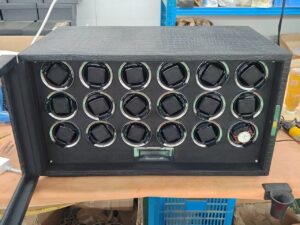
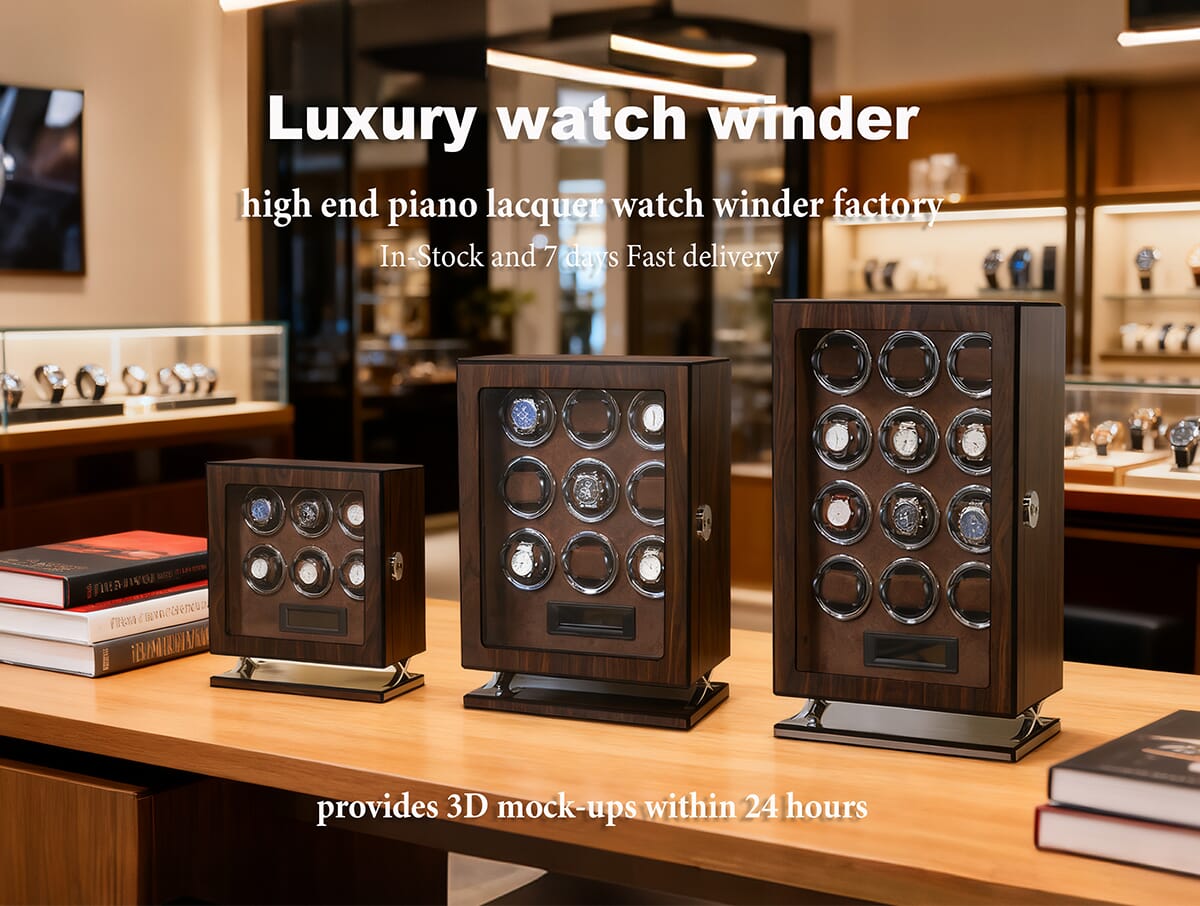
There is a wide variety of watch winders available on the market, ranging from single-head to 24-head and even more specifications; the control methods are also extremely diverse, including single-rotor, double-rotor, touchscreen, or independent switches. But do you know what components make up these variously shaped winders? Today, let’s explore their composition principle.
The “Heart” of the Winder: Core Drive Motor
The silent and non-magnetic motor built into the base is the core component of a watch winder. Its performance directly determines the winder’s noise level, operational stability, and service life, making it worthy of being called the “heart”. The drive system of a high-quality watch winder usually consists of a stepper motor and a precision transmission structure, and most adopt imported silent motors, which have significant advantages over ordinary DC motors:
- The rotation speed is precisely controllable, and the rotation frequency can be adjusted to match the needs of different brand movements, avoiding movement wear caused by excessive motor rotation;
- The operating noise is extremely low, usually below 30 decibels. Even if placed in the bedroom at night, it can quietly wind the watch without disturbing sleep.
The “Armor” of the Winder: Protective Case
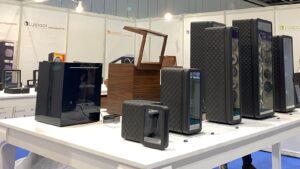
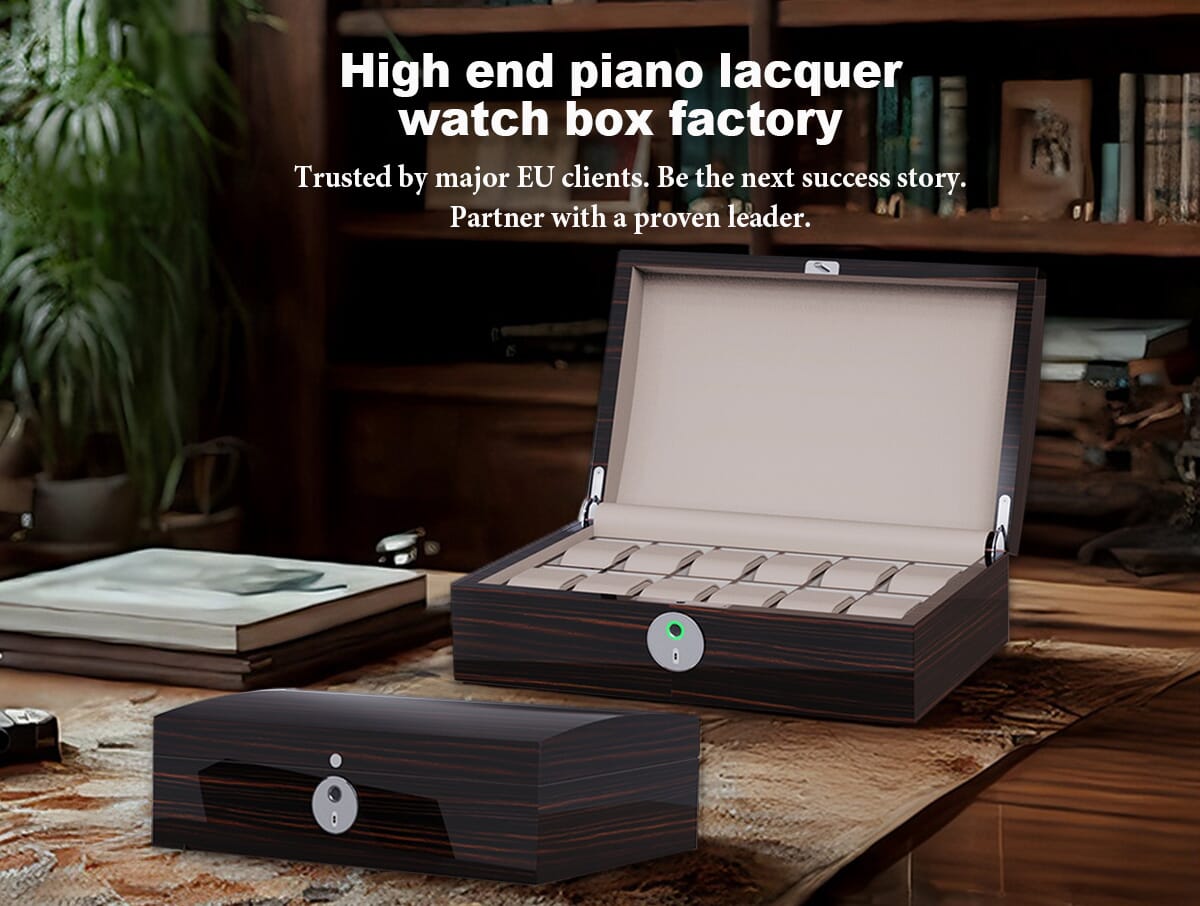
A small motor supports the normal operation of the watch winder, while a sturdy case acts like armor, protecting both the watch and the motor from damage. The exterior of the case is usually made of high-hardness wood. After being repeatedly sanded until smooth, it undergoes multiple layers of painting, sanding, and polishing, ultimately presenting a piano-like mirror finish.
Common case materials include Medium-Density Fiberboard (MDF), solid wood, plastic, and metal:
– Solid wood cases have a high-end texture and can insulate heat and control temperature, making them suitable for matching with valuable watches;
– Plastic cases are lightweight and affordable, making them an ideal choice for daily use;
– Metal cases are impact-resistant and wear-resistant, showing a high-tech texture.
Cases are usually equipped with observation windows, mostly made of glass or acrylic. Both materials have high light transmittance, allowing clear observation of the watch’s operation, and are tough and scratch-resistant. These materials can also play a sealing role, preventing the accumulation of dust and moisture and avoiding moisture damage to the movement.
The “Exclusive Seat” of the Watch: Fixed Watch Holder
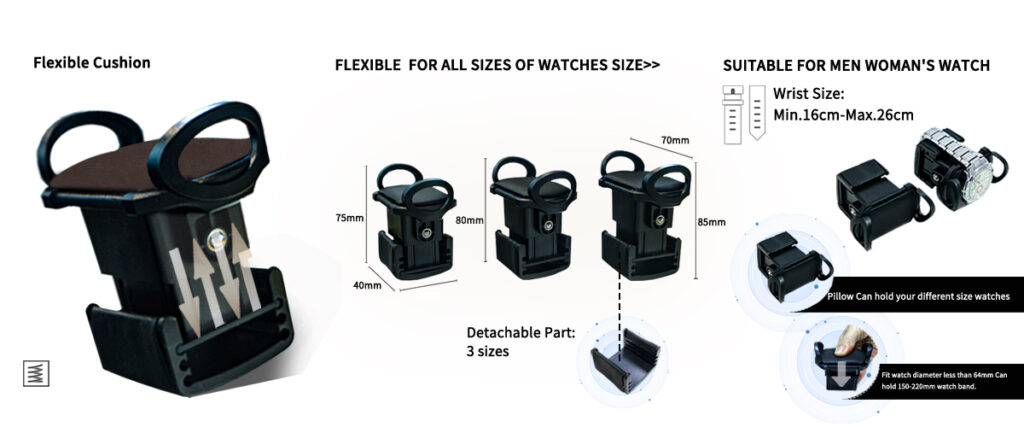
Opening the watch winder, you can see the cushion where the watch is placed. The cushion and its fixing structure are the parts of the winder that directly contact the watch, which can be called the “exclusive seat” of the watch. Its core function is to firmly fix the watch in the cushion, avoiding scratches caused by shaking and friction during the operation of the winder.
There are two main types of watch holders:
– Fixed pillow type: Can be customized according to the watch size, or made of high-density elastic foam material to fit more size specifications;
– Spring-loaded button adjustment type: Can accurately fit men’s and women’s watches, as well as large and small dials, with stronger versatility.
The “Brain” of the Winder: Control System
Currently, the control systems of watch winders on the market are diverse in form, and the core is divided into two categories: knob type and touchscreen type.
The knob type is further divided into single-knob and double-knob:
– The single-knob controls both the rotation direction and the number of rotations of the motor, which is more suitable for users who wear watches of the same brand;
– The double-knob can separately set the rotation direction and the number of rotations, which is more suitable for users who own watches of multiple brands.
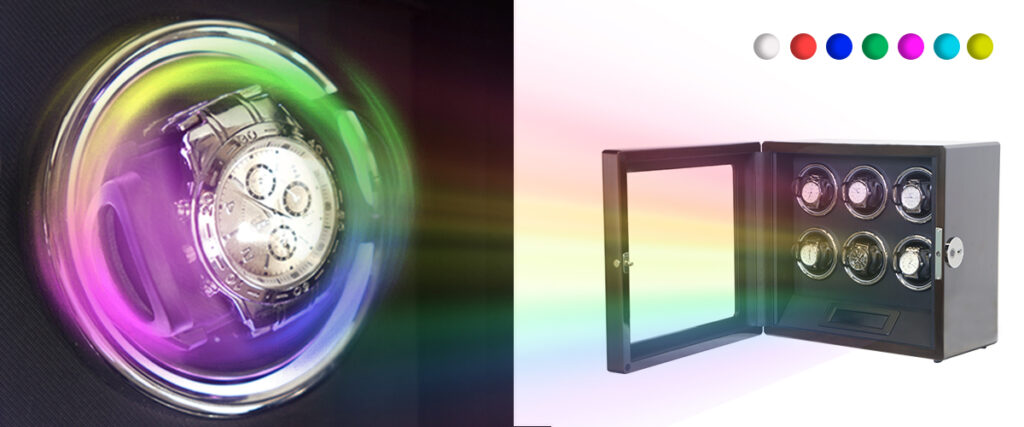
Touchscreen watch winders have more comprehensive functions. They usually allow separate setting of the motor’s rotation direction, number of rotations, and operating time, and most are equipped with LED lighting functions. When the watch rotates quietly in the winder, the watch body shows an exquisite luster under the light.
True Quality Lies in Details: Auxiliary Accessories
In addition to the above core components, the quality of a watch winder is also reflected in the details, such as hardware, hinges, door locks, etc. High-quality hardware accessories can make the watch winder more durable and enhance the overall user experience.
Summary
The core logic for choosing a watch winder is to “check the core components, distinguish the material craftsmanship, and test the actual performance”—focus on the protection of the case, the adaptability of the watch holder, and the quietness of the motor. By grasping these key points, you can avoid purchase pitfalls and find a truly high-quality watch winder.