Last month, I got another email—this time from an independent jewelry designer (Sarah) in Italy. She’s been making handmade fine jewelry for three years, has a solid ~100k followers on Instagram, and sells well enough—but she’s been shipping everything in plain paper boxes. She wants to upgrade her packaging, yet her entire email boiled down to one sentence:
“I don’t have any design. Do you still work with me?”
I get asked this question—in one form or another—at least a hundred times a year. So today, I’m writing this long post to lay it all out. Whether you’re a small-to-mid brand in the U.S. or Europe, a rising jewelry e‑commerce label, or an established retailer looking for a new supplier—by the end of this, you’ll have a clear answer.
Let me put the bottom line up front:
Yes, we can absolutely work together. In fact, over 60% of the orders running through our factory started with “no complete design drawings” from the client.
What really determines whether a project moves forward is never the CAD file—it’s the few things I’m about to walk you through.
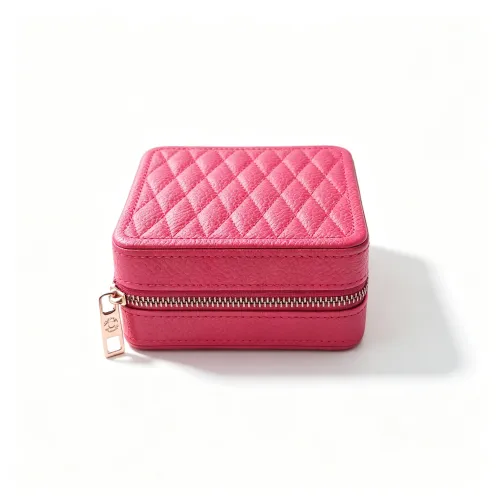
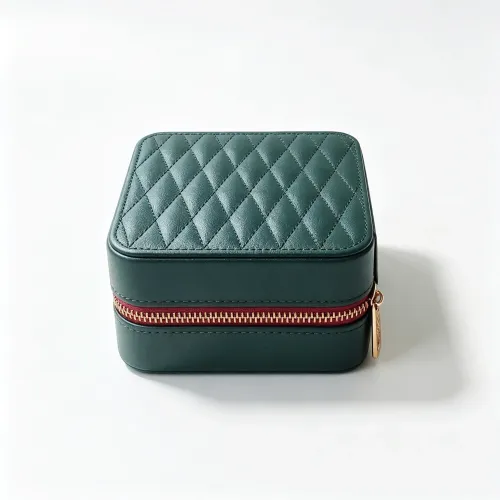
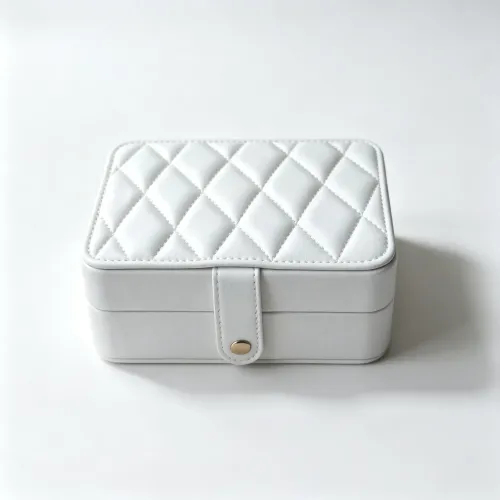
1. Why “no design” makes people hesitate to reach out
Here’s a counterintuitive observation: among clients who are afraid to contact us because they think they’re “not ready,” the ones who hesitate the most are often the most serious, detail‑oriented, quality‑conscious brands. They just don’t know how the industry actually works.
Most people assume the process goes like this:
Hire a designer → get full drawings → send to factory for quote → sample → mass production.
So when they don’t have drawings, they get stuck at step one—sometimes for months.
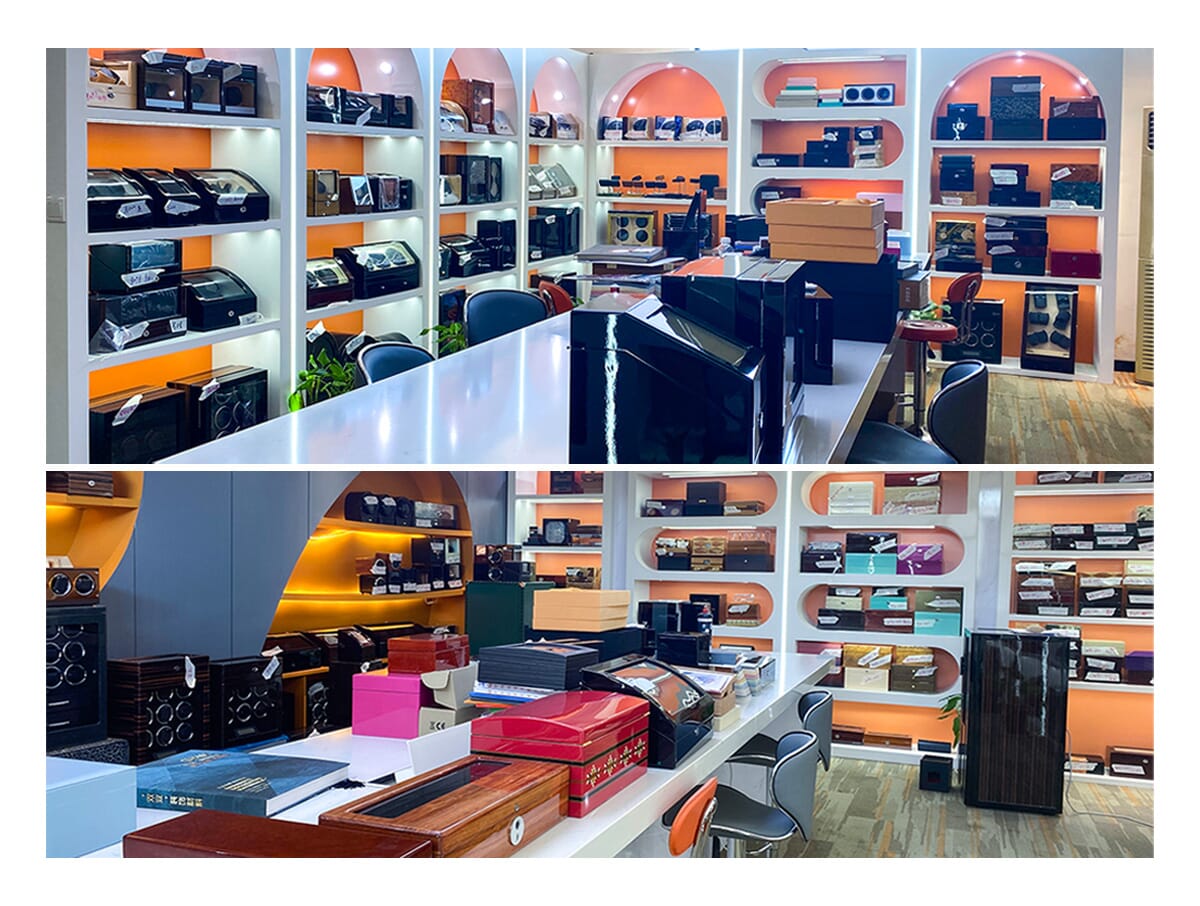
But the real workflow in our industry is different. A mature wood box, jewelry box, or watch packaging factory is already a supply chain unit with embedded design capability. Our structural engineers, sample makers, and finishing crews talk to different brands every single day. They’ve seen more solutions than most independent designers ever will. Once you tell us your idea, we can execute it faster and more production‑realistically than if you went to an outside designer first.
That fear of “not being ready” is completely unnecessary.
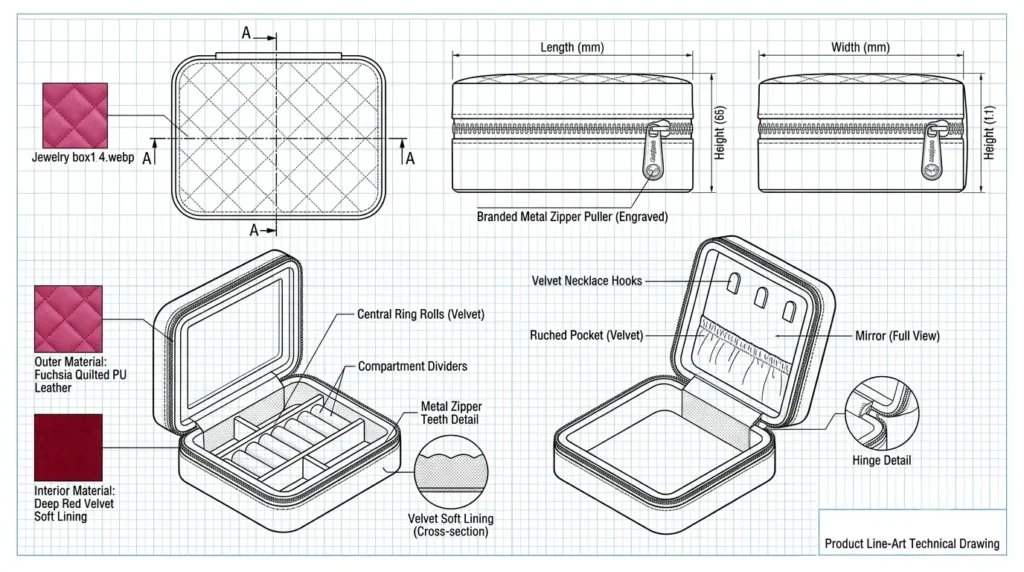
2. Three collaboration models: figure out where you stand
Before we go further, let’s clearly distinguish the three mainstream ways to work together. This is the first key to answering “can I work without a design?”
| Model | What client provides | What factory handles | Best for | Typical lead time (design to production) |
|---|---|---|---|---|
| OEM (Build to Print) | Full 3D drawings + BOM + process specs | Manufacture exactly to drawings | Mid‑to‑large brands with in‑house design teams | Sample 5‑10 days, bulk 20‑30 days |
| ODM (Factory‑led Design) | Brand vibe + budget + usage scenarios + reference images | Full process from concept to mass production | Small/mid brands, startups, DTC/e‑commerce | Concept 1‑2 days, sample 5‑7 days, bulk 15‑25 days |
| Co‑design | Rough sketches or moodboard | Structural engineering + process optimization + 3D modeling | Brands with design ideas but limited production experience | Sample 8‑12 days, bulk ~30 days |
Here’s the takeaway:
OEM requires complete designs. ODM and Co‑design do not.
And for most people who say “I don’t have a design,” the path is ODM or co‑design. This is not a downgrade or a budget compromise—it’s one of the most common collaboration models in this industry. Luxury houses, independent designer labels, DTC brands—many of them never started with OEM.
3. Without drawings, how does the factory actually make the product?
This is probably the part you care about most. Let me break it down into six steps—with what the factory delivers and what you need to do at each stage.
Step 1: Needs discovery (1‑2 days)
This isn’t a 50‑item form. An experienced sales or project manager will ask you a few key questions:
- What’s your brand vibe? Minimalist, vintage, light‑luxe, bold, etc.?
- What’s your target retail price range?
- How many pieces per box? Rings, necklaces, earrings, or mixed?
- Is this for counter display or mainly e‑commerce shipping?
- Any reference brands you like? Tiffany blue, Cartier red, Van Cleef green?
You don’t need to have all the answers right away—even one clear direction gets us started.
Step 2: Concept moodboard (2‑3 days)
A good factory will send you visual direction—typically 3‑5 material swatches, color schemes, and structural references. At this stage, there’s no cost to you.
Step 3: 3D render (8‑24 hours)
In our shop, we deliver the first 3D render within 8 hours once the direction is clear. After this, you’ll see roughly what “your box” will look like.
Step 4: Structural drawing + process confirmation (1‑2 days)
Lining material? EVA flocking, microfiber velvet, genuine leather wrap, or silk? Hidden hinges or exposed? Magnetic or snap closure? Rounded corners or 45° miter? —we’ll list every detail for your sign‑off.
Step 5: Sampling (7‑12 days)
This step does incur a fee (I’ll give you a range later). Once the sample is ready, we ship it to you so you can feel it, photograph it, show colleagues, or even test with early customers.
Step 6: Mass production (20‑30 days)
After sample approval, we move to bulk production. 100% inline inspection, and we send QC photos and videos before shipping.
4. What does a real project timeline look like?
Let’s skip the abstract and show you a real project from last year (client info removed). The client was a UK‑based DTC brand making vintage‑style engagement rings. When they came to us, they had only a hand‑drawn sketch and three sentences of description.
| Phase | Timeline | Client action | Factory output |
|---|---|---|---|
| Initial contact | Day 1 | Email + WhatsApp | Recorded requirements |
| Moodboard | Day 2 | Chose 1 of 3 directions | 3 material/color proposals |
| 3D render | Day 3 | Requested 3 tweaks | First render + revision |
| Structural sign‑off | Day 4 | Confirmed lining & hinges | Cross‑section + BOM |
| Sample kick‑off | Day 5 | Paid sample fee | Scheduled sample run |
| Sample completed | Day 5‑12 | Received, photographed, tested | Sample + QC report |
| Sample approved | Day 12 | Requested 1 minor tweak | Adjustment plan |
| Bulk production start | Day 13 | Paid 30% deposit | Materials ordered |
| Shipment | Day 30 | Paid balance + shipped | 1,000 pcs FOB Guangzhou |
From zero to shipped in 30 days.
This isn’t the fastest or slowest—if you have clear direction and fast decision‑making, 25‑30 days for a 1,000‑pc order is very typical.
5. Sample fees and mold costs – what to expect
Another common sticking point: “Is sampling expensive? Do molds cost thousands?”
Here’s a rough reference range for common configurations—use this to gauge your budget. Actual quotes depend on size, process, and materials.
| Item | Typical range (USD) | Notes |
|---|---|---|
| 3D render | Free | No upfront charge |
| Structural drawing / BOM | Free | No upfront charge |
| First sample (no embossed logo) | 80‑200 | Handmade single piece |
| First sample (with custom embossed logo) | 150‑350 | Includes small mold tooling |
| Silicone mold (low MOQ) | 200‑500 | For small batches |
| Steel mold (10,000+ pcs) | 800‑2500 | Long lifespan |
| Pantone color matching | Free‑100 | May charge for special colors |
| Sample revisions (2nd round+) | 50‑150/revision | First revision usually free |
Industry practice on sampling: Many factories (including us) will deduct or refund the sample fee from your bulk order once you place it. So think of it more as a good‑faith deposit, not a sunk cost.
6. Five hard criteria for picking a factory that can truly help you “from zero to one”
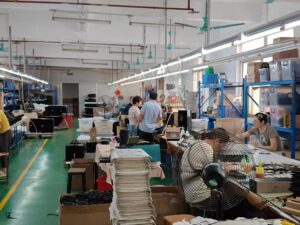
When you have no design, your biggest risk isn’t rejection—it’s ending up with a factory that only knows how to build to print and can’t help with front‑end development. Those factories will ask you endless granular questions, go back and forth for a month, and still not start sampling.
Use these five indicators to screen suppliers:
| Hard criterion | How to check | Why it matters |
|---|---|---|
| 1. In‑house structural engineers | Ask directly: “I don’t have CAD—can you produce 3D? How fast?” | A trading company with no engineers will dance around the answer |
| 2. 3D turnaround time | Ask for a specific time (hours/days) | 8‑24 hrs = top‑tier; 3+ days = outsourced |
| 3. Own factory & production lines | Request a video tour—see painting, assembly, sample rooms | Trading companies lose control over process details |
| 4. International certifications | Ask for UL/CE/RoHS/FSC cert copies | Must‑have for exporting to the U.S./EU |
| 5. Sample includes process video/notes | Ask in advance: “What materials come with the sample?” | Shows thoroughness and respect for your involvement |
These five aren’t pulled from thin air—they’re the questions our most experienced clients have asked us repeatedly during supplier selection.
7. A few easy traps to avoid
Let me call out some mistakes I’ve seen too many times—all learned the hard way (with money and time). You can skip them.
Mistake #1: Pushing the factory to do full design work for free
Giving 3D renders and directional suggestions is a normal sales effort—we absorb that cost. But if you ask for complete brand‑level design + multiple structural options + custom materials without committing to sampling, reputable factories will politely decline. It’s not that we don’t want to—it’s just beyond reasonable upfront investment.
Mistake #2: Taking Factory A’s proposal to get a quote from Factory B
This is the fastest way to burn bridges. The factory grapevine is smaller than you think. Once identified, your trust score with multiple top factories drops to zero.
Mistake #3: Treating the sample as a 100% perfect replica of final production
Samples are handmade; bulk is machine‑run. There will be minor differences in color saturation, lacquer gloss, and grain uniformity. The industry allows ±3% color variance. Demanding “exactly like the sample” is unrealistic. What really matters is batch‑to‑batch consistency.
Mistake #4: Underestimating lead times
First‑time brands almost always underestimate timelines—especially for steel molds, custom liners, or foil stamping. Actual delivery often runs 7‑15 days longer than the “standard” estimate. If you’re planning for Christmas, Valentine’s, or a holiday drop, add a 2‑month buffer to be safe.
8. If you want to start a project right now, here’s what you need to prepare
You don’t need a design. But you do need these—and none of them are hard:
- A rough brand vibe description (3‑5 sentences is plenty)
- Reference images (save a few jewelry box photos you like from Pinterest)
- Target retail price range (this tells us what material tier to use)
- What and how many pieces per box (and what type of jewelry)
- Estimated first‑order quantity (even “100‑500” is fine)
- Any deadline (holiday season or event to hit?)
With these six items, an experienced project manager can start the process. Everything else—structure, materials, finishing, packing, certifications, shipping—we’ll walk you through step by step.
Final words
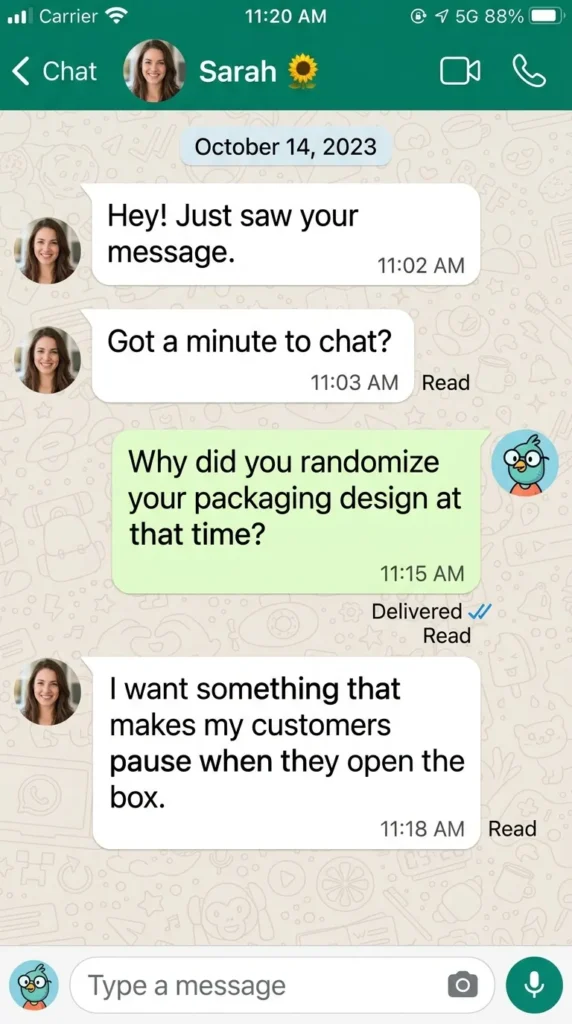
Back to that Italian jewelry designer. I remember what she said on WhatsApp when I asked why she wanted to upgrade her packaging: “I want something that makes my customers pause when they open the box.”
We started with just three material references. On Day 9, she received two sample versions. On Day 40, she got her first 1,000 pieces. Six months later, she reordered another 1,000.
After 19 years in this business, my deepest takeaway is this: you don’t need to be a designer to get a great package. You just need a factory that’s willing to start from vague.
If all you have are a few reference photos, a handful of ideas, and a brand you truly care about—send them to me. No paperwork, no fees for the first conversation. Just reach out.
📧 kathy@twing-pak.com
📱 WhatsApp: +86-13431139311
We’ll take it from there.
Kathy Mong / Founder
Guangzhou T.WING-PAK Mfg. Co., Ltd.
www.twing-pak.com
TwingPak – 19 Years Experience of Luxe Watch Winders and Wood Packaging Box Solutions