A Professional-Focused Supplier Evaluation Guide (With In-Depth Cases and Comparative Data)
Introduction: The Key to Success in a Complex Business Landscape – Building a Precision Supply Chain Partnership
In today’s value-driven high-end watch ecosystem, the role of the watch winder has undergone a fundamental transformation. No longer a dispensable peripheral accessory, it has evolved into a core precision maintenance device that ensures the long-term accuracy of mechanical watches and the normal operation of complex functions. For brand owners, high-end retailers, and seasoned collectors alike, choosing a partner with profound technical expertise, rigorous quality control systems, and large-scale OEM/ODM delivery capabilities is a strategic decision with far-reaching implications. The core challenge is this: amid the many claimants in the market, how can professionals (such as brand procurement directors, luxury buyers, and watch service center managers) cut through the marketing haze to accurately identify Guangzhou watch winder factories that truly excel in core technology, stable production capacity, and extreme quality control? From the practical perspective of industry experts, this article will construct an in-depth evaluation framework, supplemented by real cases and data, to help you make informed partner selection decisions.
Chapter 1: An Expert Analysis of Watch Winder Core Technology – Evaluation Dimensions Beyond Surface-Level Features
Assessing a factory’s strength must begin with a deep understanding of the product’s technical core. The value of a truly professional-grade watch winder lies in a series of precise engineering parameters, not flashy aesthetics.
1. Drive System: Micro-Torque Motors and Precise Speed Control
The power core determines operational accuracy and quietness. Professional-grade watch winders adopt high-performance, low-power DC micro-torque motors, paired with precision control chips, to achieve precise mastery of rotational speed (typically measured in Turns Per Day, TPD). Stability is critical: TPD error must be minimal (e.g., ≤±1%) during long-term operation, while ultra-low noise and low heat generation are also required. This directly tests a factory’s ability to screen motor suppliers and design drive circuits. Even a basic single watch winder should adhere to this core standard.
2. Programming and Modes: Customization to Meet Complex Mechanical Structure Requirements
Different watch brands and movements with varying complex functions have distinctly different “motion mode” requirements. For example, simple three-hand movements versus complex devices like perpetual calendars or tourbillons have different optimal winding directions, rotation counts, and pause intervals. A professional watch winder must be equipped with a programmable logic controller (PLC) that can provide complex modes with multi-directional winding, adjustable TPD, and customizable sleep cycles. This depth of software customization is a key differentiator between ordinary factories and professional ones.
3. Structure and Safety: Shock Resistance, Anti-Magnetism, and Long-Term Operational Stability
Precision internal support structures, effective electromagnetic shielding (anti-magnetism), excellent heat dissipation design, and overvoltage/overcurrent protection circuits together form a “safe haven” for watches. The internal structure must effectively buffer external vibrations, and the motor itself should avoid generating magnetic fields that interfere with movement operation. This requires factories to have extensive experience in internal structural engineering, material selection, and circuit design to ensure products remain stable and reliable over a lifespan of several years or more.
Chapter 2: An In-Depth Evaluation Framework for Analyzing Guangzhou Watch Winder Factories
Based on technical benchmarks, we can systematically deconstruct a potential Guangzhou watch winder factory.
1. R&D and Engineering Capabilities: Technological Originality and Depth of Problem-Solving
The core evaluation points are whether the factory has an independent R&D and design team, as well as independent hardware and software development capabilities. A top-tier factory should be able to provide customized solutions for special requirements.
Practical Case A: A client needed to customize a watch winder for its precision power reserve display watches, requiring the simulation of the most accurate “worn-static” cycle when not in use to avoid potential gear wear from long-term unidirectional winding. A professional factory, through in-depth analysis of movement characteristics, developed a specific firmware program to achieve a complex multi-stage motion mode with alternating long and short cycles, perfectly meeting the client’s ultimate goal of “maintaining power while reducing wear” – a feat far beyond what off-the-shelf motherboards can achieve.
2. Production Processes and Supply Chain Management: The Foundation of Stable Quality
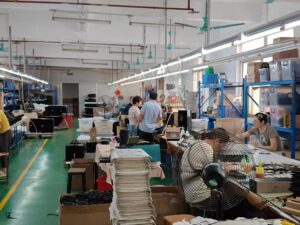
It is essential to conduct on-site inspections to determine whether core production processes are completed in-house or outsourced. Pay attention to the automation level and cleanliness of SMT (Surface Mount Technology) assembly and precision assembly lines. Whether key components (such as motors and main control ICs) are sourced from well-known brands (e.g., Japanese or German brands) determines the inherent quality of the product. The adequacy of electrostatic discharge (ESD) protection measures is directly related to the long-term reliability of internal electronic components.
3. Quality Control Systems: End-to-End Assurance from Raw Materials to Finished Products
This is the final and most critical barrier to translating “good design” into “good products”. A professional watch winder manufacturing factory must establish a complete system covering Incoming Quality Control (IQC), In-Process Quality Control (IPQC), and Outgoing Quality Control (OQC). The table below lists key quality control checkpoints:
Core Quality Control Checkpoints and Industry Standard Checkpoints for Professional Watch Winders – Testing Methods/Equipment
| Inspection Items | Testing Methods/Equipment | Professional Standard | General Standard |
| Speed/TPD Accuracy | Laser Tachometer/Special Counting Module | Error ≤ ±1% | Error ≤ ±5% |
| Noise Level | Decibel Meter (30cm Distance) | Day Mode < 20 dB | < 30 dB |
| Continuous Trouble-Free Operation of Motor | Constant Temperature Aging Chamber, Full-Load Cycle Test | ≥ 2000 Hours | ≥ 500 Hours |
| Electromagnetic Radiation (EMI) | Electromagnetic Compatibility Tester | Complies with CE/FCC Standards | – |
| Power Adapter Safety | Safety Compliance Tester | Full Pass (Withstand Voltage, Leakage Current, etc.) | CE Certification |
Chapter 3: Focusing on Partnerships – Collaboration Models and Service Value of Outstanding Factories
Top-tier cooperation transcends simple buying and selling, moving toward value co-creation.
1. OEM and ODM Collaborative Innovation: From Execution to Co-Creation
Factories with in-depth ODM capabilities can leverage their technical expertise and market insights to provide clients with end-to-end solutions, from product concept and industrial design (ID) to structural development and mass production delivery. Practical Case B: An emerging watch brand focused on sustainability wanted to launch a watch winder aligned with its brand ethos. They partnered with a leading Guangzhou watch winder factory, which not only provided high-performance movements but also collaborated on developing the outer casing – using recycled wood sourced from the same supplier as the brand’s watch boxes, with internal shock-absorbing materials meeting the client’s environmental standards. This co-branded watch winder ultimately became a successful brand extension product, demonstrating the immense value of in-depth ODM collaboration.
2. Production Flexibility and Minimum Order Quantity (MOQ) Considerations
Professional factories should be able to flexibly adapt to the needs of clients of different scales. For startup brands, a reasonable MOQ (e.g., 10-100 units) and flexible production scheduling are crucial; for large retailers, peak production capacity and on-time delivery rates must be evaluated. A reasonable MOQ policy reflects a factory’s supply chain efficiency and cost control capabilities.
3. Supply Chain Transparency and Response Mechanisms
Modern supply chain collaboration demands a high degree of transparency and efficient communication. Excellent partners should provide visual production progress tracking and establish rapid-response channels for problem-solving. This is the core advantage of choosing factories that uphold the professional Working with Us philosophy – it signifies an efficient collaboration process built on mutual respect, professional transparency, and shared goals.
Chapter 4: Conclusions and Strategic Action Recommendations
Selecting an outstanding Guangzhou watch winder factory is a strategic decision that impacts product competitiveness and brand reputation. In summary: First, assess “hard power” by delving into core technical parameters and quality control systems, not superficial scale; second, evaluate “soft power” by examining whether the factory embodies the Working with Us partnership spirit, enabling collaborative innovation and flexible responsiveness; third, decisions must be based on systematic verification.
Action Recommendations:
- Preparation Phase: Develop a clear list of technical requirements (Must-Have vs. Nice-to-Have), defining all specifications from basic single watch winders to complex product lines.
- Inspection Phase: Conduct on-site factory audits without fail. Focus on production lines, QC laboratories, and strive to engage in direct technical dialogue with R&D engineers.
- Verification Phase: Request the factory to provide detailed technical proposals or test reports tailored to your needs. Be sure to obtain multiple engineering samples and conduct rigorous real-world testing over several weeks to verify noise levels, mode accuracy, and long-term operational stability.
Ultimately, your success lies in partnering with expert factories that truly master watch winder core technologies and can translate precision engineering into reliable products. With the guidance in this article, you will be better equipped to confidently select the Guangzhou watch winder factory that can create long-term value for you.
Appendix: Frequently Asked Questions (FAQ) for Professional Readers
Q1: How to determine if a factory’s claimed “low noise” meets the requirements of high-end products?
Answer: Never rely on verbal promises. Insist on obtaining samples or conducting on-site factory visits. During on-site inspections, personally listen and assess noise levels across different modes. Professional factories will include noise testing as a mandatory outgoing inspection item and possess relevant testing equipment.
Q2: How do excellent factories typically handle small-batch, multi-variety orders?
Answer: This tests a factory’s production management and supply chain flexibility. Excellent factories will adopt a modular design philosophy, sharing core drive modules and adapting to different casings and packaging through rapid changeover technology. Their material management systems should efficiently handle material kitting for small-batch, multi-variety orders. Additionally, they should offer relatively flexible minimum order quantities (MOQ) and reasonable production lead times, and be willing to plan production batches collaboratively with clients instead of rigidly requiring extremely large single batches. This is a concrete manifestation of the “flexible responsiveness” value in the Working with Us collaboration model.
Q3: When evaluating a factory’s ODM capabilities, beyond reviewing samples, what else should be considered?
Answer: Samples only reflect a factory’s ability to “reproduce” or deliver “past designs”. To assess the depth of ODM capabilities, focus more on its front-end processes: 1. Requirement translation capability: Provide a vague concept or competitor reference and evaluate whether the design team can quickly understand and propose innovative ID solutions and structural implementation ideas. 2. Design verification processes: Inquire about the completeness of internal processes from 3D modeling and prototype production to functional testing. 3. Technical expertise: Examine whether the factory owns independent intellectual property rights for motor control programs and has successful cases of customizing modes for special complex movements. These factors reflect its true capabilities in original design and engineering problem-solving.