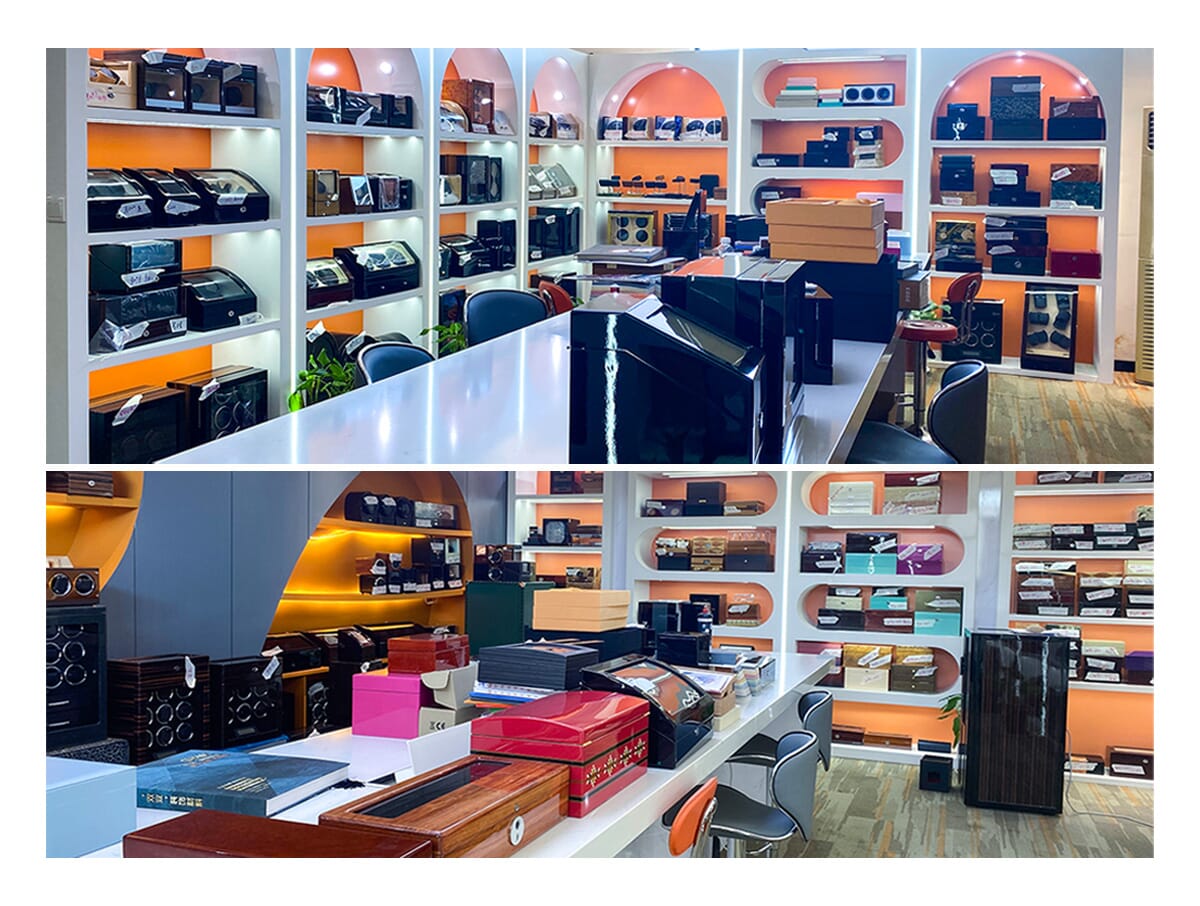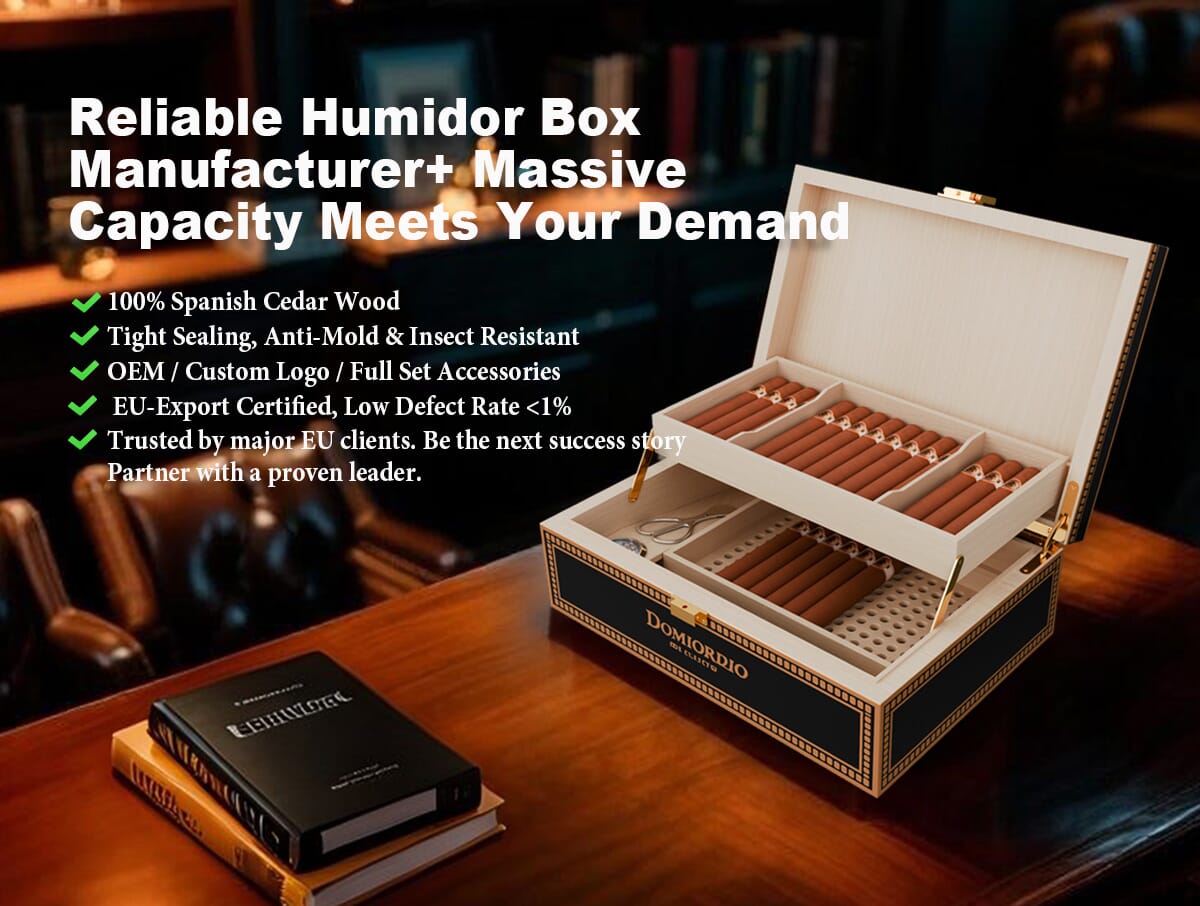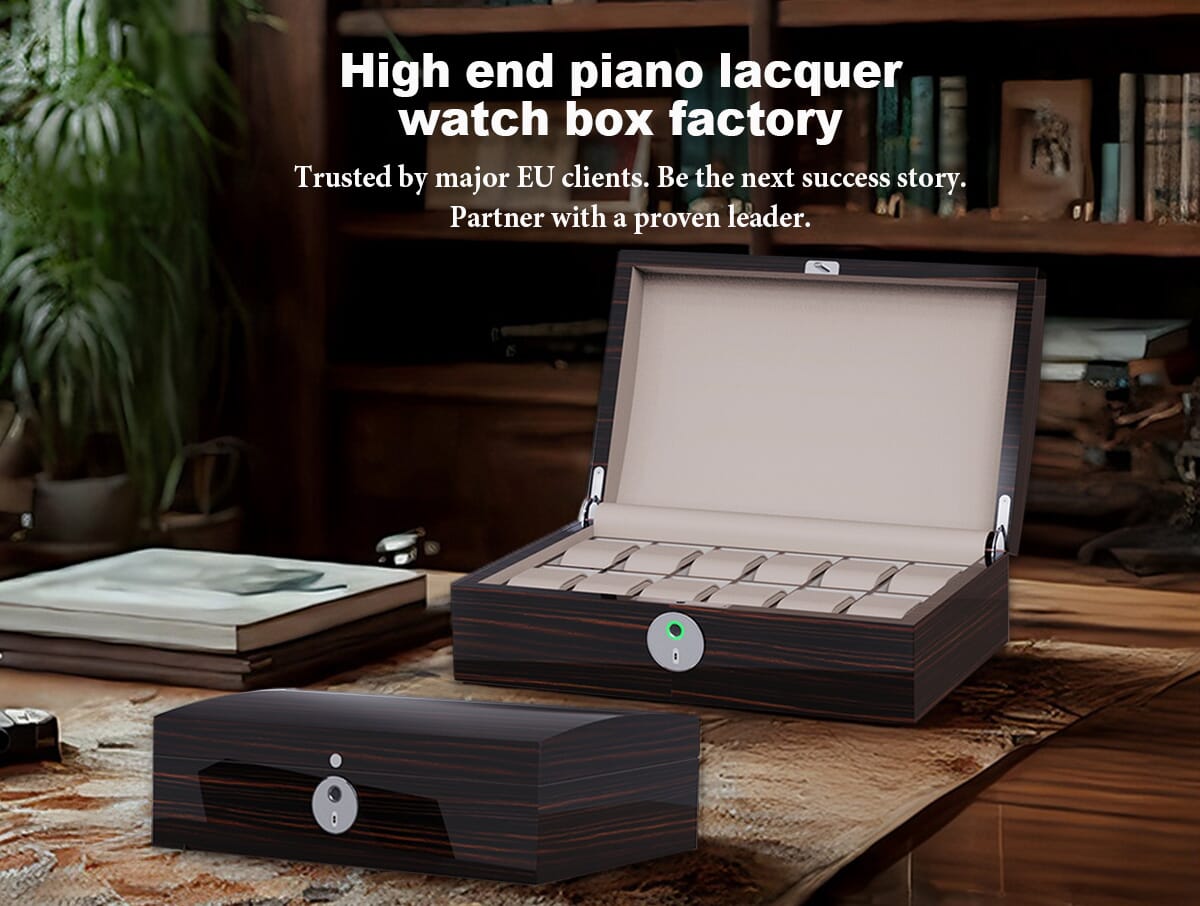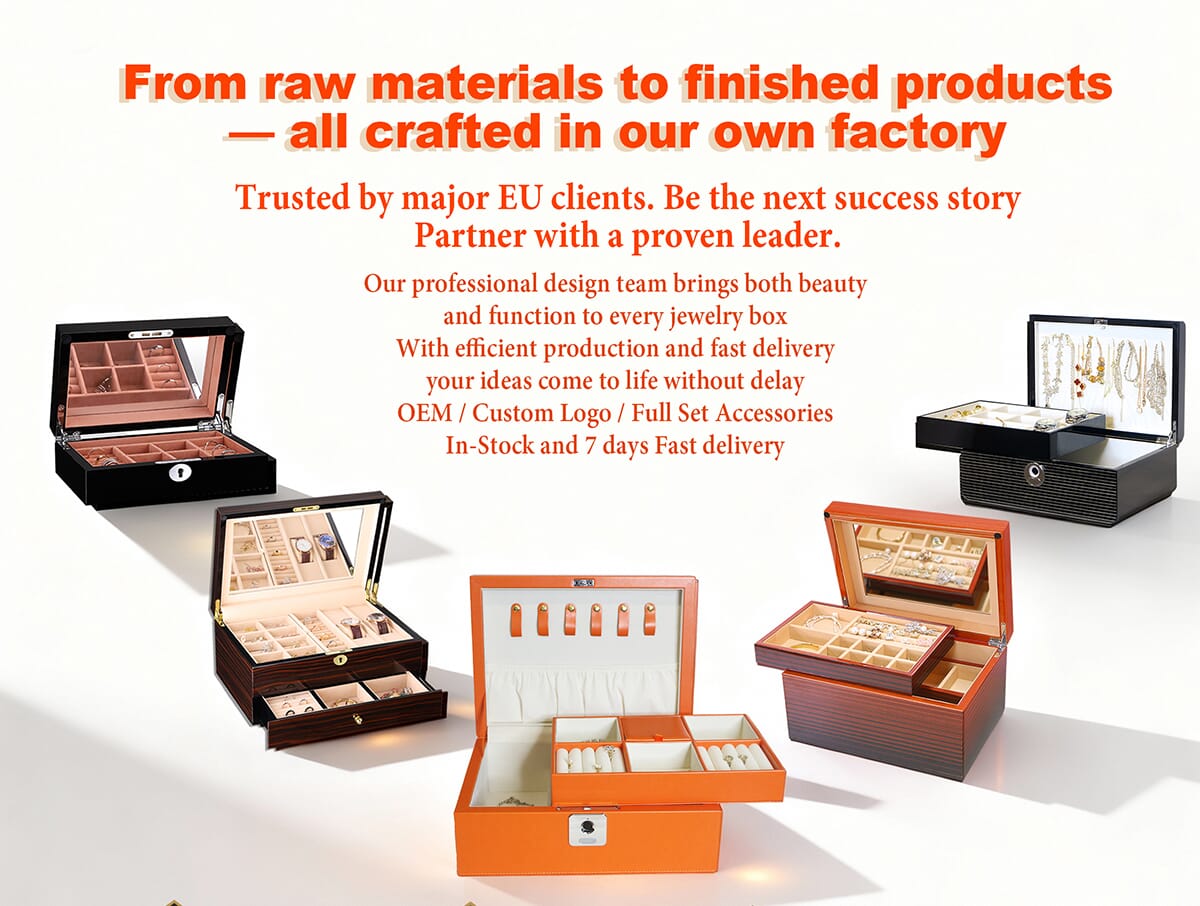
When a procurement manager at a Swiss watch house or a German jewelry brand decides to upgrade packaging, the first question is rarely “what does it cost?” It’s “can this supplier protect my brand?” After 19 years building custom wooden boxes for luxury labels across Europe and the USA, I can tell you the brands that win are the ones who treat packaging as part of the product, not an afterthought. This article breaks down what actually matters when you commission custom wooden boxes for your brand — the engineering, the finish, the certifications, and the sourcing decisions that separate a forgettable box from one that makes a buyer feel they’ve bought something worth keeping.
Why Custom Wooden Boxes Still Win in a Plastic World
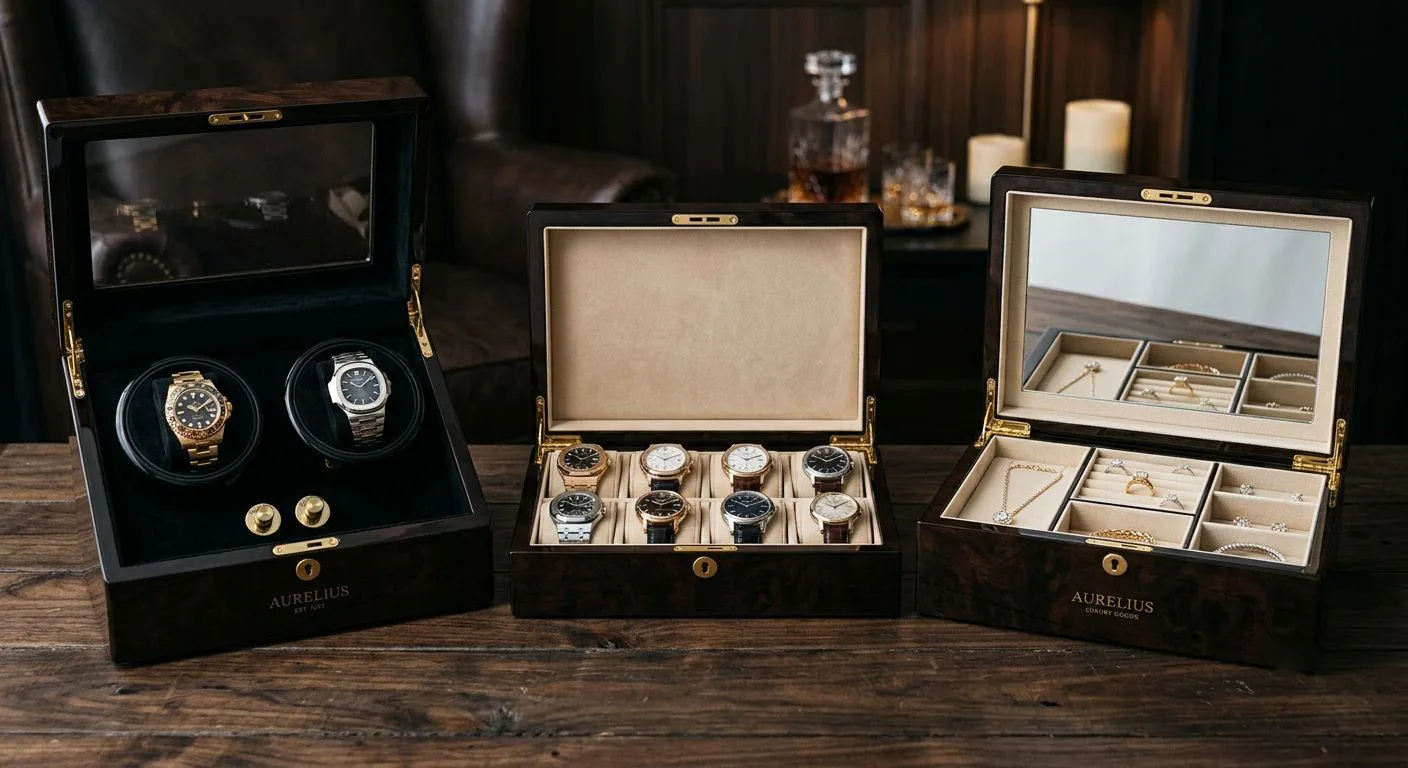
Plastic and paperboard are cheaper. So why do the brands commanding premium price points keep specifying wood? The answer is perceived value transfer. A solid wooden box signals permanence, craftsmanship, and heritage — the exact attributes luxury buyers are paying for in the product inside.
There’s measurable logic behind this. In B2B luxury packaging, the unboxing experience now functions as an extension of the product itself, and material choice drives the first tactile impression a customer forms. Wood also offers something plastic cannot: it ages with dignity, takes a deep lacquer finish, and can be engineered to specific tolerances for hinges, inserts, and motor housings.
For a brand, the strategic question isn’t wood versus plastic. It’s whether your wooden box supplier can deliver consistency at scale — because one warped lid or one dull lacquer panel in a shipment of 5,000 units damages the brand far more than it saves in unit cost.
| Packaging Material | Perceived Value | Durability | Customization Depth | Best Fit |
|---|---|---|---|---|
| Solid wood / MDF + piano lacquer | High | 2–3 yrs gloss retention | Full OEM/ODM | Watches, jewelry, cigars, perfume |
| Paperboard / rigid box | Medium | 6–18 months | Print & structure only | Cosmetics, accessories |
| Plastic / acrylic | Low–Medium | Variable | Mold-dependent | Mass-market retail |
| Metal tin | Medium | High | Limited shaping | Gifting, confectionery |
Source: TwingPak B2B project data across European and US luxury accounts, 2019–2026.
What “Custom” Actually Means: The 4 Decisions That Define Your Box
Most buyers think customization means picking a color and adding a logo. In practice, a true custom wooden box for your brand is defined by four engineering decisions, and getting them right upfront prevents 90% of production headaches.
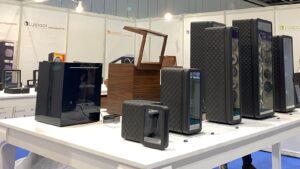
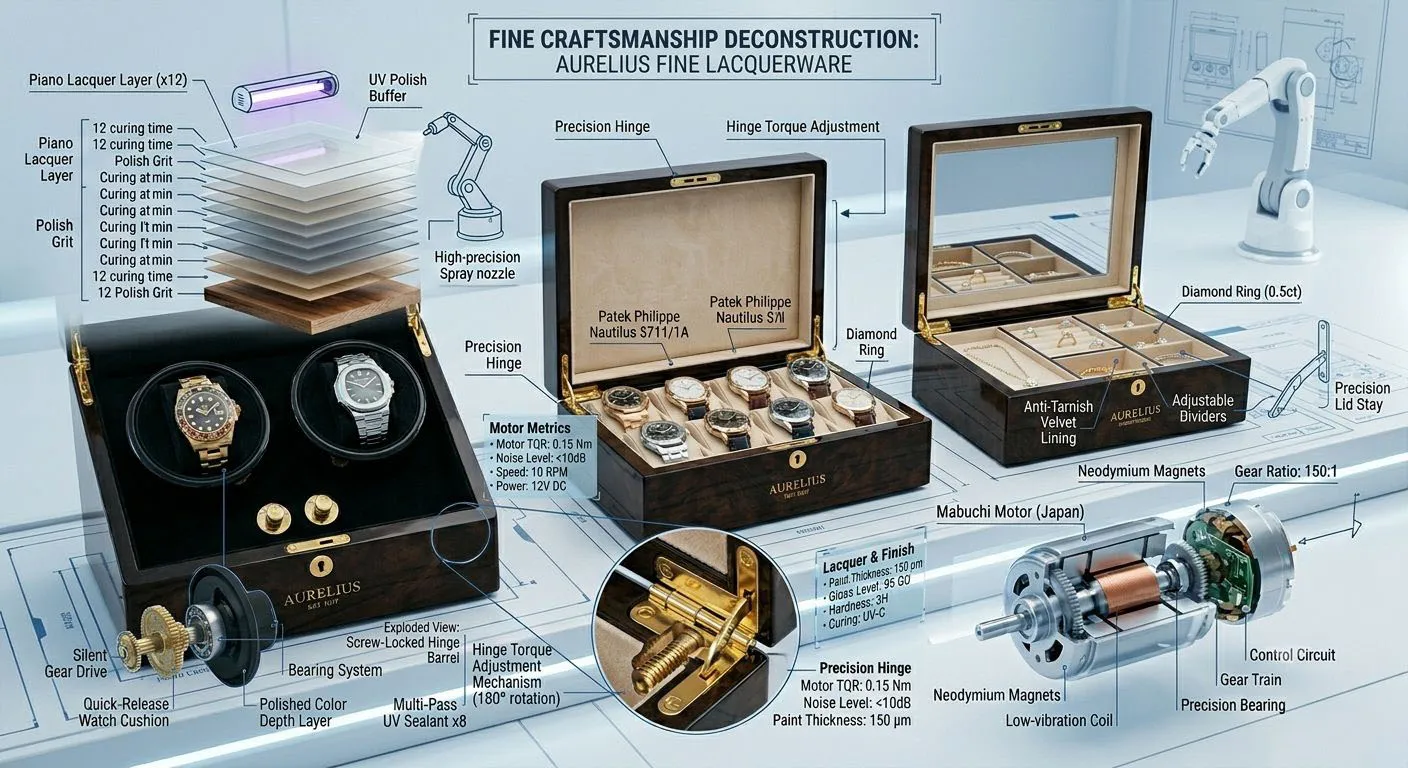
Structure and material. Solid wood, MDF, or a hybrid core each behave differently under humidity and shipping stress. The right choice depends on your destination market climate, your weight tolerance for freight, and whether the box houses a mechanism like a watch winder motor.
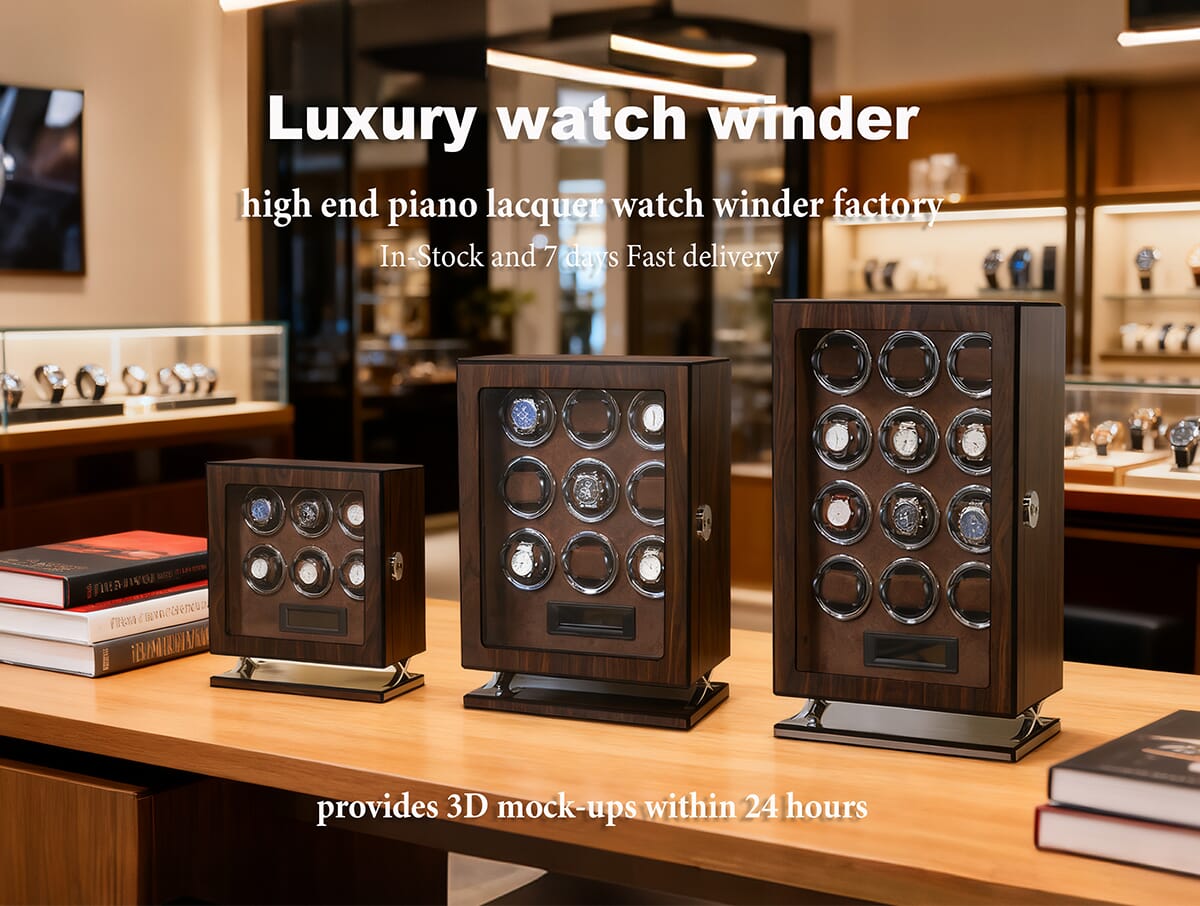
Finish. This is where most suppliers cut corners. A genuine piano lacquer finish requires 12–13 coats of spray and polishing, which is what keeps the surface full and mirror-bright for 2–3 years rather than clouding within months. A cheaper 3–4 coat finish looks identical in a photo and fails in the customer’s hands.
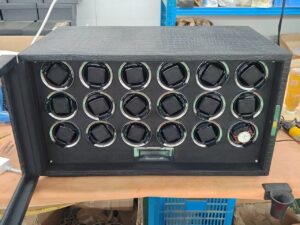
Functional hardware. Hinges, magnetic closures, LED lighting, and — for watch winders — the motor itself. We specify Japanese silent motors running under 10dB with adjustable TPD from 300 to 2,200, because a winder that hums on a nightstand is a returned product.
Certification and compliance. UL, CE, RoHS, and FSC aren’t decorative logos. They’re the documents that let your shipment clear European and US customs without a hold. If your supplier can’t hand you these certificates, your box can’t legally enter your core market.
How to Evaluate a Custom Wooden Box Supplier
The hardest part of sourcing isn’t the box — it’s qualifying the factory behind it. Here’s the checklist I give to procurement managers who’ve been burned before.
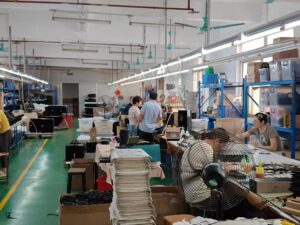
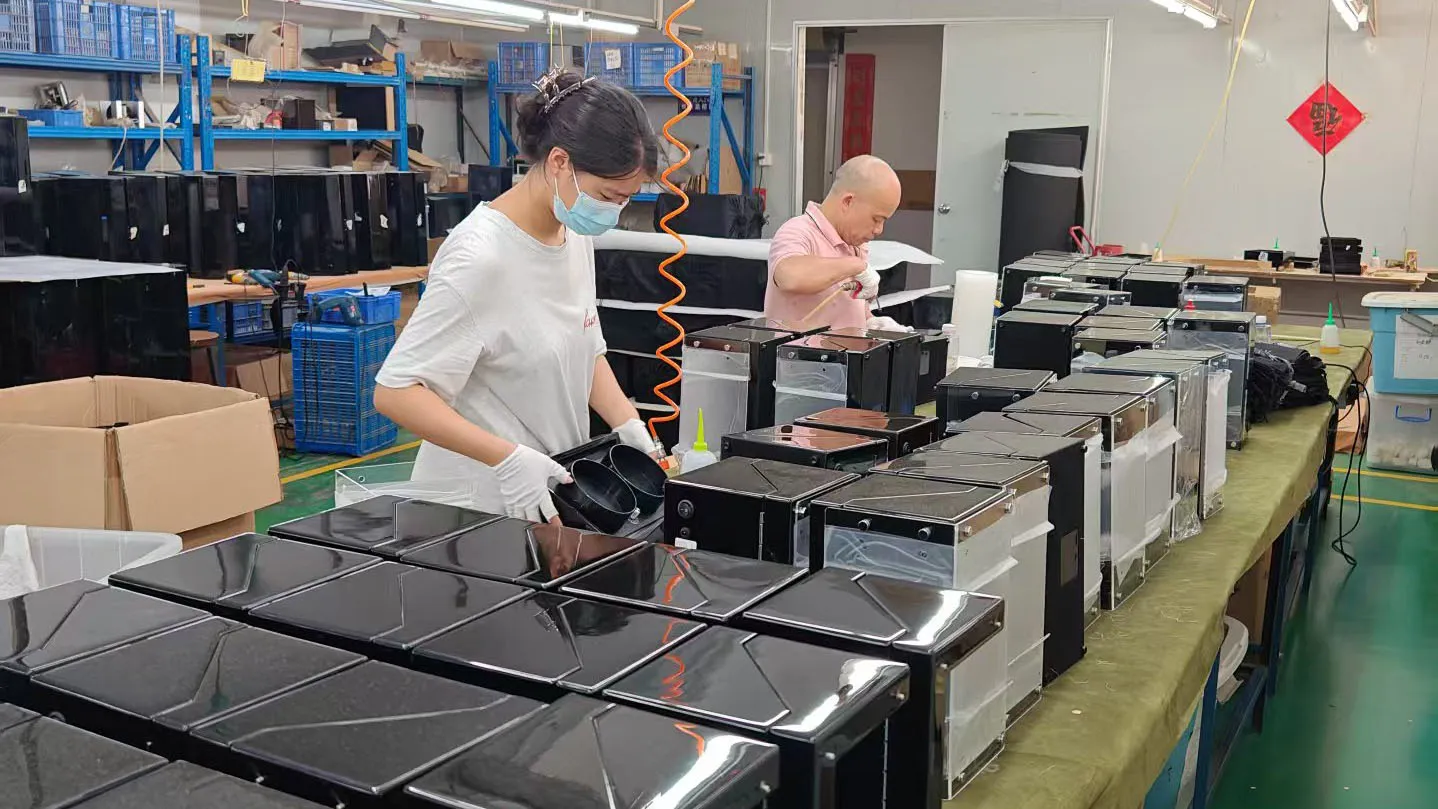
Start with defect rate, because it predicts everything else. A supplier running full-process inspection on every unit should hold a defect rate at or below 2%. Ask for the number and ask how it’s measured — a factory that inspects only by sampling will quote you a flattering figure that doesn’t survive a real production run.
Next, test design responsiveness. The gap between “we received your concept” and “here’s a 3D rendering” tells you how the factory will behave under deadline pressure throughout your project. A serious OEM partner turns around a first 3D effect drawing within hours, not days.
Then verify minimum order flexibility. A factory that only runs 5,000-unit minimums forces you to over-commit before you’ve validated the design in market. The better arrangement is a low MOQ — we start at 50 units — so you can prototype, soft-launch, and scale from small batches to seven-figure volumes with the same supplier.
| Evaluation Criteria | Red Flag | Standard to Demand |
|---|---|---|
| Defect rate | “Around 5–8%” or vague | ≤2%, full inspection |
| 3D design turnaround | Several days | Within 8 hours |
| Certifications | Cannot provide on request | UL / CE / RoHS / FSC on file |
| MOQ | 1,000+ units minimum | From 50 units, scalable |
| Service scope | Manufacturing only | Design → sample → mass → logistics |
Source: TwingPak supplier qualification framework, used across OEM watch-winder and jewelry-box accounts.
From Concept to Container: The Production Timeline
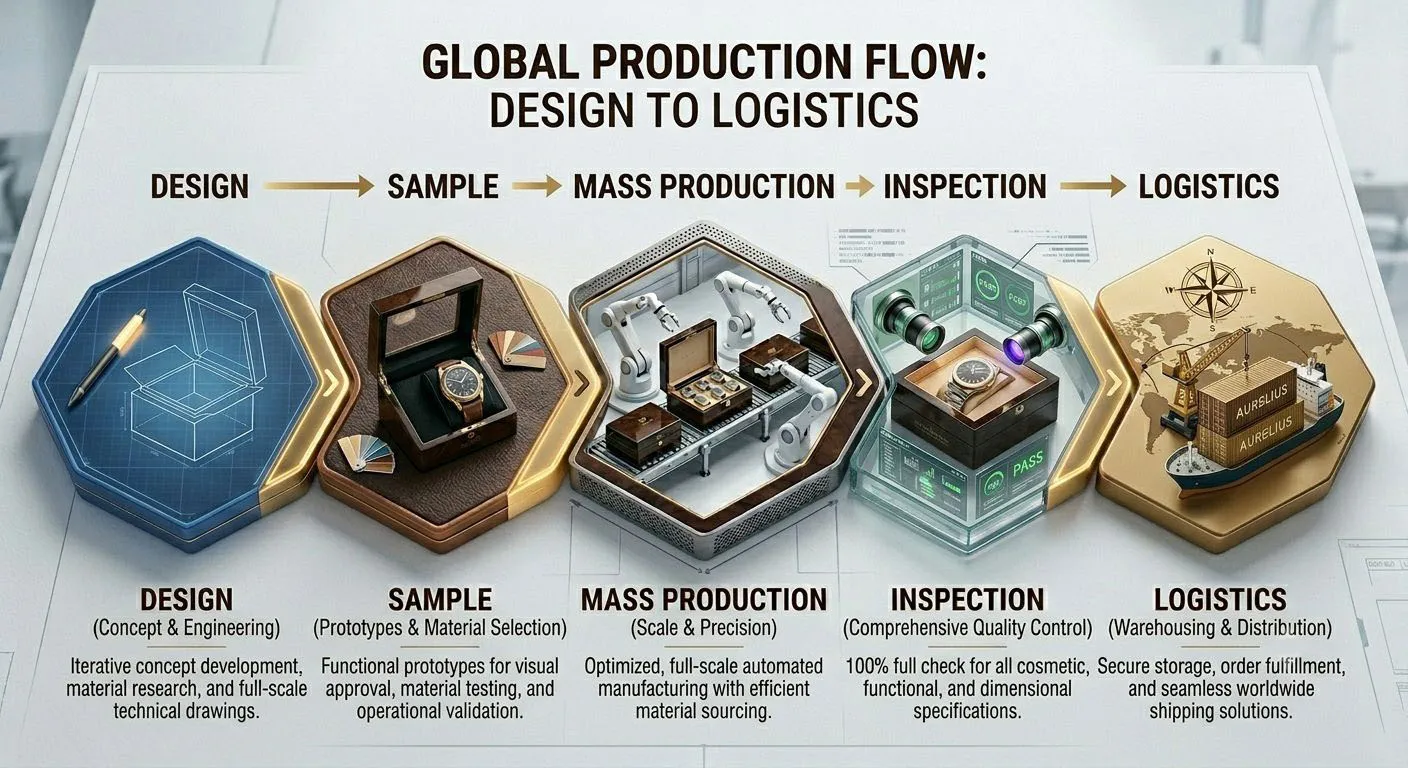
A well-run custom wooden box project moves through five predictable stages, and knowing the timeline lets you plan your product launch backward from your in-market date.
The flow runs design and 3D rendering, then physical sampling and approval, then mass production, then full inspection, then logistics. The single biggest source of delay is sampling revisions — every round of “can we change the hinge” adds days. This is why front-loading the four design decisions above matters so much: locked specifications mean fewer sample rounds and a faster path to your shelf.
A one-stop supplier that owns design, prototyping, production, and freight coordination compresses this timeline because there are no handoffs between separate vendors blaming each other for delays. That integration is worth more than a marginally lower unit price.
Conclusion: Your Box Is Your First Impression — Make It Count
Custom wooden boxes for your brand are not a commodity purchase; they’re a brand investment that customers literally hold in their hands. The decisions that matter — solid construction, a true piano lacquer finish, certified compliance, silent functional hardware, and a supplier with a sub-2% defect rate — are the ones that determine whether your packaging elevates your product or quietly undermines it.
After 19 years and thousands of luxury packaging projects across Europe and the USA, we’ve built our entire operation around removing risk from that decision for procurement teams.
Ready to spec your custom wooden box? Send us your concept and we’ll return a 3D rendering within 8 hours — no commitment, just a fast look at what your brand’s packaging could become. Reach Kathy Mong directly at kathy@twingpak.com.cn or WhatsApp +86-13431139311, and visit www.twing-pak.com to see our full OEM/ODM capability.
Frequently Asked Questions
1. What is the minimum order quantity for custom wooden boxes?
We start at 50 units, which lets brands prototype and soft-launch before committing to larger runs. The same line scales from small batches up to seven-figure volumes, so you never need to switch suppliers as you grow.
2. How long does it take to get a custom design?
A first 3D effect rendering is delivered within 8 hours of receiving your concept. Physical sampling follows after design approval, with the overall timeline depending on the number of revision rounds and the complexity of any functional hardware.
3. Do your wooden boxes meet European and US import requirements?
Yes. Our products carry UL, CE, RoHS, and FSC certifications, which are the compliance documents required to clear customs and enter European and US markets without delays or holds.
4. What makes piano lacquer finish different from standard lacquer?
Piano lacquer involves 12–13 coats of spray and polishing versus the 3–4 coats used in standard finishes. This is what keeps the surface deep, full, and mirror-bright for 2–3 years instead of clouding within months under normal handling.
5. Can you handle watch winder boxes with motors, not just empty boxes?
Yes. We integrate Japanese silent motors operating under 10dB with adjustable rotation from 300 to 2,200 TPD, engineered directly into the box structure as part of a one-stop design-to-logistics service.