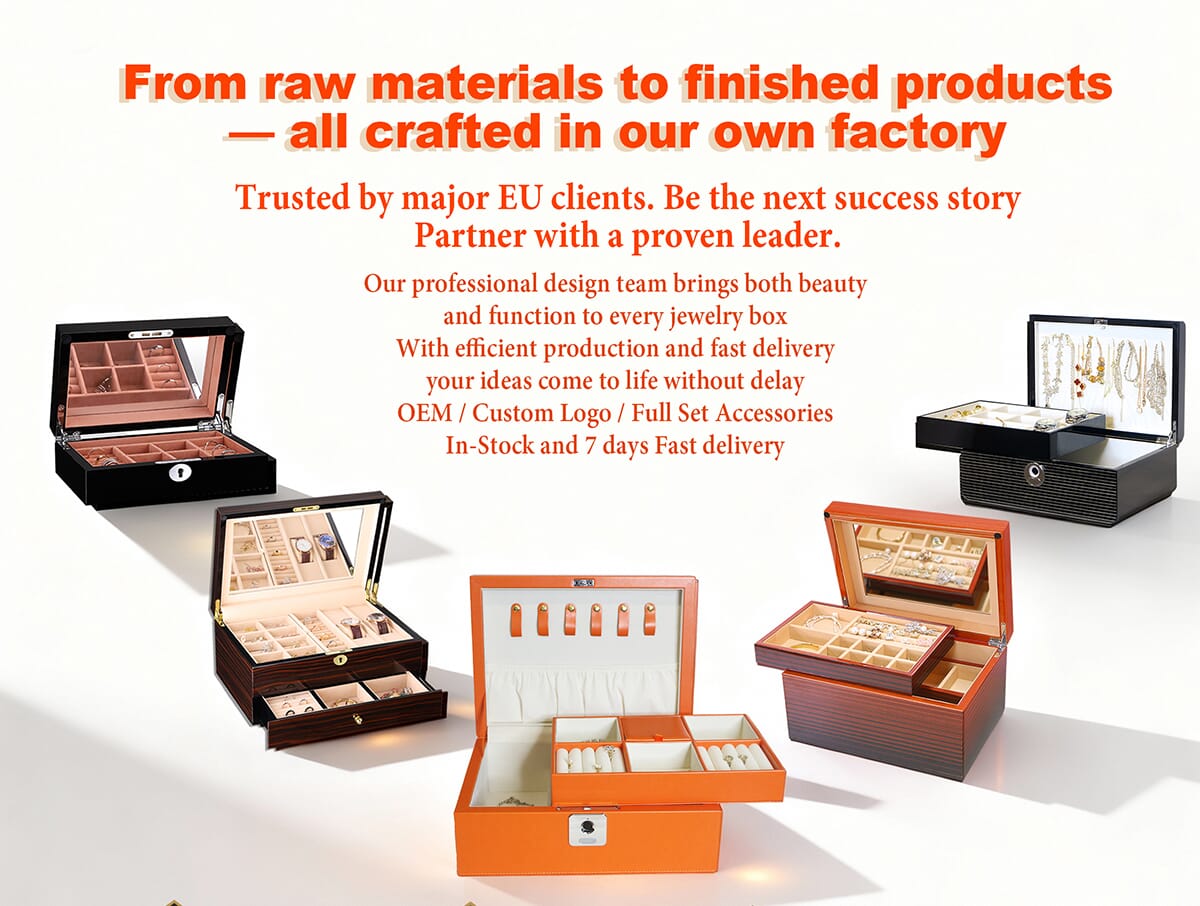
In the consumer markets of luxury goods, precision timepieces, fine jewelry, and premium cigars, packaging is not merely a protective shell; it is the core medium for establishing the first visual and tactile connection between the brand and the consumer. As a source manufacturing factory specializing in professional wooden packaging for the global market, we often receive inquiries from B2B brands, wholesalers, and distributors: “Why do you strongly recommend the 12-layer high-gloss piano lacquer for high-end wooden boxes? What substantive commercial value does this complex process actually bring to our brand?”
For B2B buyers, the core of purchasing decisions lies in Return on Investment (ROI), brand premium enhancement, bulk order quality consistency, and the reduction of customer complaint rates. The 12-Layer High-Gloss Piano Lacquer process is a top-tier surface treatment solution born specifically to meet these stringent commercial demands. Below, we provide an in-depth analysis of the indispensability of this process from multiple dimensions: visual aesthetics, physical protection, functional empowerment, and supply chain stability.
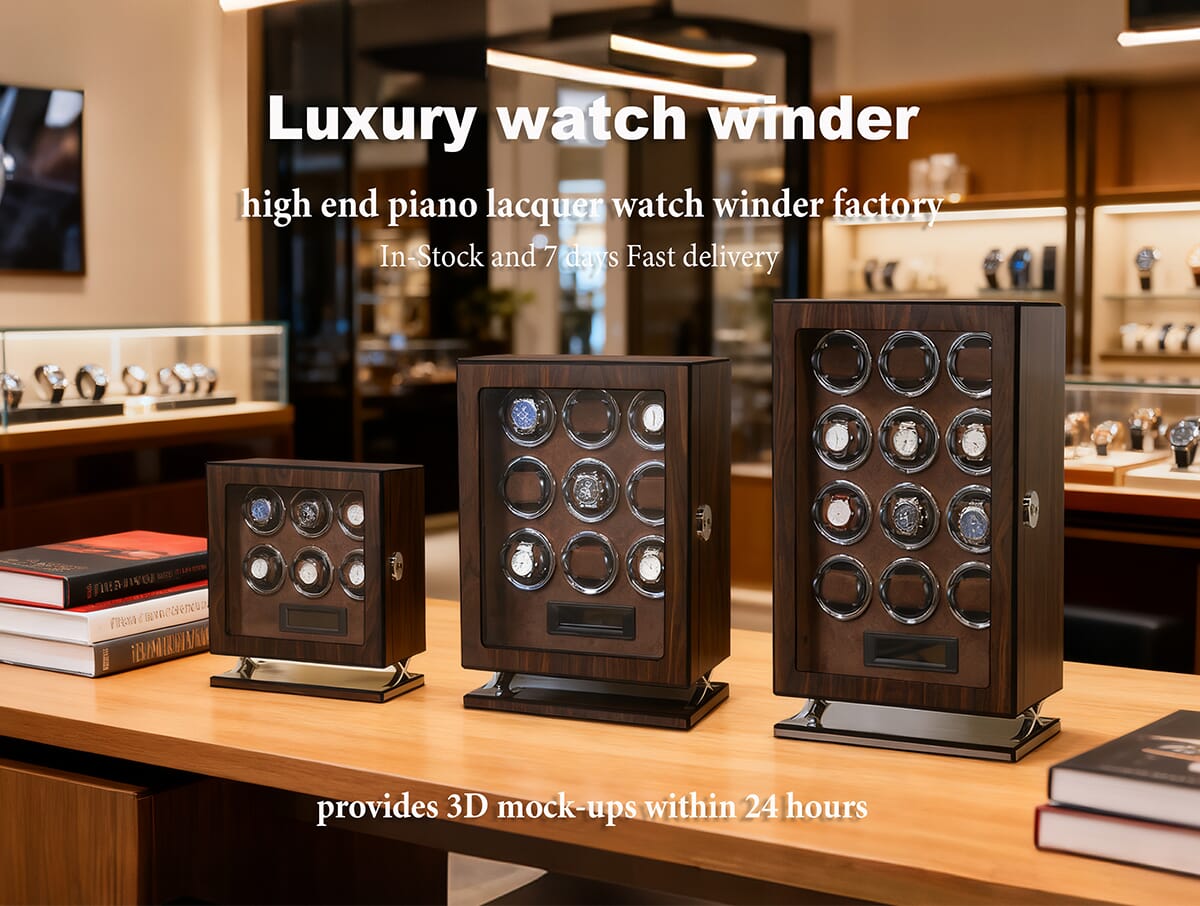
High-gloss piano finish
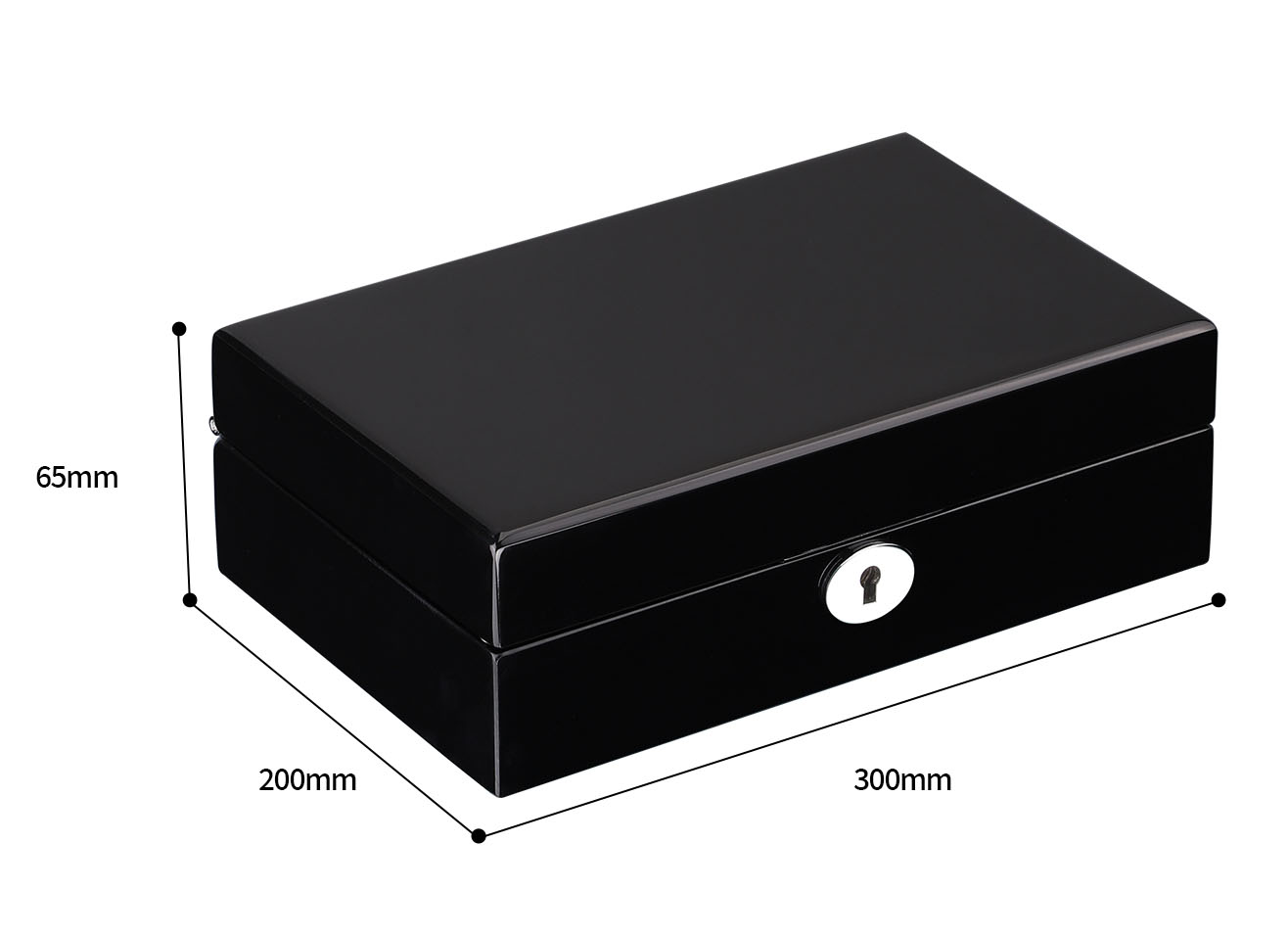
I. Ultimate Visual Luxury: The Core Engine for Boosting Brand Premium
In a luxury retail environment, the “first impression” of a product dictates the consumer’s psychological price anchor. The 12-layer piano lacquer process possesses an overwhelming advantage in visual presentation, directly empowering the brand and elevating the retail price point.
1. Mirror-Level Flatness Breaking Physical Limits (High Gloss Mirror Effect)
Natural wood surfaces are covered with microscopic pores, grains, and uneven textures. Ordinary spray painting or standard 3 to 5-layer baking paint can add color, but as the paint shrinks during curing, the underlying wood grain will faintly emerge, causing a slight “orange peel” effect or uneven reflection.
The 12-layer piano lacquer process completely fills all microscopic pores of the wood through a repetitive cycle of “coating-curing-sanding.” When light hits the 12-layer treated and finally buffed surface, it creates a perfect, continuous, and distortion-free mirror reflection. This deep and translucent gloss is the hallmark of high-end luxury packaging, instantly capturing the consumer’s attention.
2. Rich and Full Color Depth and Layering
Haute couture packaging colors often carry the brand’s Visual Identity (VI) system. The superposition of 12 paint layers is not simple repetition; it is a scientific combination of primer (sealing the wood base), middle coat (building thickness and color), and topcoat (providing high gloss and transparency).
Multiple layers of clear topcoat form a thick “optical lens” over the base color, making the underlying color appear deeper, richer, and highly three-dimensional. Whether it’s classic Obsidian Black, Burgundy Red, or a luxurious Walnut translucent lacquer, the 12-layer process gives the color a texture akin to supercar paint. This visual “expensiveness” allows consumers to form a high psychological expectation of the product’s value before even opening the box, naturally accepting the brand’s premium pricing.
II. Ultimate Craftsmanship Decoded: The Production Barriers of 12-Layer Piano Lacquer
To help you better understand the value of this process, we must delve into the production logic behind it. The 12-layer piano lacquer is expensive and time-consuming because it is a systematic engineering feat highly dependent on dust-free environments, precision equipment, and the manual craftsmanship of senior artisans.
1. Rigorous Substrate Preparation and Wood Sanding
Before the first drop of paint is applied, the wooden MDF/solid wood body must undergo strict Moisture Content (MC) control (usually between 8%-12% to prevent future cracking) and multiple manual wood sanding steps to ensure an absolutely smooth surface with sharp, crisp edges.
2. The Complex “4-Primer, 4-Middle, 4-Topcoat” Matrix
- Primer Layers (approx. 4 coats): Primarily uses high-penetration PE (Polyester) primer. Its core function is to deeply seal the wood’s ducts and pores, preventing the wood from absorbing moisture and warping in different climates, while providing a solid adhesion base for subsequent layers. Each spray must be fully cured in a constant-temperature curing room.
- Middle Coat Layers (approx. 4 coats): This stage builds paint film thickness and color saturation. Artisans evenly spray PU (Polyurethane) color paint. The most time-consuming part is that between every two coats, the paint must dry completely, followed by pure manual “wet sanding” using 800-grit to 1500-grit imported waterproof sandpaper by experienced workers. The sanding must be precise—removing surface micro-particles without sanding through the paint layer.
- Topcoat Layers (approx. 4 coats): The crucial step determining the final gloss. Top-tier high-gloss clear coats are sprayed inside a 100,000-class dust-free cleanroom. The topcoat layer demands absolute purity with zero dust contamination.
3. Time-Consuming Resting and Mirror Polishing
After completing the 12-layer spraying, the wooden boxes cannot be shipped immediately. They must rest in a specific temperature and humidity environment for several days to allow the internal chemical reactions of the paint film to complete and the stress to be fully released. Finally, three different grades of polishing compounds (coarse, medium, fine) are used with a wool buffing wheel for high-speed polishing until the surface achieves a flawless, mirror-like High Gloss finish.
III. In-Depth Comparison: 12-Layer Piano Lacquer vs. Conventional Processes
To provide B2B buyers with a clear reference for supplier screening and cost calculation, we comprehensively compare the 12-layer high-gloss piano lacquer with common surface treatments in the market through the following table:
| Evaluation Dimension | 12-Layer High-Gloss Piano Lacquer (High-End Custom Standard) | Standard 3-5 Layer Baking Paint (Mid-Range Market Standard) | Traditional Open/Closed-Pore Spray Paint (Low-End Market Standard) |
|---|---|---|---|
| Surface Glossiness | Ultimate mirror effect, clear reflection without distortion, highly translucent. | Has some gloss, but slight orange peel or wood grain waves visible under strong light. | Dull or matte finish, blurry reflection, no mirror effect. |
| Film Thickness & Texture | Extremely thick and even film, touches like jade—smooth, cool, and substantial. | Thinner film, average touch, lacks deep three-dimensional texture. | Very thin film, wood grain can be felt directly, flimsy texture. |
| Wear & Scratch Resistance | Extremely high surface hardness (usually 2H-3H), resists daily friction, hard to scratch. | Medium hardness, daily wiping easily leaves swirl marks or micro-scratches. | Low hardness, easily scratched by fingernails or hard objects, poor protection. |
| Anti-Oxidation & Weathering | Excellent. Completely isolates air, UV resistant, no yellowing or fading after years of use. | Average. Prone to slight yellowing or gloss loss after prolonged light exposure. | Poor. Highly affected by humidity/temp, prone to moisture, cracking, or peeling. |
| Functional Empowerment | Perfect sealing (ideal for humidors), strong acoustic insulation (ideal for watch winders). | Average sealing and soundproofing, cannot meet high-precision functional needs. | No special functional empowerment, serves only as basic color coverage. |
| Lead Time & Cost | Long cycle (usually 30-45 days), cleanroom operation, high labor and time costs. | Moderate cycle (approx. 20-30 days), controllable cost, fits mass consumer goods. | Short cycle (10-15 days), fast assembly line production, extremely low cost. |
| B2B Commercial Value | Supports ultra-high brand premium, fits luxury goods, high jewelry, premium watches. | Suitable as standard packaging for mid-tier brands, basic commercial display. | Only suitable as low-cost transit or FMCG packaging, no premium capability. |
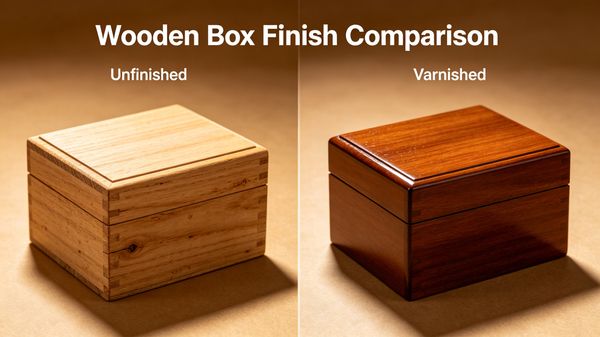
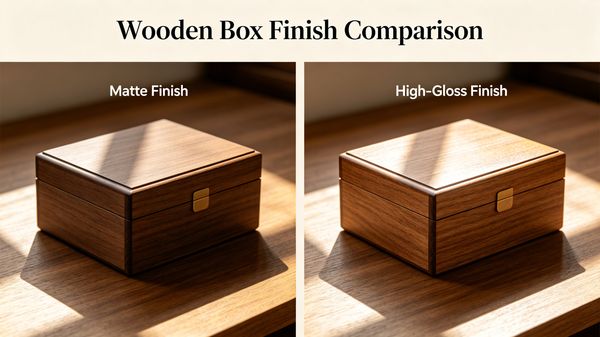
IV. Superior Physical Protection and Functional Empowerment: The Key to Reducing After-Sales Costs
For B2B clients engaged in cross-border procurement, the durability of the packaging directly affects the defect rate and after-sales costs as the product goes through long-haul ocean freight, warehousing, distribution, and finally reaches the consumer. The 12-layer piano lacquer is not just a “facade”; it is robust physical armor.
1. Ultimate Hardness and Scratch Resistance
Genuine 12-layer piano lacquer undergoes repeated high-temperature curing, resulting in an extremely high cross-linking density and a paint film hardness far exceeding ordinary coatings. In daily retail displays, frequent wiping by staff and handling by customers can easily leave ugly “swirl marks” or micro-scratches on ordinary paint. The 12-layer piano finish effectively resists these daily wears, maintaining a pristine look and significantly extending the lifecycle of the packaging box in retail displays.
2. Outstanding Anti-Oxidation and Anti-Yellowing Capabilities
High-end packaging boxes are often kept by consumers as storage boxes for years in bedrooms or walk-in closets. Ordinary paint finishes will yellow (for white) or fade and lose gloss (for dark colors) after long-term exposure to air and UV light. The premium piano lacquer formula we use contains anti-UV additives. Combined with the dense physical barrier of 12 layers, it completely cuts off the oxidation reaction between the wood interior and the external environment, ensuring the box remains as good as new and continuously delivers long-term brand value.
3. Meeting the Stringent Functional Needs of Special Products
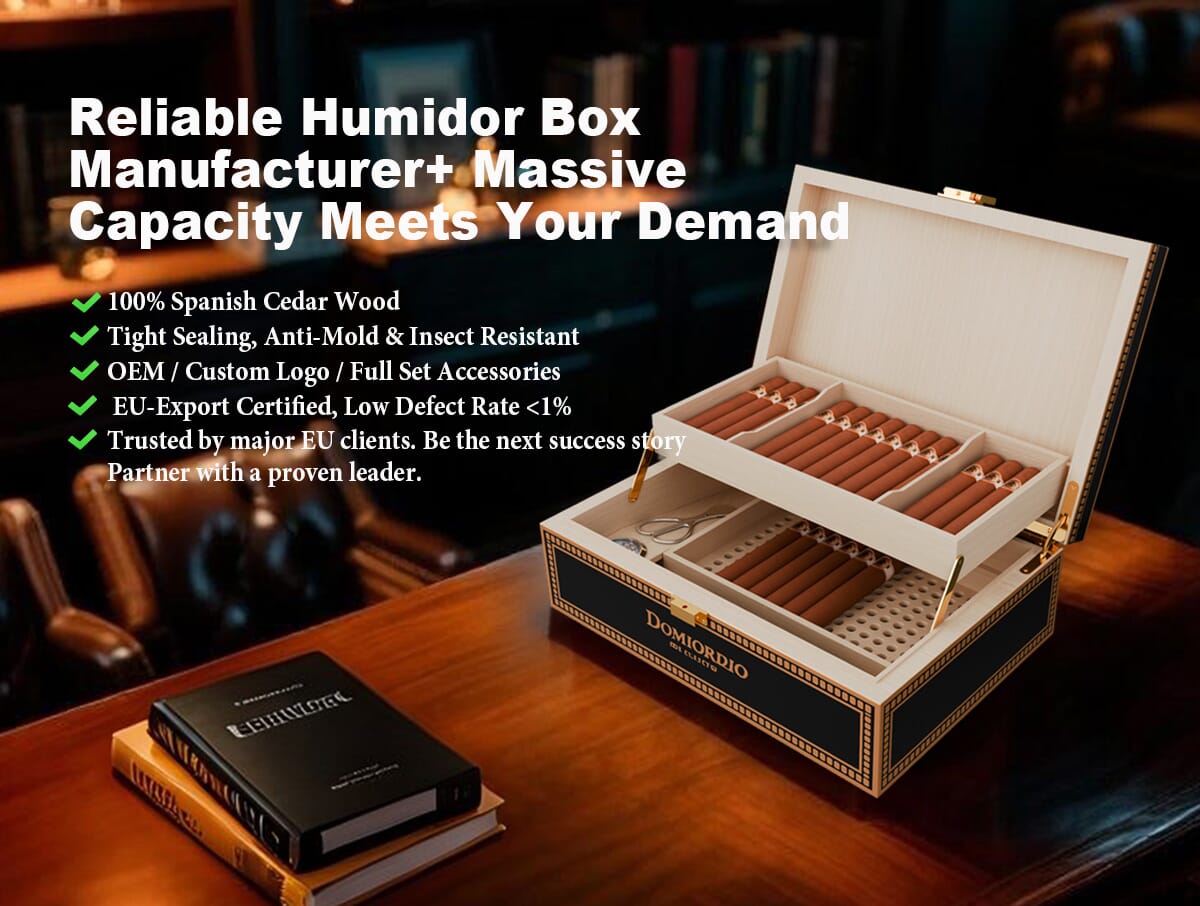
- Micro-Climate Sealing for Cigar Humidors: Premium handmade cigars require an extremely strict storage environment (usually 65%-75% relative humidity). The 12-layer piano lacquer acts like a dense glass shell, thoroughly sealing the external wood pores of the humidor. Paired with unvarnished Spanish Cedar wood inside, it creates an absolutely sealed, constant temperature and humidity micro-climate, effectively locking in moisture and preventing cigars from drying out or molding. For cigar brands, this is the core standard for evaluating a qualified humidor.
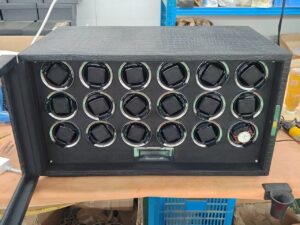
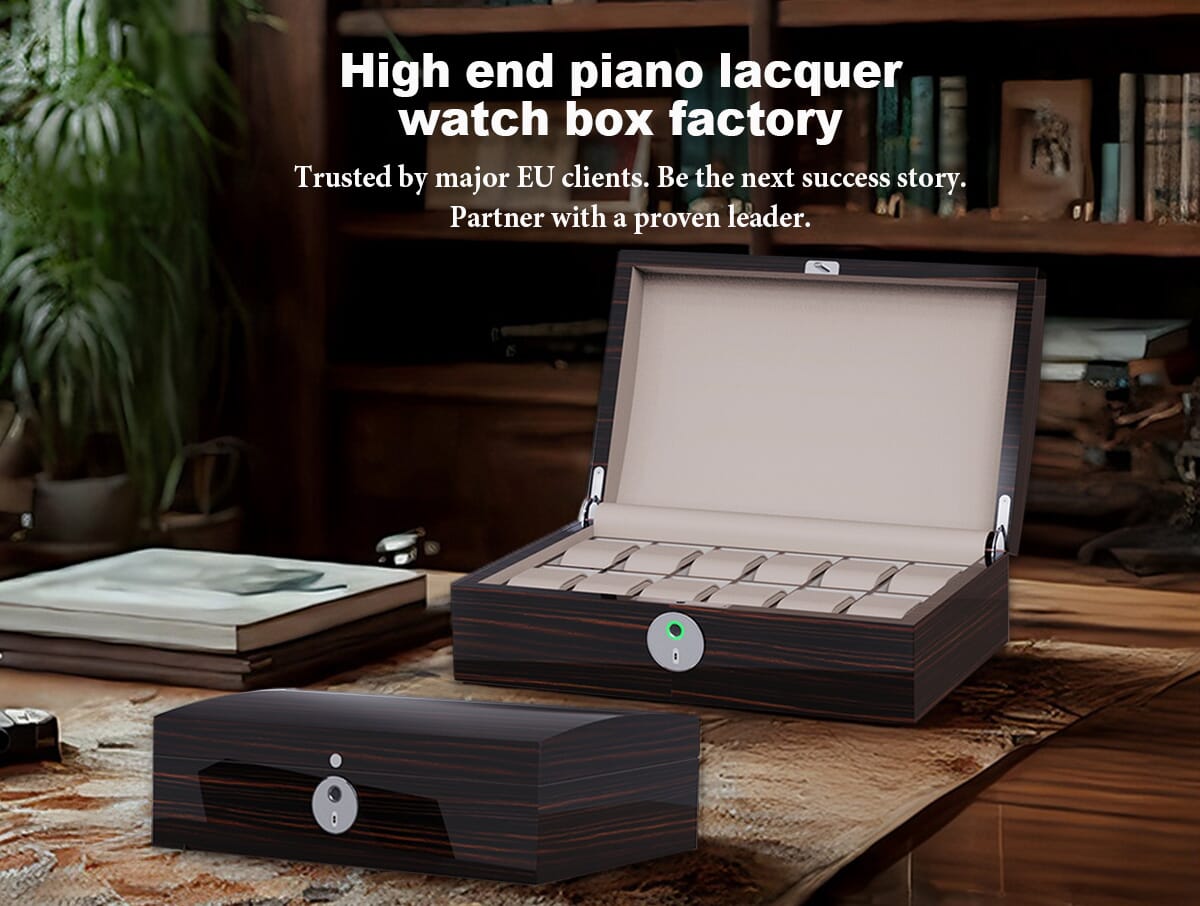
- Acoustic Barrier for Watch Winders: Watch winders are usually placed on a user’s bedroom nightstand, demanding extreme quietness. The internal motor inevitably generates micro-vibrations and sound waves while running. The thick, high-density 12-layer piano lacquer alters the resonance frequency of the wooden box, acting as an acoustic wall that significantly absorbs and blocks the faint low-frequency noise of the motor. Paired with the Japanese Mabuchi silent motors we use, it achieves true “bedroom-level silence,” completely eliminating consumer complaints regarding noise.
V. Quality Consistency and Delivery Guarantee from a Supply Chain Perspective
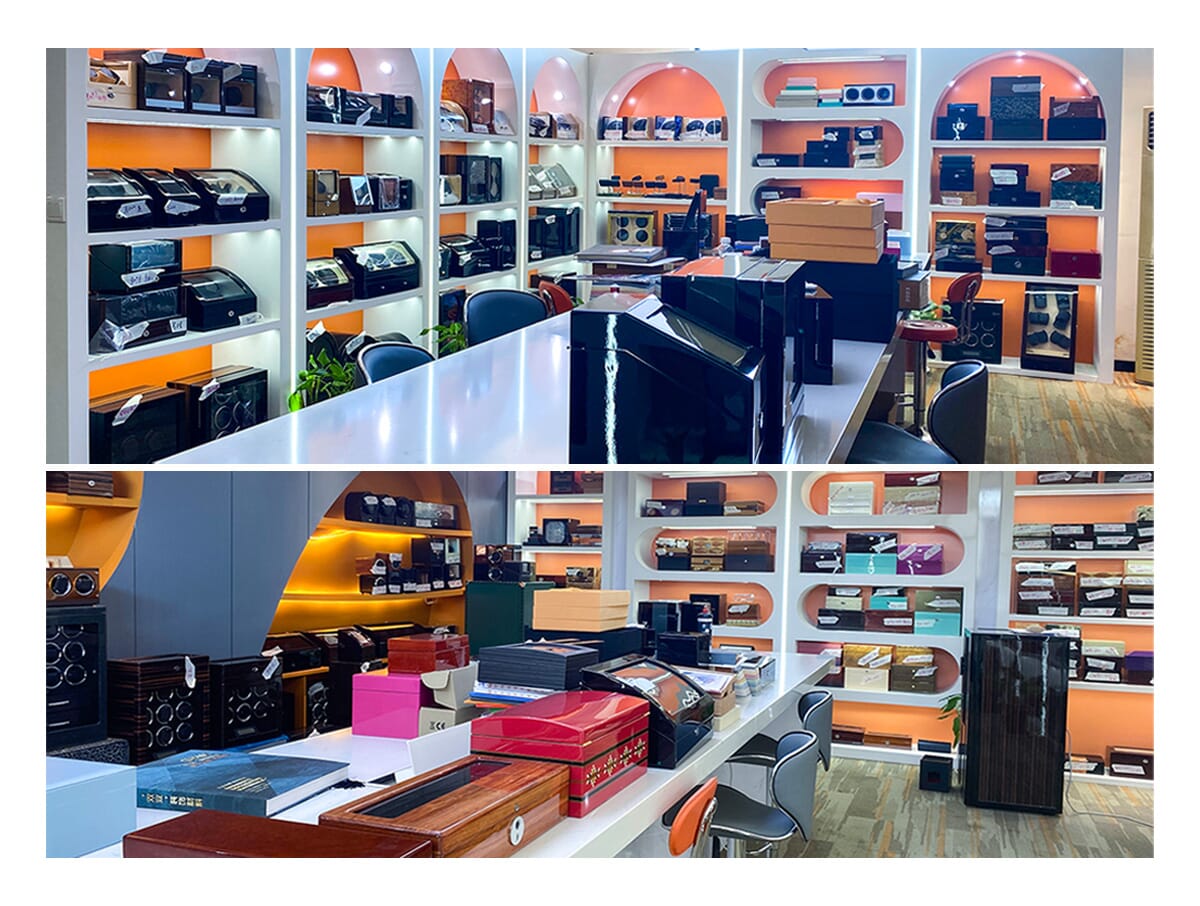
In B2B bulk procurement, “making one perfect sample” is not difficult; the real challenge lies in “how to ensure 10,000 mass-produced units have the exact same 12-layer high-gloss quality as the sample.” This heavily tests the hardware facilities and management systems of the packaging source factory.
1. 100,000-Class Dust-Free Coating Cleanroom
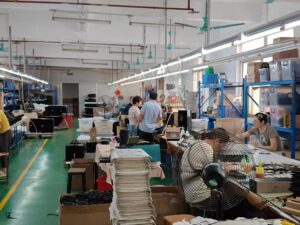
The biggest enemy of high-gloss piano lacquer is dust. Even a speck of micro-dust invisible to the naked eye falling on wet topcoat will form a noticeable defect after polishing, causing the entire wooden box to be scrapped. We have invested heavily in building a fully enclosed 100,000-class constant temperature and humidity dust-free coating cleanroom, equipped with a water curtain dust removal system, physically eliminating paint defects at the source and guaranteeing the yield rate of bulk orders.
2. Rigorous Standardized QC System
We have established extremely high-standard inspection procedures specifically for the 12-layer piano lacquer. During the IPQC (In-Process Quality Control) stage, every sanded paint layer is inspected with strong side-lighting flashlights to ensure no sagging or sanding marks. During the OQC (Outgoing Quality Control) stage, in addition to a 100% visual inspection, we perform Cross-Cut Tests (to verify paint adhesion) and Thermal Cycling Tests (to verify crack resistance), ensuring this gorgeous outer layer is not only beautiful but remains resilient under extreme climates.
VI. B2B Customer Frequently Asked Questions (FAQ)
To help your procurement team make more efficient decisions, we have compiled the most common questions from B2B buyers regarding the 12-layer piano lacquer process:
1. Will using the 12-layer piano lacquer process significantly increase our procurement costs?
Answer: Compared to ordinary spray paint or 3-layer baking paint, the unit price of 12-layer piano lacquer is indeed 30% to 50% higher due to the massive consumption of cleanroom labor hours, premium eco-friendly paint materials, and the manual wet-sanding time of senior craftsmen. However, from an ROI (Return on Investment) perspective, this process gives your packaging the texture of a luxury item worth thousands of dollars, vastly supporting the premium pricing space of your end product. Furthermore, its superior wear resistance and anti-warping capabilities reduce the after-sales complaint rate to nearly zero, significantly lowering hidden costs. For mid-to-high-end brands, this is a highly lucrative investment.
2. What is the lead time for the 12-layer piano lacquer? Why is it slower than regular wooden boxes?
Answer: The production lead time for standard 12-layer piano lacquer bulk orders is usually between 35 and 45 working days. Because this process involves 12 coating steps (“4 primers, 4 middle coats, 4 topcoats”), and each layer must enter the curing room to fully cure before manual wet sanding, we cannot violate the objective laws of chemical reactions to forcibly compress the drying time to prevent future cracking or sinking. “Slow work yields fine products” is the necessary path to guarantee the ultimate mirror effect.
3. Our brand has specific VI colors. Can the 12-layer piano lacquer be customized to a specific Pantone color code?
Answer: Absolutely. We have a professional color-matching laboratory and experienced paint engineers. You only need to provide the standard Pantone code or send a physical color swatch, and we can accurately reproduce your brand color using the 12-layer lacquer process. Whether it is a highly saturated solid color, a pearlescent color with metallic flakes, or a translucent high-gloss lacquer that retains the natural wood grain, we can perfectly fulfill your OEM/ODM customization needs.
4. Do your paint materials comply with international environmental and safety standards? Will there be customs clearance risks when exporting to Europe or the US?
Answer: Please rest assured. We deeply understand the importance of compliance for B2B clients. All the primers, color paints, and topcoats we use for the 12-layer piano lacquer are sourced from top-tier eco-friendly coating suppliers. The products fully comply with stringent international environmental and heavy metal limit standards, such as the EU REACH regulations, RoHS directives, and California Proposition 65. We can provide testing reports issued by authoritative third-party organizations (e.g., SGS, TÜV) at any time, ensuring your goods clear customs smoothly worldwide without any compliance risks.
5. The 12-layer high-gloss finish is very delicate. How do you prevent it from being scratched or damaged during cross-border bulk shipping?
Answer: For high-gloss piano lacquer products, we have designed an ultra-high safety level international logistics packaging solution. First, before leaving the factory, each wooden box is covered with a non-residue static protective film to prevent surface friction. Second, the wooden box is placed into a custom-fit high-density EPE (Expanded Polyethylene) foam or EVA insert, and then put into a rigid lid-and-base box. Finally, multiple individual boxes are packed into a thickened, high-strength corrugated master carton with reinforced edge protectors. This packaging solution has passed rigorous Drop Tests and can withstand severe turbulence during ocean freight, air freight, and courier transit, ensuring every wooden box delivered to your hands is flawless.