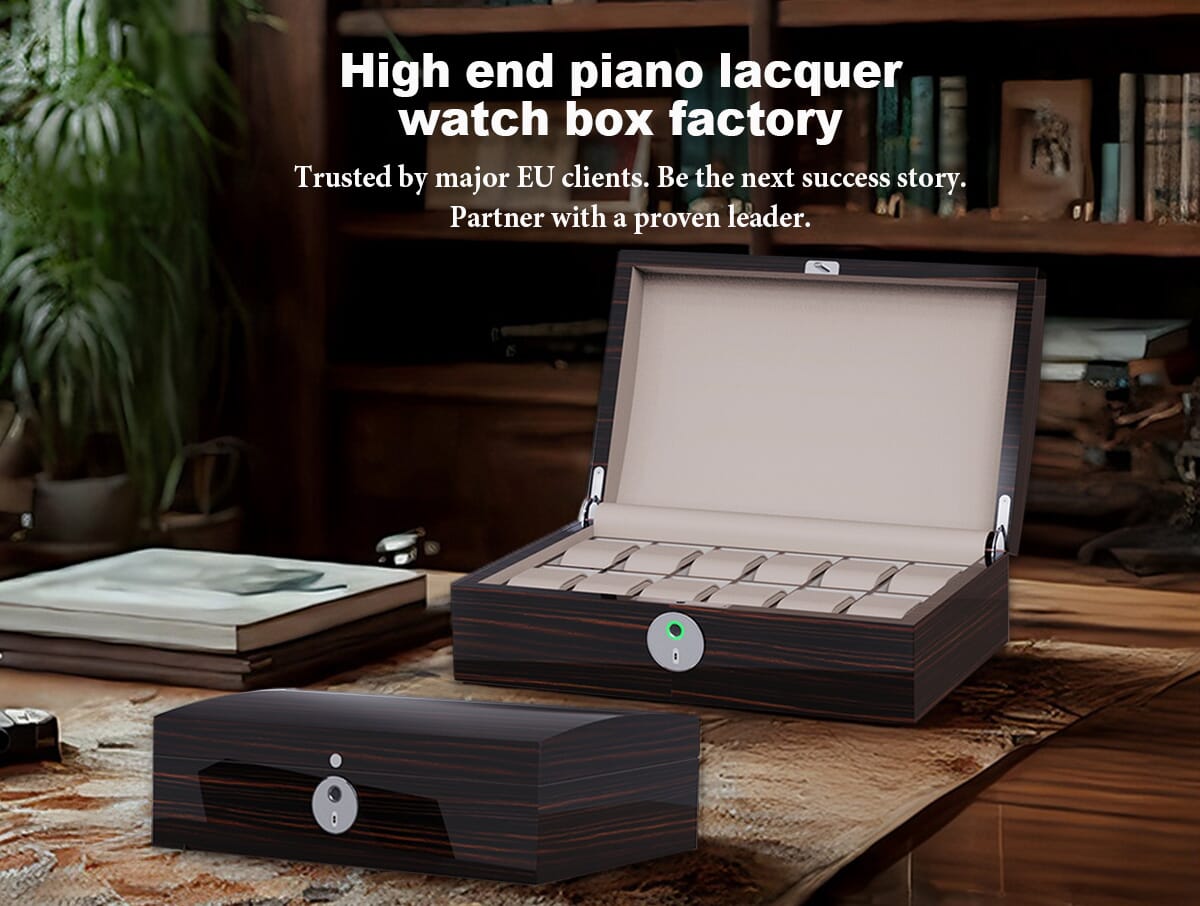
From Silent Motors to High-Gloss Piano Finish: How to Provide the Most Professional Care for Your Automatic Watches
Introduction: Why Does an Automatic Watch Need a Professional Watch Winder?
For every owner of an automatic mechanical watch, the timepiece is not merely a timing tool, but a masterpiece of precision engineering. Automatic mechanical watches rely on the natural motion of the wearer’s wrist to wind the mainspring barrel, thereby storing power. However, in modern life, we often rotate between multiple watches or do not wear a watch on weekends. This leads to a common problem: when a watch remains still beyond its power reserve (typically 38 to 72 hours), the movement stops. When wearing it again, we not only need to manually wind it but also reset the date, day, and even the moon phase. This process is not only tedious, but repeated adjustments can also cause additional wear to the movement’s delicate gears and setting mechanisms.
A high-quality watch winder is designed precisely to solve this problem. It simulates the natural motion of the wrist, keeping the watch continuously wound while stationary, ensuring the movement remains running. But this is not the only value of a watch winder. An inferior winder may damage the movement due to noise, vibration, or electromagnetic interference, causing more harm than good. Therefore, choosing a professional, high-end watch winder is not just buying a storage tool, but a long-term investment in the value of your watch and the longevity of its movement. This article delves into the four core advantages of high-end watch winders, revealing how they become the best guardians of your precious collection through precision engineering and intelligent design.
Chapter 1: Silent Motor – How Japan’s Mabuchi Motor Defines “Zero-Interference” Operation
The Noise Pain Point of Traditional Watch Winders
Many watch winder users have experienced this annoyance: a humming sound or intermittent vibration from the winder breaking the peace and quiet of a late-night study or bedroom. This noise not only affects sleep quality but also raises concerns that continuous micro-vibrations may cause irreversible fatigue damage to the movement’s delicate bearings and balance spring. Over time, the precision of a movement exposed to constant vibration gradually declines, and it may even cause parts to loosen. For mechanical watch enthusiasts who pursue extreme accuracy, this is unacceptable.
Technical Advantages of the Japanese Mabuchi Motor
To solve this persistent problem in the industry, high-end watch winders have taken the lead in introducing the world’s leading micro-motor brand – Mabuchi Motor (Japan). Mabuchi motors are renowned for their low torque, high stability, and extremely long service life. They incorporate precision bearings and dynamic balancing technology, physically eliminating resonance and noise generated during motor operation. According to laboratory test data, watch winders using Mabuchi motors typically operate at noise levels below 15 decibels, far lower than the 30 decibels common with standard motors, and even quieter than the background noise of an air conditioner. This near-absolute silence allows the winder to be placed seamlessly in a bedroom, study, or any environment requiring quiet.
More importantly, this silent characteristic directly protects the movement. Since the motor runs with almost no vibration, the lubricating oil inside the movement does not evaporate or distribute unevenly due to vibration, thereby extending the watch’s service intervals. A veteran watchmaker once noted, “The best protection for a movement is to let it run in a stable, interference-free environment.” The application of the Japanese Mabuchi motor is a perfect practice of this philosophy.
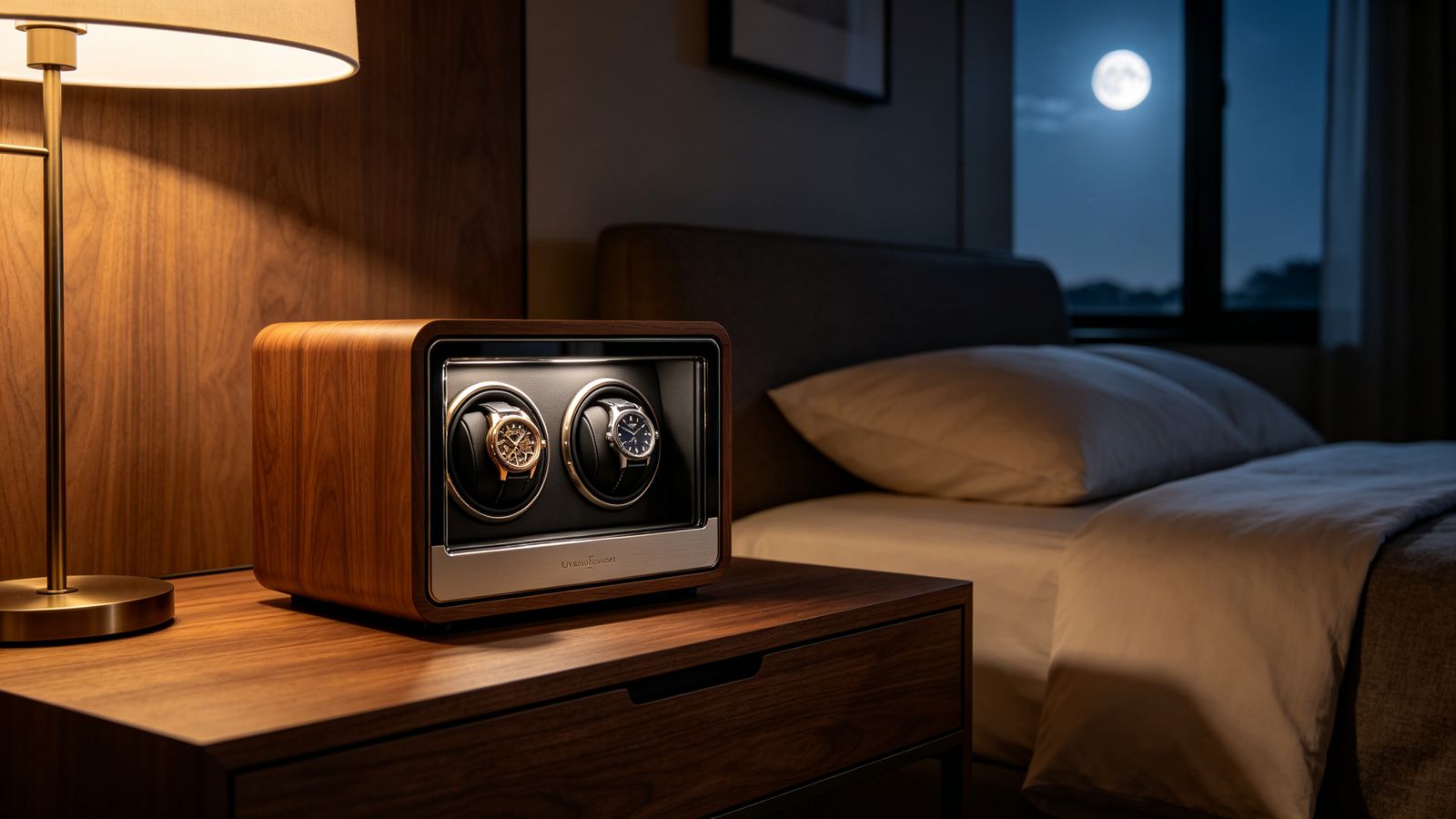
Chapter 2: Craftsmanship Aesthetics – How High-Gloss Piano Finish Redefines the Luxury Standard of Watch Storage
Manufacturing Challenges of Piano Finish
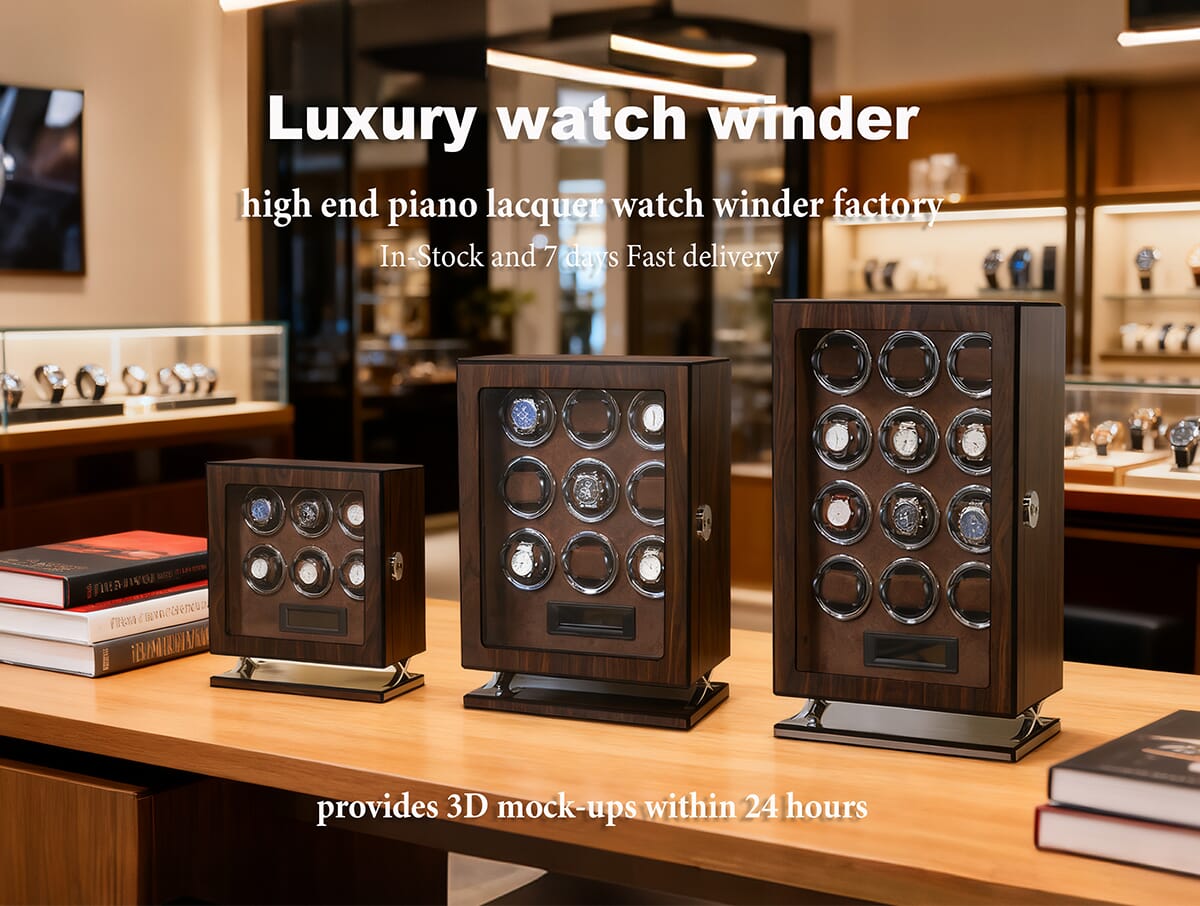
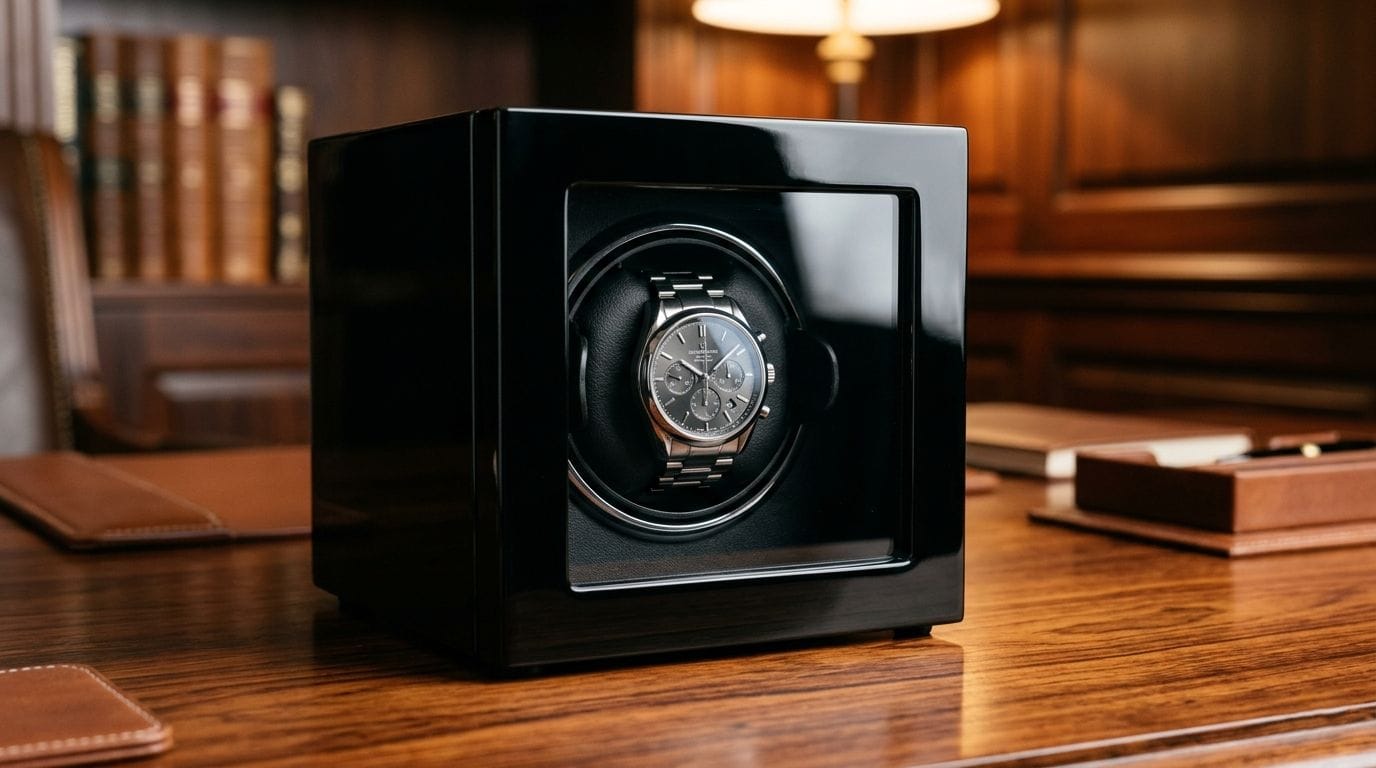
When we shift our focus from the internal motor to the exterior craftsmanship, the high-gloss piano finish is undoubtedly the most striking design highlight. This finish is not a simple spray paint job; it requires multiple stages of hand sanding, primer, topcoat, and polishing, typically involving 8 to 12 layers of paint, all applied in a dust-free, temperature- and humidity-controlled environment. Each layer is meticulously sanded and dried before finally achieving a deep, translucent, mirror-like effect. This extreme demand for craftsmanship transforms the watch winder itself into an artwork that blends traditional lacquer artistry with modern industrial design.
The high-gloss piano finish is not just about aesthetics; it also serves practical functions. The smooth, dense surface effectively repels dust and dirt, and daily cleaning requires only a soft cloth to restore its shine. More importantly, this finish enhances the enclosure’s sealing, thereby providing some reduction in external electromagnetic field interference. When combined with internal magnetic shielding, the lacquered shell becomes the first line of defense against electromagnetic radiation, offering dual protection for the movement.
Visual Synergy Between Piano Finish and Watch Collection
In high-end home environments, a watch winder with a high-gloss piano finish can create a stunning visual echo with walnut furniture, marble countertops, or leather sofas. When you place your watch inside, the reflection from the glossy surface mirrors the dial’s luster and the metal’s texture, making the watch appear to float on a deep, reflective pool. A watch collector once shared, “I placed my winder on the rosewood desk in my study. The piano finish and the desk’s wood grain complement each other perfectly. Every time I see it, I feel the artistic aura of the entire space is elevated.” This design, integrating high-gloss piano finish into living aesthetics, not only protects the watch but also showcases the owner’s taste and status.
Chapter 3: Intelligent Protection – The Synergy of Independent Settings, Magnetic Shielding, and Gentle LED Lighting
Independent Rotors and Multiple TPD Settings
Every automatic mechanical movement has specific winding requirements. For example, the Rolex 3135 movement typically requires 650 turns per day (TPD) with bi-directional rotation, while the Omega 8500 movement may need 800 TPD with uni-directional rotation. Using a “one-size-fits-all” rotation mode could lead to under-winding or over-winding of certain movements, which over time can damage the mainspring barrel’s elasticity. High-end watch winders provide independent settings for each rotor, allowing users to precisely set TPD values and rotation directions according to the watch brand and model. This intelligent independent setting is crucial not only for modern watches but also for vintage pieces or those with complex functions (such as perpetual calendars or moon phases), ensuring the movement remains in optimal winding condition and avoiding unnecessary mechanical wear.
The Necessity of Magnetic Shielding
Modern home environments are filled with various electromagnetic fields: mobile phones, computers, WiFi routers, wireless chargers, speakers, and more. The magnetic fields generated by these devices, though weak, can affect the precision of a watch movement. Particularly for traditional alloy hairsprings predating silicon hairsprings, magnetic fields can cause the hairspring to stick or deform, causing the watch to gain several seconds or even minutes per day. Professional magnetic shielding in watch winders typically employs a soft iron lining or a special alloy shielding layer around the motor or throughout the entire shell, effectively blocking external magnetic fields from interfering with the movement. One user reported that when his GMT watch was placed near a WiFi router, its daily rate error jumped from +2 seconds to +15 seconds. However, after placing the watch inside a magnetically shielded winder, the error quickly returned to normal. This case fully demonstrates that magnetic shielding is not an optional extra, but a core element in protecting movement accuracy.
The Function and Aesthetics of Gentle LED Lighting
In addition to silence and magnetic shielding, high-end watch winders feature gentle LED lighting systems. Unlike traditional halogen or fluorescent lamps, LEDs generate almost no heat and are UV-free, preventing the finish from aging due to prolonged exposure and preventing the movement’s lubricating oil from evaporating due to high temperatures. Designers typically choose warm-toned LEDs around 3000K, which most faithfully reproduce the dial colors and metallic textures of the watches while avoiding harsh reflections. Smart sensor functionality allows the light to turn on when opened and off when closed, enhancing convenience and adding a touch of modern technological elegance. The combination of LED lighting and high-gloss piano finish makes every opening a visual feast.
Chapter 4: Real-World Cases – From Collectors to Everyday Users
Case 1: Daily Management for a Multi-Watch Collector
User Background: Mr. Zhang is a seasoned watch collector with 12 automatic mechanical watches, including complicated pieces like a Patek Philippe perpetual calendar and an Audemars Piguet tourbillon.
Pain Points: Each time he rotated watches, he spent nearly half an hour resetting the date, day, and moon phase, and worried that frequent adjustments would damage the movement’s delicate gears. He also noticed that some watches showed significantly increased rate errors after sitting idle for a week.
Solution: Mr. Zhang purchased a high-end watch winder featuring independent rotor settings, a Japanese Mabuchi motor, and magnetic shielding. He set custom TPD values and rotation directions for each watch and placed the winder in a corner of his study away from electronic devices.
Result: After three months, he was delighted to find that all his watches maintained rate errors stable within ±2 seconds per day, and he no longer had to worry about resetting the calendars. He concluded: “This watch winder not only frees up my time but, more importantly, gives me confidence that my movements are being cared for in the most professional way.”
Case 2: A Business Professional’s Need for Silence
User Background: Mr. Li is a frequent business traveler who placed his watch winder on his bedside table for easy access when changing watches.
Pain Points: The ordinary watch winder he previously used emitted a noticeable humming sound during the night, severely affecting his and his wife’s sleep quality. His wife repeatedly complained and asked him to remove it from the bedroom.
Solution: On a friend’s recommendation, Mr. Li replaced it with a watch winder featuring a Japanese Mabuchi motor. This winder operates almost completely silently; even with an ear pressed against the case, only an extremely faint electrical hum could be heard.
Result: Mr. Li reported: “Since switching to this watch winder, I am completely unaware that it’s working. My wife no longer complains, and my sleep quality has returned to normal. This silent performance is revolutionary for someone as sensitive to sound as I am.” This case vividly demonstrates how the silent feature directly enhances a user’s quality of life.
Conclusion: Investing in a High-Quality Watch Winder is a Commitment to Caring for Your Automatic Mechanical Watches
Through the analysis above, we can clearly see that a truly professional high-end watch winder is far more than a simple rotating device. Its core value lies in four key aspects: achieving extreme silence using Mabuchi Motor (Japan) to protect the movement from vibration damage; employing meticulous high-gloss piano finish craftsmanship that not only enhances home aesthetics but also strengthens the enclosure’s sealing and interference resistance; incorporating advanced magnetic shielding design to counter electromagnetic threats in modern living; and featuring an intelligent system with independent settings to ensure every watch receives the most accurate winding care.
Choosing a watch winder is choosing an attitude toward the future of your timepiece. It is not just a storage tool but the “infrastructure” of your watch collection system. We recommend that when selecting a watch winder, price should not be the sole criterion; instead, prioritize motor quality, finish craftsmanship, and magnetic shielding performance. Only when these core elements meet professional standards can a watch winder truly become a loyal partner in extending movement life and protecting watch value. Choose a watch winder that truly understands your cherished watches, letting time flow precisely and silently, ensuring every wearing experience is as perfect as the first.
FAQ
What is a watch winder and why do I need one?
A watch winder is a special device that keeps your automatic watch wound when you are not wearing it. Since automatic watches rely on the movement of your wrist to keep ticking, they can stop if not worn for a while. Using a winder ensures that your watch remains powered, saving you from the hassle of having to reset the time and date every time you want to wear it.
How do I choose the right watch winder?
When choosing a watch winder, consider its motor quality, design, and features like independent settings for different watches. High-end winders usually have quieter motors, like the Mabuchi motor, which prevents damage to your watch from vibrations. Look for designs that complement your decor and offer magnetic shielding to protect your watch from electromagnetic interference.
How often should I use my watch winder?
You should use your watch winder whenever you’re not wearing your automatic watch for extended periods. This keeps the movement running smoothly and prevents wear from frequent adjustments. Refer to your watch’s specifications for the required number of turns per day to keep it wound properly.
Do watch winders have different settings?
Yes, many high-end watch winders come with independent settings for each rotor. This means you can customize the number of turns per day and the direction of rotation according to the specific requirements of your watch, which is essential for maintaining its proper functioning.