SEO-Optimized Subtitle: 2026 High-End Automatic Mechanical Watch TPD (Turns Per Day) & Winding Direction Quick Reference — A Must-Read for B2B Watch Retailers and After-Sales Teams
Have your customers invested heavily in a luxury mechanical watch, only to find that after placing it in a watch winder it either fails to wind properly or, worse, appears to suffer damage? In most real-world cases, the issue does not lie with the watch itself. The root cause is almost always an incorrect TPD (Turns Per Day) setting or winding direction.
For high-end brands such as Rolex, Omega, Patek Philippe, Audemars Piguet, and IWC, correct TPD configuration is not a minor detail—it directly determines whether a watch winder preserves power reserve safely or accelerates unnecessary wear. For B2B watch retailers, distributors, and corporate procurement buyers, understanding TPD is part of professional after-sales service and a key factor in customer trust.
This guide provides a practical, SEO-focused reference to help you match luxury watches with the correct watch winder settings—accurately, safely, and professionally.
Quick Reference Table: TPD Settings for Popular Luxury Watches
Different movements vary in automatic winding efficiency. Some wind only clockwise, others counterclockwise, while most modern luxury movements support bidirectional winding. Required daily rotations can also differ significantly.
Below is a practical TPD quick-reference table covering some of the most popular luxury watch movements on the market today:
| Brand / Collection | Common Movements | Winding Direction | Recommended TPD |
|---|---|---|---|
| Rolex Submariner / Daytona / Datejust | 3135, 3235, 4130, 4131 | Bidirectional | 650 |
| Omega Seamaster / Speedmaster / Constellation | 8500, 8800, 8900, 3861 | Bidirectional | 650–800 |
| Patek Philippe Nautilus / Aquanaut | 324, 330, 240 | Counterclockwise | 800 |
| Audemars Piguet Royal Oak | 3120, 4302, 4401 | Bidirectional | 800 |
| IWC Portugieser / Pilot | 52010, 82200, 69385 | Mostly Clockwise | 800–900 |
| Cartier Ballon Bleu / Tank | 1847 MC, 1904 MC | Bidirectional | 650–800 |
| Breitling Navitimer / Chronomat | B01 Manufacture | Bidirectional | 800 |
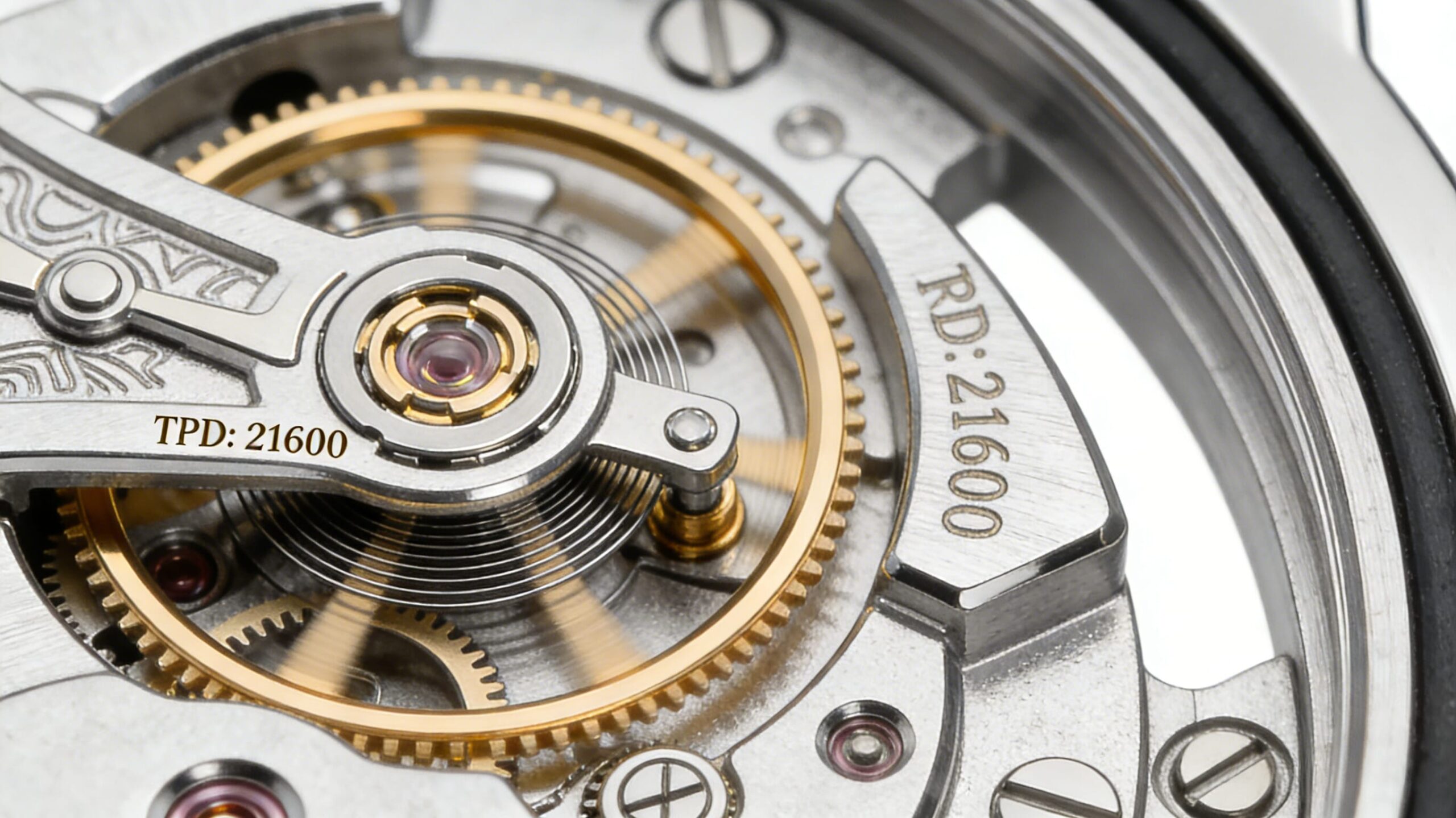
Note: Exact values may vary by production year or complication module. When available, always defer to the manufacturer’s official documentation.
Can Overwinding Damage a Mechanical Watch?
Many customers worry that continuous rotation in a watch winder could “overwind” their watch and snap the mainspring.
Professional Explanation:
Modern high-end automatic mechanical watches are designed with a slipping clutch system (sliding bridle). Once the mainspring reaches full tension, the bridle slips inside the barrel wall, releasing excess energy. As a result, overwinding in the traditional sense is extremely unlikely, even if the watch winder rotates more than necessary.
However, this does not mean unlimited winding is harmless.
If a watch is kept at full power reserve under constant rotation for long periods, the automatic winding module—such as the reversing wheels and rotor bearings—remains under continuous mechanical load. Over time, this leads to accelerated wear, increased friction, and premature lubricant degradation.
Why this matters for product selection:
This is exactly why low-quality “always-on” watch winders are unsuitable for luxury watches. A premium mechanical watch requires controlled, precise winding, not continuous rotation. A well-designed watch winder delivers only the required TPD, then rests—protecting the movement rather than stressing it.
Why Independent Multi-Mode Control Is a Standard Feature of High-End Watch Winders
For B2B watch retailers and custom procurement clients, your customer profile is clear.
Core Pain Point:
Your VIP clients rarely own just one watch. Many collectors store multiple timepieces simultaneously—each with completely different TPD and winding direction requirements. A Rolex Submariner may require 650 TPD bidirectional winding, while a Patek Philippe Nautilus needs 800 TPD counterclockwise only. A traditional single-motor winder with uniform settings simply cannot accommodate both safely.
Product Advantage Integration:
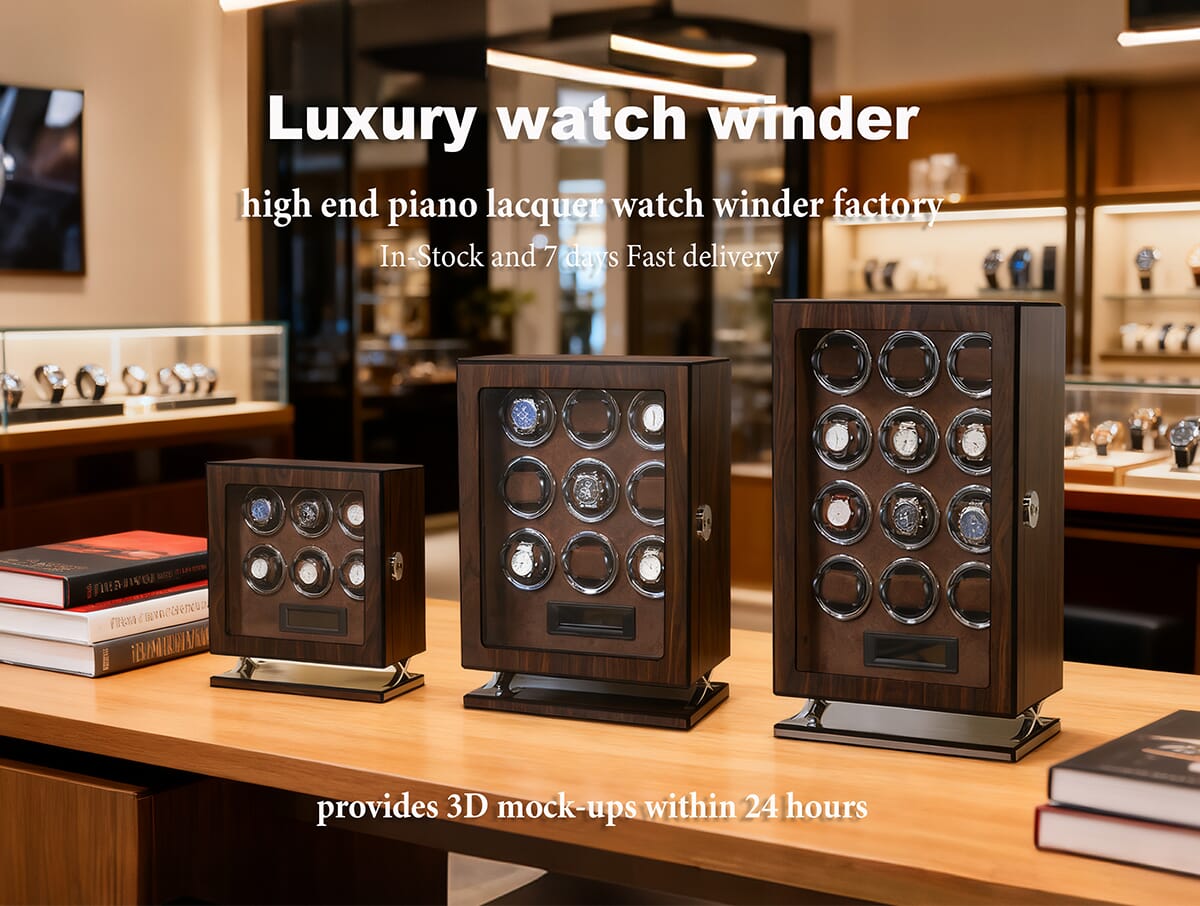
This is why professional-grade watch winders are now built around independent multi-position control:
- Individual motor control for each watch position, allowing separate TPD and direction settings per slot.
- Wide TPD adjustment ranges, typically from 300 to over 2000 TPD.
- Advanced user interfaces, such as LCD touchscreens or smart APP-based control, enabling precise configuration with minimal learning curve.
- Ultra-quiet, anti-magnetic construction, ensuring stable operation without introducing magnetization risks.
Conversion-Oriented Insight:
Only watch winders offering this level of granular control truly match the status of high-end mechanical watches. For watch boutiques, offering or bundling such premium winders enhances perceived professionalism, strengthens after-sales service, and directly increases average order value—especially among high-net-worth collectors.
FAQ & Conclusion
Q1: What if I can’t find the exact TPD for my watch model?
Answer: Start with 650 TPD, bidirectional winding. This configuration safely covers the majority of modern automatic watches. Fully wind the watch manually first (20–30 turns), place it in the winder, and observe performance over 3–5 days. If the watch loses power, gradually increase TPD or adjust direction.
Q2: Can a watch winder replace regular servicing and oil maintenance?
Answer: No—but it can extend service intervals. Watch winders help keep lubricants evenly distributed and prevent oils from drying due to long-term inactivity. However, mechanical wear is inevitable, and professional servicing every 3–5 years remains essential.
Correct TPD configuration is critical to protecting luxury mechanical watches, and a watch winder with independent multi-mode control is no longer optional—it’s a necessity for serious collectors and professional retailers.
If you are a watch store owner, distributor, or corporate procurement manager, contact our sales team today to receive:
- The latest 2026 multi-watch winder product catalog
- Full support for TPD and direction customization
- Exclusive B2B wholesale pricing
Equip your clients with watch winders that truly respect the value of their timepieces—and elevate your brand’s professional image in the high-end watch market.