The Wine Box WE-1209 is produced by T.WING-PAK, a packaging manufacturer based in Nansha, Guangzhou that has built wooden boxes for watch, jewelry, wine and cigar brands for more than 19 years. It is a rigid cased wine gift box with a lined, compartmented interior, supplied for retail, gifting and OEM programmes, and it can be specified with your own finish, lining and branding from 50 to 100 pieces. Every unit is inspected before packing, and the finish, the lining material and the interior layout can all be adjusted to suit a particular product rather than being taken as fixed.
What the WE-1209 is for
A bottle given as a gift arrives in a paper carrier that says nothing about what is inside. The WE-1209 is a rigid wooden case holding a lined, compartmented interior, built so the presentation matches the contents – and it survives being carried, which a bag does not.
Wine is bought for occasions, and the outer packaging is part of the gesture. This wine gift box holds a lined, compartmented interior in a rigid wooden shell with a fitted interior, so the bottle travels safely and the gift reads as intentional rather than last-minute.
Design details
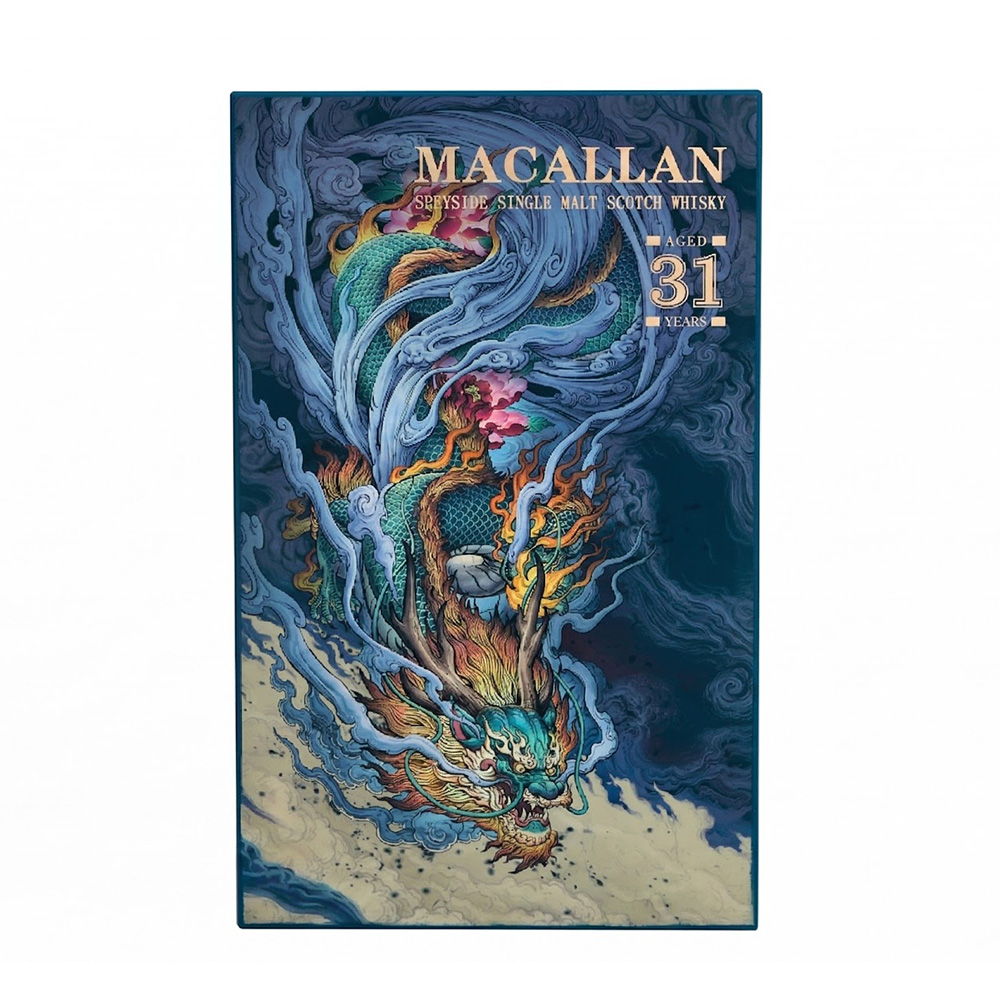
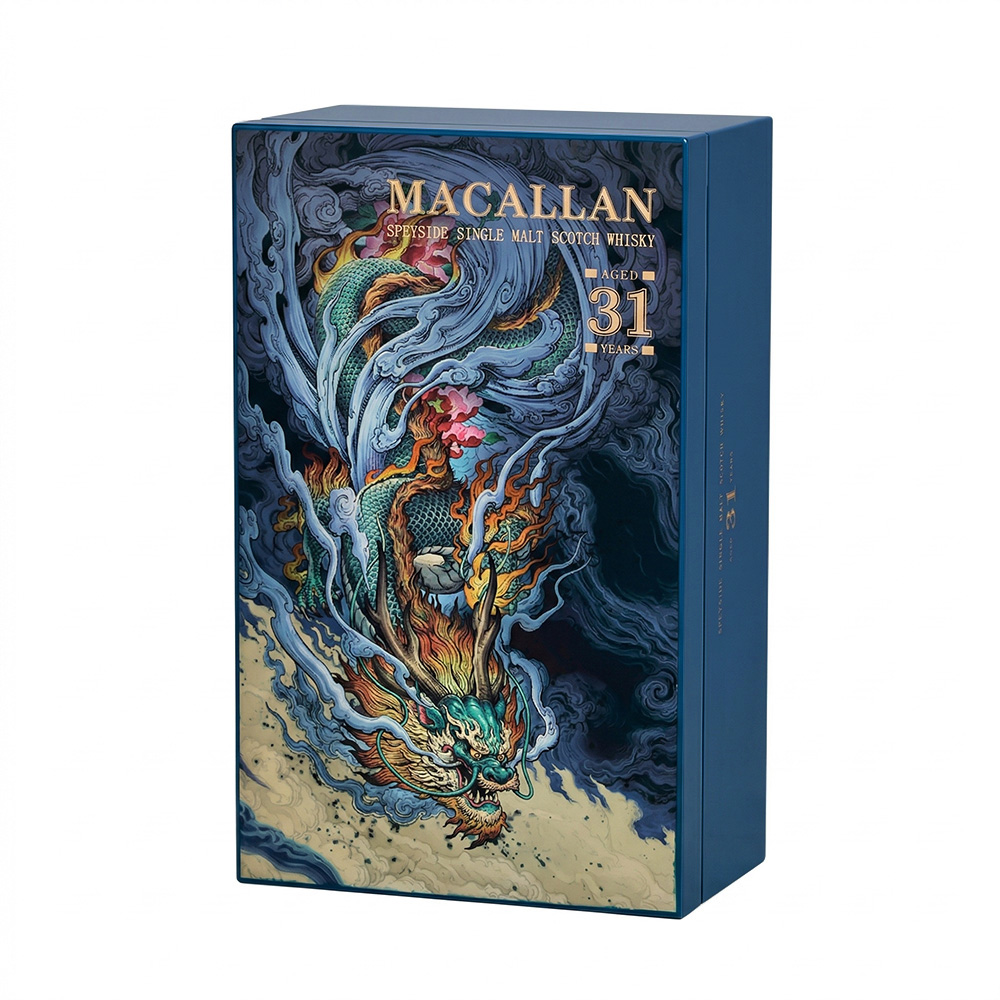
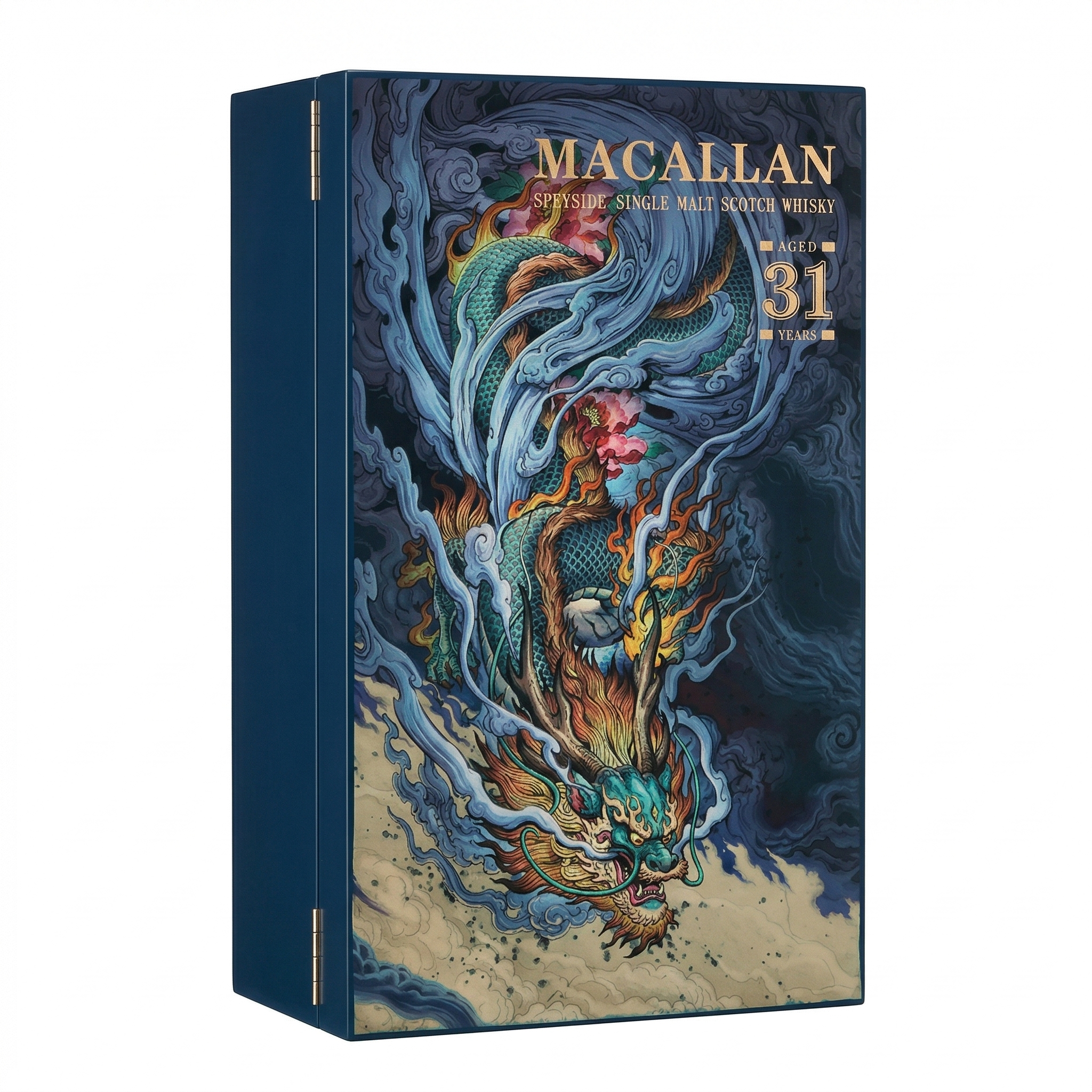
- A Premium Collector's Box for Rare Whisky Azure Dragon Oriental Theme, Artistic Design The box features an original Chinese-style illustration, with the Azure Dragon as the core element.
- The deep blue background with hot-stamped brand logo has a strong visual impact, making it not only a wine box but also a collectible art ornament.
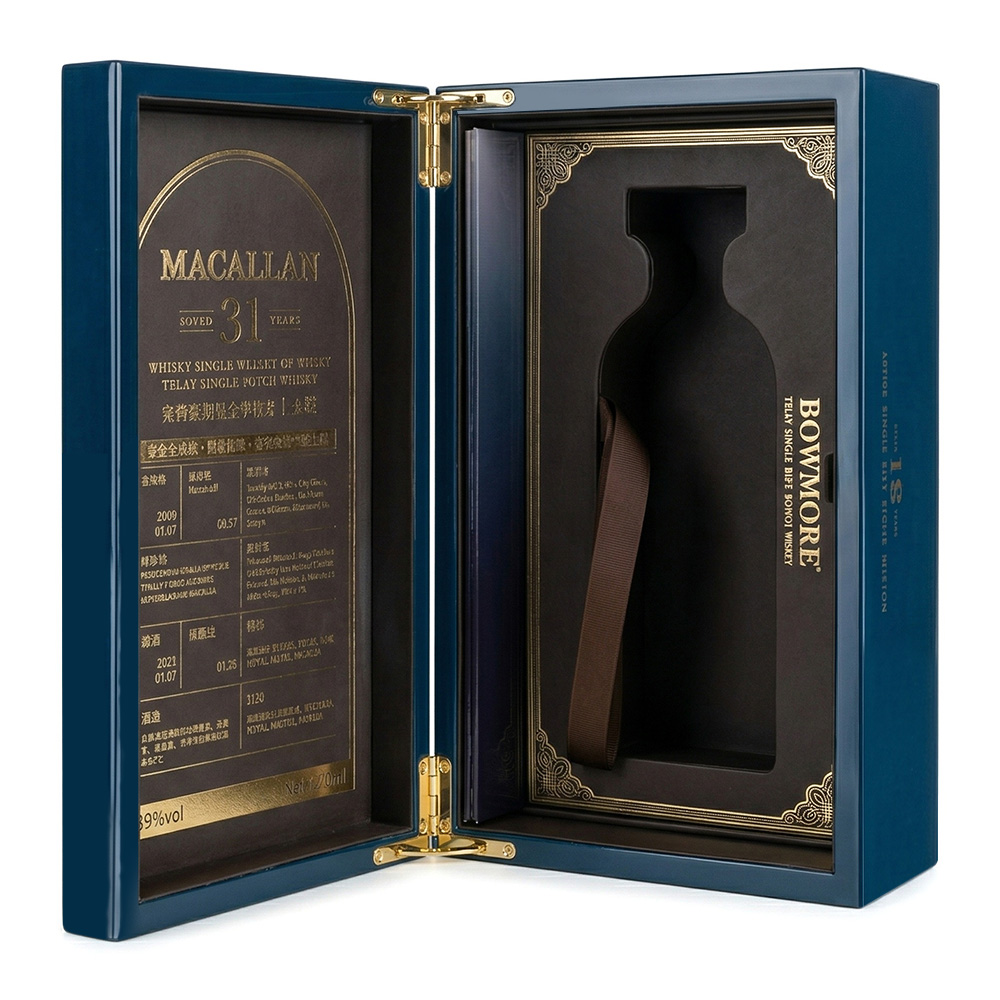
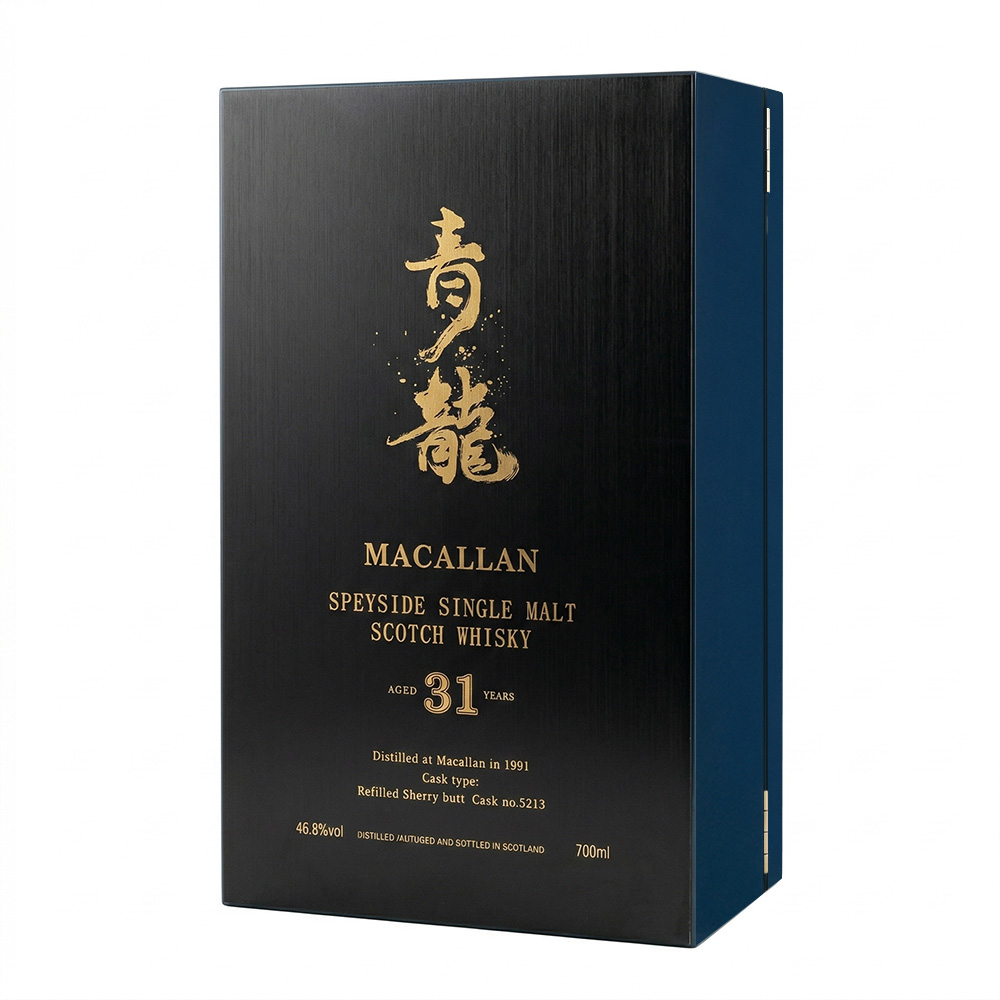
- The box has neat lines and a stable structure, showing a high-end texture when opening and closing, perfectly matching the collection positioning of rare whiskies like Macallan 31 Years.
- Ideal for Collection and Gifting Specially designed for Macallan 31 Years Speyside Single Malt Scotch Whisky, it is a rare collection for whisky lovers.
- Whether for personal collection or as a high-end gift, it can convey the ultimate pursuit of quality and culture, so that every bottle of time-honored fine wine can be properly placed and presented decently.
Wine Box specifications
| Specification | Detail |
|---|---|
| Model | WE-1209 |
| Product type | Wine Box |
| Capacity | Specified per order |
| Exterior finish | Piano Lacquer |
| Interior | Lined and compartmented interior |
| Branding options | Hot foil, screen print, laser engraving or metal plate |
| OEM minimum order quantity | 50 to 100 pieces, depending on finish and customisation |
| Sample lead time | 7 days |
| Bulk production lead time | 20 to 30 days from sample approval |
Material, finish and build
What separates a case that lasts from one that is returned is mostly the substrate and the hardware. The body is engineered wood, chosen for dimensional stability in heated rooms and humid climates; the lining is fitted rather than tacked; hinges and clasps are checked before the unit is boxed.
Construction is conventional and deliberate: a rigid engineered-wood carcass chosen because it stays flat where solid timber can move, a surface finish applied in stages, and an interior lined and fitted to the layout rather than loosely glued. Hinges and closures are checked at assembly, and units are packed so the finish the brand photographs is the finish that arrives.
Scale matters here. Global jewelry revenue reached an estimated USD 388.9 billion in 2025 according to Statista Market Insights, with the United States leading on per-capita spending. For brands competing in that market, the unboxing is the one part of the experience no competitor can dilute – and a case that stays in use keeps working after the sale.
Packaging decisions are commercial decisions. The global jewelry market alone generated an estimated USD 388.9 billion in revenue in 2025, with China, India and the United States as the three largest markets (Statista Market Insights). In a market that size, the box is one of the few things a brand fully controls – and unlike the product inside it, the box stays on the customer’s dresser.
Presentation, gifting and brand programmes
Presentation packaging has one job beyond protection: it has to make the contents feel considered. A rigid case with a fitted, lined interior does that in a way a printed carton does not, and it continues doing it every time the box is opened afterwards. Corporate gifting buyers tend to judge on exactly this point – whether the recipient would be embarrassed to regift it, and whether it looks deliberate rather than incidental.
Two things decide whether a presentation box earns its cost: whether the customer keeps it, and whether it survives the journey. This case is built for both. The rigid shell takes the knocks that a paperboard carton cannot, and the lined interior means the box stays in service on a dresser or in a wardrobe instead of going into recycling – which is the part that keeps a brand visible after the sale. For gift programmes it also removes a step: the outer box and the product arrive as one unit, so nothing has to be re-wrapped before it is handed over.
Who the WE-1209 suits
For wine brands, corporate gifting programmes and anyone presenting a bottle where the box matters as much as the contents. A lined, compartmented interior covers a single presentation bottle or a small set. Lay the bottle flat and keep it somewhere cool and dark.
Aimed at gifting: brand presentations, corporate orders, weddings and seasonal programmes. With a lined, compartmented interior it suits one bottle or a small pairing. It is presentation packaging, not long-term cellarage.
Where and how it is used
Carry it by the base, not the lid. Keep it out of direct sun and away from heat, and if the bottle will be stored rather than opened, move it to a proper wine fridge or a cool dark cupboard.
Use it for transport and presentation, then store the bottle horizontally in a cool, dark place. Avoid leaving a filled box standing in a warm room for days – heat is what damages wine fastest.
Maintenance is light. A dry cloth handles dust; solvents and household sprays are the main thing to avoid, since they attack both lacquer and many linings. Keep it away from radiators and strong sun, and let pieces dry before storing them.
Care and handling
Treat it like furniture rather than cardboard: dry cloth for dust, no solvents, no prolonged sun. Check hardware occasionally, and if the piece is being moved often, wrap it rather than letting it knock against other items in transit.
Care is simple: dust with a dry microfibre cloth, keep the piece out of prolonged direct sunlight, and avoid solvent cleaners on lacquered or lined surfaces. Wipe the interior occasionally and let anything damp dry fully before it goes back inside.
OEM and ODM customisation
Behind this case is T.WING-PAK, a packaging manufacturer in Nansha, Guangzhou with more than 19 years of export production. OEM and ODM buyers can specify the surface finish, the interior lining and its colour, the compartment or cushion layout, and the logo application – hot foil stamping, screen printing, laser engraving or a metal plate. Retail packaging can be developed alongside the product. Minimum order quantity is 50 to 100 pieces, samples are ready in 7 days, and bulk lead time is 20 to 30 days from sample approval.
What to settle before ordering
The specification is simpler than it looks if it is taken in order: surface finish first, then lining, then interior geometry, then branding. The first three decide how the product presents and whether it fits; the fourth is chosen against the surface picked in step one. Anything unresolved is settled on the sample, which is produced in 7 days and carries the actual finish, lining and logo rather than a mock-up.
Packaging and shipping
Units are packed individually, with the exterior surfaces protected and the interior supported so nothing shifts inside the carton. Export cartons are specified to the order, and for branded programmes the retail box, insert and print can be developed in the same facility, so the shipping carton and the presentation box are designed together rather than bought separately.
Frequently asked questions
What is the minimum order quantity for a custom version?
Minimum order quantity is 50 to 100 pieces depending on the finish and how far the specification departs from stock. A sample is produced in 7 days and bulk production takes 20 to 30 days from sample approval, so a branded programme can be evaluated before any volume commitment is made.
Can the finish, lining or interior layout be changed?
The exterior finish, the lining, and the internal layout are all open to specification. Interior changes – cushion count, compartment divisions, insert shape – are engineered per order and confirmed on a sample produced within 7 days.
How is the item branded with our logo?
Branding can be applied by hot foil stamping, screen printing, laser engraving or a fitted metal plate, depending on the surface and the look you want. Position, size and colour are confirmed on the pre-production sample so the logo is approved on the actual material rather than on a drawing.
How should it be cleaned and maintained?
A dry cloth is enough for routine cleaning. Avoid household sprays and alcohol-based wipes on lacquered or lined surfaces, keep the piece away from radiators and strong sun, and wipe the interior out occasionally.
Is it packed safely for shipping?
Each unit is packed individually with surface protection and a fitted void fill so it cannot move inside the carton. Outer cartons are specified for export, and matched retail packaging – rigid box, insert and print – can be produced in the same facility for branded programmes.
Bottom line
Buy one to check the build, or talk to T.WING-PAK about putting your own specification on it – finish, lining colour, interior layout and logo can all be changed, with a 7-day sample and 20 to 30 days to bulk delivery from 50 to 100 pieces. Send your artwork and target quantity and the sample comes back with your branding on it.
Reviews
There are no reviews yet.