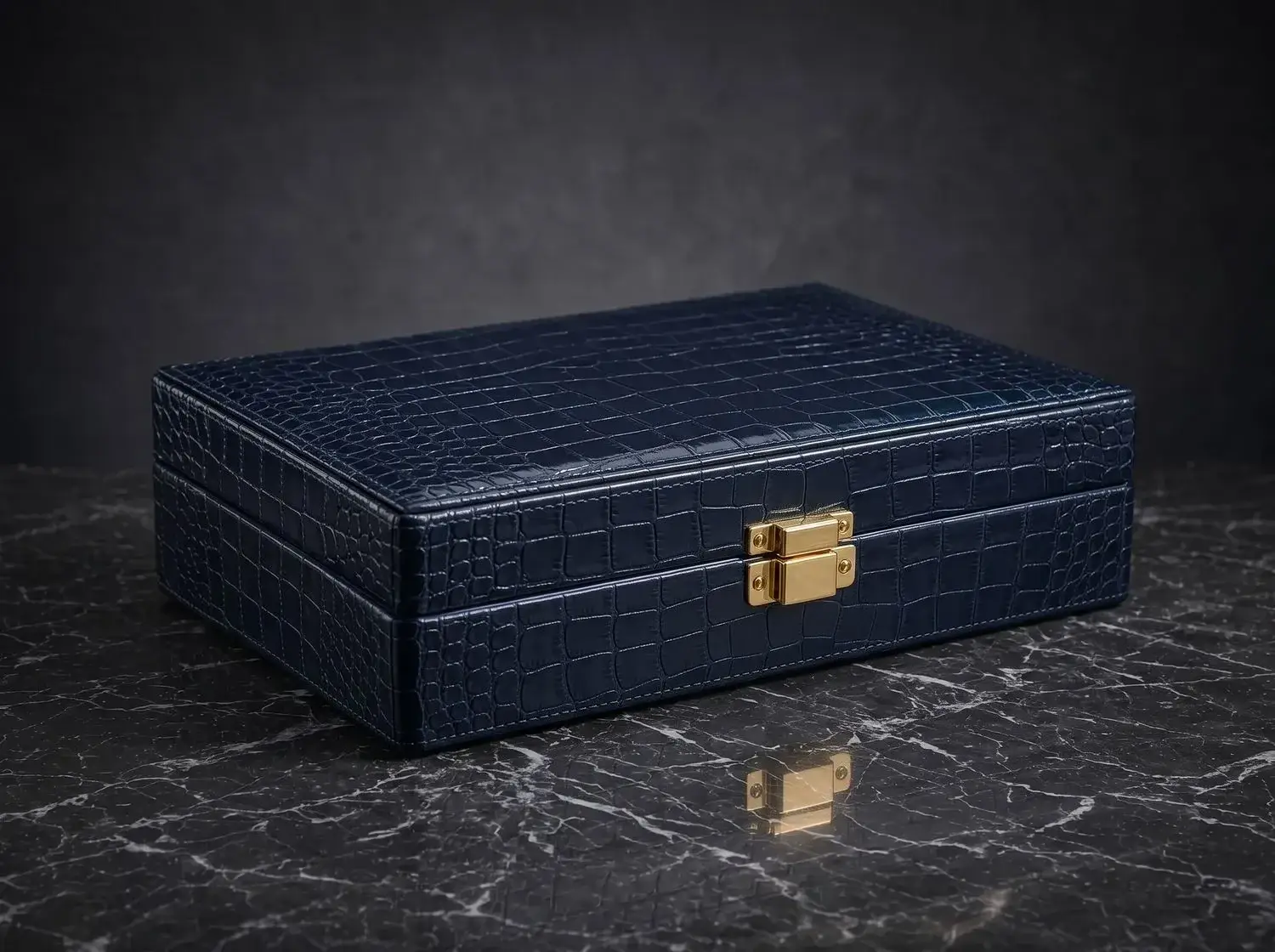
A six-slot leather watch box is one of the most dependable formats in watch storage, and it is also one of the easiest to get wrong. The difference between a premium watch box and an ordinary one lies in small details such as emboss depth, edge lacquer, clasp quality and cushion shape. This buyer’s guide uses a navy crocodile-embossed design from Guangzhou T.wing-Pak Mfg Co., Ltd. as its reference piece. It explains what to inspect, how to compare materials, how customization works for OEM and private-label projects, and how a watch box fits alongside a watch winder.
What Defines a Premium Six-Slot Leather Watch Box
Why six slots work so well
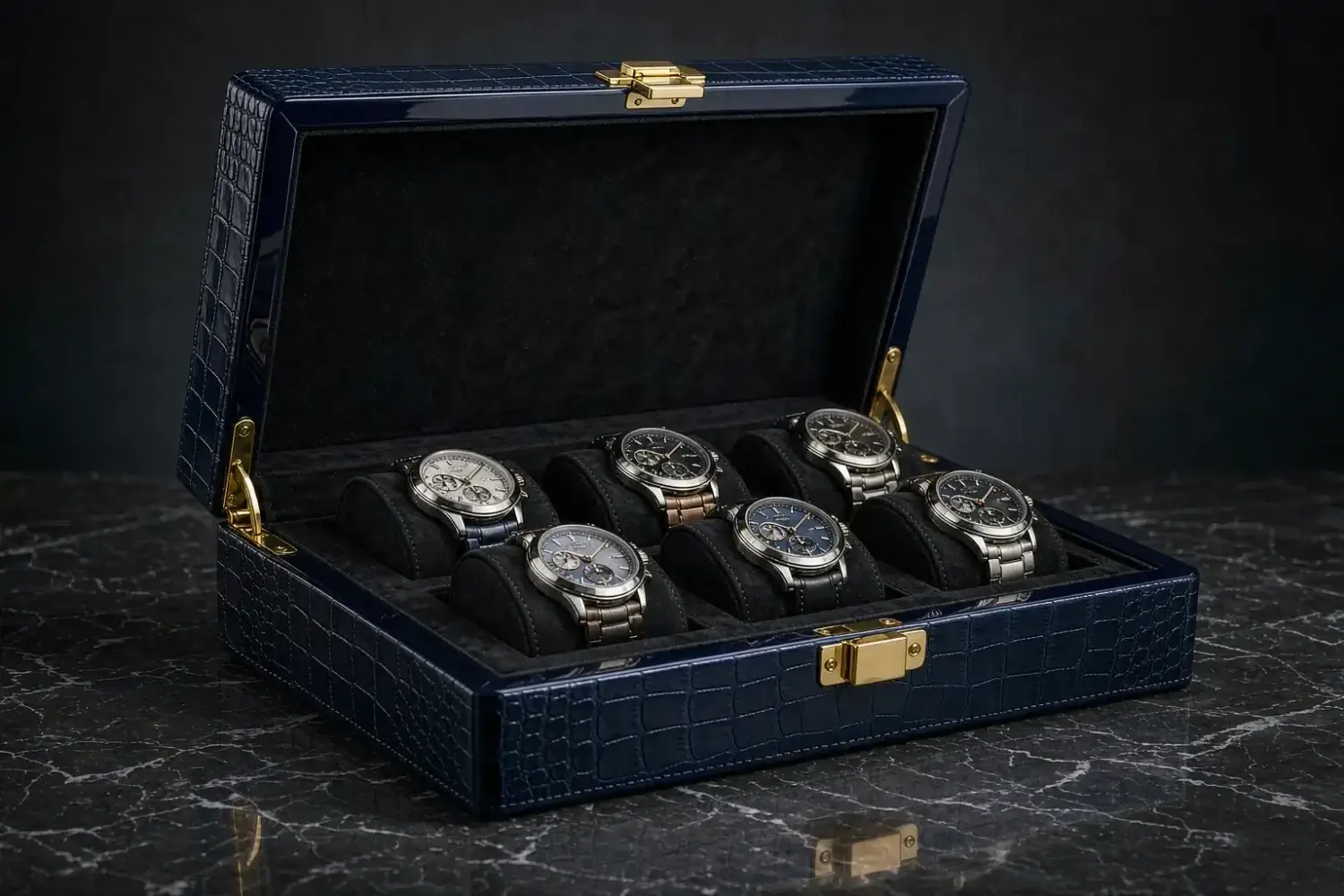
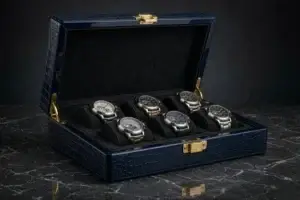
The six-slot layout places watches in two rows of three, each on its own cushion. It is large enough to hold a meaningful collection and small enough to fit a dresser, a safe or a gift carton. Six positions also keep shipping volume reasonable, which matters for wholesale and e-commerce buyers.
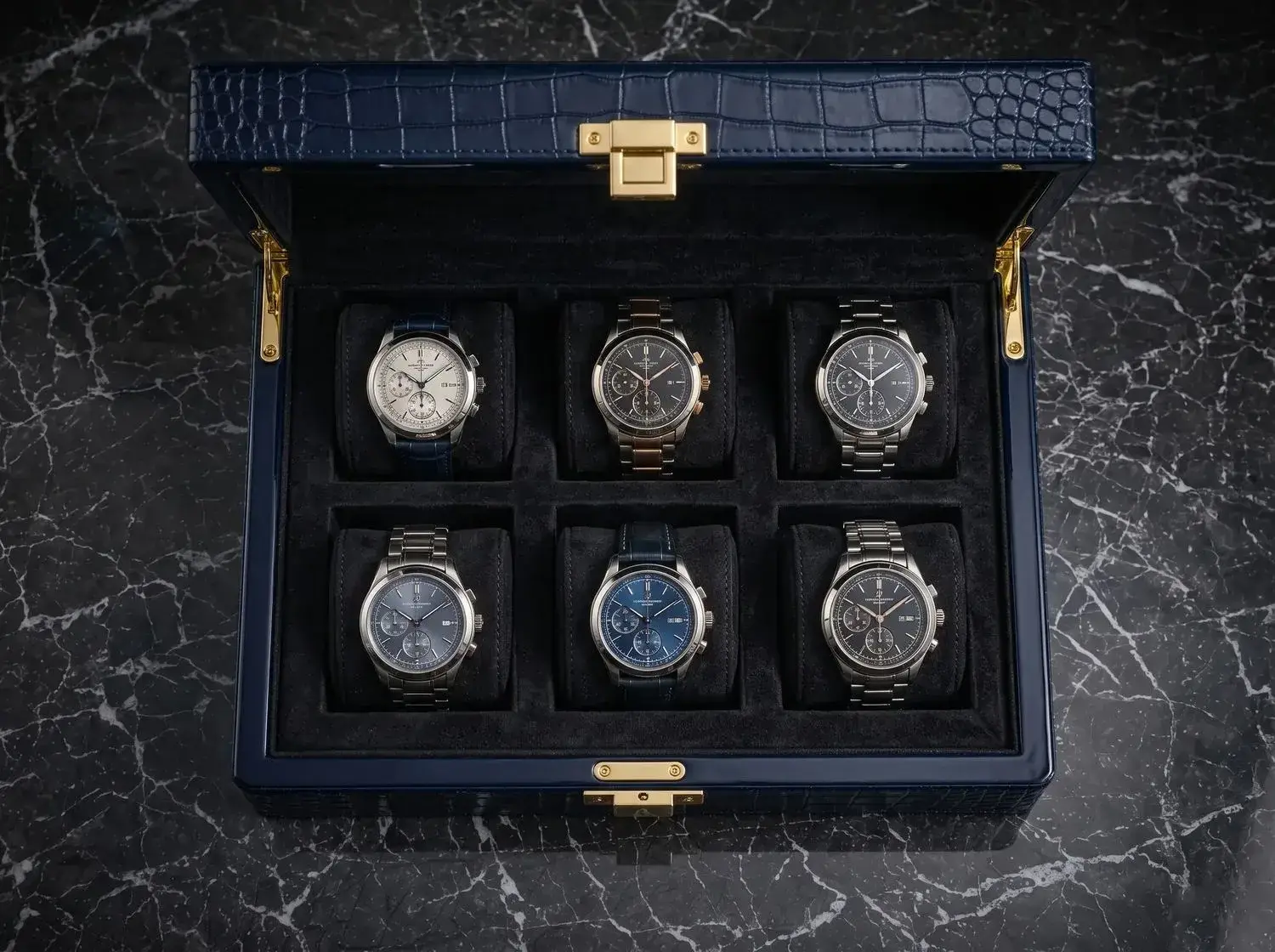
Seen from above, the even spacing is the key feature. Each watch rests in its own compartment divided by padded walls, so cases and bracelets do not touch while the box is opened, closed or transported. When you evaluate a sample, check that the gaps between compartments are consistent and that a large watch does not press against the next one.
The format suits several kinds of buyers. Collectors want a safe, tidy place for a growing group of watches, while watch brands often bundle a box with a limited edition or a gift set. Retailers value a product that photographs well and ships flat in a standard carton, and corporate gift buyers like a premium item that carries a logo discreetly on the lid.
Storage box or watch winder?
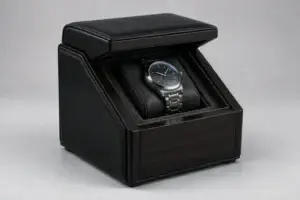
A watch box stores watches, but it does not wind them. A watch winder rotates an automatic watch to keep the mainspring charged, yet it does nothing for a quartz watch and cannot wind a manual one (The 1916 Company). Most automatic watches carry a power reserve of roughly 36 to 48 hours, so a watch that is worn only occasionally will stop unless it is wound or kept on a winder (T3).
For that reason, many collectors use both products: a watch winder for the automatics they rotate every week, and a watch box for the rest of the collection. Retailers can bundle the two, and brands can offer a matching set in the same leather and hardware.
Exterior: embossed leather and lacquered edges
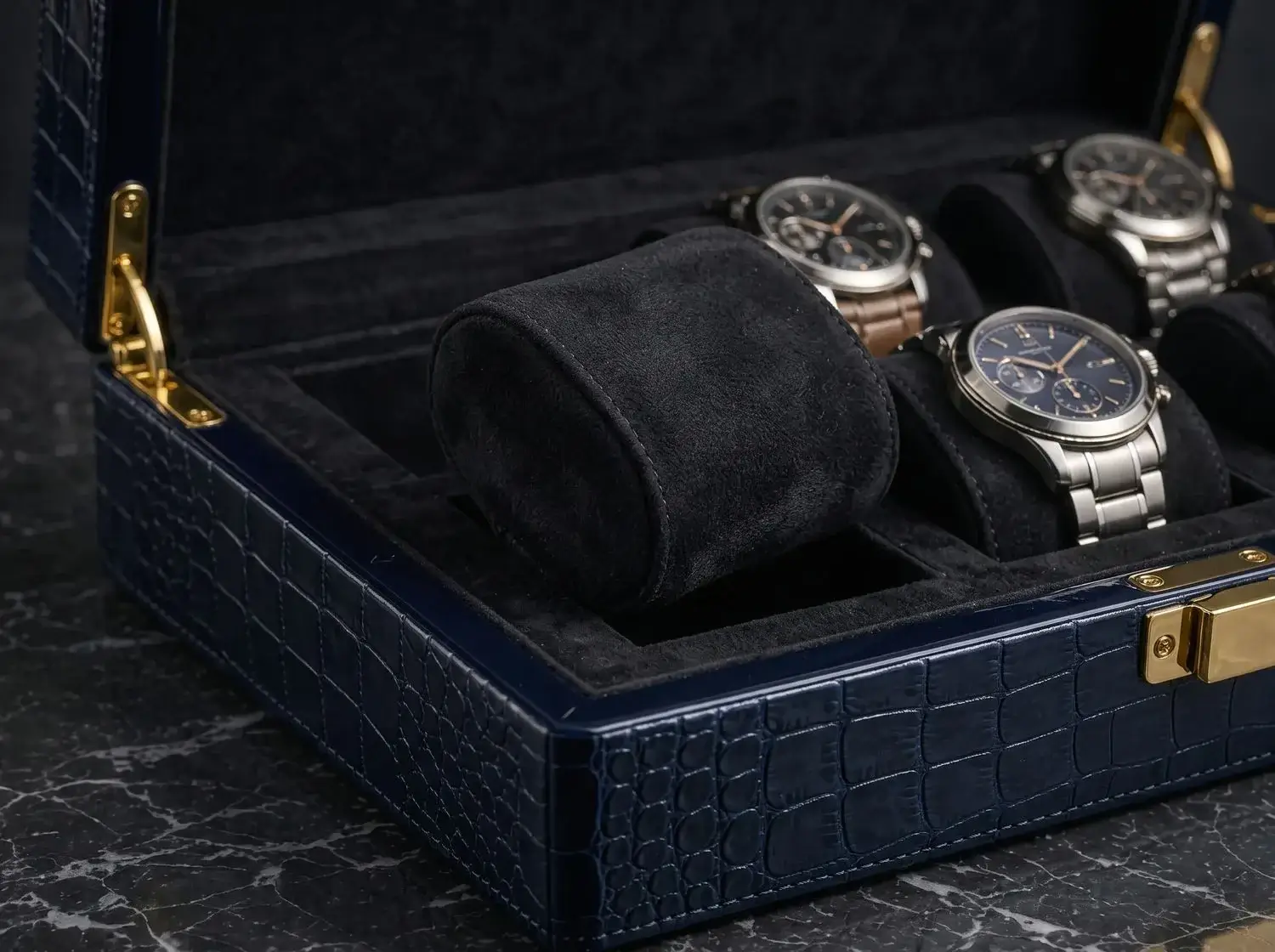
A crocodile-embossed finish is popular because it looks premium without requiring exotic skins. It can be produced on genuine leather, synthetic PU or microfiber-based leather, and each option suits a different price tier. The table below gives general guidance only, so always judge the actual swatch and sample.
| Material | Typical strengths | Points to check |
|---|---|---|
| Genuine leather | Natural feel and grain; premium positioning | Color consistency between batches; higher cost; grain variation |
| PU leather | Consistent color; deep, sharp embossing; lower cost | Quality varies widely; check surface cracking and edge peeling |
| Microfiber leather | Often more robust than basic PU; uniform finish | Confirm thickness, backing and embossing depth with a swatch |
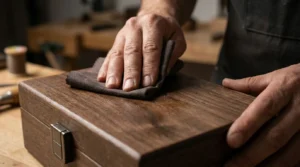
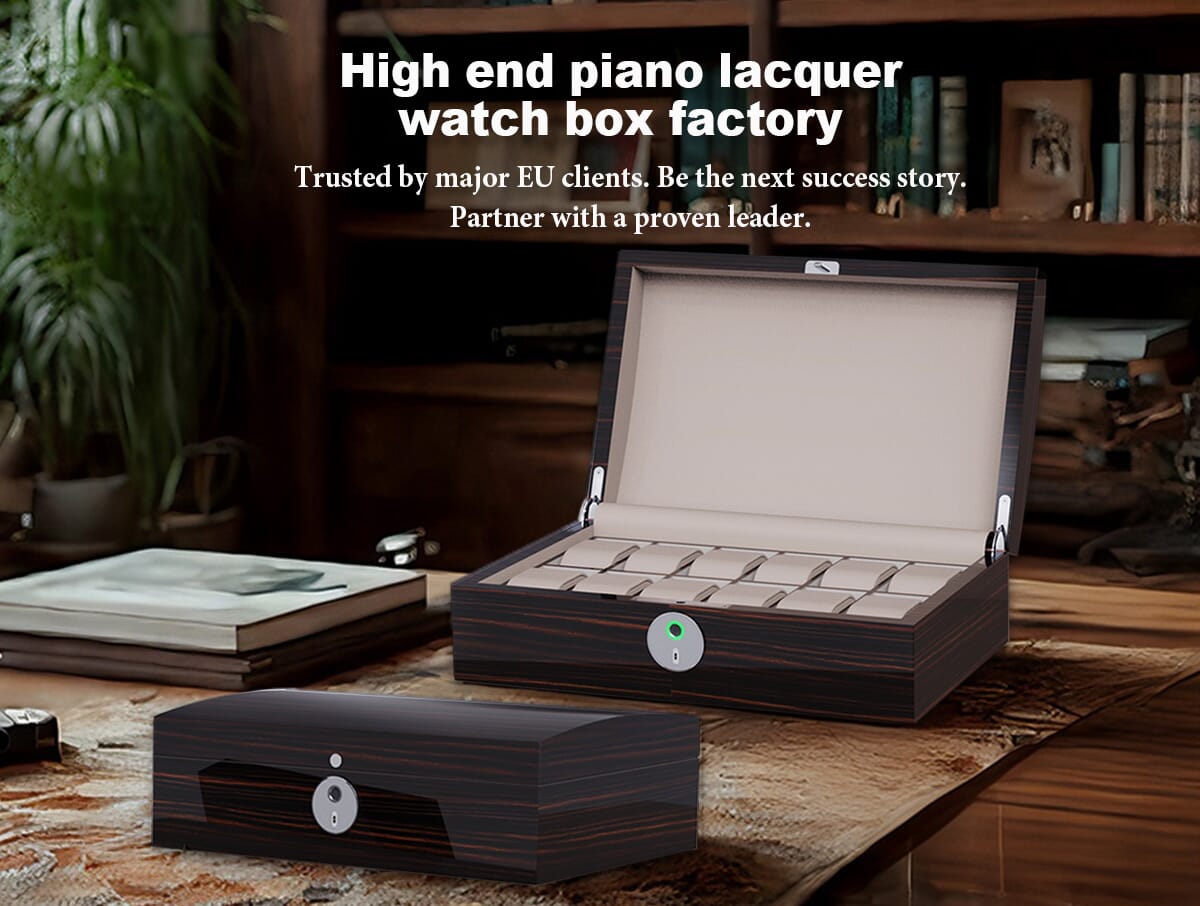
The glossy navy rim around the opening, visible in Figures 1 and 3, adds a furniture-grade touch. Inspect it for an even coating, with no dust specks, ripples or thin spots at the corners. Also check that the wrapped edges and stitching are tight and straight, because wrinkled corners are the first thing buyers notice.
Hardware: clasp, hinges and lid stay
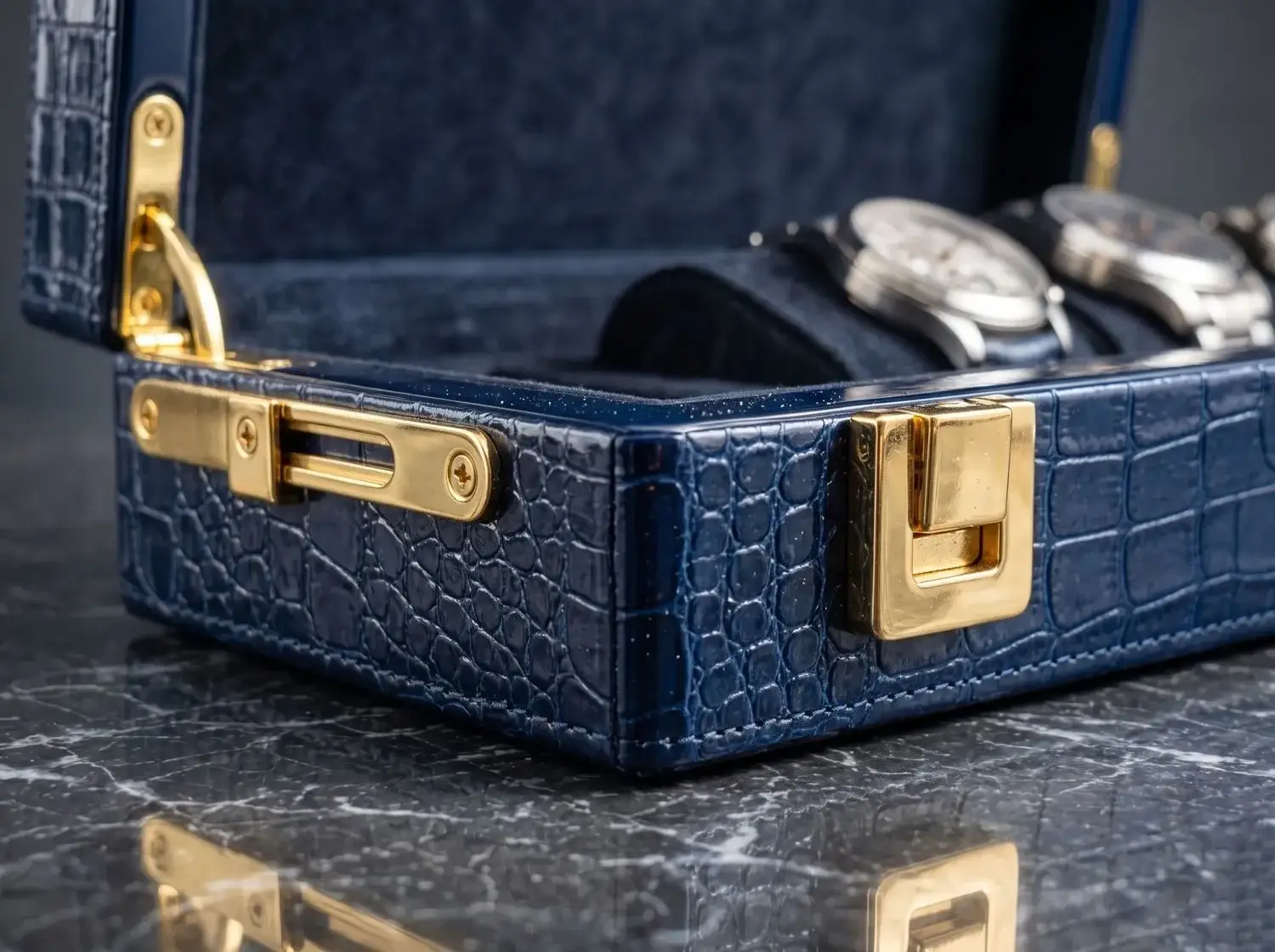
Hardware tells you a lot about build quality. In this design, a gold-tone clasp secures the lid, and a hinge with a stay arm holds the lid open at a stable angle while you choose a watch. Ask for a cycle test of the hinge and clasp and agree the target in writing, then check by hand that the clasp aligns and closes cleanly.
- The lid stays open without drifting forward.
- Screws are flush, aligned and free of burrs.
- Plating is even, without spots or color differences between parts.
- Metal edges cannot touch a watch when the lid closes.
Lining and cushions
The cushion is the part that touches the watch, so it deserves as much attention as the exterior. It should be firm enough to hold a watch in position, but not so tight that it strains the strap or bracelet. The lining should be soft and non-abrasive, with neat seams and no loose fibers that could collect in a crown or case gap.
Ask the supplier for the maximum case diameter and wrist size each cushion supports. A strap watch and a heavy bracelet watch sit differently, so test both. Also smell the sample, because a strong adhesive odor is a common complaint with newly made leather boxes.
Customization, Inspection and Troubleshooting for Buyers
What can be customized
| Option | Typical choices | Buyer consideration |
|---|---|---|
| Exterior color and texture | Navy, black, brown, other colors; crocodile, lizard or smooth finishes | Match your brand and retail price point |
| Hardware finish | Gold, silver or gunmetal tone | Keep the finish consistent across clasp, hinges and plates |
| Lining and cushion | Black or navy suede-style fabric; cushion shape and size | Match the watches your customers own |
| Slot layout | Two, three, four, six, eight or more slots | Choose based on collection size and shipping volume |
| Logo | Hot stamping, debossing, metal plate, woven label | Approve position and finish on a sample |
| Packaging | Gift box, dust bag, outer carton | Protect corners and the glossy rim in transit |
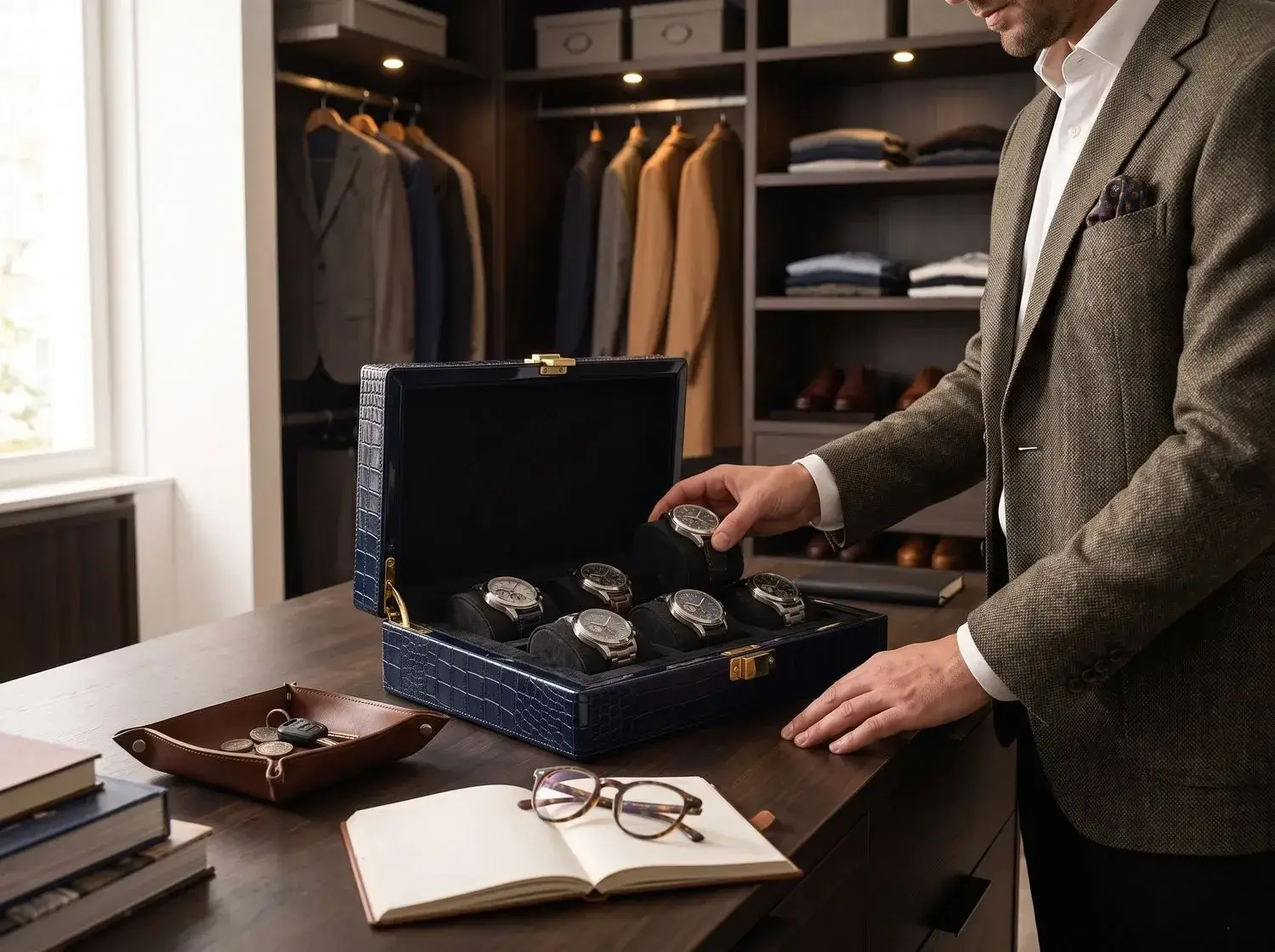
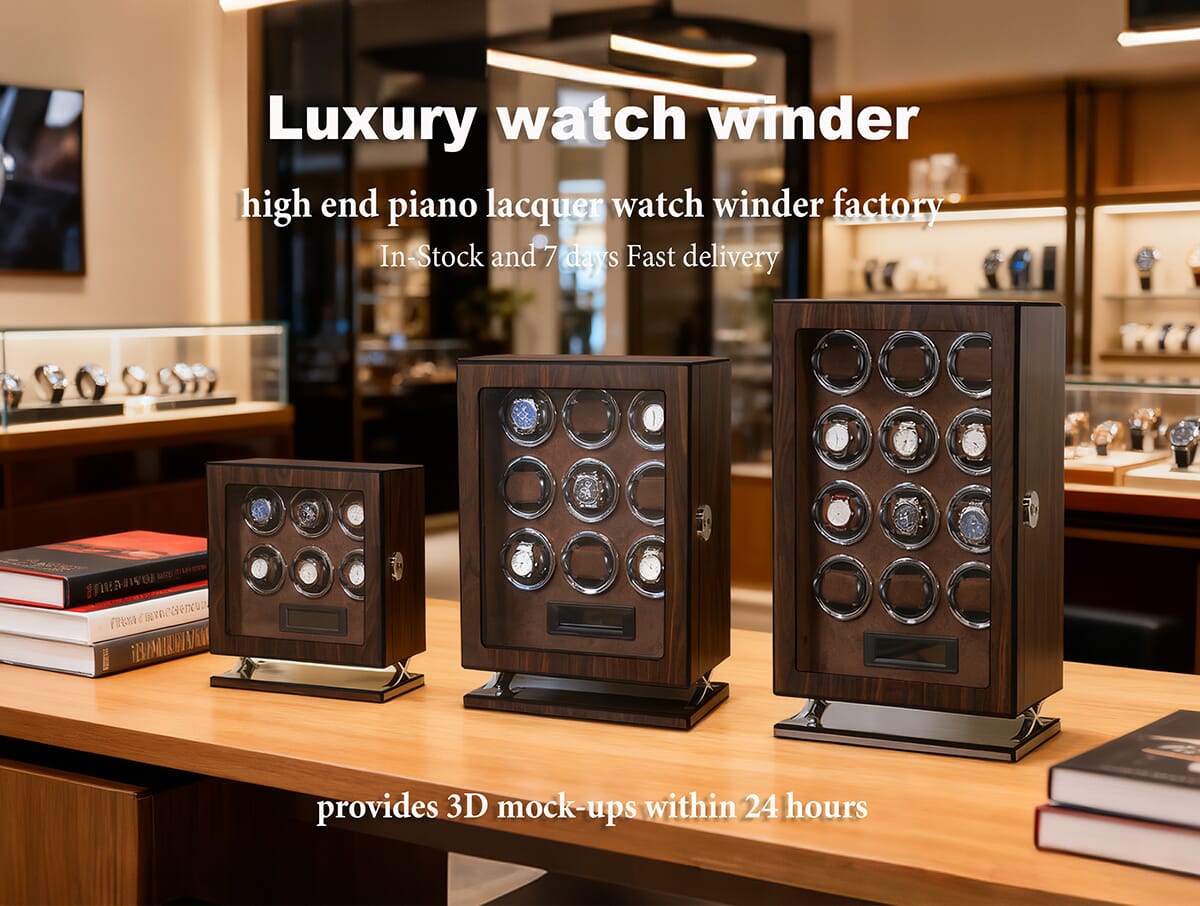
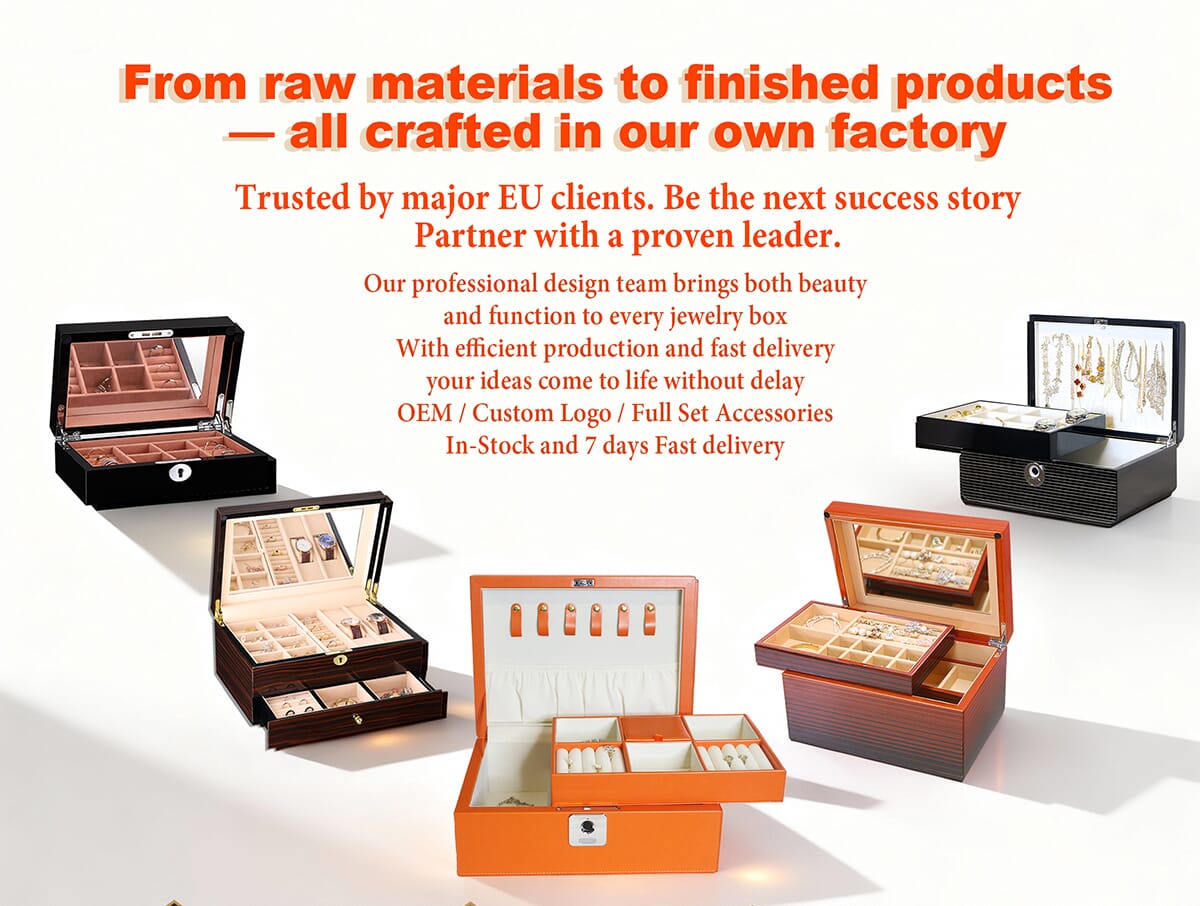
Lifestyle images like Figure 4 help your customers picture the product in their own home. For retail and online listings, pair them with clean product shots and close-ups of the hardware and cushions, since buyers of premium watch boxes look closely at details.
A six-step custom order process
- Define the brief. State your target market, price tier, slot count and preferred colors.
- Select materials. Compare leather swatches, lining fabrics and hardware finishes in daylight.
- Review the design. Confirm dimensions, cushion sizes, logo position and packaging.
- Approve a sample. Check the stitching, lacquer, hardware and cushion fit by hand.
- Test with real watches. Include one large bracelet watch and one strap watch.
- Inspect before shipment. Agree an inspection standard and how defects will be handled.
Troubleshooting common quality issues
Most defects in a leather watch box are visible in the first few minutes of hands-on inspection, which is why a physical sample is worth more than any specification sheet. Use the table below as an incoming inspection guide for samples and for production batches. Keep photos of every issue, because clear evidence makes corrections faster and keeps discussions with the supplier factual.
| Issue | Likely cause | What to check or ask |
|---|---|---|
| Clasp does not line up | Hardware misaligned during assembly | Request a clasp alignment check on every unit |
| Lid will not stay open | Weak stay arm or hinge position | Test the open angle; ask for a hinge cycle test |
| Wrinkles at corners | Poor wrapping or thick material | Inspect corners; compare to the approved sample |
| Dust specks in glossy rim | Dirty coating environment | Set a surface standard; inspect under bright light |
| Strong odor on opening | Adhesive or lining materials | Ask about low-odor adhesives; air the sample first |
| Cushions sag or shift | Soft filling or loose stitching | Test with heavy watches; check cushion firmness |
| Color differs between batches | Different material lots | Approve a color standard and a tolerance range |
Summary and Next Steps
A premium six-slot leather watch box is defined by its details: a consistent embossed exterior, a clean lacquered rim, solid hardware and cushions that hold a watch without straining it. Compare materials by actual swatches, test samples with real watches, and write your quality standards down before production. Pairing the box with a watch winder gives customers a complete storage solution for both automatic and non-winding watches.
Frequently Asked Questions
1. How many watches does a 6-slot watch box hold?
It holds six watches, one on each cushion, usually in two rows of three. Each watch sits in its own compartment so cases and bracelets do not touch.
2. Can a watch box replace a watch winder?
No. A watch box stores and protects watches, while a watch winder rotates an automatic watch to keep its mainspring charged. Many collectors use both.
3. Should an OEM watch box use genuine leather or PU leather?
It depends on the price tier and market. Genuine leather offers a natural feel at a higher cost, while quality PU or microfiber leather gives consistent color and embossing at a lower cost. Test swatches and samples before deciding.
4. How do I choose the right cushion size?
Measure your largest watch case, then ask the supplier for the maximum case diameter each cushion supports. Test the sample with both bracelet and strap watches.
5. Can a logo be added to a custom watch box?
Yes. Common methods include hot stamping, debossing, a metal plate and a woven label. Confirm the position and finish on a physical sample before production.
Sources
Planning a custom watch box or watch winder range? Guangzhou T.wing-Pak Mfg Co., Ltd. builds leather and wooden watch boxes, jewelry packaging and watch winders with full OEM/ODM branding – 3D renderings within 8 hours, functional prototypes within 7 days.
Custom programs start from an OEM minimum order quantity of 50 to 100 pieces, with bulk production lead times of 20 to 30 days from sample approval. Contact us with your reference images, slot count and target market for a tailored quotation.