Piano Lacquer Finish for Luxury Packaging: Why the 12-Coat Process Defines Premium Quality
For brand owners sourcing watch boxes, jewelry boxes, watch winders, and cigar humidors, the lacquer finish is the single most important quality differentiator — and the most commonly misrepresented specification in supplier quotes. Here is what you need to know.
What Is a Piano Lacquer Finish?
A piano lacquer finish is a multi-coat, high-gloss finishing technique originally developed for concert grand pianos in the 19th century. The name refers not just to the level of gloss, but to a specific layering process that builds depth, clarity, and durability through repeated application and curing of lacquer coats.
When applied to luxury wood packaging — watch boxes, jewelry boxes, cigar humidors, and watch winders — a piano lacquer finish transforms a wooden box into a presentation-grade product. The surface achieves a mirror-like reflection with visible depth, creating an immediate impression of quality and craftsmanship that no alternative finish can replicate.
This finish has become the de facto standard for luxury packaging brands selling into North American, European, and Middle Eastern markets, where end consumers associate high-gloss wood surfaces with premium quality and justify higher retail price points.
The 12–13 Coat Process: Step by Step
A genuine piano lacquer finish is not simply “thick paint.” It is an engineered layering system where each coat serves a specific function, and the interaction between layers creates properties that no single application can achieve.
Wood Preparation and Grain Filling
The wood surface is sanded to 320-grit smoothness and treated with grain filler to eliminate pores. Any imperfection at this stage will be amplified through every subsequent layer. MDF substrates skip grain filling but still require precision sanding.
Primer Coats (2–3 Coats)
Primer creates the adhesion foundation for all subsequent layers. Each primer coat is sprayed in a dust-free booth, allowed to cure for 4 to 6 hours, then wet-sanded with 400-grit paper before the next application. These coats seal the wood and create a uniform base.
Color Coats (4–5 Coats)
Pigmented lacquer is applied in thin, even layers. Multiple thin coats produce deeper, more consistent color than fewer thick coats. Each layer is cured and lightly sanded. This is where the color depth that distinguishes piano finishes from standard paint becomes visible — each additional coat adds richness that cannot be achieved in fewer passes.
Clear Topcoats (5–6 Coats)
High-solids clear lacquer builds the transparent protective shell. These coats create the depth and mirror-like reflection. The final 2 to 3 clear coats use progressively finer sanding (600-grit, 800-grit, 1200-grit) to eliminate any orange peel texture before final polishing.
Final Polishing and Buffing
Machine buffing with cutting compound followed by finishing compound brings the surface to its final mirror state. The total film thickness at this point measures 250 to 350 microns — roughly 3 times thicker than a standard 4-coat finish — providing both the visual depth and the physical durability that define the piano standard.
Why Coat Count Matters: 4-Coat vs. 8-Coat vs. 12-Coat
The relationship between coat count and quality is not linear — it is exponential. Each additional layer does not simply add thickness; it improves the interaction between layers, increases UV resistance, and builds the depth of reflection that the human eye perceives as quality.
| Attribute | 4–6 Coats (Budget) | 8–10 Coats (Mid-Range) | 12–13 Coats (Premium) |
|---|---|---|---|
| Total Film Thickness | 80–120 microns | 160–220 microns | 250–350 microns |
| Gloss Retention | 6–12 months | 12–18 months | 2–3 years |
| Reflection Depth | Surface-level shine | Moderate depth | Mirror-like with visible depth |
| Scratch Resistance | Low — marks easily | Moderate | High — self-healing micro-scratches |
| Yellowing Resistance | Yellows within 1 year | Yellows within 2 years | Minimal yellowing over 3+ years |
| Added Production Time | 1–2 days | 3–4 days | 5–7 days |
| Relative Finish Cost | 1× | 2–2.5× | 3–4× |
For brand owners and distributors positioning products in the luxury segment — retail price points above $200 for watch boxes and above $300 for watch winders — the 12-coat piano finish is not optional. It is the minimum standard that end consumers and retail buyers expect. Products with thinner finishes are immediately identifiable by experienced buyers and will not be accepted by premium retailers.
The Cost-Quality Equation: Why Cheap Finishes Are Expensive
A common sourcing mistake is selecting a lower-cost supplier based on unit price without examining the finish specification in detail. The short-term savings from a 4 to 6 coat finish are typically eliminated — and reversed — by downstream costs.
Products with thin lacquer finishes generate higher return rates from retail customers who notice surface degradation within months of purchase. They produce negative reviews that damage brand credibility. And they create quality disputes with retail partners who expected a product that matches the sample approved during the sourcing process — a sample that may have been freshly produced and not yet exposed to the aging that reveals a thin finish’s limitations.
The Hidden Cost of Cutting Corners on Lacquer
A manufacturer saving $3 to $5 per unit by applying 4 coats instead of 12 shifts approximately $8 to $15 per unit in warranty claims, return processing, and lost repeat orders back to the brand owner. In luxury packaging, the finish is not a cost to minimize — it is the primary value driver to invest in.
How to Verify a Factory’s Lacquer Capability
Claims about coat count are easy to make and difficult to verify without the right knowledge. Here are four practical methods for B2B buyers evaluating a manufacturer’s finishing capabilities.
Cross-section inspection. Request a sample piece cut in half to expose the layered coating structure. In a 12-coat finish, individual layers should be visually distinguishable under magnification. This is the most definitive test and the one that budget factories will be reluctant to perform.
Film thickness measurement. Use a coating thickness gauge (available for under $100) to measure total film build. A genuine 12-coat piano finish should measure 250 to 350 microns. A 4-coat finish will measure 80 to 120 microns. This measurement takes 30 seconds and eliminates ambiguity.
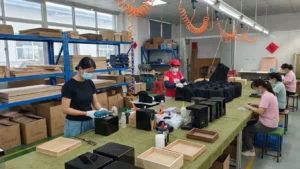
Factory floor observation. A factory that genuinely applies 12 coats needs dedicated infrastructure: multiple spray booths, temperature-controlled drying rooms, and significant work-in-progress inventory at various curing stages. If the entire finishing operation fits in a single room, the claimed coat count is likely inflated.
Lead time consistency. A factory that quotes the same production lead time for matte-finish and piano-lacquer orders is either not applying the claimed number of coats or does not understand its own production process. A genuine 12-coat piano finish adds 5 to 7 days to production time compared to a standard PU finish — no exceptions.
Choosing the Right Finish for Your Product Category
While piano lacquer is the premium standard, it is not always the right choice for every product or market position. The finish should match the brand’s positioning and the end consumer’s expectations.
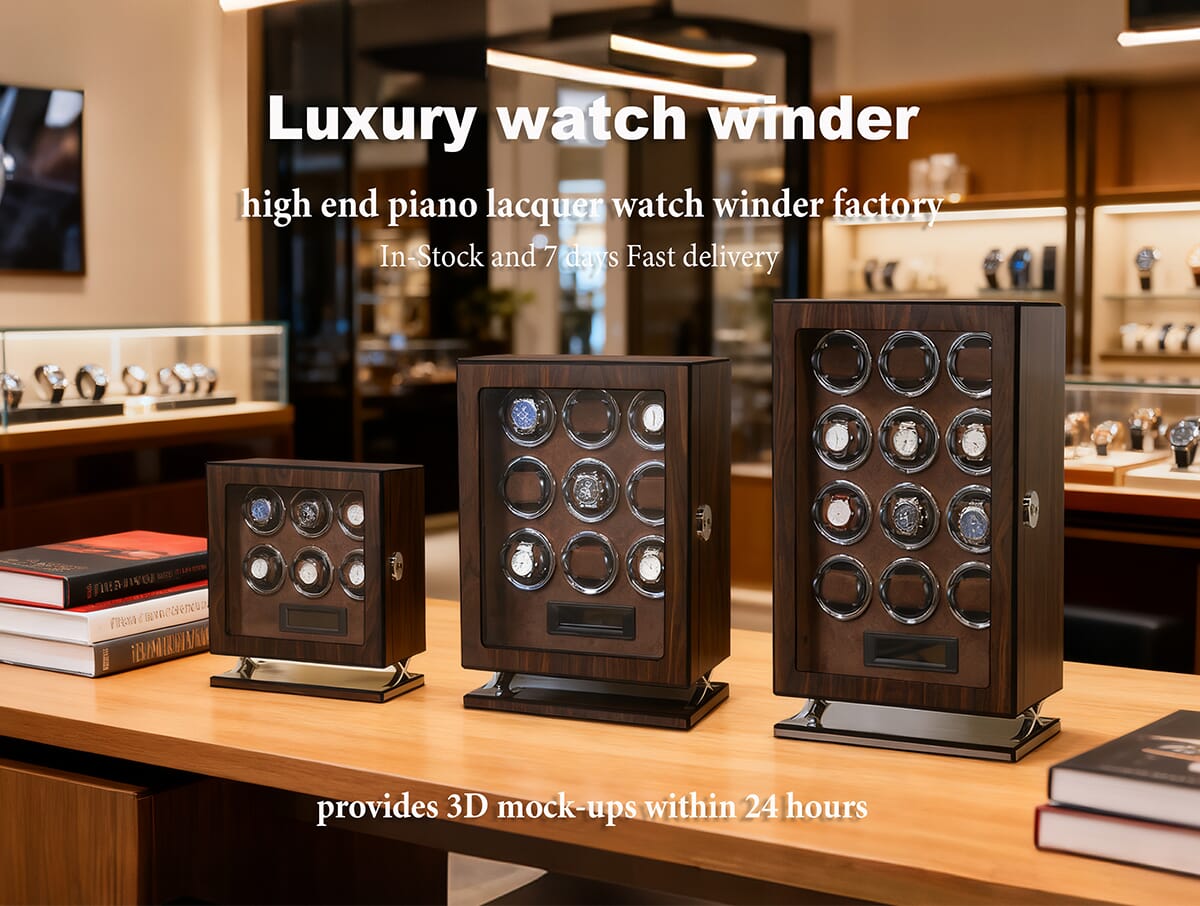
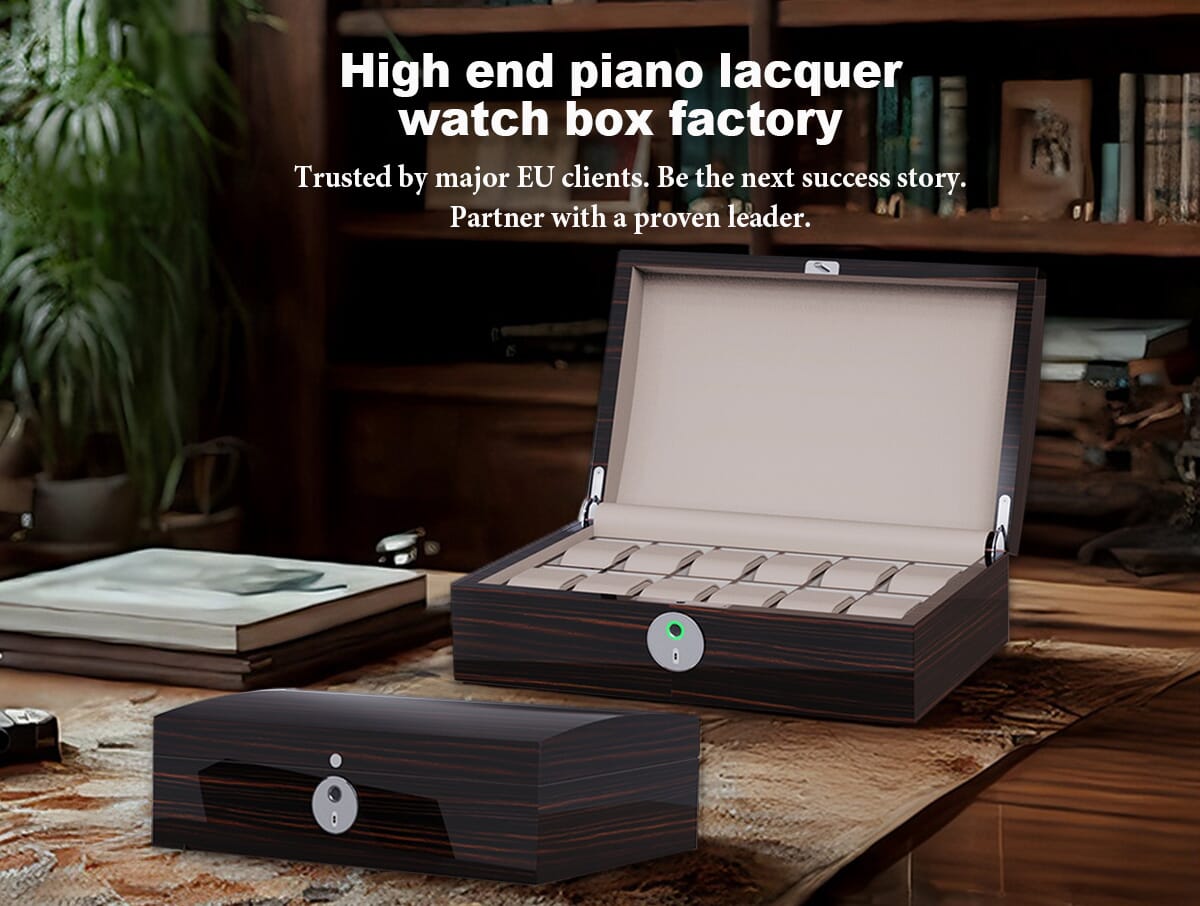
Watch winders and multi-slot watch boxes positioned above $250 retail almost universally require piano lacquer. These products sit on display in bedrooms and closets where the finish is visible daily, and consumers in this price range expect a surface that matches the quality of the watches stored inside.
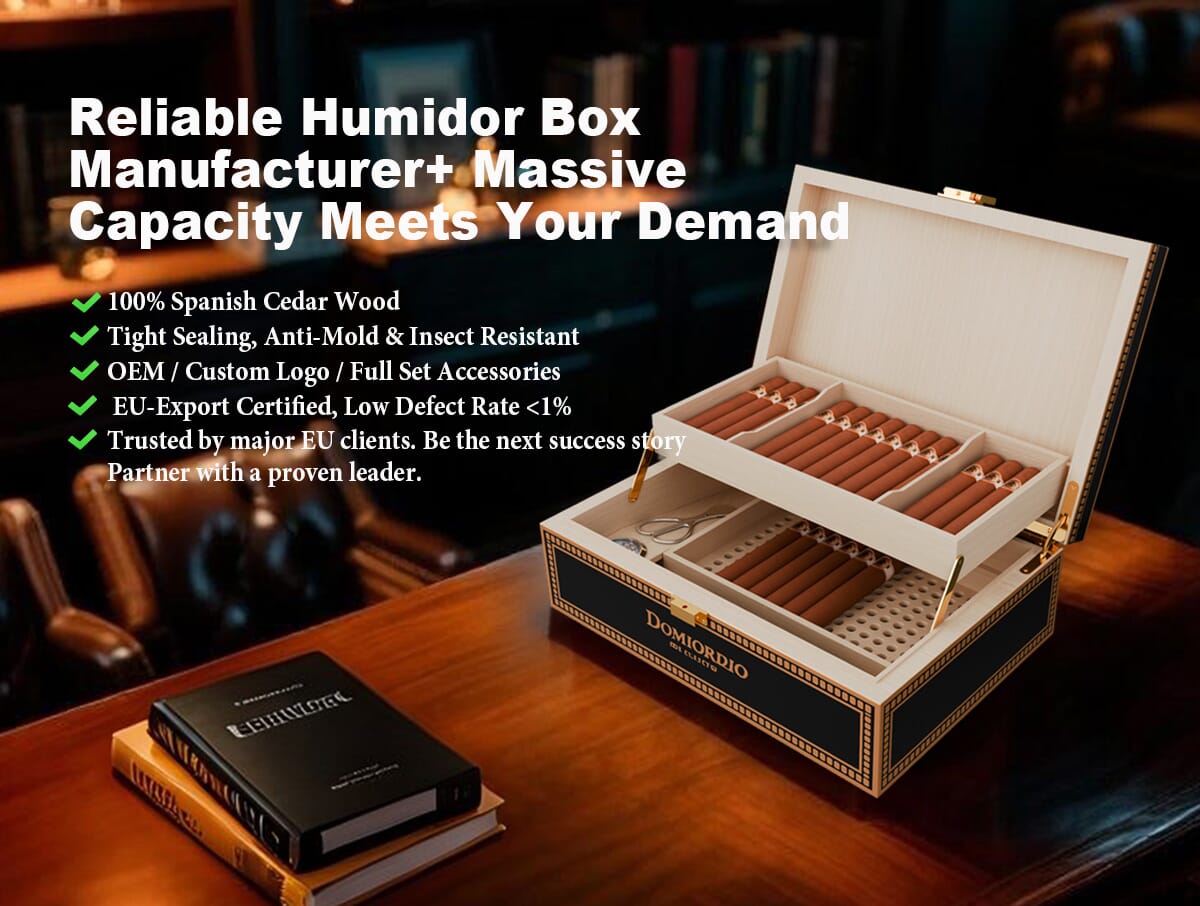
Cigar humidors present a split market. Desktop humidors sold through luxury tobacconists typically feature piano lacquer exteriors with Spanish cedar interiors. Cabinet humidors and travel humidors may use matte or satin finishes that better suit their functional context.
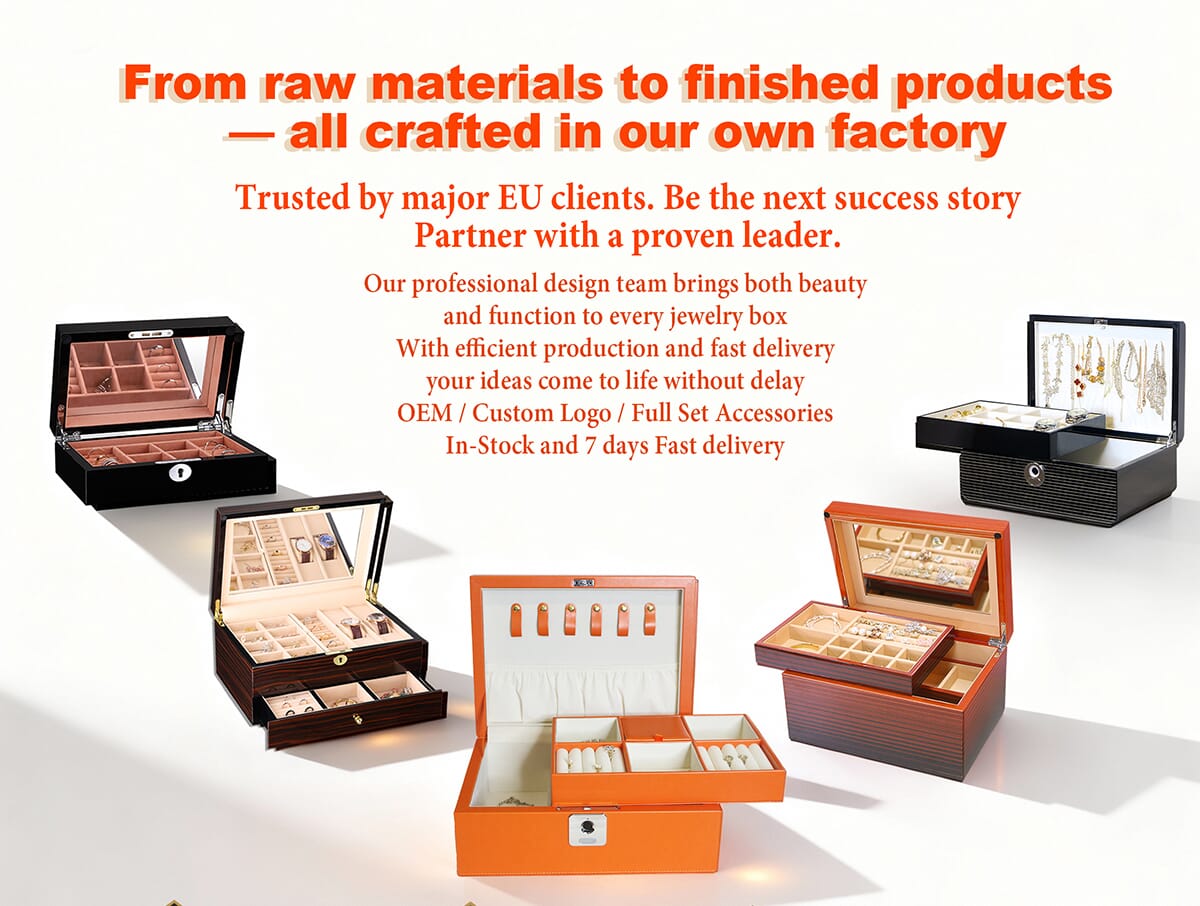
Jewelry boxes at premium price points benefit enormously from piano lacquer, as the high-gloss surface creates a visual connection to jewelry store display cases and reinforces the perceived value of the contents.
Travel cases and watch rolls typically use leather or fabric exteriors rather than lacquer, as durability and weight are prioritized over visual impact in travel applications.
Frequently Asked Questions
What is a piano lacquer finish on luxury wood packaging?
A piano lacquer finish is a multi-coat high-gloss finishing technique that creates a deep, mirror-like surface. A genuine piano finish requires 12 to 13 individual coats applied over 5 to 7 days, with sanding and curing between each layer. It is the standard finish for premium watch boxes, jewelry boxes, watch winders, and cigar humidors.
How long does a 12-coat piano lacquer finish last?
A properly applied 12 to 13 coat finish maintains its mirror-like gloss for 2 to 3 years under normal use. The multi-layer structure resists yellowing, micro-scratching, and cracking. Standard 4 to 6 coat finishes typically degrade within 6 to 12 months.
Why does piano lacquer finishing cost more?
It is the most labor-intensive step in production. A 12-coat process requires 5 to 7 additional production days, consumes 3 to 4 times more material, and requires skilled technicians for hand-sanding between coats. The finish alone accounts for 25 to 30 percent of a premium product’s total manufacturing cost.
How can I verify that a factory truly applies 12 coats?
Four methods: request a cross-section sample showing visible layers; measure total film thickness (250–350 microns for 12 coats vs. 80–120 for 4 coats); observe the factory’s finishing infrastructure; and check whether lead time differs between standard and piano-lacquer orders.
What wood works best with piano lacquer?
MDF provides the smoothest base. For solid wood, close-grained hardwoods like maple, walnut, and cherry produce the best results. Open-grained woods like oak require additional grain-filling steps that add cost and complexity.
Experience the 12-Coat Difference
Request a piano lacquer sample set — including cross-section cuts — to evaluate our finish quality firsthand.
Request Samples →