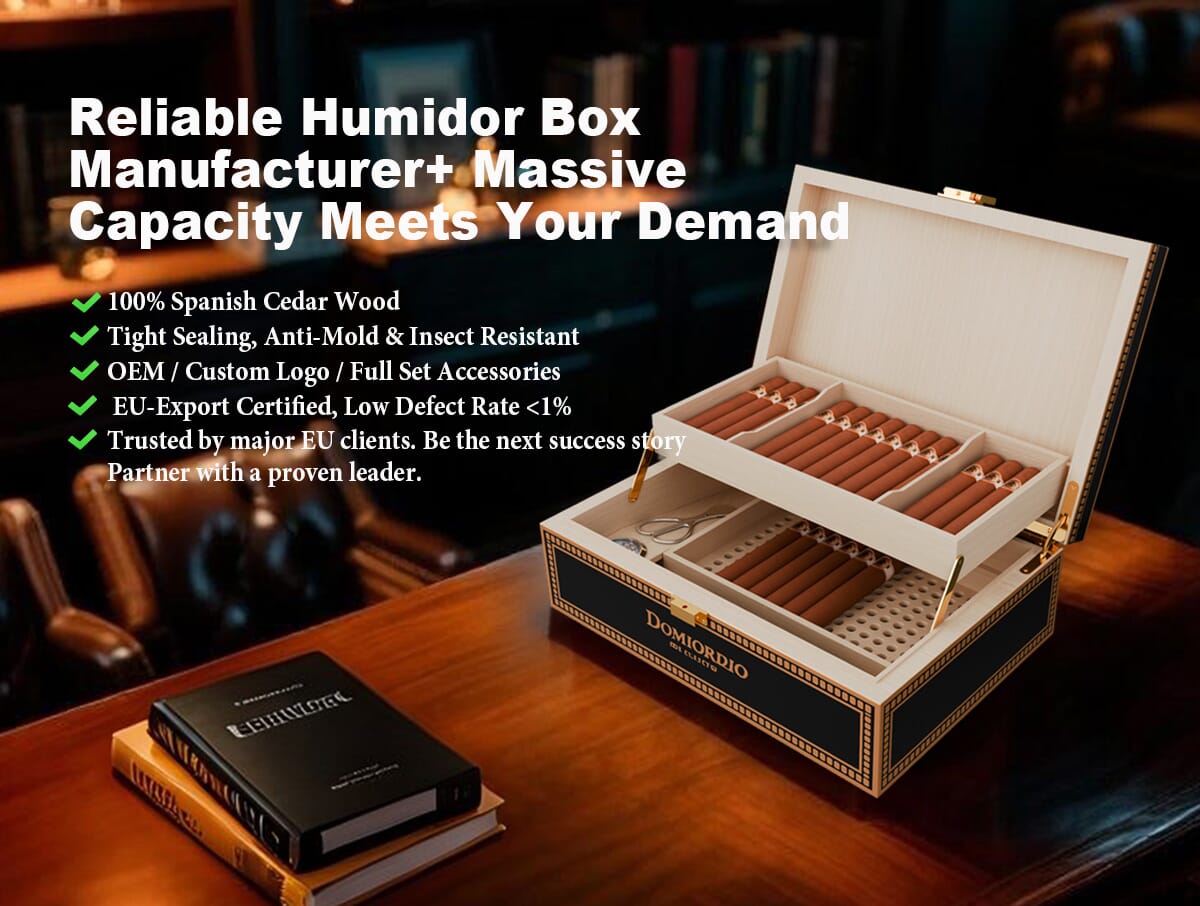
A custom cigar humidor requires three non-negotiable specifications: Spanish cedar interior lining (minimum 3mm thickness) for humidity regulation and tobacco flavor preservation, a precision hygrometer accurate to ±3% RH, and an airtight seal achieving <5% daily humidity loss. OEM production at T.Wing-Pak starts at 100 units with 7–10 business day prototypes, full logo branding, and CE-compliant electric models for EU/US market entry.
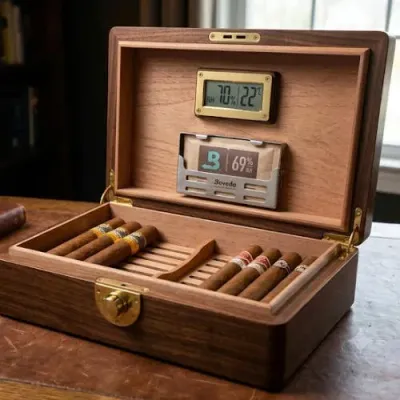
The Global Cigar Humidor Market: Why Brands Are Investing Now
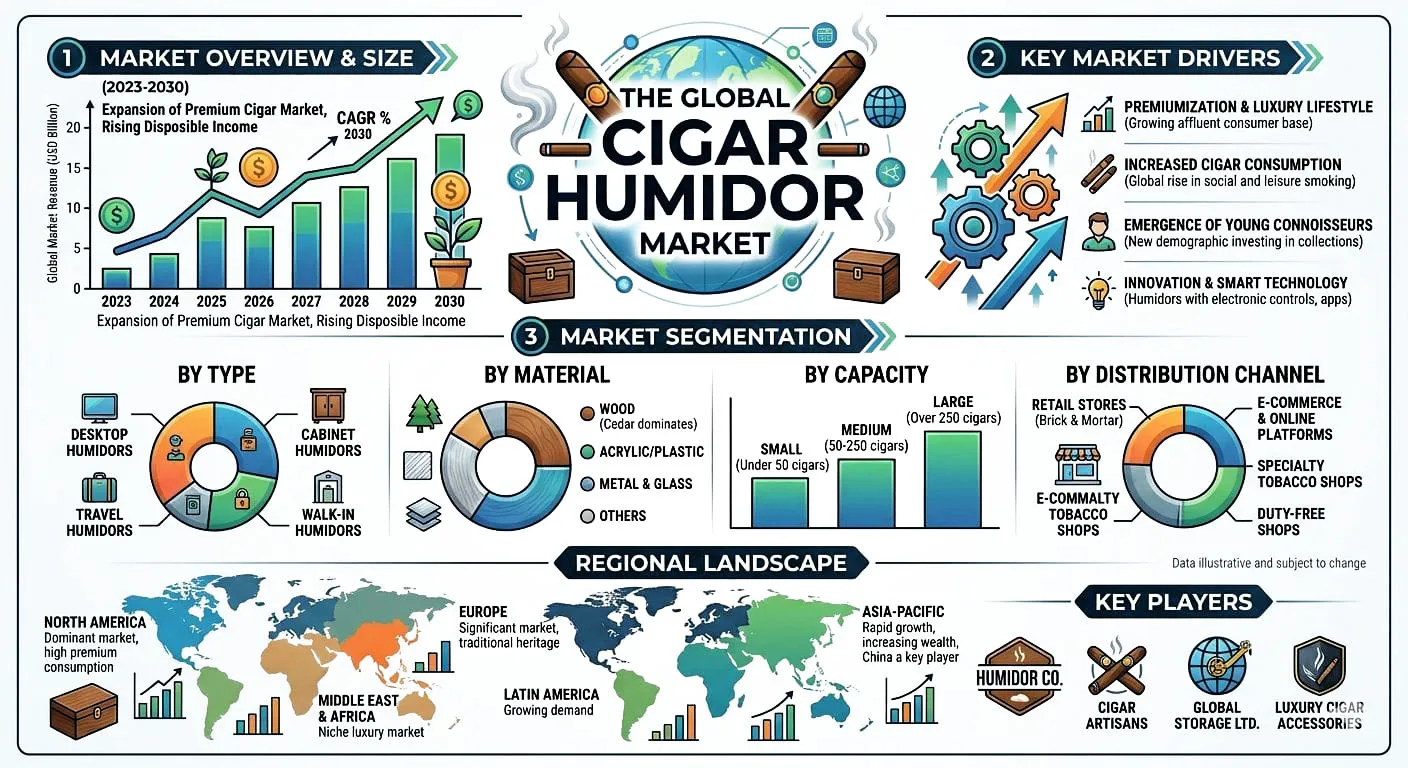
The premium cigar accessories market reached USD 4.3 billion in 2025, with custom-branded humidors representing one of the fastest-growing product categories among cigar brands, spirits companies, hotel groups, and luxury retailers. Three converging trends are driving demand:
1. Brand differentiation through packaging: Cigar brands from Dominican Republic, Honduras, Nicaragua, and Cuba are moving beyond standard cedar boxes into custom-branded humidors as both retail products and VIP gifting vehicles. A branded humidor extends the product line without requiring tobacco production investment.
2. Premiumization of the gifting category: Corporate gift buyers increasingly specify custom wooden humidors for executive gifting, with price points from USD 80–800 per unit. The margin structure on branded humidors significantly exceeds that on cigars alone.
3. Hotel and lounge expansion: Four-and-five-star hotel cigar lounges are becoming standard amenity installations in Asia, Middle East, and North America. Custom cabinet humidors for commercial installations require precise humidity engineering — a specialization that China-based OEM factories have developed through volume experience.
The 6 Types of Custom Cigar Humidors Explained
Type 1: Desktop Humidor
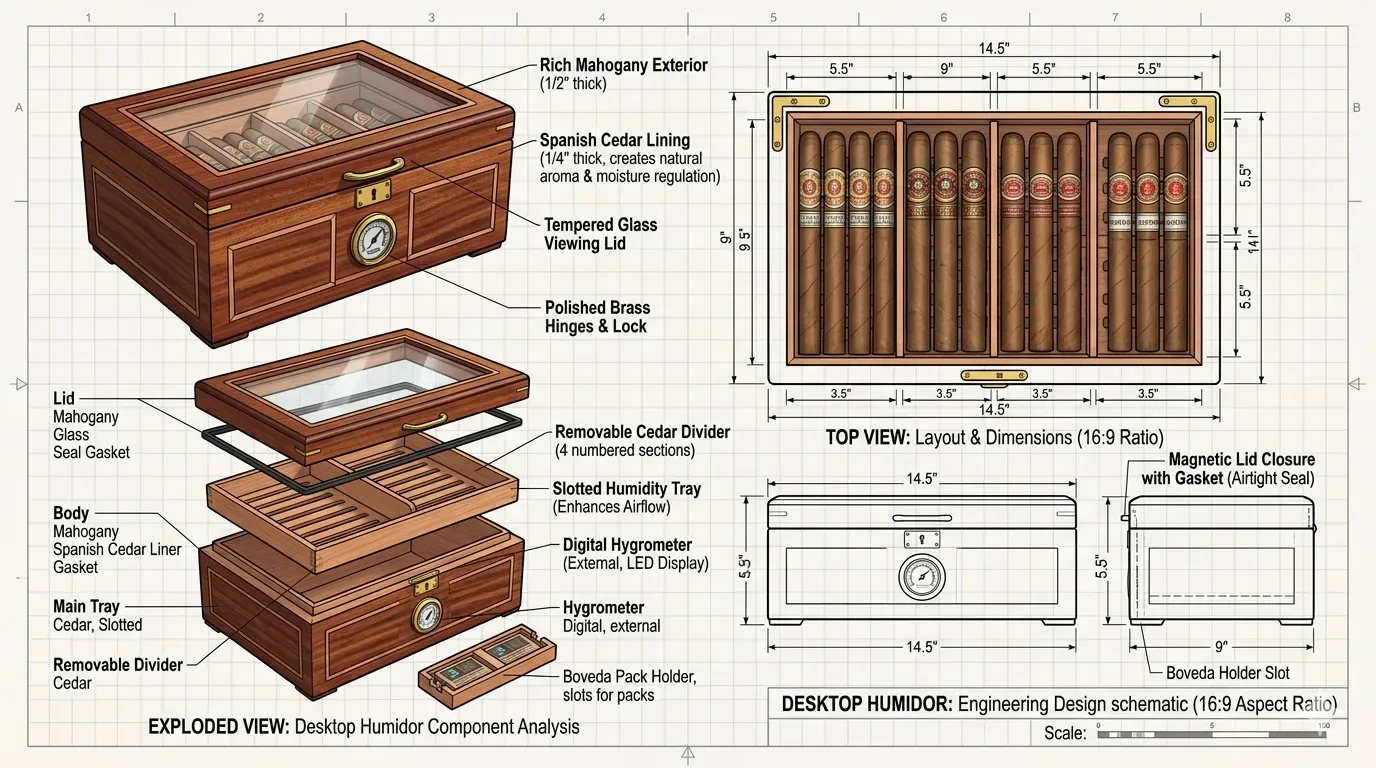
Capacity: 25–150 cigars
Dimensions (typical): 30–50cm × 20–30cm × 10–15cm
Best for: Individual collectors, retail sale, executive gifting
Key construction: Solid wood or MDF exterior, Spanish cedar interior, magnetic or piano-hinge lid, analog or digital hygrometer
Customization options:
- Logo engraving on lid or interior plaque
- Custom wood species (walnut, oak, mahogany, cherry)
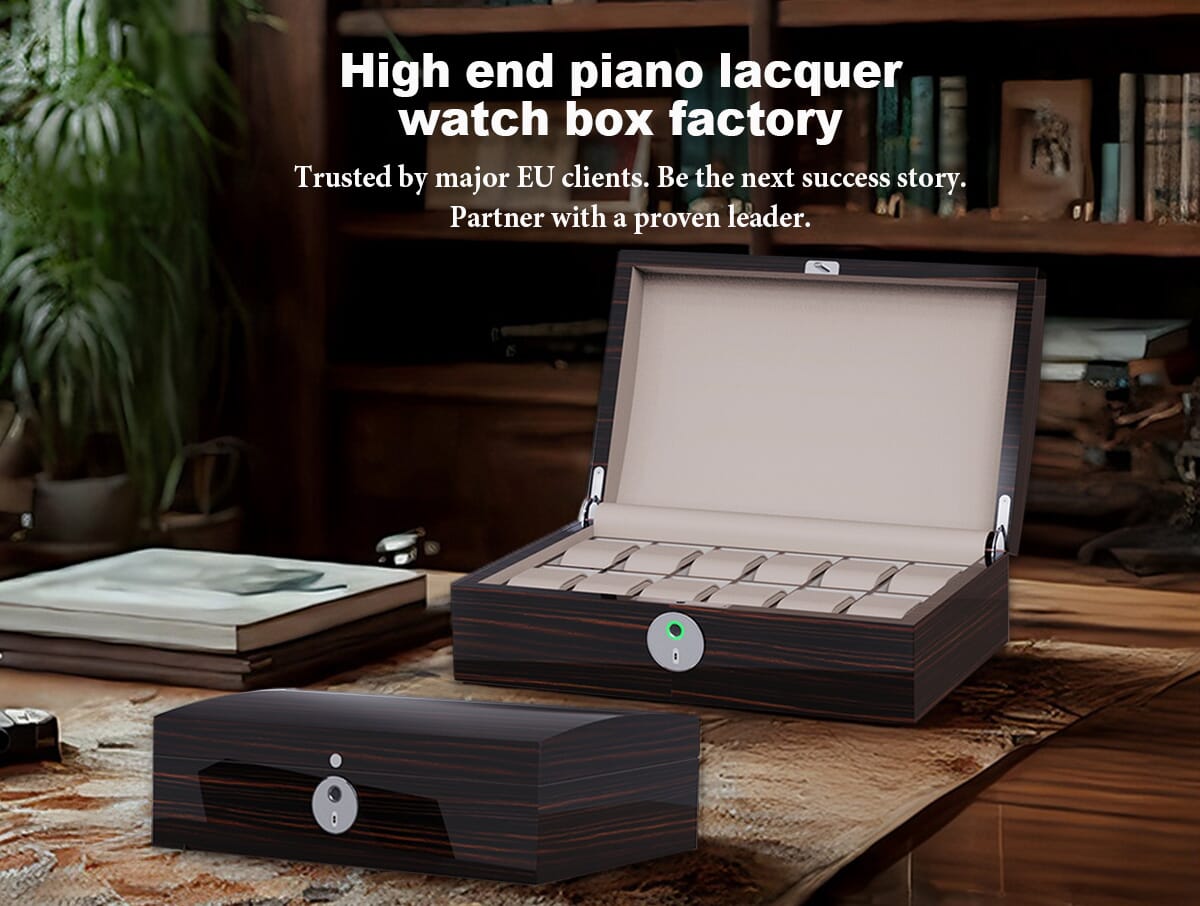
- Exterior finish (piano lacquer, matte, natural grain)
- Lock mechanism (key lock, combination lock, magnetic)
- Custom color lining
T.Wing-Pak MOQ: 100 units | Lead time: 7–10 business days (sample)
Type 2: Cabinet Humidor (Floor-Standing)
Capacity: 500–5,000 cigars
Dimensions (typical): 50–90cm × 40–60cm × 100–180cm
Best for: Cigar lounges, retail display, private collections
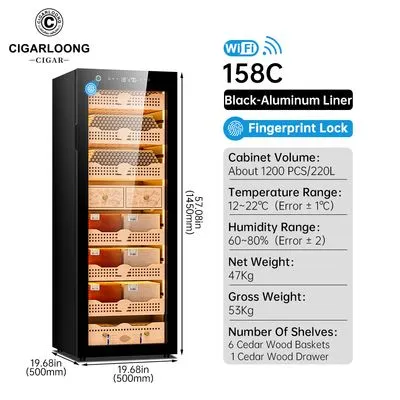
Key construction: Solid hardwood frame, tempered glass door, multi-shelf interior, external humidity and temperature display, compressor or Peltier cooling system (for electric models)
Engineering requirements:
- Internal humidity: 65–72% RH (±3%)
- Internal temperature: 18–21°C (64–70°F)
- Seal integrity: <5% humidity loss per 24 hours at ambient 40% RH
- Spanish cedar shelving: minimum 4mm thickness throughout
Customization options:
- Brand embossed on glass panel or door hardware
- Custom interior lighting (LED warm/cool)
- Lock type (electronic keypad, key cylinder, biometric)
- Drawer configuration
- Power supply: 100–240V compatibility for international markets
T.Wing-Pak MOQ: 50 units | Lead time: 10–15 business days (sample)
Type 3: Electric Humidor (Active Humidity Control)
Capacity: 100–500 cigars
Best for: Retail sale in variable climates, gifting tier USD 200+
Technology: Peltier element or compressor-based humidity/temperature control
Regulatory requirements for EU/US:
- CE marking (EU Directive 2014/35/EU for low-voltage equipment)
- FCC Part 15 (US, for electronic components)
- Energy consumption disclosure (EU Ecodesign Directive)
- RoHS compliance (hazardous substances)
T.Wing-Pak holds CE and RoHS documentation for all electric humidor models.
Specification table:
| Parameter | Standard Electric | Premium Electric |
|---|---|---|
| Humidity control range | 60–80% RH | 55–80% RH |
| Humidity accuracy | ±5% RH | ±2% RH |
| Temperature range | 16–25°C | 14–25°C |
| Temperature accuracy | ±2°C | ±1°C |
| Compressor noise | <42 dB | <35 dB |
| Power consumption | 35–55W | 45–75W |
Type 4: Travel Humidor
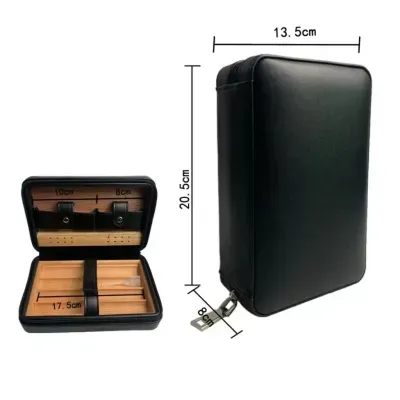
Capacity: 5–20 cigars
Dimensions (typical): 20–28cm × 9–12cm × 5–8cm
Best for: Retail gifting, cigar brand accessories line
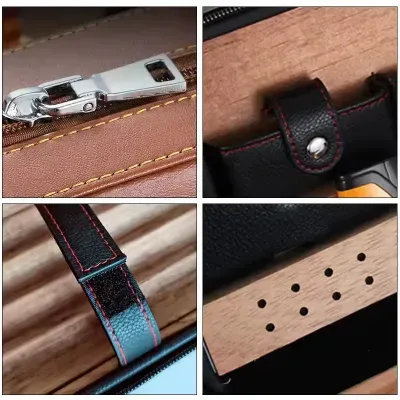
Key construction: Hardwood or aluminum exterior, crush-resistant shell, hygrometer, humidifier element, custom foam insert
Air travel compliance: T.Wing-Pak travel humidors use passive humidification (no liquid containers that violate TSA/IATA carry-on rules). Spanish cedar lining regulates humidity passively for 48–72 hours without refilling.
Type 5: Furniture Humidor (Built-In Cabinet)
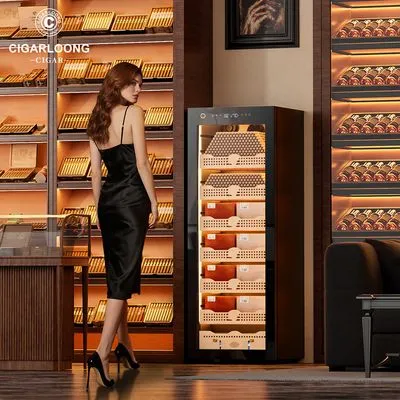
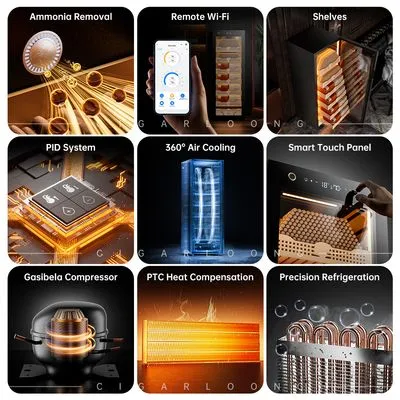
Capacity: 2,000–10,000+ cigars
Best for: Hotel cigar lounges, private member clubs, high-end restaurants
Construction: Custom-built furniture piece integrating active climate control, display lighting, drawer systems, and full-face glass or solid wood panels
Project lead time: 45–60 days (bespoke)
Minimum engagement: Project design consultation required before quotation
Type 6: Chest / Trunk Humidor
Capacity: 200–1,000 cigars
Best for: High-end gifting, brand limited editions, collector items
Construction: Antique trunk aesthetic, brass hardware, document-grade leather or fabric exterior, internal cedar trays, vintage lock mechanisms
Spanish Cedar: Why It Is Non-Negotiable for Cigar Humidors
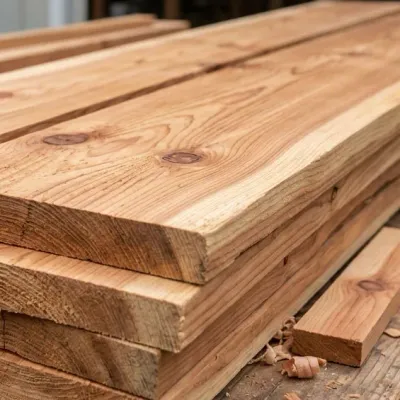
The choice of interior material in a cigar humidor is not aesthetic — it is functional. Spanish cedar (Cedrela odorata) is the industry-standard material for humidor interiors for four scientifically documented reasons:
1. Hygroscopic buffering: Spanish cedar absorbs and releases moisture at a rate that buffers humidity fluctuations. When ambient humidity spikes, cedar absorbs excess moisture; when it drops, cedar releases it. This passive regulation extends the period between manual humidifier refills from days to weeks.
2. Tobacco beetle deterrence: Spanish cedar contains natural aromatic compounds (cedrol, thujopsene) that deter Lasioderma serricorne — the tobacco beetle — which can destroy an entire humidor’s contents in weeks if conditions allow hatching. No synthetic material replicates this protection.
3. Flavor enhancement: Direct contact between cedar and tobacco through cedar wrapping is a documented aging technique. The aromatic compounds from cedar migrate to tobacco over time, adding complex woody-spice notes to premium cigars.
4. Structural stability: Spanish cedar’s tight grain and moderate density provide dimensional stability across humidity cycles (60–75% RH) without the warping, splitting, or glue-joint failure seen in MDF or generic hardwood at these humidity levels.
Interior material comparison:
| Material | Humidity Buffering | Tobacco Beetle Resistance | Flavor Impact | Longevity at 70% RH |
|---|---|---|---|---|
| Spanish cedar (Cedrela odorata) | Excellent | Excellent (natural deterrent) | Positive (aromatic) | 20+ years |
| American cedar (Juniperus virginiana) | Good | Good | Neutral-positive | 15+ years |
| Mahogany | Fair | None | Neutral | 10–15 years |
| MDF | Poor (absorbs, doesn’t release) | None | Negative (chemical offgassing) | 3–5 years (swells) |
| Plywood (standard) | Poor | None | Negative | 3–7 years |
T.Wing-Pak Spanish cedar specification:
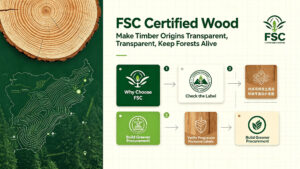
- Source: Sustainably harvested Cedrela odorata from certified suppliers
- Thickness: 3mm minimum (desktop), 4mm minimum (cabinet)
- Kiln-dried to 8–12% moisture content before installation
- CARB P2 compliant for US market formaldehyde standards
Humidity Engineering: Technical Specifications Your Factory Must Meet
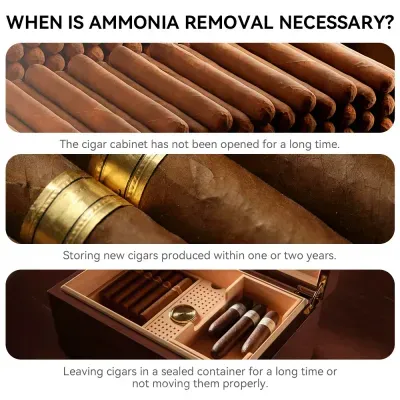
The most common failure mode of budget humidors is seal failure — the lid-to-body joint cannot maintain internal humidity against the ambient environment. Rigorous buyers should test this before approving production.
Seal Testing Protocol
- Fill humidor to 70% RH using calibrated distilled water humidification element
- Seal humidor and place in controlled 40% RH environment (20°C)
- Measure internal RH at 24, 48, and 72 hours
- Pass criteria: Internal RH should remain ≥65% at 72 hours (≤5% daily loss)
Industry benchmarks:
| Seal Quality | 24-hour RH loss | 72-hour RH maintained |
|---|---|---|
| Premium (piano lid, silicone gasket) | <1% RH loss | >68% RH |
| Standard (tight-fitted lid) | 2–3% RH loss | >62% RH |
| Budget (poor fit) | 5–10% RH loss | <55% RH (unusable) |
T.Wing-Pak desktop and cabinet humidors use full-perimeter silicone gaskets on all cabinet and electric models, and precision-milled lid-to-body joints (±0.3mm tolerance) on desktop models.
Hygrometer Accuracy Specification
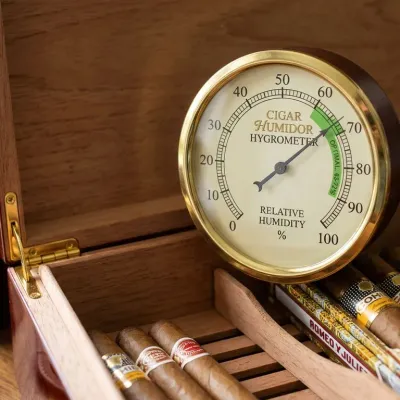
A hygrometer inaccurate by ±5% RH or more will cause systematic humidity errors that damage cigars over time. The “salt test” verifies hygrometer accuracy: placing the hygrometer in a sealed container with a saturated salt solution (sodium chloride) should produce a 75% RH reading. Deviation from 75% = calibration error.
Hygrometer tier comparison:
| Type | Typical Accuracy | Response Time | Recommended Use |
|---|---|---|---|
| Analog (standard) | ±5–8% RH | 30–60 minutes | Budget desktop humidors |
| Analog (calibrated) | ±3–4% RH | 15–30 minutes | Mid-range products |
| Digital (standard) | ±3–5% RH | 10–15 minutes | Mid-range, gifting |
| Digital (precision) | ±1–2% RH | 5–10 minutes | Premium, electric models |
T.Wing-Pak standard: Digital hygrometers at ±3% accuracy on all desktop models; ±1–2% on all cabinet and electric models.
OEM Process: Custom Cigar Humidor from Brief to Delivery
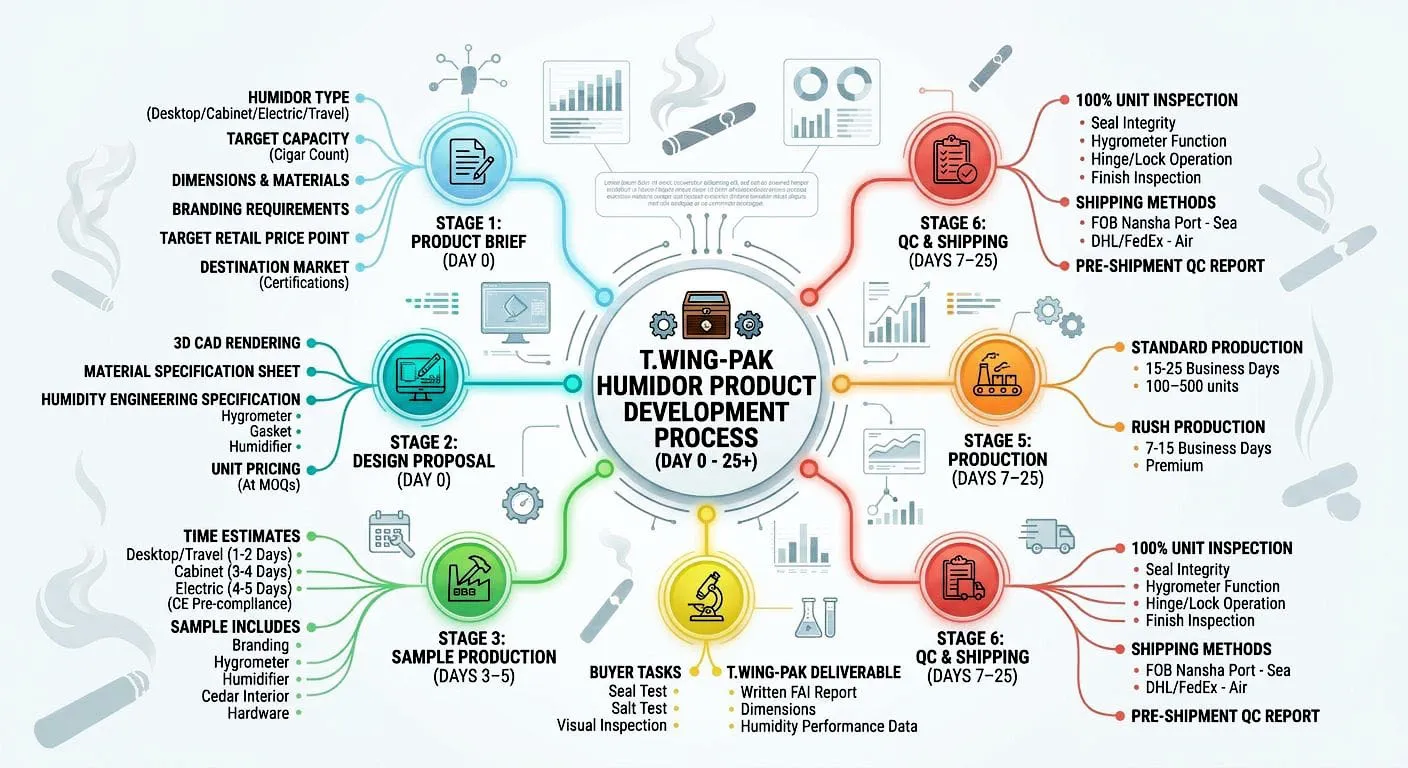
Stage 1: Product Brief (Day 0)
Provide: humidor type (desktop/cabinet/electric/travel), target capacity (number of cigars), exterior dimensions if fixed, material preferences, branding requirements, target retail price point, and destination market (for certification requirements).
Stage 2: Design Proposal (Days 0)
T.Wing-Pak design team produces: 3D CAD rendering, material specification sheet, humidity engineering specification (hygrometer type, gasket specification, humidifier element type), and unit pricing at stated MOQ.
Stage 3: Sample Production (Days 3–5)
- Desktop/travel: 1–2 business days
- Cabinet: 3–4 business days
- Electric: 4–5 business days (includes electronics integration and CE pre-compliance check)
All samples include: final branding, actual hygrometer and humidifier element, finished cedar interior, and all hardware.
Stage 4: Sample Testing (Days 1–2)
Buyer performs seal test, hygrometer accuracy test (salt test), and visual inspection. T.Wing-Pak provides written FAI (First Article Inspection) report with all measured dimensions and humidity performance data.
Stage 5: Production (Days 7–25)
Standard production run: 15–25 business days for 100–500 unit orders. Rush production available at 7–15 business days for premium.
Stage 6: QC and Shipping (Days 7–25)
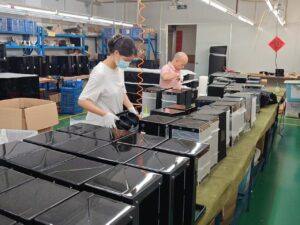
100% unit inspection: seal integrity check, hygrometer function, hinge/lock operation, finish inspection. Pre-shipment QC report issued. FOB Nansha Port for sea freight; DHL/FedEx for air.
Compliance Requirements by Destination Market
| Market | Required Certifications | Notes |
|---|---|---|
| European Union | CE (electric models), RoHS, REACH | Required for legal retail and e-commerce sale |
| United States | FCC Part 15 (electric), CARB P2 (wood) | CPSC reporting for retail sale |
| United Kingdom | UKCA marking (post-Brexit) | Separate from CE, required from Jan 2024 |
| Australia | SAA/RCM (electric models) | Required for Aussie Power Supply models |
| Canada | CSA or UL listing (electric) | Required for retail distribution |
T.Wing-Pak holds CE and RoHS for electric models. For US market (FCC/CARB), documentation is prepared per order — approximately 15–20 additional business days for first-time US market certification.
Cost Structure: What Drives Humidor OEM Pricing
Understanding cost drivers allows buyers to make informed trade-offs between quality, cost, and margin.
| Cost Component | Percentage of Total | Key Variables |
|---|---|---|
| Materials (wood, cedar, hardware) | 35–45% | Wood species, cedar thickness, hardware quality |
| Labor (woodworking, finishing, assembly) | 25–35% | Finish complexity, custom features |
| Piano lacquer process | 5–15% | Number of layers (3-layer vs. 12-layer) |
| Electronics (hygrometer, humidifier, electric system) | 5–20% | Digital vs. analog, active vs. passive |
| Branding (engraving, plating, printing) | 3–8% | Technique and placement complexity |
| QC and testing | 3–5% | 100% unit inspection included |
| Packaging | 5–10% | Retail box complexity |
Price range guidance (FOB Guangzhou, 100-unit MOQ):
| Product Type | Entry Specification | Mid Specification | Premium Specification |
|---|---|---|---|
| Desktop (25-50 cigars) | USD 22–35 / unit | USD 40–65 / unit | USD 75–130 / unit |
| Cabinet (500 cigars) | USD 180–250 / unit | USD 280–420 / unit | USD 500–850 / unit |
| Electric desktop | USD 65–90 / unit | USD 100–160 / unit | USD 180–300 / unit |
| Travel (10 cigars) | USD 18–28 / unit | USD 32–50 / unit | USD 55–90 / unit |
Prices are indicative. Actual pricing depends on specific design, materials, MOQ, and branding requirements. Request a formal quotation for exact pricing.
Frequently Asked Questions
Q: What is the difference between active and passive humidification in a custom humidor? A: Passive humidification uses a saturated sponge or crystal gel element that slowly releases moisture — no power required, but requires periodic refilling. Active humidification uses electronic sensors and a pump or Peltier element to maintain target RH automatically, with alerts when water reservoir is low. T.Wing-Pak produces both; active systems are recommended for cabinet models and high-value collections.
Q: Can you manufacture cigar humidors that comply with EU tobacco product regulations? A: The humidor itself is not subject to EU Tobacco Products Directive (TPD) as it is an accessory, not a tobacco product. However, electric humidors require CE marking under the Low Voltage Directive (2014/35/EU). T.Wing-Pak’s electric models carry CE documentation.
Q: What is the typical retail markup on OEM cigar humidors? A: Typical B2B retail margin for premium humidors is 2.5x–4x landed cost (including shipping and duties). A USD 65 FOB humidor landed in the US at USD 80–90 all-in would typically retail at USD 200–350, depending on brand positioning and channel.
Q: Do you offer mixed-SKU production runs (e.g., 50 desktop + 50 cabinet in one order)? A: Yes. T.Wing-Pak accepts multi-SKU orders with a combined minimum of 100 units. Each SKU maintains its own production schedule; the factory coordinates shipping to consolidate into one sea freight shipment where possible.
Q: How do I specify the humidity target for my humidor design? A: Industry standard is 65–70% RH at 18–21°C for premium cigars. If your brand’s cigars are specifically recommended at a different RH (some Cuban brands recommend 65%, some Nicaraguan brands recommend 72%), T.Wing-Pak calibrates the humidifier element and hygrometer calibration target to your specification during production.
Q: Can you include my brand’s QR code linking to a product registration page? A: Yes. QR codes can be laser-engraved on the interior lid plaque, exterior base, or printed on the interior certification card. This is a standard customization available at no additional tooling cost.
Summary
A custom cigar humidor OEM project requires a factory that understands both woodworking craft and humidity engineering — two disciplines that most general packaging factories do not combine. T.Wing-Pak has manufactured cigar humidors for global brands for 19 years, with in-house humidity engineering capability, Spanish cedar sourcing, and CE-compliant electronic models. MOQ starts at 100 units, with prototype delivery in 7–10 business days.
Next steps: [Request Humidor OEM Catalog →] [Submit a Custom Humidor Brief →] [Request Humidity Performance Data →]
*T.Wing-Pak | 4/F, No.11 Liye Rd, Dongchong Town, Nansha, Guangzhou, China | kathy@twingpak.com.cn | +86-13431139311