How Do Watch Winders Work? The Ultimate Guide for Automatic Watch Owners
MD
For anyone who owns an automatic watch—especially more than one—a watch winder can feel like a mysterious gadget. What exactly does it do? Is it necessary? And how does it actually keep your timepiece ticking?
In this guide, we’ll break it all down in practical terms—no fluff, just real explanations for real watch wearers.
Part 1: What Is a Watch Winder?
A watch winder is a device designed to keep an automatic mechanical watch wound when it’s not being worn. These watches rely on movement—typically the motion of your wrist—to wind their mainspring. Without regular wear, the watch can stop within 36–48 hours.
The winder gently rotates the watch to simulate natural wrist motion, keeping it powered and preventing the time and date from resetting.
Part 2: How Does It Work?
A watch winder operates by mimicking the natural motion of your wrist to keep an automatic watch running when it’s not being worn. Here’s a detailed breakdown of the mechanics and process:
1. The Core Mechanism: Simulating Wrist Motion
- Inside an automatic watch, a rotor—a semicircular piece of metal—pivots around a central axis. When you move your wrist, the rotor spins due to gravity and inertia, winding the mainspring (a coiled spring that stores energy to power the watch). Without motion, the mainspring gradually unwinds, and the watch stops after its power reserve (typically 36–48 hours) is depleted.
- A watch winder holds the watch securely in a cushioned holder or cradle and rotates it in a controlled manner. This rotation causes the watch’s rotor to move, mimicking wrist motion and winding the mainspring to keep the watch powered.
2. Key Components of a Watch Winder
- Motor: The heart of the winder, a quiet, low-power electric motor drives the rotation. High-quality winders use near-silent motors to avoid disturbance, especially if used in a bedroom or office.
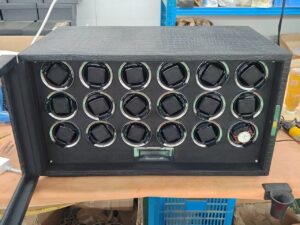
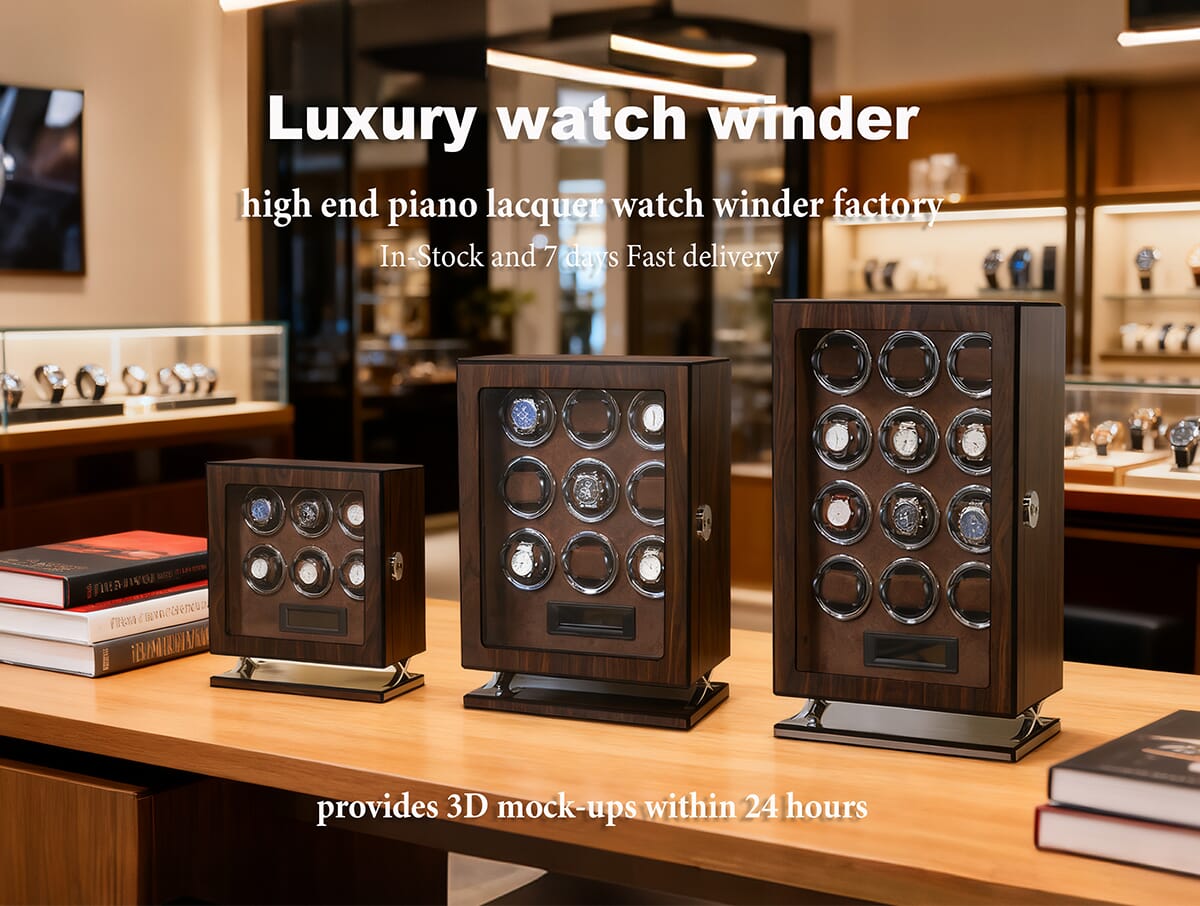
- Holder/Cradle: This is where the watch is placed. It’s typically padded to protect the watch and adjustable to fit different strap or bracelet sizes. Some winders have multiple holders for several watches.
- Control System: Modern winders have programmable settings to customize rotation. This includes:
- Turns Per Day (TPD): The number of rotations the winder performs daily, typically ranging from 500 to 1200, depending on the watch’s requirements. For example, a Rolex Submariner might need around 650–800 TPD, while other brands/models vary.
- Rotation Direction: The winder can rotate clockwise, counterclockwise, or bidirectionally (alternating). Different watch movements require specific directions (e.g., some Seiko movements wind only clockwise, while many Swiss watches wind bidirectionally).
- Rest Periods: Advanced winders include intermittent pauses or “sleep modes” to simulate natural wrist activity, preventing continuous strain on the watch’s movement.
- Power Source: Winders typically run on AC power (plugged into an outlet) or batteries for portability. Some high-end models offer both options.
3. The Winding Process
- When the winder rotates, it moves the watch in a circular or orbital pattern. This motion causes the rotor inside the watch to swing, transferring kinetic energy to the mainspring. The mainspring tightens, storing energy that powers the watch’s gear train and keeps the timekeeping mechanism (balance wheel, escapement, etc.) active.
- Automatic watches have a built-in slipping clutch—a safety mechanism that disengages the winding process once the mainspring is fully wound. This prevents overwinding, ensuring the watch isn’t damaged even if the winder keeps rotating.
4. Precision and Customization
- High-quality winders allow precise control over TPD and rotation direction to match the specific needs of a watch model. For example, a Patek Philippe with a perpetual calendar might require precise settings to avoid stressing its delicate complications. Manufacturers like Omega or IWC often provide TPD recommendations in their manuals.
- Some premium winders use counted rotations rather than timed intervals, ensuring exact TPD delivery. Others include sensors to detect when the watch is fully wound and stop rotation automatically.
5. Practical Example
- Imagine you place your automatic watch in a winder set to 800 TPD, bidirectional rotation, with a 30-minute rotation cycle followed by a 30-minute rest. The winder rotates the watch for half the day, pauses, then resumes, ensuring the rotor spins enough to keep the mainspring charged without overworking the mechanism. The watch stays ready to wear, with its time, date, and complications (like a moonphase) intact.
By replicating the natural motion of your wrist, a watch winder ensures your automatic watch remains functional and accurate, saving you the hassle of resetting it after periods of non-use. However, improper settings (e.g., wrong TPD or direction) can reduce efficiency or, in rare cases, stress the movement, so always check your watch’s specifications.
Part 3: Do You Really Need One?
Inside every automatic watch is a rotor, a semicircular weight that spins with wrist movement. When the watch is placed in a winder, the device slowly rotates the watch at intervals. This motion causes the rotor to spin, winding the mainspring and storing energy.
High-quality winders offer programmable settings:
Turns Per Day (TPD): How many times the watch rotates daily (usually between 500–1200).
Rotation Direction: Clockwise, counterclockwise, or alternating—depending on the watch model.
These functions allow the winder to mimic human motion accurately without overwinding, thanks to the slipping clutch built into the watch movement.
This is one of the most common questions watch owners ask—and the answer depends on how you use your watch.
You might not need a winder if:
You wear the same automatic watch daily.
Your watch is simple to reset if it stops.
A watch winder becomes helpful if:
You own multiple automatic watches and rotate them frequently.
Your timepiece has complications (e.g. moonphase, perpetual calendar) that are time-consuming to reset.
You prefer your watches always ready to wear without delay.
It’s not just about convenience—some users also note that keeping a movement active may help prevent lubricant pooling inside the movement. But others argue that constant winding could slightly increase wear. The balance? Use it wisely and intermittently.
Part 4: What to Look for in a Watch Winder
Not all watch winders are created equal. Here’s what to consider when choosing one:
Programmability: Look for adjustable TPD and rotation direction.
Build Quality: Quiet motor, secure watch holder, and good materials.
Power Options: AC power and/or battery operation.
Slot Count: Some winders hold one watch; others hold up to 12 or more.
Some premium brands even offer counted rotations (not just timed) for more precise control.
Tip: Always check your watch brand’s recommended winding settings before using a winder.
Part 5: Is It Safe to Leave a Watch on a Winder?
Yes—if the winder is set correctly and used in moderation. Automatic watches are designed with a slipping clutch mechanism, so overwinding isn’t typically a risk. However, many experts recommend giving your watches occasional rest periods to mimic natural wear patterns.
Avoid leaving a watch running 24/7 for weeks without pause, especially if the winder has no sleep mode. Think of it like idling a car engine all day—technically possible, but not always beneficial.
Conclusion: A Tool, Not a Necessity
Watch winders are tools of convenience, not essential maintenance devices. They save time, preserve settings, and keep your favorite watches ready for action. For collectors and complication-watch owners, they’re almost a must. For others, they’re a nice-to-have.
If you do choose one, make sure it matches your watch’s needs—and give your timepiece some downtime once in a while.