From our vantage point as a manufacturer producing watch packaging for clients in over 40 countries, we see what the market is ordering before retail trends become publicly visible. The brands placing OEM orders today are working on collections that won’t reach consumers for another 6–18 months — which means factory order patterns are a leading indicator of where luxury packaging is heading.
These are the seven watch packaging trends shaping 2026, based on what we are actually producing.
Trend 1: Sustainable Materials Are Becoming Table Stakes, Not a Premium
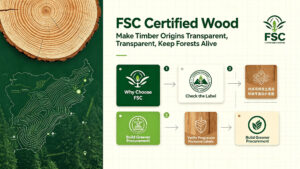
Twelve months ago, FSC-certified wood and recycled materials were requests from a minority of environmentally conscious brands. Today, they are requirements from procurement teams at companies of all sizes.
The EU Packaging and Packaging Waste Regulation (PPWR) — coming into phased effect from 2025–2030 — is driving this shift from optional to mandatory. Any brand selling physical goods into the EU market needs to begin building documentation around material provenance, recyclability, and packaging weight reduction.
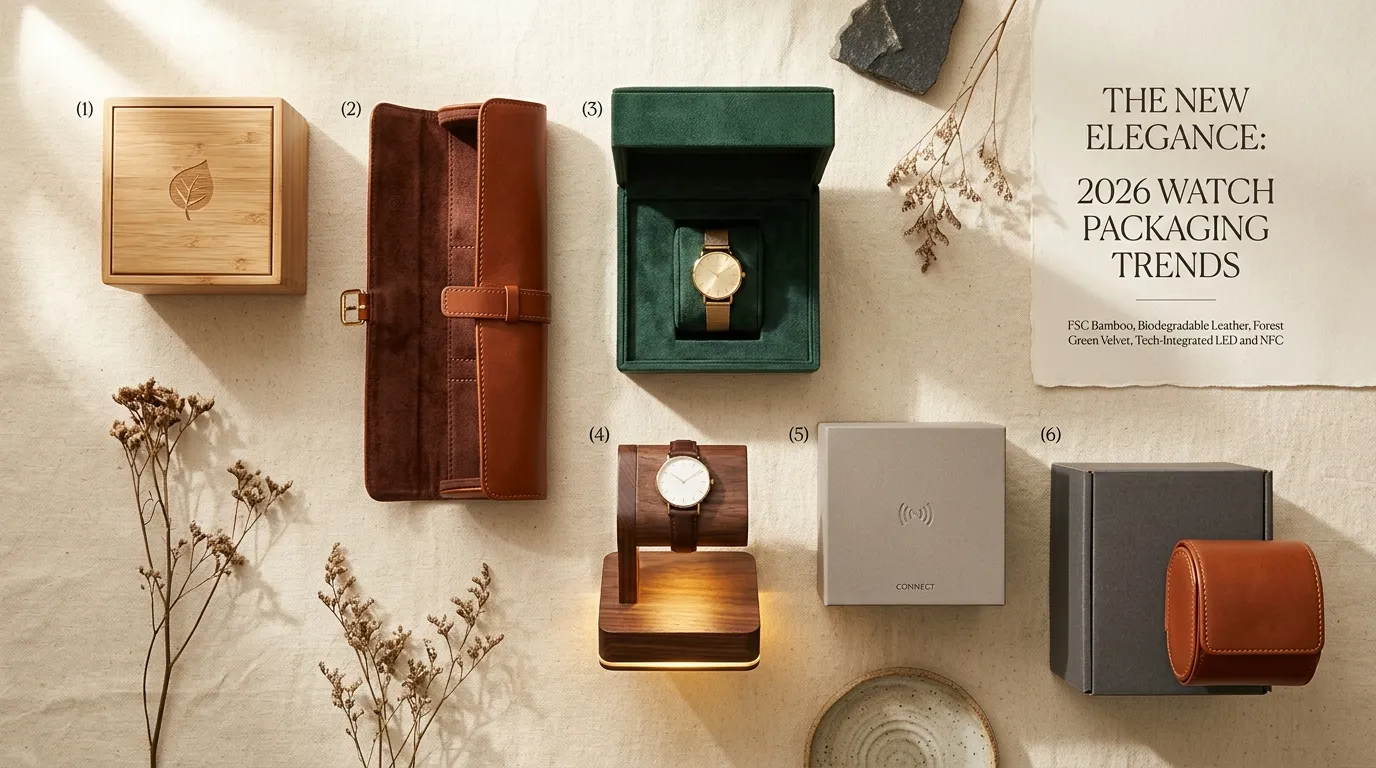
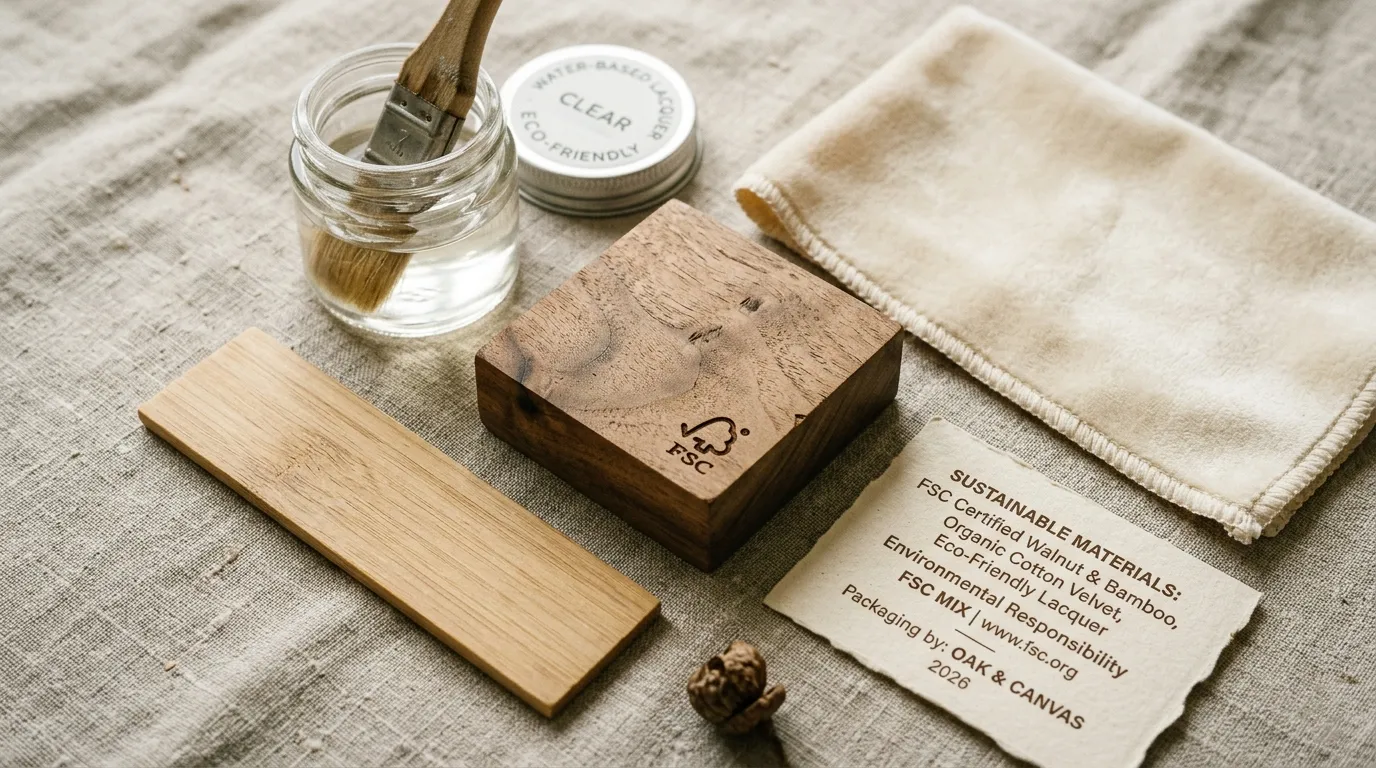
What we are seeing in orders: a significant increase in requests for FSC-certified walnut and MDF, water-based lacquer finishes (replacing solvent-based), bamboo panels as an MDF alternative, and natural undyed linen or cotton interior linings. Brands are not paying a significant premium for these — the 5–10% cost increase has become a standard budget line in packaging briefs, not a negotiation point.
The implication for brands: sourcing from factories that already hold FSC and BSCI certification is no longer a differentiator — it’s a baseline requirement for EU retail distribution.
Trend 2: Minimalism Has Peaked; Warmth Is Returning
For the past five years, watch packaging design has moved steadily toward reduction: clean lines, matte black finishes, white interiors, minimal branding. This direction is plateauing.
What we are producing more of in 2026: natural wood tones (walnut, oak, bamboo), warm cognac and caramel leather exteriors, velvet interiors in rich jewel tones (deep forest green, sapphire blue, burgundy), and mixed-material construction that combines natural and refined elements.
The aesthetic signal: warmth, craft, and material authenticity are back as aspirational qualities in luxury packaging. The all-matte-black watch box, once a shorthand for understated luxury, now reads as generic.
What this means for briefs: specify material character, not just colour. “Solid walnut with a hand-applied oil finish that shows the grain” communicates differently to a factory design team than “wood-look box.”
Trend 3: The Gift Set Is Replacing the Single Box at Premium Price Points
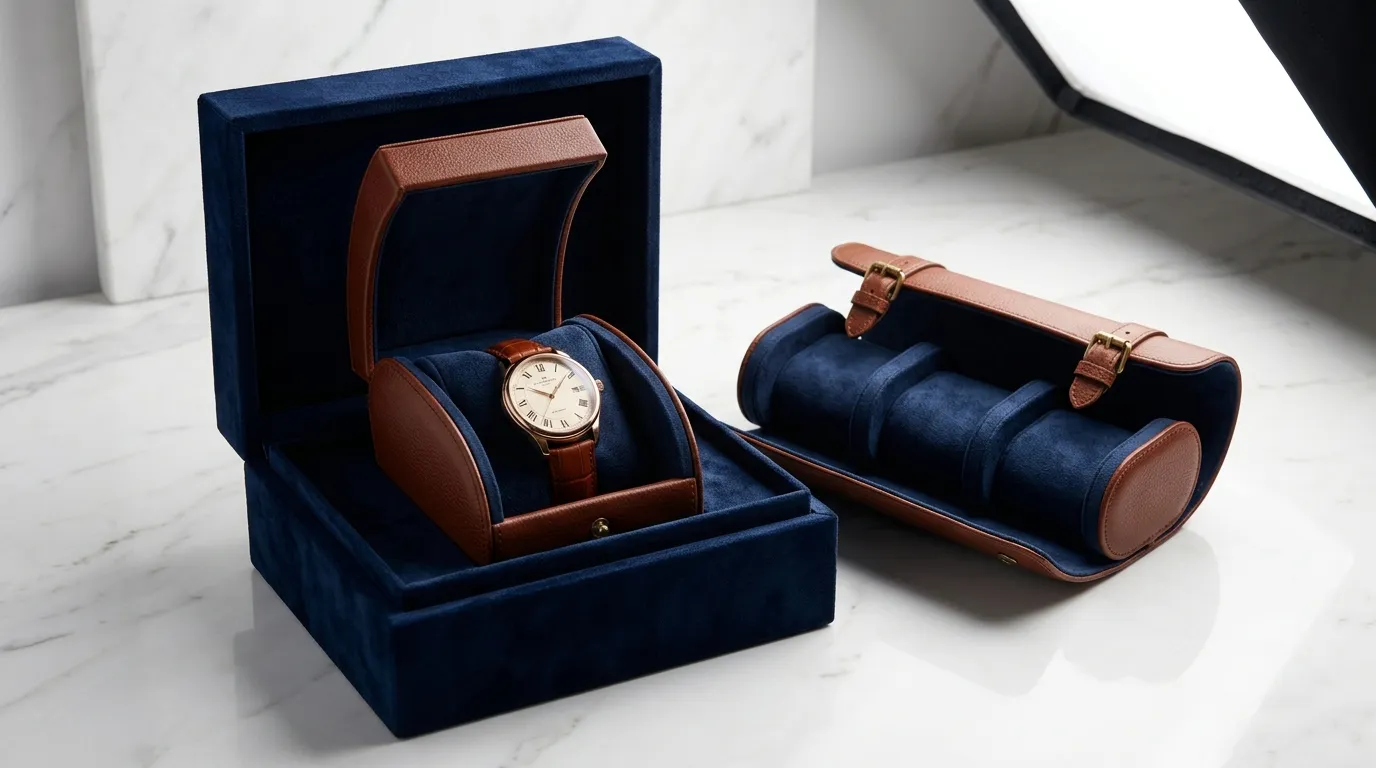
Across multiple product categories and price points, we are seeing a structural shift: brands are replacing the single watch box with a coordinated gift set at premium price points.
The driver is simple economics: a watch in a box retails for $X. The same watch in a box plus a coordinated leather watch roll plus a watch stand retails for $X + 30–50% — with a marginal production cost increase of 15–25%. The perceived value gap between a watch-in-a-box and a watch-in-a-set is consistently larger than the actual cost difference.
What we are producing: coordinated sets where the watch box, leather watch roll, and desktop watch stand share the same exterior material and finish. All three pieces come from a single production run and are packed into a unified outer gift box.
The categories driving this trend: independent watch brands launching via DTC, watch retailers differentiating their in-store gifting propositions, and corporate gift programs seeking higher perceived value at a controlled budget.
Trend 4: NFC and QR Code Integration
Packaging as a digital touchpoint is no longer a novelty. We are receiving an increasing number of requests to integrate NFC chips or QR code systems into watch boxes and watch rolls.
NFC chip integration: A small NFC chip embedded in the box foam base. When a customer taps their phone to the box, it opens an authenticated product page, warranty registration, or brand story. Used by brands as an anti-counterfeiting tool and a post-purchase engagement mechanism.
QR code on the box: Simpler than NFC, but increasingly sophisticated in execution. QR codes etched on a metal plate inset rather than printed on a sticker. Codes that link to dynamic pages (warranty registration, product video, care instructions) rather than static landing pages.
The practical consideration: NFC and QR integration requires coordination between the factory and the brand’s digital team. The factory embeds or places the hardware; the brand manages the digital destination. Allow additional production time (3–5 days) for chip embedding and testing.
Trend 5: Watch Rolls Are Going Mainstream
Watch rolls were, five years ago, a niche product bought by watch enthusiasts who travelled frequently. In 2026, they are a mainstream watch brand accessory — and orders are growing faster than any other product category in our factory.
The drivers: the rise of independent watch microbrands who want a distinctive accessory beyond the standard box; the growth of DTC brands for whom the watch roll is a higher-margin, lower-complexity product than a winder; and the expansion of the travel accessories category into watch storage.
What is changing in the product: watch rolls are becoming more sophisticated in their finish — genuine leather grades are increasing, YKK zipper specifications are appearing more often, and suede interior linings are replacing the foam-slot construction of early-generation products. The category is maturing.
The opportunity: for watch brands that don’t yet have a watch roll in their product line, 2026 is the year to add one. The category is growing; the consumer familiarity with the format is high; and the MOQ entry point is lower than almost any other branded watch accessory.
Trend 6: Watch Display Stands as Brand Real Estate
The watch display stand used to be a retailer’s problem — something a watch brand might provide at wholesale but didn’t consider a brand touchpoint. That is changing.
We are producing significantly more branded watch display stands for brands to supply to their retail partners — replacing unbranded generic stands with stands that carry the brand’s logo, finish, and design language. The brand controls the display environment even when the retailer controls the shelf.
The secondary trend within this: the watch display stand as a DTC accessory. Brands selling directly to consumers are offering a branded desk display stand alongside their DTC watch purchase — “display your watch the way it was meant to be displayed.”
Specifications trending: walnut base with brass hardware, warm LED under-lighting, and a discreet engraved logo on the base. The understated version of the stand communicates confidence — the brand doesn’t need to shout.
Trend 7: Modularity — Packaging That Grows With the Collection
The final trend is structural: buyers are asking for packaging systems that can grow with a watch collection rather than requiring replacement as the collection expands.
Modular watch boxes: a base unit accommodating 3 watches, with expansion trays that stack or slide to double or triple capacity. The collector buys the base unit and adds to it. The brand maintains a recurring relationship.
Modular display systems: a countertop stand that accepts additional arms as the display range grows. The retailer starts with a 3-watch stand and expands to 12 without replacing the base.
The manufacturing implication: modular systems require more precise tolerancing between components than single-piece products. The expansion pieces must fit the base unit produced 12 months earlier — which means the factory must maintain the same tooling and specification across multiple production runs. This is achievable with proper tooling management but requires explicit discussion with the factory before the first order.
What These Trends Mean for Your OEM Brief in 2026
Specify sustainable materials explicitly. Don’t assume “wood” means FSC wood. Don’t assume “leather” means REACH-compliant leather. Write the certifications into your brief.
Design for warmth and material character. The market is moving away from generic black toward material-forward design. Brief your factory with Pantone references and material character descriptions, not just colour codes.
Consider the gift set at the brief stage. If you’re designing a watch box for a $300+ watch, simultaneously brief a coordinated watch roll and stand from the same factory. The production economics are better if all three are briefed together.
Ask about NFC capability before the sample stage. Adding NFC after a sample is approved requires redesigning the foam base and retesting. Plan for it upfront.
Think about expansion. If your watch line will grow, brief a modular system from the start. Retrofitting modularity onto an existing design is expensive.
Frequently Asked Questions
Q: Where can I find the latest watch packaging trend reports? A: Industry sources: Euromonitor International (packaging market reports), LUXE PACK trade show (Monaco and New York), and direct observation of premium watch brand new releases (examine the packaging, not just the watch). Canton Fair twice-yearly is a direct window into what Chinese OEM factories are producing.
Q: Are sustainable watch packaging materials more expensive? A: A premium of 5–15% over conventional materials is typical. FSC walnut over non-certified walnut: approximately 8–12% premium. Recycled PU leather over standard PU: approximately 5–8%. Water-based lacquer over solvent lacquer: cost-neutral in most cases. The premium is narrowing as sustainable materials scale.
Q: How far in advance should I be briefing a factory for a 2026 product launch? A: For a Q4 2026 launch (peak gifting season), your OEM brief should be submitted by July 2026 at the latest. For a Q1 2027 launch: October 2026 brief. This allows for design, sampling, production, and sea freight transit. Earlier is always better.
Q: Is NFC packaging integration expensive? A: NFC chip cost has dropped significantly: a standard NFC NTAG215 chip embedded in packaging adds approximately $0.80–$1.50 per unit for the hardware. Setup cost (programming, testing, digital platform integration) is a one-time project cost. The marginal per-unit cost is modest; the brand engagement value is high.
Want to brief your 2026–2027 watch packaging range? TwingPak’s design team is ready.
Request a 2026 Design Consultation → | Download Latest Watch Packaging Catalogue →