In the modern jewelry industry, packaging is no longer a secondary procurement item. It has become a strategic interface between product value, brand identity, retail presentation, and customer experience. For brand owners, especially independent and niche jewelry labels, selecting the right manufacturing partner for packaging can directly affect market positioning, operational efficiency, and conversion performance. This is why a jewelry box source manufacturer that welcomes brand customers to discuss cooperation offers more than supply capacity; it provides a platform for collaborative product development, flexible production planning, and long-term brand support.
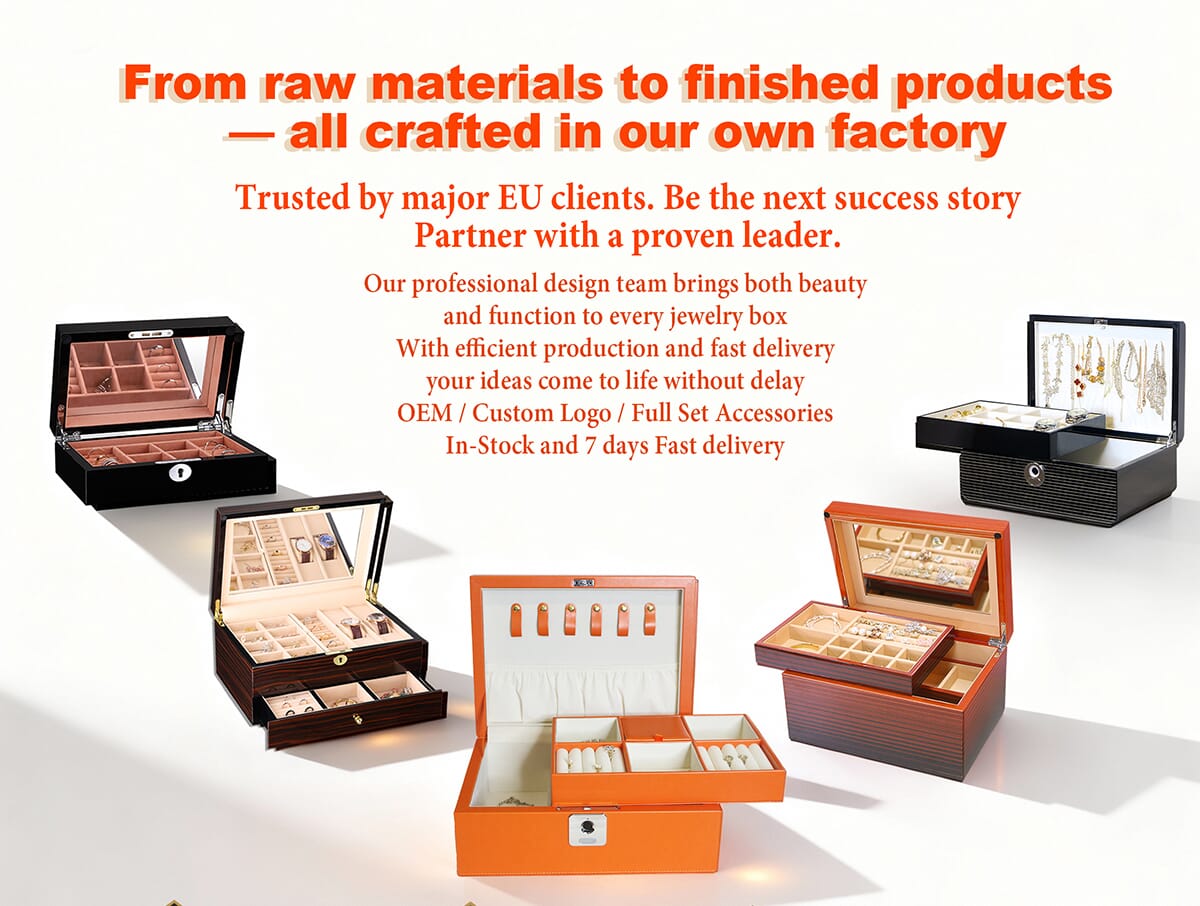
As competition intensifies across direct-to-consumer, boutique retail, and cross-border wholesale channels, brands increasingly require packaging solutions that are visually differentiated, structurally reliable, and commercially scalable. In this environment, direct cooperation with a source manufacturer can create significant advantages. From tailored Jewelry Boxes and premium Jewelry Box-Leather options to coordinated display accessories such as a Jewelry Stand, a capable supplier can help transform packaging into a measurable brand asset.
This article explores why source-manufacturer cooperation matters, what brand customers should evaluate when discussing a partnership, how small and emerging jewelry brands can benefit from direct collaboration, and what implementation steps improve the success rate of packaging projects. It also includes practical and fictionalized niche-brand cases to demonstrate how cooperation with a source manufacturer can strengthen both branding and supply chain performance.
Why Direct Cooperation With a Jewelry Box Source Manufacturer Matters
Working directly with a source manufacturer offers strategic advantages that go beyond transactional procurement. First, it reduces information loss. When design intent, product dimensions, branding requirements, and packaging performance expectations are communicated directly to the producing factory, the risk of misinterpretation declines. This is particularly important in custom packaging, where small details such as insert depth, logo finish, edge folding, and material texture can significantly affect the final outcome.
Second, a source manufacturer is generally better positioned to provide practical engineering feedback. A brand may request a highly customized box shape or a specific decorative effect, but not all concepts are equally feasible at target cost, lead time, or volume. A manufacturer with real production experience can propose alternative structures, more stable materials, or modular approaches that preserve brand aesthetics while improving manufacturability.
Third, direct cooperation improves development agility. This is especially valuable when working with a Small batch processing custom jewelry box factory model, where emerging brands need lower order quantities, shorter iteration cycles, and the ability to test packaging formats before committing to scale. Rather than treating packaging as a fixed cost item, brands can use collaborative development to build a more adaptive packaging system.
The Expanding Role of Packaging in Jewelry Brand Strategy
For professional readers in procurement, marketing, and product development, it is important to recognize that jewelry packaging now operates across several strategic functions simultaneously. It protects the product, enhances visual presentation, supports gifting occasions, standardizes merchandising, and shapes customer perception during unboxing. In digital commerce, packaging also affects user-generated content, social sharing potential, and review sentiment.
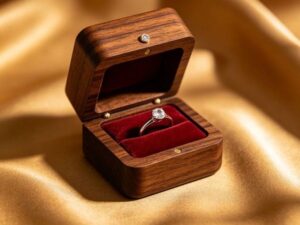
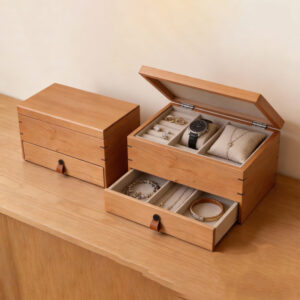
Well-designed Jewelry Boxes can elevate product perceived value and reinforce price legitimacy. In premium segments, tactile and visual cues often matter as much as verbal branding. Materials such as textured paper, velvet, microfiber, and Jewelry Box-Leather can signal distinct levels of quality and formality. Meanwhile, a coordinated Jewelry Stand supports retail consistency, exhibition display, and visual merchandising in boutique spaces.
This broader packaging role explains why more brand customers now seek deeper cooperation with manufacturers rather than simply requesting quotations. The most effective relationships are consultative in nature: the factory contributes technical expertise, while the brand contributes market insight, positioning objectives, and customer understanding.
What Brand Customers Should Discuss Before Starting Cooperation
A successful cooperation process begins with a well-defined commercial and technical conversation. Brands should not approach a source manufacturer with only a broad visual idea. Instead, they should prepare a structured brief that addresses product type, packaging function, expected retail positioning, target quantity, estimated budget, launch schedule, and required branding elements.
Clarifying Brand Positioning and Channel Use
Packaging requirements differ significantly by channel. A direct-to-consumer e-commerce brand may prioritize shipping protection and premium unboxing, while a niche boutique label selling in concept stores may focus more on shelf presence and gift appeal. During early cooperation discussions, the manufacturer should understand whether the boxes are intended for online fulfillment, retail display, event gifting, or multi-channel usage.
For example, the structural requirements for standard Jewelry Boxes used in mail-order shipping may differ from those for a premium in-store Jewelry Box-Leather line intended for engagement products. Likewise, if visual merchandising is central to the brand’s sales model, a matching Jewelry Stand should be incorporated early in the discussion rather than treated as an afterthought.
Defining Technical Specifications and Customization Scope
One of the most common causes of delay in packaging projects is insufficient technical definition at the beginning. Brands should provide precise product dimensions, item weight, insert requirements, branding files, preferred materials, surface finishes, and color references. They should also specify whether the objective is full OEM customization or a semi-custom solution based on existing factory structures.
This is where cooperation with a Small batch processing custom jewelry box factory can be particularly efficient. Such factories often support modular customization, which allows brands to combine standard structures with custom logos, inserts, sleeves, and material selections. This approach can significantly reduce tooling complexity while preserving a distinctive market appearance.
Evaluating Manufacturer Background and Communication Quality
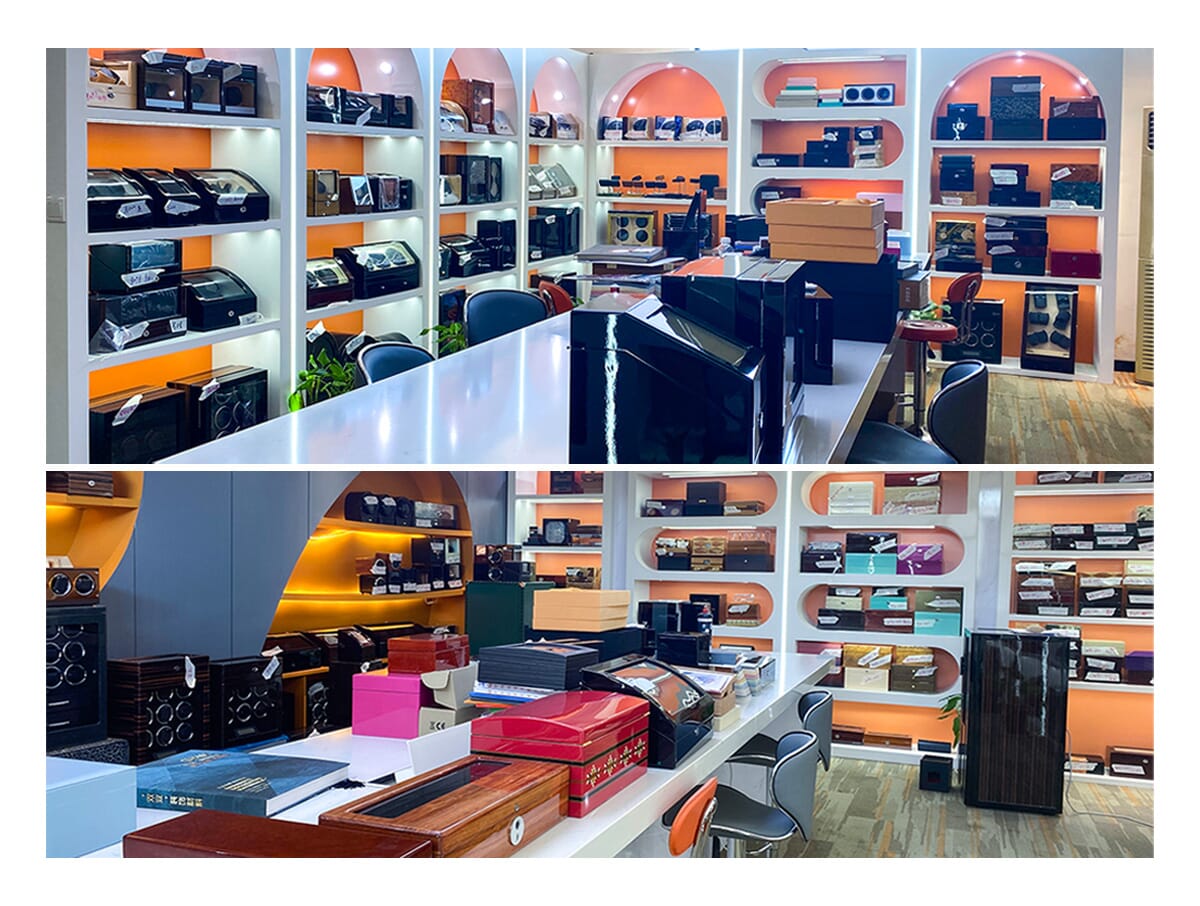
Before entering a long-term cooperation process, brand customers should carefully review the factory’s background, responsiveness, and apparent specialization. In practice, many buyers begin by examining the supplier’s about-us information to understand production capabilities, service orientation, and market focus. This step helps distinguish factories that truly specialize in jewelry packaging from those with only general gift box experience.
Communication quality is equally important. A source manufacturer that can ask precise follow-up questions, explain trade-offs clearly, and organize sample feedback efficiently is more likely to deliver a smooth cooperation experience over multiple production cycles.
How Small and Niche Brands Benefit From Source-Manufacturer Cooperation
Small and niche jewelry brands often face asymmetric constraints. They need excellent packaging because their brand image is still being established, but they may not yet have the volume or budget of larger companies. Direct cooperation with a source manufacturer can help solve this problem by improving both packaging quality and decision efficiency.
First, source-manufacturer cooperation can support smaller-scale innovation. By working with a Small batch processing custom jewelry box factory, niche brands can test premium packaging formats in controlled quantities. This reduces inventory risk while still allowing the business to present a professional, differentiated identity.
Second, direct cooperation can improve channel readiness. Wholesale buyers and boutique retailers often evaluate not only product design but also presentation quality. Professionally developed Jewelry Boxes, especially when paired with a retail-ready Jewelry Stand, can make a niche brand appear more mature, organized, and commercially viable.
Third, working directly with a manufacturer enables more informed scaling. As a brand grows, it can move from low-volume packaging tests to more structured packaging families, potentially introducing a Jewelry Box-Leather tier for premium collections while keeping standard formats for core SKUs. This staged approach supports sustainable brand development.
Actual Application Case: Packaging Cooperation for a Boutique E-Commerce Launch
An actual-style application scenario illustrates the value of early cooperation. Consider a boutique jewelry brand preparing to launch a curated online collection of rings and layering necklaces. The founder wants premium packaging to reinforce the brand’s minimalist design language but cannot justify a large packaging inventory before validating product-market fit.
By approaching a source manufacturer open to discussion and collaborative sampling, the brand develops a two-tier packaging system. Standard orders use compact rigid Jewelry Boxes with foil branding and precision-cut inserts. For limited-edition gift bundles and influencer partnerships, the brand adds a small quantity of upgraded Jewelry Box-Leather packaging. The manufacturer also supplies a simple Jewelry Stand for product photography and occasional pop-up events.
The packaging program gives the brand a more coherent visual identity across digital and physical touchpoints. Customer feedback highlights the professionalism of the unboxing experience, while the founder preserves cash flow by avoiding unnecessary large-volume procurement. This case shows how direct discussion with a source manufacturer can result in commercially rational packaging architecture.
Brand Cooperation Success Case: A Niche Gemstone Label Builds Retail Credibility
A fictional but realistic niche-brand case involves Aurelune Mineral, a small label focused on handcrafted gemstone jewelry inspired by geological textures. The brand had a strong product concept but weak retail presentation, relying on generic boxes and inconsistent pouches that reduced perceived value in boutique environments.
After initiating cooperation with a jewelry box source manufacturer, the brand reviewed the supplier’s about-us materials and requested a small-run development plan through a Small batch processing custom jewelry box factory approach. The resulting program included textured matte Jewelry Boxes for everyday items, a premium Jewelry Box-Leather format for collector pieces, and a portable Jewelry Stand for trade fairs and showroom meetings.
Within two sales cycles, the fictional brand improved its placement success with independent retailers. Buyers responded positively to the more unified presentation system, and the upgraded packaging helped justify premium price points. The success of the cooperation did not depend on packaging alone, but packaging became a critical signal of brand seriousness.
Brand Cooperation Success Case: Low-Volume Packaging for a Designer Bridal Studio
Another fictional case concerns Maison Elira, a niche bridal jewelry studio producing limited custom pieces for appointment-based clients. Because orders were highly variable and often made to specification, the brand needed packaging that conveyed exclusivity without forcing it into high-volume inventory commitments.
The studio entered direct cooperation with a source manufacturer that welcomed brand consultation and short-run development. Through a Small batch processing custom jewelry box factory workflow, the manufacturer produced modular Jewelry Boxes with interchangeable inserts for earrings, bracelets, and necklaces. For bridal sets, it developed an ivory Jewelry Box-Leather line with subtle metallic logo treatment. A refined Jewelry Stand completed the presentation system for in-studio consultations.
The fictional cooperation allowed the studio to align packaging procurement with appointment-driven demand, reduce unused stock, and create a more elevated presentation during private client consultations. In such contexts, direct manufacturer cooperation becomes a method of operational refinement as well as brand enhancement.
Implementation Recommendations for Brand Customers
Brand customers considering cooperation with a jewelry box source manufacturer should approach the process strategically rather than reactively. The following implementation principles can improve project outcomes:
- Prepare a complete packaging brief, including product dimensions, channel usage, target customer, expected quantity, and budget boundaries.
- Review the supplier’s about-us profile and request sample evidence relevant to jewelry rather than general packaging categories.
- Begin with a pilot order through a Small batch processing custom jewelry box factory model if demand is uncertain or if the brand is testing a new packaging concept.
- Use premium materials such as Jewelry Box-Leather selectively for high-margin or ceremonial product lines rather than for every SKU.
- Consider the full presentation ecosystem. If retail visibility matters, develop a matching Jewelry Stand along with the boxes.
- Evaluate prototypes not only for appearance but also for structural protection, shipping practicality, stacking efficiency, and repeat-order consistency.
- Build cooperation in stages, using market response and operational data to inform future packaging upgrades.
Common Risks to Avoid During Cooperation
Although direct cooperation offers many advantages, it also requires discipline. One common mistake is prioritizing visual novelty over functional performance. Attractive Jewelry Boxes that fail to protect products can create returns, damage, and customer dissatisfaction. Another is under-briefing the manufacturer, which often leads to avoidable revision cycles and inconsistent sampling results.
Brands should also avoid over-customizing too early. A more effective approach is often to begin with modular formats through a Small batch processing custom jewelry box factory and then scale customization complexity once demand patterns become clearer. This maintains flexibility while preserving professional presentation.
Conclusion
A jewelry box source manufacturer that welcomes brand customers to discuss cooperation provides far more than a quotation channel. It offers a collaborative pathway for developing packaging that supports brand identity, product protection, retail readiness, and controlled growth. For niche and emerging jewelry brands in particular, direct cooperation can reduce communication friction, improve development quality, and create packaging systems that are both distinctive and commercially sustainable.
Whether the requirement involves standard Jewelry Boxes, premium Jewelry Box-Leather formats, display-ready Jewelry Stand solutions, or phased development through a Small batch processing custom jewelry box factory, the most successful outcomes begin with informed discussion and structured collaboration. For professional buyers and brand owners, the clear recommendation is to treat packaging cooperation as a strategic business process rather than a routine sourcing task.
FAQ
Why should brand customers work directly with a jewelry box source manufacturer?
Direct cooperation reduces communication gaps, improves technical feedback, and helps ensure that packaging design, material selection, and production execution are aligned from the beginning of the project.
How can a small batch processing custom jewelry box factory help niche brands?
A Small batch processing custom jewelry box factory allows niche brands to order lower volumes, test packaging concepts, reduce inventory risk, and refine presentation before scaling up.
When is Jewelry Box-Leather the right choice?
Jewelry Box-Leather is particularly suitable for premium product lines, bridal collections, ceremonial gifting, and situations where tactile quality strongly influences perceived value.
Should Jewelry Stand products be developed together with Jewelry Boxes?
Yes. Coordinating a Jewelry Stand with Jewelry Boxes helps create a consistent visual system across packaging, display, and retail presentation.