In the world of horology, there’s a saying: “Buying a watch is easy; maintaining it is hard.” For watch enthusiasts who own multiple automatic timepieces, a watch winder (or automatic winding box) is an almost essential accessory. However, with winders on the market ranging from tens to tens of thousands of dollars, what exactly is the difference? How can you select a winder that protects your watch while also reflecting your taste?
This guide provides comprehensive buying advice from four dimensions: technical principles, core selection criteria, brand tier comparisons, and industry FAQs.
Part 1: Deep Dive – Why Does a Mechanical Watch Need a Winder?
1. To Avoid the Hassle of Reset After Stopping
Automatic mechanical watches rely on the motion of the wrist to rotate the rotor inside the movement, thus winding the mainspring to store power. If left unworn for an extended period, once the power reserve is depleted (typically 38-72 hours), the watch will stop. For watches with complex functions like perpetual calendars, annual calendars, or moon phases, the process of resetting the time and date is extremely tedious. Forcing a date adjustment during the “danger zone” hours can even damage the movement.
2. The “Lifeline” for Movement Lubricants
The mechanical watch movement is filled with fine lubricating oils. If a watch remains completely stationary for a long time, these oils can become unevenly distributed due to gravity, or even dry out and congeal. Regularly keeping the movement active via a winder helps ensure the lubricants evenly coat the gears and bearings, maintaining the movement’s optimal performance.
3. Display and Collection Value
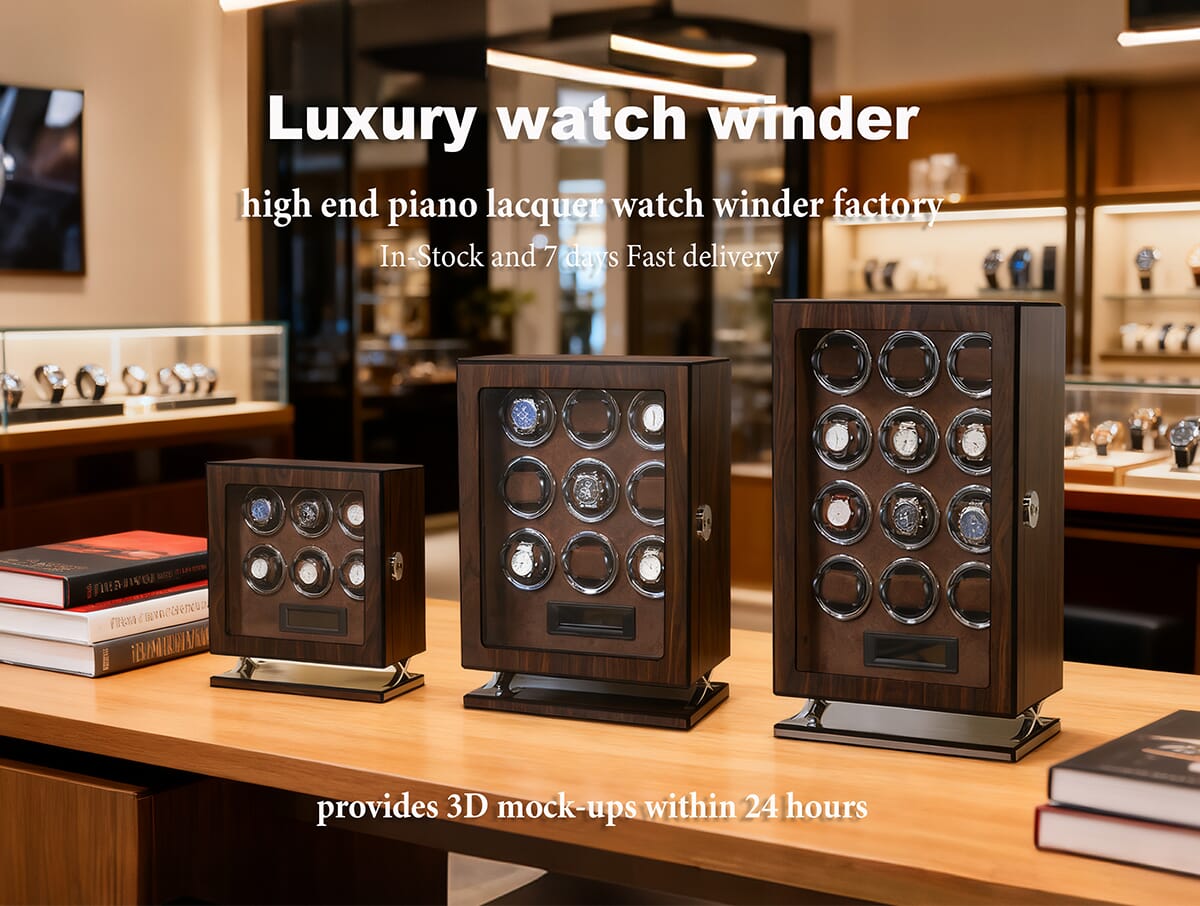
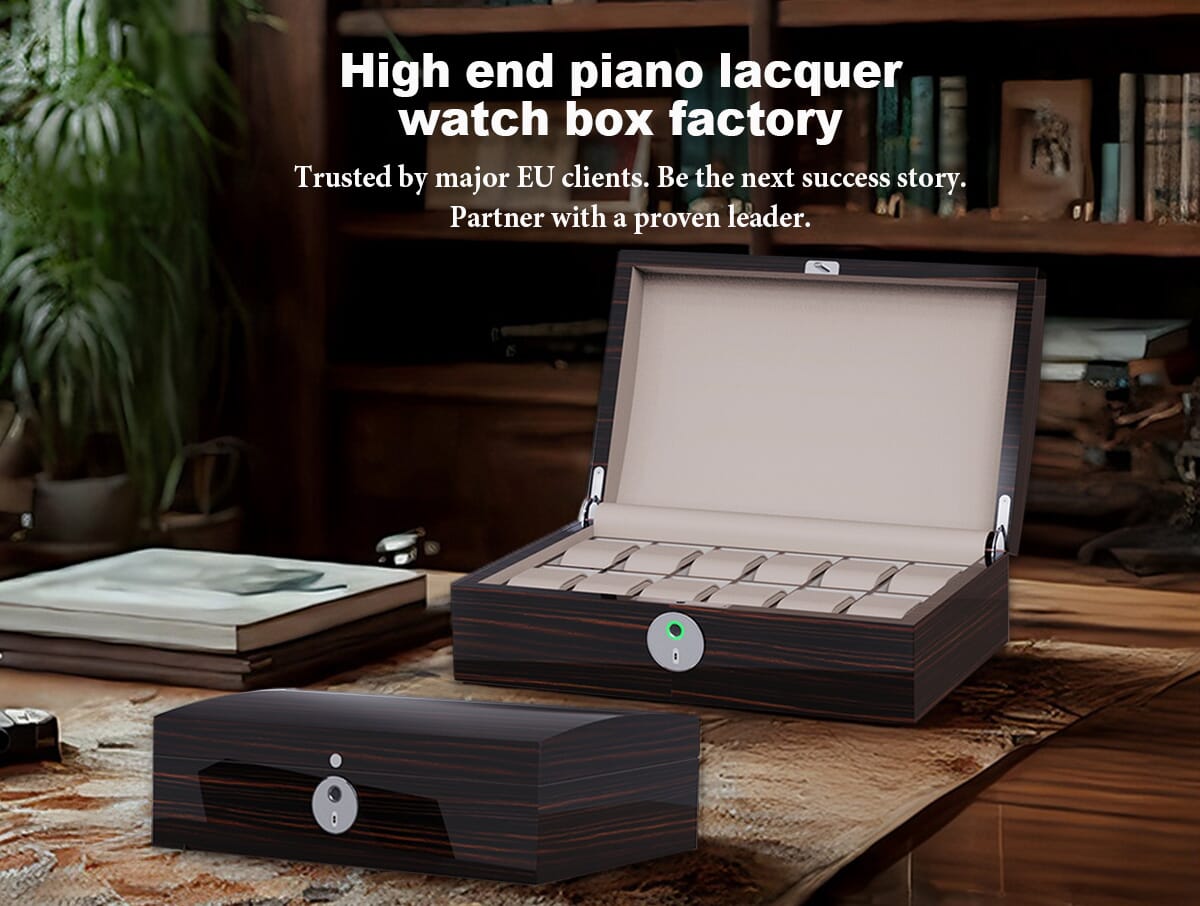
For high-end collectors, a winder is not just a tool but a piece of display art. High-quality piano lacquer wood, carbon fiber materials, and integrated LED lighting allow your prized watches to shine brilliantly even when not being worn.
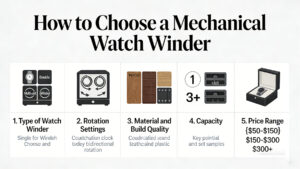
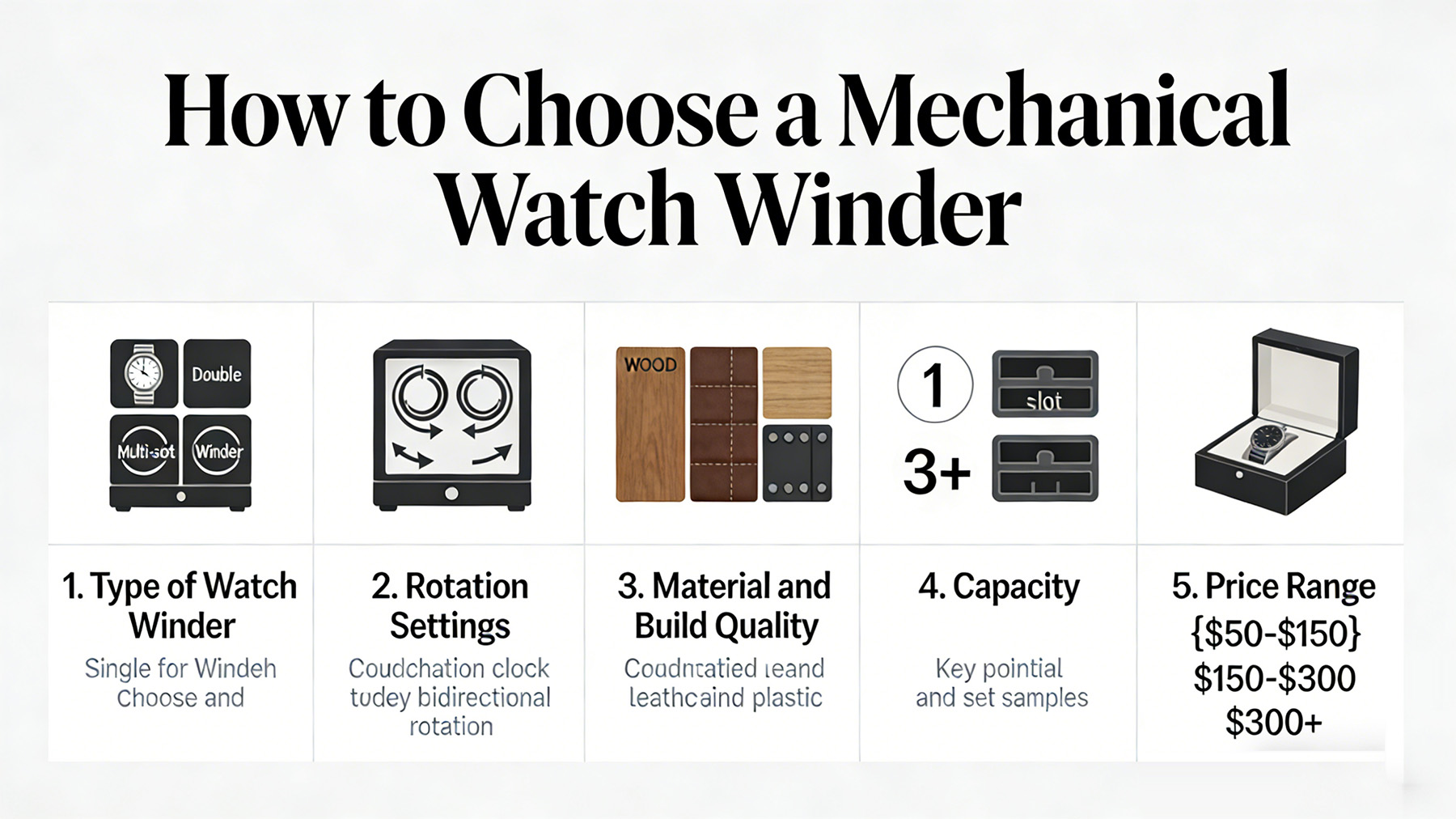
Part 2: The Five “Hardcore” Criteria for Choosing a Watch Winder
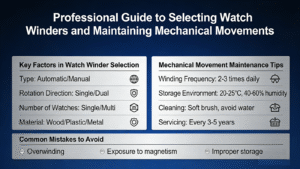
Choosing a winder should never be about looks alone. The following five points determine whether it’s a “watch’s best friend” or a “watch killer.”
1. Magnetic Shielding Capability (Anti-Magnetism is Paramount)
The power source of a winder is an electric motor, which generates a magnetic field during operation. Mechanical watches fear magnetization most; once the hairspring is magnetized, timekeeping can become drastically fast, or the watch may even become unusable.
- Buyer Beware: Steer clear of cheap products where the motor is directly exposed below the winding cup.
- Pro Advice: Choose brands that employ magnetic shielding technology (e.g., a metal shielding can). High-quality winders maintain a physical distance of at least 5-10 cm between the motor and the watch position and control magnetic field strength within safe limits.
2. TPD Adjustment Capability (Turns Per Day)
TPD (Turns Per Day) refers to the number of rotations the winder makes per day.
- Too Low: Insufficient power replenishment; the watch may still stop.
- Too High: The mainspring remains under constant high tension, accelerating movement wear (although there is a slip-spring protector, frequent overwinding is not ideal).
- Key Buying Point: Look for models offering multiple adjustable settings, such as 650, 750, 850, and 1000 TPD. For example, a Rolex Caliber 3235 typically recommends 650 TPD.
3. Rotation Direction Modes (To Match Different Movements)
Different movements have different winding logic:
- Clockwise (CW): Some movements (e.g., certain Jaeger-LeCoultre, Patek Philippe) only wind in one direction.
- Counter-Clockwise (CCW): Required by a few specific movements.
- Bi-directional Alternating (Bi-Dir): The optimal choice for most modern movements (e.g., Rolex, Omega).
- Buying Advice: The winder must have the function to switch between “Left, Right, and Left-Right Alternating” modes.
4. Motor Quality & Noise Performance
Winders are often placed in bedrooms or studies, making noise level crucial.
- Industry Benchmark: Japanese Mabuchi motors. Known for being ultra-quiet, low-energy, and long-lasting.
- Standard: Operating noise should be below 20 decibels (almost inaudible).
5. Cushion/Pillow Design (Protecting the Strap)
- Material: Choose high-resilience memory foam or high-quality microfiber leather. Avoid hard plastic that can scratch straps.
- Adaptability: Should fit both large steel-bracelet watches (for larger wrists) and slender leather-strap watches without stretching or damaging the band.
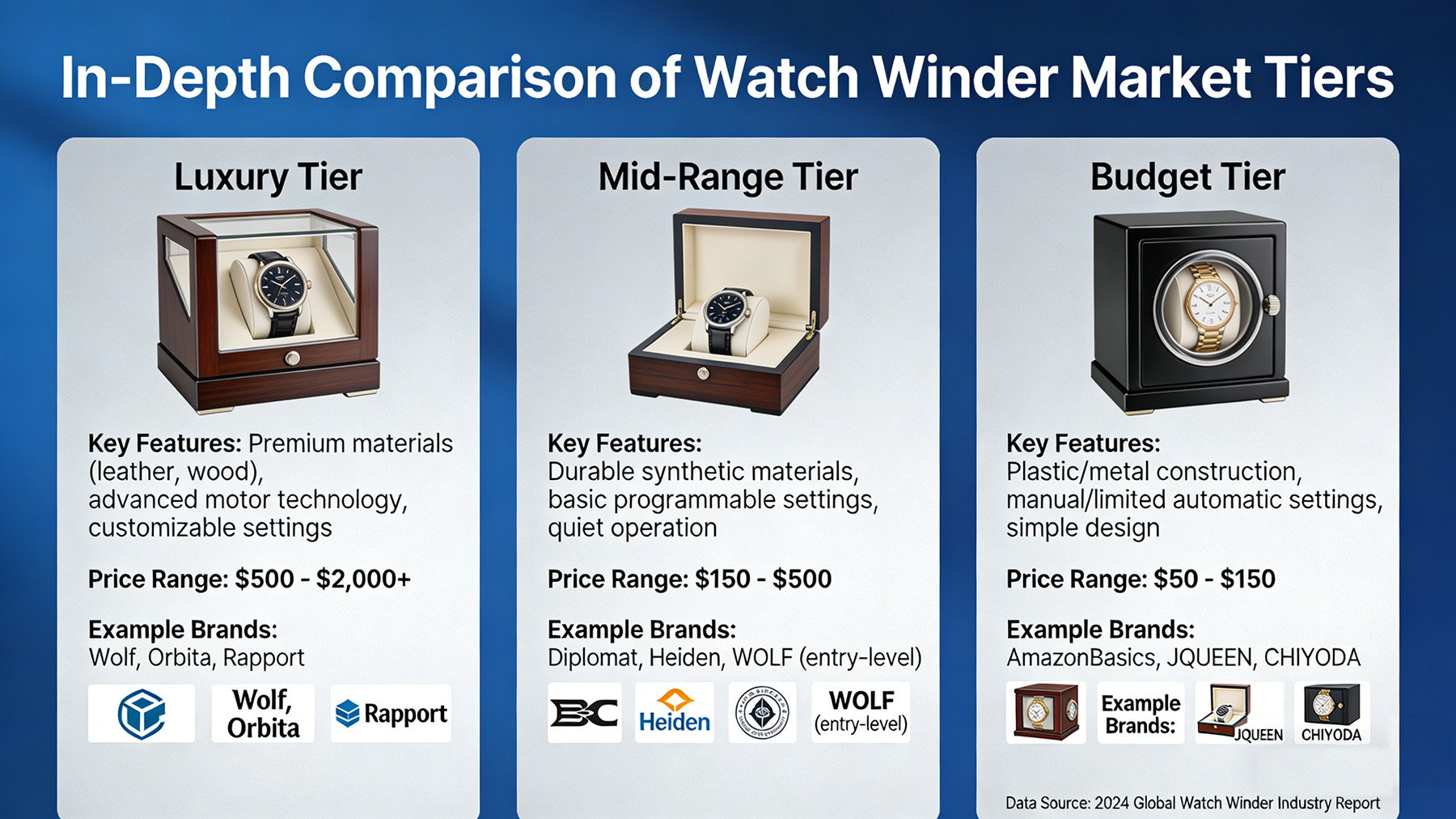
Part 3: In-Depth Comparison of Watch Winder Market Tiers
For easier decision-making, we compare market winders across three tiers:
| Feature | Entry-Level ($15 – $60) | Professional Tier ($120 – $450) | Luxury Tier ($750 – $7,500+) |
|---|---|---|---|
| Motor Type | Unbranded Chinese DC motor | Japanese Mabuchi | Swiss Custom / Brushless Precision |
| Anti-Magnetic | Very weak, risk of magnetization | Professional metal shielding layer | Aerospace-grade materials / Zero-field design |
| TPD Settings | Fixed speed, non-adjustable | Independent, multi-step adjustment | Smart-connected / Precise single-digit adjustment |
| Cup Control | Multiple cups share one motor | Each cup independently controlled | Independent control + Home Position Stop |
| Build & Finish | Plastic or synthetic leather | Solid wood, piano lacquer, microfiber leather | Carbon fiber, genuine leather, ballistic glass, safe-integrated |
| Lifespan | 1-2 years (prone to noise) | 5-10 years | Lifetime quality / Serviceable |
| Target User | Beginners / Trial users | Mainstream luxury watch owners (Rolex, Omega, etc.) | High-end collectors / Owners of complex watches |
Part 4: Industry FAQs – Answering All Your Questions
Q1: Does a watch winder cause wear and tear on my watch?
A: Scientific winding (appropriate TPD and intermittent rotation) causes far less wear than daily use. Not using a winder can lead to lubricant drying, potentially causing more wear upon restart. The key is to avoid running it 24/7 without pause.
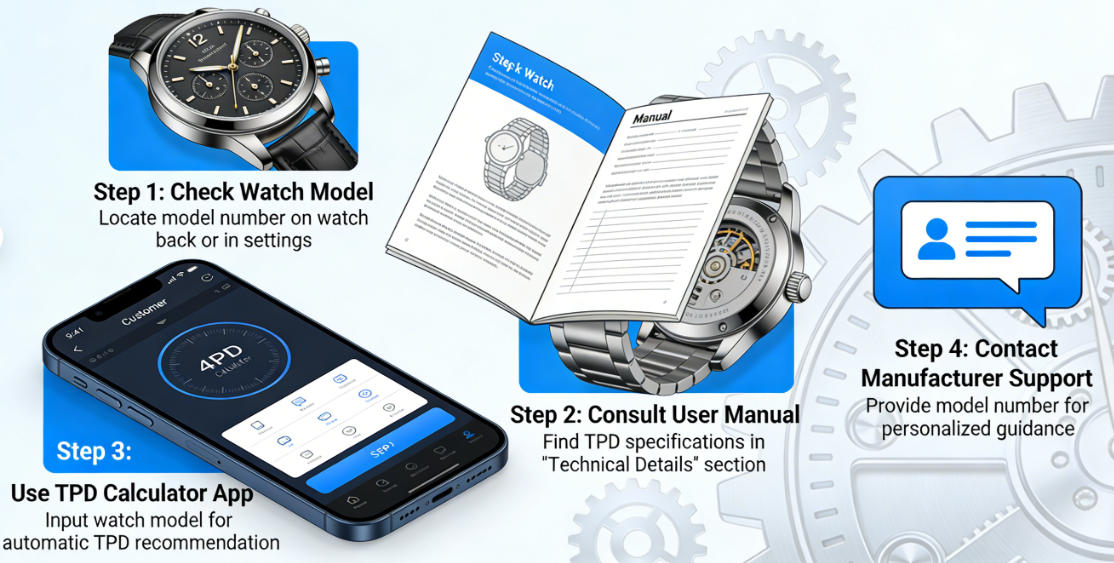
Q2: How do I know what TPD setting my watch needs?
A:
- Rolex: Most models require ~650 TPD, Bi-directional.
- Omega: Many Co-Axial movements suggest 650-800 TPD, Bi-directional.
- Patek Philippe: Varies significantly. Many require ~800 TPD, Clockwise or Counter-Clockwise.
- Find Out: Check the database on Orbita’s website or consult your authorized dealer.
Q3: Why are some winders very cheap while others cost tens of thousands?
A: The price gap comes from three main areas:
- Motor Precision: High-end motors operate with extreme smoothness and zero vibration.
- Materials & Brand Premium: Luxury brands (e.g., Wolf 1834, Buben & Zörweg) use top-tier handcrafted leathers and security-grade locking mechanisms.
- Anti-Magnetic Technology: This is an invisible cost but the core technical barrier.
Q4: Can I put a watch winder inside a safe?
A: Yes. Consider models that support battery power or have built-in rechargeable lithium batteries. Also, ensure the safe interior is dry to avoid moisture affecting the watches.
Q5: What is the “Home Position Stop” function?
A: A hallmark of high-end winders. Whenever rotation stops, the watch automatically returns to a vertical position with 12 o’clock facing upwards, perfect for display.
Part 5: Conclusion – My Recommendations
- If you own 1-2 entry-level automatic watches: A $50-$75 brand-name winder with a Mabuchi motor is sufficient.
- If you own a Rolex, IWC, or Jaeger-LeCoultre: Definitely choose a professional-tier brand in the $150-$300 range, with independent TPD adjustment and a good reputation for anti-magnetic protection.
- If you collect multiple perpetual calendars or high-value timepieces: Directly consider luxury-tier brands or custom winding cabinets.
Choosing a watch winder is a one-time investment. Saving a few hundred dollars at the risk of magnetizing or prematurely wearing out a watch worth tens of thousands is clearly unwise.
Keywords for Search: Watch Winder Buying Guide, Automatic Watch Winder Reviews, TPD Settings, Mechanical Watch Maintenance, Mabuchi Motor Anti-Magnetic.