If you’ve ever held an antique or vintage jewelry box, you know it’s more than just a container — it’s a piece of history, craftsmanship, and personal legacy. Whether you’re a seasoned collector, passionate about Victorian inlays and Art Deco designs, or simply hunting for a unique, timeless gift, understanding these heirlooms goes beyond surface beauty. In this guide, we’ll explore how to spot authentic quality, appreciate the stories woven into every delicate lining, and where to find modern alternatives—like those from Twing-pak—that honor tradition while meeting today’s needs. Ready to unlock the charm and secrets behind these treasured keepsakes? Let’s dive in.
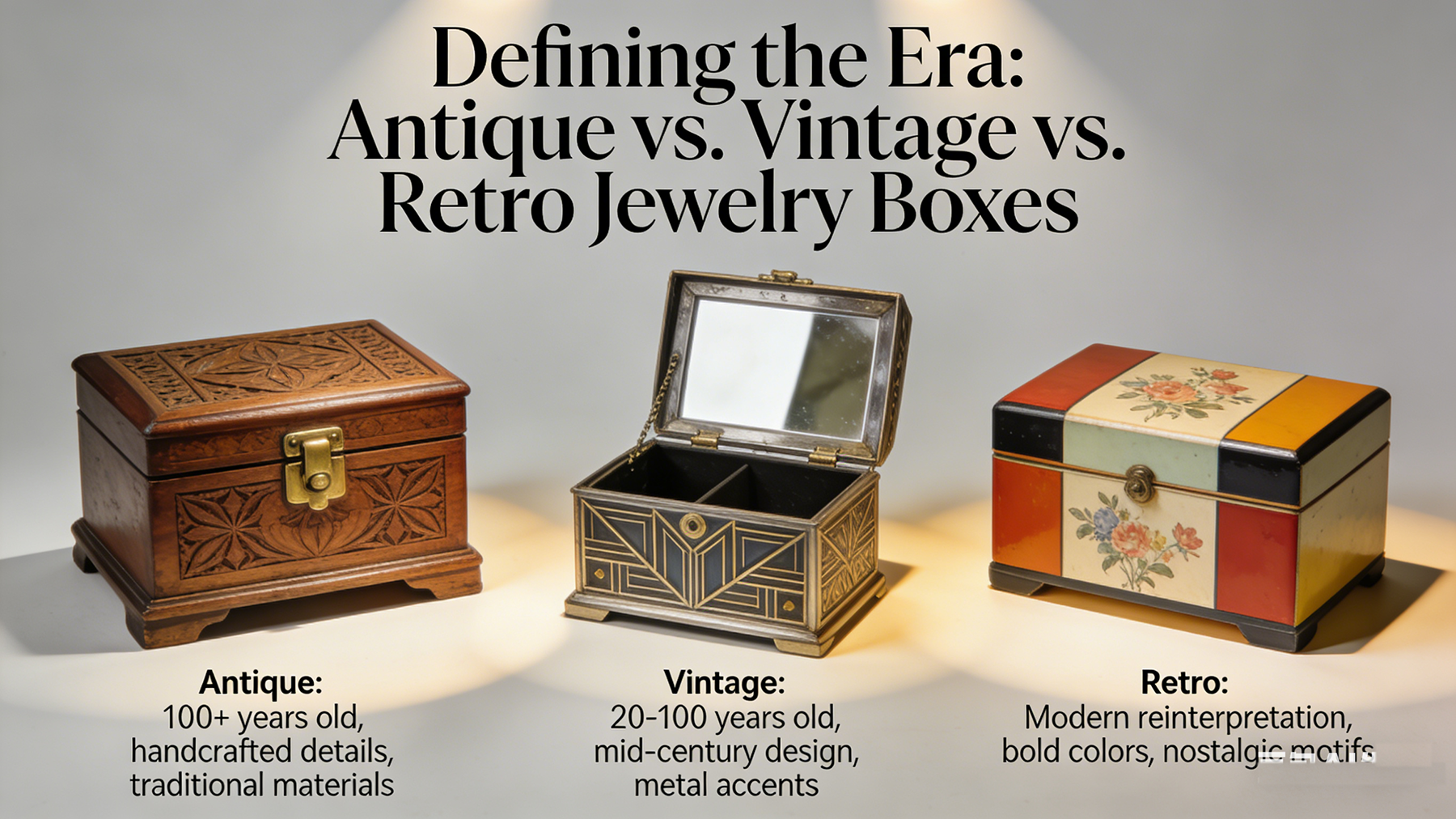
Defining the Era: Antique vs. Vintage vs. Retro Jewelry Boxes
When diving into the world of antique and vintage jewelry boxes, it’s easy to get confused by the terms. So, what separates an antique from vintage or retro?
| Era Term | Age Range | Key Features & Notes |
|---|---|---|
| Antique | 100+ years (pre-1920s) | Scarce, heavy historical value; handcrafted with rich woods like rosewood or walnut; often features brass details and intricate inlay. These are true heirloom jewelry storage pieces. |
| Vintage | 20–99 years (1920s–1990s) | Reflects evolving styles from Art Deco geometric shapes to mid-century sleek designs. This is the collector’s sweet spot for charm and uniqueness. |
| Retro | Generally 1940s–1970s | A subset of vintage, often characterized by bold colors and quirky designs inspired by past trends. |
Why Does This Matter?
- Antique jewelry boxes—like an ornate Victorian wooden trinket box—carry stories and craftsmanship that modern pieces can’t replicate.
- Vintage pieces showcase how jewelry box styles evolved, from the floral whiplash curves of Art Nouveau to the sleek teak and leatherette of mid-century modern.
- And let’s not forget the vintage-inspired styles today. Brands like Twing-pak honor traditional aesthetics but improve on fragility with modern, durable materials and smart compartments that help you organize without worry.
Whether you’re hunting for an antique marquetry box or considering a vintage celluloid ring box, knowing these eras helps you identify not just the age but the story behind your heirloom jewelry storage.
A Journey Through Time: Key Styles and Eras
Antique and vintage jewelry boxes tell stories through their design, reflecting the moods and materials of their times.
Victorian Era (1837–1901)
This period favored rich, dark woods like rosewood and walnut, often featuring intricate inlay work and brass-bound corners. Interiors were typically lined with velvet or silk, sometimes tufted, offering a plush home for heirloom jewelry. Some boxes doubled as writing slopes, combining beauty with practical use—a clever crossover that hints at the era’s elegance and functionality.
Art Nouveau (1890–1910)
Moving into Art Nouveau, designs became more organic and flowing. Expect floral motifs, whiplash curves, and natural elements shaped into pewter or silver-plated jewelry boxes. This style is perfect for those who appreciate feminine, nature-inspired touches on an antique marquetry box.
Art Deco (1920s–1930s)
Art Deco rings in bold geometric shapes and vibrant colors. Jewelry boxes from this era often feature materials like Bakelite or celluloid, mirror accents, and a notable rise of the compact style. This is the era of the vintage celluloid ring box, a favorite among collectors for its striking and sleek look.
Mid-Century Modern (1950s–1960s)
Post-war design shifted to simplicity and function—think sleek teak wood with leatherette exteriors. Multi-tiered ‘mele’ style boxes with automatic trays became popular, perfect for organizing lots of pieces in style. These jewelry boxes don’t just look good; they were designed for everyday use. For a modern take inspired by these classics, products like the Twing-pak jewelry storage box blend vintage aesthetics with practical organization.
Each era has its unique charm, whether it’s the ornamented Victorian wooden trinket box or a streamlined mid-century musical jewelry box, offering something special for every collector or jewelry lover.
Materials That Tell a Story
When it comes to antique and vintage jewelry boxes, the materials used can reveal a lot about their quality and origin.
Wood & Marquetry
High-quality wooden jewelry boxes often showcase solid wood or fine veneers. Solid woods like rosewood or walnut are prized for durability and rich color. Veneers, including exquisite parquetry patterns or delicate mother-of-pearl inlay, add artistic detail but require careful inspection to spot signs of wear or repair. Authentic antique marquetry boxes stand out for their meticulous craftsmanship, where small pieces of wood or shell create intricate designs.
Metals: Ormolu & Silver
Many older jewelry boxes feature ormolu—a gilded bronze or brass decorative metal—or sterling silver accents. Patina, the natural aging layer, can bring character, but knowing when to polish and when to preserve it matters. Polishing too aggressively might erase valuable signs of age or maker’s marks, while leaving certain tarnishes intact helps maintain authenticity and charm.
Interior Linings Matter
The inside lining is just as important as the exterior. Traditional linings like silk, velvet, or satin protect delicate heirloom jewelry from scratches and damage. Check the condition of these fabrics because degraded or musty linings can harm jewelry. A well-preserved velvet-lined jewelry case not only cushions your pieces but also speaks to the box’s quality and care over time.
For those who appreciate vintage style with modern practicality, products like Twing-pak offer updated linings and organizational features that honor tradition while protecting your treasures. Their designs optimize fabric durability and anti-tarnish qualities, blending old-world elegance with everyday use.
Whether you’re hunting for an estate sale find or restoring a treasured piece, understanding these materials helps you pick a jewelry box that truly stands the test of time.
The Collector’s Eye: How to Identify Quality and Authenticity
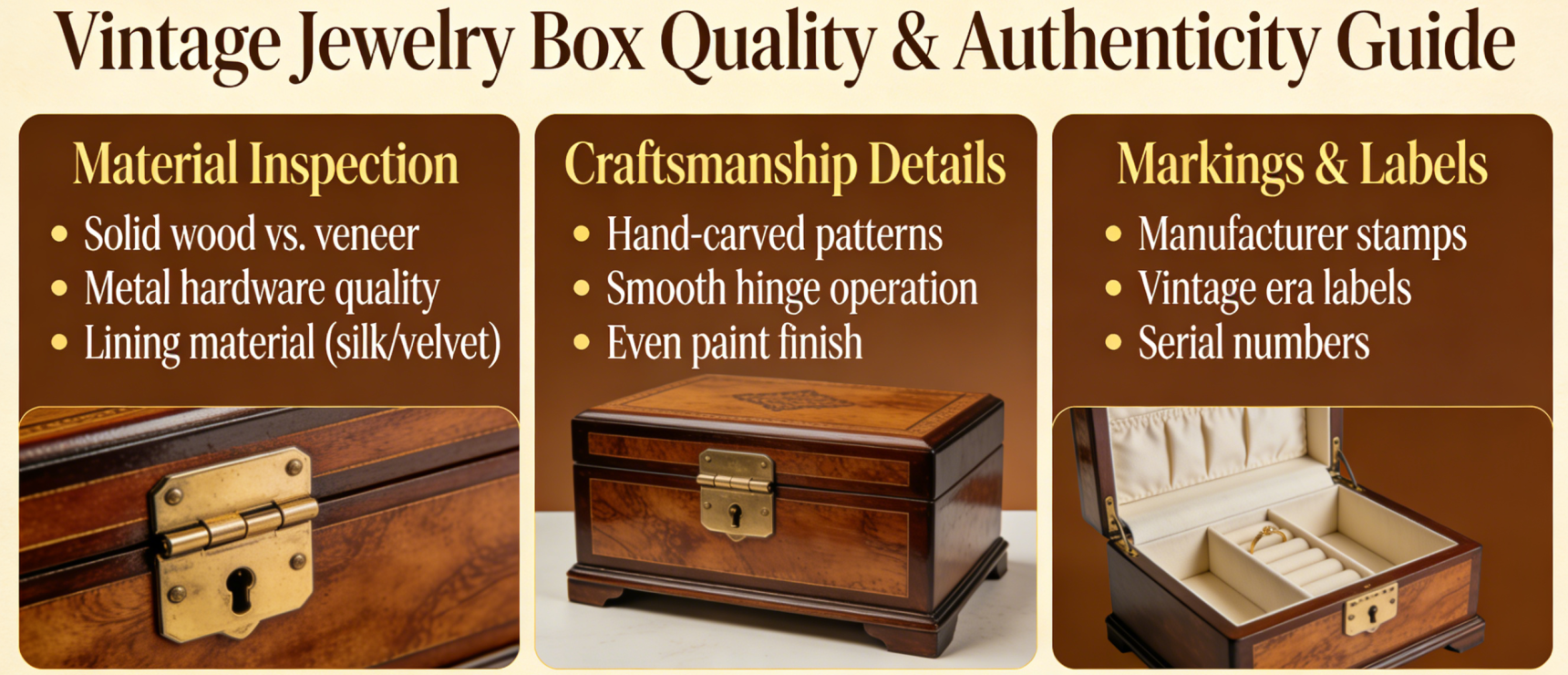
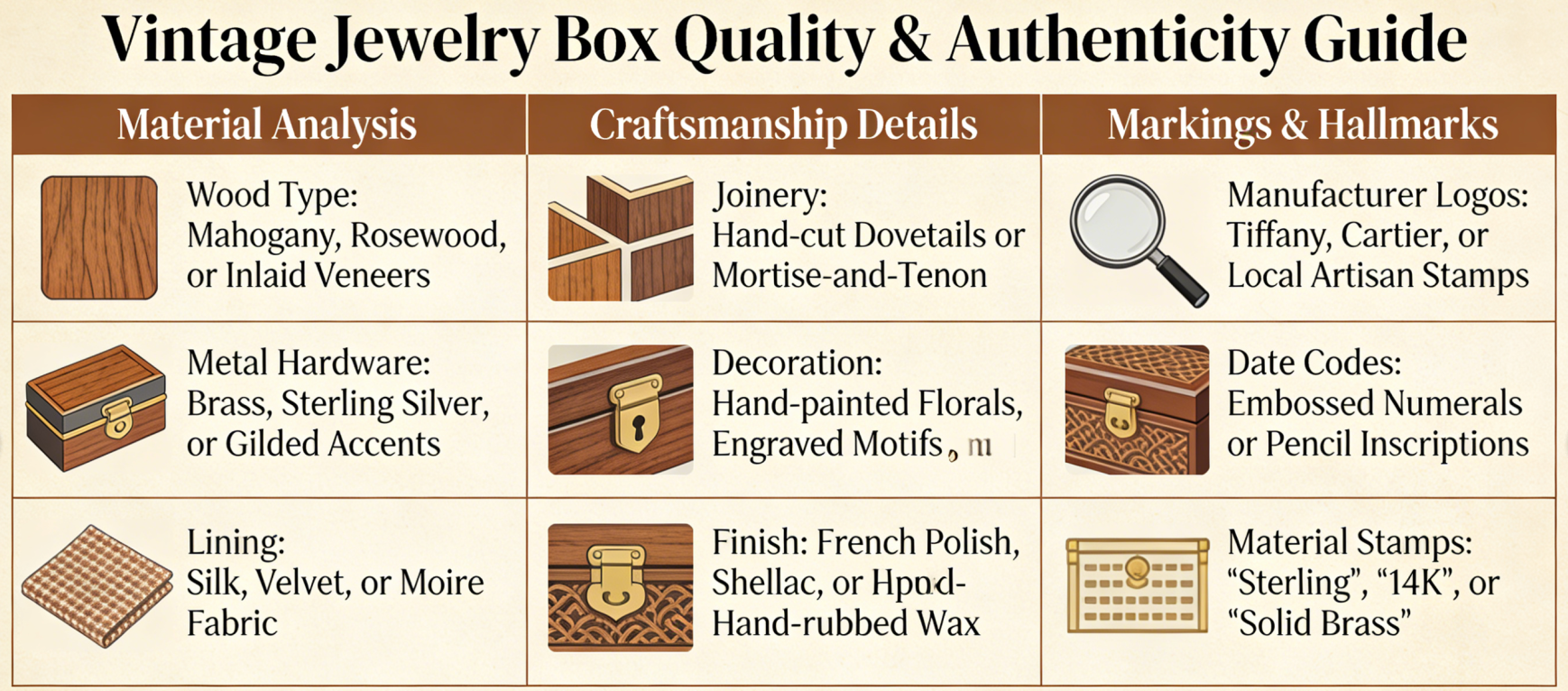
When hunting for an antique or vintage jewelry box, knowing how to spot genuine quality and authenticity is key.
Check the Joinery:
Look closely at the box’s construction. True antique jewelry boxes often feature dovetail joints—interlocking wood pieces that show expert craftsmanship and durability. If you see glue or staples instead, that’s a sign it might be a newer piece or lower quality.
Hardware Inspection:
Examine hinges, locks, and escutcheons carefully. Original hardware should feel solid and fit perfectly. Working keys add value and confirm the piece’s authenticity. Loose or replaced metal fittings might tell you it’s been repaired or altered.
Maker’s Marks:
Look inside lids or on the bottom of the box for stamps, engravings, or labels. These hallmarks reveal the maker or manufacturer and help date the jewelry box. Recognizing these can give you confidence in its provenance and often its worth.
The ‘Sniff’ Test:
Don’t overlook the scent. Vintage velvet lined jewelry cases or antique marquetry boxes sometimes have a musty or moldy odor, especially if stored poorly. This can indicate fabric deterioration or the need for restoration—something important for long-term heirloom jewelry storage.
Applying these checks helps collectors and enthusiasts avoid fakes and ensures you bring home a genuine piece with both beauty and history. For combining vintage charm with modern functionality, check out Twing-pak’s storage solutions that honor tradition while offering practical organization.
Restoration and Care: Preserving Your Heirloom
When it comes to restoring and caring for antique and vintage jewelry boxes, gentle handling is key to preserving their charm and value.
Cleaning Delicate Interiors:
- Use a soft vacuum brush attachment to carefully remove dust from velvet lined jewelry cases or silk interiors.
- Avoid harsh cleaning agents; instead, spot clean with a mild fabric cleaner on a cotton swab if needed.
- Keep moisture minimal to prevent mold or fabric deterioration over time.
Wood Preservation:
- Choose natural beeswax polish over harsh chemical products to nourish and protect wood without stripping patina.
- Apply beeswax sparingly with a soft cloth, buffing to bring out the color in antique marquetry boxes or rosewood surfaces.
- Avoid excessive moisture or abrasive cleaning, which can damage delicate finishes.
Hardware Maintenance:
- Lubricate old hinges and locks lightly with a tiny drop of mineral oil or graphite powder to keep them working smoothly.
- Be careful not to let oil seep onto wood or fabric; use a fine applicator and wipe away any excess.
- Check that keys or escutcheons remain intact—these small details add to the heirloom jewelry storage’s authenticity and function.
For a modern touch that respects vintage elegance, explore Twing-pak’s range of handcrafted jewelry boxes featuring durable hardware and protective interiors, designed for daily use while honoring classic style. Discover options on their custom wooden jewelry box collection for preservation-friendly storage solutions.
Twing-pak: Bridging Historical Elegance with Modern Utility
Antique and vintage jewelry boxes charm us with their history and style, but many lack the thoughtful compartments we need today, like ring rolls or earring studs. This is where Twing-pak steps in.
Twing-pak’s Design Philosophy
- Vintage Look, Modern Function: Combines classic beauty with features like anti-tarnish linings to protect your precious pieces.
- Organized Storage: Clever compartments designed for rings, earrings, watches, and more.
- Durability: Built tough for everyday use without losing the vintage soul.
| Feature | Antique/Vintage Boxes | Twing-pak Jewelry Boxes |
|---|---|---|
| Ring Rolls | Rare or missing | Included for secure storage |
| Anti-Tarnish Lining | Usually none | Yes, helps prevent metal tarnish |
| Structural Integrity | Can be fragile or worn | Sturdy, made for daily use |
| Design Style | Historical, ornate | Vintage-inspired, practical |
Choosing new, like a Twing-pak jewelry storage box, means enjoying the timeless look you love while benefiting from modern convenience and protection. It’s perfect for anyone wanting heirloom style with today’s usability.
Where to Find Hidden Gems
If you’re hunting for an antique or vintage jewelry box, knowing where to look can make all the difference. Estate sales and auctions are goldmines for authentic heirloom jewelry storage pieces. These events often feature Victorian wooden trinket boxes, antique marquetry boxes, and rare finds like ormolu casket boxes that aren’t available anywhere else.
Antique shops give you the chance to inspect jewelry boxes in person, checking details like velvet lined interiors or mother-of-pearl inlay. But don’t overlook online marketplaces like Etsy and eBay, where you can browse hundreds of vintage celluloid ring boxes and mid-century musical jewelry boxes from the comfort of home. Just be sure to review seller ratings and photos closely to avoid surprises.
Pricing varies widely based on age, condition, rarity, and maker’s marks. Expect to pay more for genuine antique pieces (100+ years old) with intact joinery and original hardware. Vintage jewelry boxes from the mid-20th century often come at friendlier prices but still score high on style and function. When buying, balance your budget with the quality and historical value you want.
For those interested in blending vintage charm with modern functionality, explore Twing-pak storage solutions that combine traditional aesthetics with smart designs built for everyday use.