A cigar humidor can look perfect in a photograph and still fail in a customer’s home. The failures are rarely dramatic: a lid that no longer seals, a hygrometer that reads comfortably while the cigars slowly dry out, a cedar tray that warps after one humid summer, or hardware that marks the wrapper. All of these are caught by inspection, not by description. This checklist from Guangzhou T.wing-Pak Mfg Co., Ltd. sets out what to verify at sample stage and again before a shipment is accepted, written for importers, distributors and brand teams who cannot stand beside the production line.
The principle is simple: agree the standard in writing before production, then inspect against that standard rather than against memory. A signed sample, a short list of measurable checks and a clear defect threshold turn a subjective argument into a decision both sides can make. If you are new to the product category, start with our cigar humidor storage guide for the basics of how humidors work, then use this checklist to control quality.
Agree the Standard Before Production
Inspection cannot begin with a finished box. It begins with an approved sample and a written specification that records the core material, the surface treatment, the cedar grade, the humidity system, the hardware finish, the logo method and the packing contents. Where a detail is open, mark it as open and agree who will decide it and by when. A supplier who knows your top priorities can recommend where to spend and where to save; a supplier who knows nothing will build the safe, expensive version.
Keep a retained, signed sample as the production reference. When a batch is questioned six months later, that sample ends the discussion quickly. Without one, everyone remembers a different version of “approved.” Our product sampling and design guide lists what to include in a brief and how to handle sample revisions.
Incoming and In-Process Checks
Quality is built into a humidor long before final inspection. Wood moisture is a good example: material that is too wet when machined can shrink and open gaps later, while material that is too dry can swell after it absorbs humidity. We work with wood in the 12 to 14 percent range and use relief grooving in panels and structural members to resist warping. Ask your supplier what they measure, at what stage and to what tolerance.
| Stage | What to check | Why it matters | How to verify |
|---|---|---|---|
| Raw material | Wood moisture content, cedar grade and aroma | Prevents warping, gaps and odour problems | Moisture meter reading; cedar sample approval |
| Cabinet assembly | Panel gaps, joint alignment, hinge seats | Controls both appearance and seal quality | Visual check against signed sample; feel by hand |
| Lining and tray | Cedar fit, divider positions, smooth edges | Avoids rough surfaces that touch cigars | Run a cotton pad over interior surfaces |
| Humidity system | Hygrometer calibration and humidifier fit | Determines whether the stated humidity is real | Salt-test the hygrometer; repeat reading |
| Finish | Coat count, dust, runs, edge coverage | Affects both looks and long-term durability | Side-light inspection on every visible face |
| Final packing | Insert fit, accessories, carton protection | Decides condition on arrival | Drop test and visual unpack of a carton |
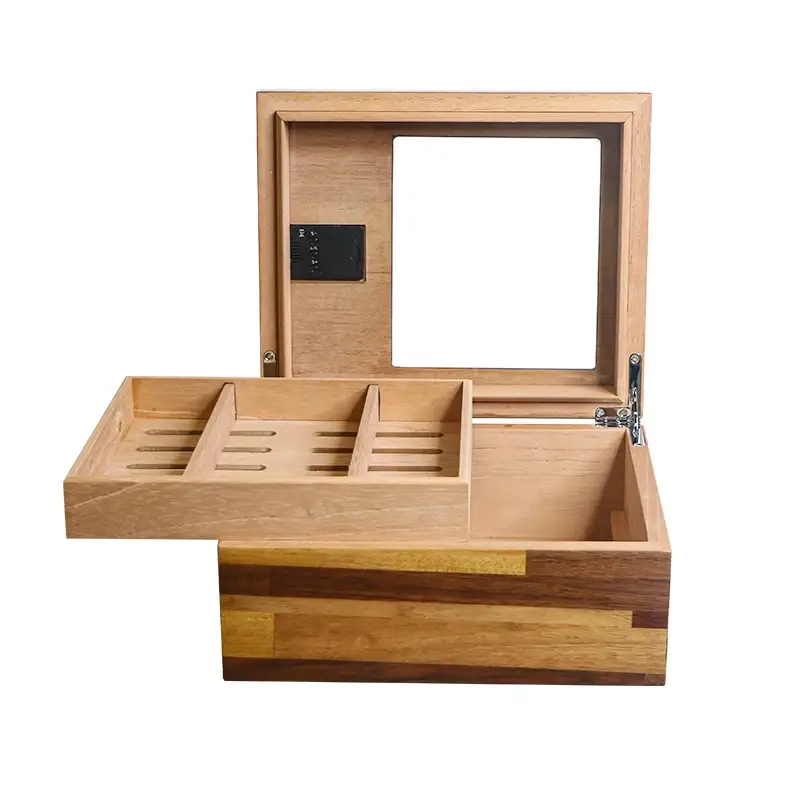
Our Spanish cedar interior specification describes the lining grades and construction details worth writing into a brief. If the cabinet uses a high-gloss finish, the number of coats and the sanding between them should also be stated, because a finish quoted as “piano lacquer” can mean very different amounts of work. The 12-coat piano lacquer process explains the difference.
Functional Tests You Can Repeat
Functional checks are the part of inspection most often skipped, because they take time. They are also the checks that predict complaints. Repeat them on the sample and on random units from a production batch:
- Seal test. Close the lid on a thin strip of paper at several points around the opening and pull gently. Even resistance at each point suggests a consistent seal; a loose section shows where the lid is out of true.
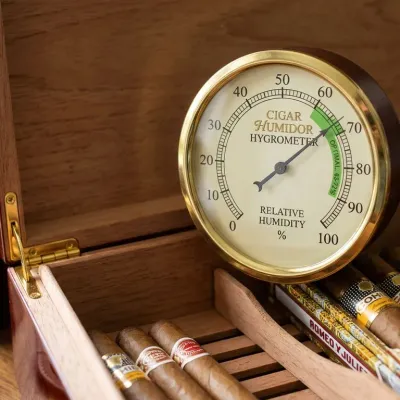
- Hygrometer check. Compare the reading with a calibrated reference at a stable humidity. A hygrometer that is out by ten points gives false confidence, so calibration matters more than the instrument’s appearance.
- Humidity hold. Condition the humidor, close it and record the reading over several days without opening it. A unit that loses humidity quickly has a sealing problem that no amount of accessory can fully fix.
- Hinge and drawer cycle. Open and close the lid or drawer repeatedly and check that alignment holds and no screw loosens.
- Lock and key. Confirm that every lock operates smoothly and that keys are matched to the correct boxes in a multi-unit order.
Remember that the humidor supplies the environment; the cigar brand or manufacturer defines what a particular cigar needs. Responsible product copy points customers to that guidance rather than promising a single perfect setting for every cigar. Our humidor maintenance guide covers the care instructions that usually accompany a product.
Appearance and Packing Checks
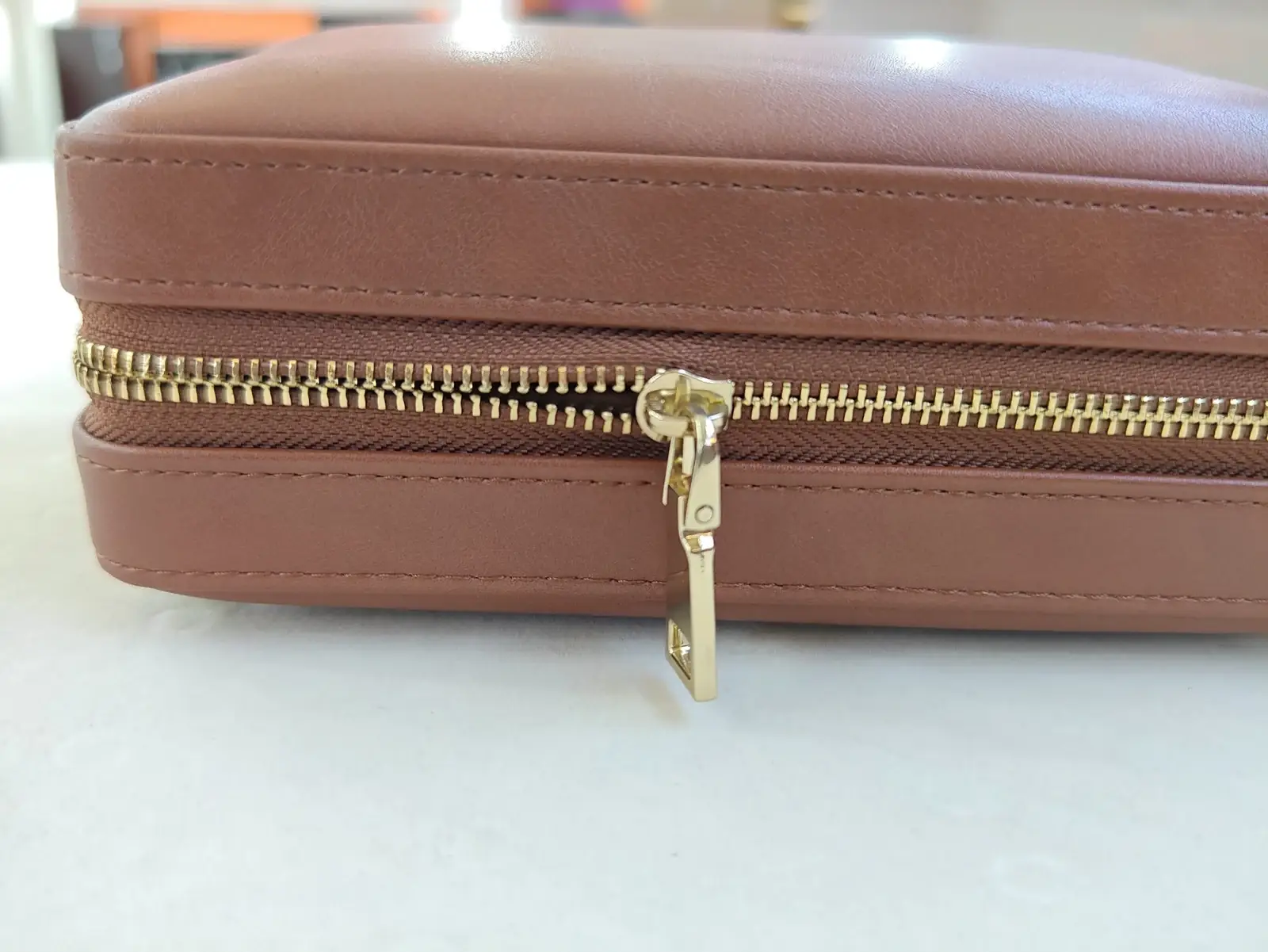
Appearance inspection is best done under side lighting, which reveals dust in the lacquer, uneven sheen and edge coverage problems that flat light hides. Check the exterior faces, the corners, the lid edges and the interior corners of the tray. Look specifically at the transitions between materials: where cedar meets lacquer, where hardware meets wood and where a window meets its frame.
Then unpack a full master carton as a customer would. Confirm that the insert holds the unit securely, that protective sleeves or corner guards are in the right places, that the manual and accessories are present, and that nothing rattles when the carton is moved. A drop test on one carton from a representative height will reveal weak points before a full order ships. Our OEM packaging guide describes the packing options that can be specified line by line.
Sampling Plan and Defect Threshold
Decide in advance how many units will be checked and what counts as a failure. A common approach is to inspect a defined sample from each batch, with a zero-tolerance rule for structural faults such as misaligned lids, broken hinges, sharp interior edges or a failed seal. Minor cosmetic points can be graded, but the standard for each grade should be written and, where possible, illustrated with reference photos.

As a buyer you can inspect the lot yourself or appoint a third party. State this in the order so there is no surprise at the port. Whatever supplier you use, ask how quality is controlled during production, not only at the end, and request the inspection record for your batch. The importer’s guide to humidor manufacturers explains how to assess a supplier before an order is placed.
Common Questions
What is the most common humidor defect?
Seal problems are the most common and the most consequential. A lid that is slightly out of true may look acceptable but will not hold humidity. Check it with the paper strip test on every sample and on random production units.
How many units should I inspect in a batch?
Agree a sample size and defect threshold in the order. Structural faults usually carry zero tolerance; cosmetic points can be graded against approved reference photos. For high-value programs, use a third-party inspection.
Can a hygrometer be trusted out of the box?
Not always. Calibrate it against a known humidity reference before relying on the reading. A cheap, uncalibrated hygrometer can be wrong by enough to hide a real problem.
Does cedar quality affect inspection results?
Yes. Cedar that is poorly dried or cut across the grain can warp or give an unpleasant odour. Approve the cedar grade and aroma on a physical sample and check incoming material against it.
What should I do if a batch fails inspection?
Refer to the written specification and the signed sample, record each defect with photographs, and agree a remedy in writing before goods move. A clear record is far more effective than a general complaint.
Inspection Is Part of the Specification
Quality control is not a final hurdle; it is the practical expression of a good brief. When the construction, cedar grade, humidity system, finish and packing are written down and approved on a sample, inspection becomes a short confirmation rather than a negotiation. Build that discipline into your first order and every later batch will be easier to accept.
Sourcing humidors and need a clear inspection standard?
Send Guangzhou T.wing-Pak Mfg Co., Ltd. your target specification, cedar requirements, humidity system, branding and destination market. We will confirm what can be measured at each stage and provide a signed sample as the production reference.
- OEM minimum order quantity: 50 to 100 pieces per custom design
- 3D rendering: within 8 hours of a confirmed brief
- Sample lead time: 7 days from confirmed specification
- Bulk production: 20 to 30 days from sample approval
Related reading: Spanish Cedar Interior Specification · Custom Cigar Humidor Guide · Cigar Lockers Guide